Introduction
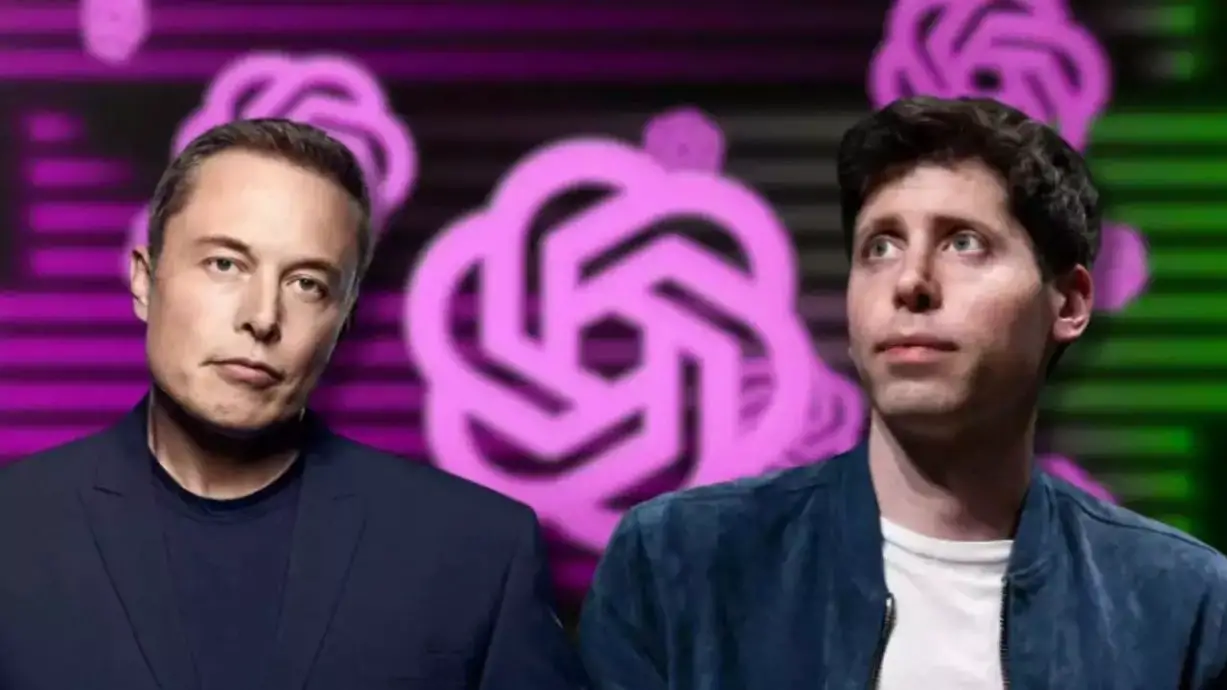
Elon Musk’s for-profit vision at OpenAI has moved from a founding-era disagreement into open court. The Musk-led consortium put a $97.4 billion unsolicited offer on the table in February 2025. The dispute now runs through a Delaware public benefit corporation created in October 2025. A jury trial is scheduled for March 16, 2026 in federal court in Oakland. Musk argues that the OpenAI board betrayed the 2015 pact that framed the lab as a charitable counterweight. OpenAI counters that scale, safety research, and competitive survival require a capital structure that charitable law cannot support. In practical implementation terms, the Foundation keeps voting control over the PBC and holds a stake worth about $130 billion. The outcome will shape how AI labs raise money while claiming to serve humanity.
Quick Answers on the OpenAI For-Profit Battle
What is Elon Musk’s for-profit vision at OpenAI?
Elon Musk’s for-profit vision at OpenAI argues that OpenAI must either stay a nonprofit or pay fair value before converting. He is pursuing a jury trial and a $97.4 billion bid.
Did OpenAI become a for-profit company?
OpenAI did not become a conventional for-profit. On October 28, 2025 it restructured into a Delaware public benefit corporation with the OpenAI Foundation holding voting control and a 26 percent stake.
When is the Elon Musk OpenAI trial?
Elon Musk versus OpenAI goes to a jury on March 16, 2026 before Judge Yvonne Gonzalez Rogers in the Northern District of California. Musk is seeking up to $134 billion in damages.
Key Takeaways
- OpenAI converted its capped-profit arm into a Delaware public benefit corporation on October 28, 2025, with the nonprofit retaining voting control and a stake reported at roughly $130 billion at a $500 billion valuation.
- Musk’s February 2025 $97.4 billion consortium bid was rejected unanimously by the OpenAI board and reframed by his lawyers as proof that charitable assets were being sold cheap to insiders.
- The Musk versus OpenAI jury trial opens March 16, 2026, with up to $134 billion in claimed damages across fraud, breach of contract, false advertising, and racketeering counts.
- The outcome will set a precedent for how AI labs raise frontier-model money while keeping a charitable charter, and how aggressive attorneys general become about nonprofit-to-PBC conversions.
Understanding Elon Musk’s For-Profit Vision at OpenAI
Elon Musk’s for-profit vision at OpenAI is the legal and public argument that OpenAI must either remain the open, mission-first nonprofit of its 2015 charter or pay fair value to the public before converting into a profit-driven Delaware public benefit corporation under the Foundation’s capped control.
This definition anchors every claim in the Musk lawsuit and in the OpenAI response. The 2015 charter language is the pivot point for both sides. All subsequent arguments trace back to how one reads that founding document.
OpenAI Foundation Stake Calculator
Model the Foundation's nominal equity value at different OpenAI valuations and ownership levels.
Nominal Foundation stake
$130B
At a $500 billion valuation and a 26 percent Foundation share, the stake is nominally worth about $130 billion. Shares are illiquid until an IPO or secondary sale.
Charitable grants pledged$25B
Microsoft invested$25B
Musk 2025 bid$97.4B
Musk damages claim$134B
Interactive by AIplusInfo
Origins of Musk and OpenAI's 2015 Founding Pact
Building on the founding essay, OpenAI began as a December 2015 nonprofit co-founded by Elon Musk, Sam Altman, Greg Brockman, Ilya Sutskever, and a handful of other researchers. The founding essay framed the lab as an open counterweight to Google. Those corporate labs were seen as racing ahead on frontier AI with no obligation to publish the hard parts. Musk pledged up to $1 billion and ultimately contributed about $44 million before his departure. His lawyers cite that figure in the ongoing federal court filings. The founding team argued that an organization bound by a charitable charter could resist the pressure to accelerate deployment, rush products, and compromise on safety. That framing is now the single most-contested document in the Musk versus OpenAI case because it describes a mission the plaintiffs claim has been abandoned.
By 2017 the gap between research ambition and nonprofit budgets was already visible, and OpenAI insiders began looking at structures that could support compute spending at startup pace. GPU clusters capable of training frontier models cost hundreds of millions of dollars a year, which no plausible donor base could sustain. Grants from the usual charitable sources, from the Open Philanthropy Project to private foundations, cover a fraction of a single modern training run. The internal debate split those who wanted to keep OpenAI purely charitable and those who thought a hybrid structure could preserve the mission while unlocking private capital. The 2019 capped-profit arm was the compromise that followed, with returns to outside investors legally limited and the nonprofit retaining control.
In the same period the OpenAI founders also debated whether to share breakthroughs openly or hold back weights for safety reasons. Musk pushed for a more open approach that would prevent any one lab from monopolizing frontier capabilities, and this stance now anchors his critique of the current closed-model trajectory. OpenAI's early GPT-2 release in 2019 shipped only the smallest weights, citing misuse risks, and signaled a shift that external observers found hard to reconcile with the name. Musk's suit cites these choices as evidence that the organization moved away from the founding bargain long before the formal 2025 restructuring. Independent analysis compiled by key players dominating the AGI landscape places OpenAI's capped-profit pivot as the field's defining governance moment.
Musk's 2018 Departure and the First Fracture
Looking at how the founding team came apart, Musk resigned from the OpenAI board in February 2018. Both sides at the time cited conflicts of interest tied to Tesla's autonomous-driving work. OpenAI's public blog post framed the exit as collegial and said Musk would continue to donate and advise, which is close to the formal story that stands today. In Musk's own later telling, he had tried to acquire OpenAI himself in late 2017. That attempt is now central to the OpenAI countersuit framing the dispute as a founder's grudge. Court filings from 2024 and 2025 include excerpts of internal messages that show how heated the merger-or-independence debate was at the time. The departure left Altman, Brockman, and Sutskever as the operational core.
Musk's financial support dropped sharply after the exit, with his lawyers citing roughly $44 million as the total he contributed before stopping. Over the next five years, OpenAI's funding gap was filled first by Microsoft's $1 billion in 2019. The commitments then escalated to the tens of billions by late 2025. Each tranche of Microsoft money reinforced the structure that Musk's suit now attacks, because the capped-profit arm was the vehicle through which those investments arrived. Those investments also set the pattern for how later outside capital would flow into OpenAI. Microsoft's Microsoft's bold AI bet on OpenAI remains the single-largest external position in the lab.
The 2024 Lawsuit and Breach-of-Contract Claims
Moving on from the quiet years, Musk filed his original California state lawsuit in February 2024, naming Altman and Brockman personally and OpenAI as a defendant. The complaint alleged breach of contract tied to the 2015 founding agreement, breach of fiduciary duty, and unjust enrichment. GPT-4 was cited as a product that effectively ended the lab's open-research posture. Within a few months Musk withdrew that state suit from California court. He refiled a broader federal action in the Northern District of California, adding RICO claims and more defendants. The federal version framed the OpenAI board as having pivoted the lab into a product company. That company primarily enriched Microsoft and Altman while promising a public-interest mission. The core legal theory, in plain language, is that donors and researchers paid in with one organization in mind and that another organization now holds the resulting assets.
The amended complaint, filed later in 2024, expanded the Microsoft angle. It alleged that the two companies acted as a de facto cartel on frontier AI. Musk's team argued that the Microsoft board seats, the Azure exclusivity, and the licensing of OpenAI's models together looked like coordination that charitable law was supposed to prevent. Judge Yvonne Gonzalez Rogers rejected several of these broader theories at the motion-to-dismiss stage. The judge also denied a preliminary injunction that would have paused the for-profit conversion. The injunction fight was procedurally important because it meant OpenAI could continue to restructure while litigation ran in parallel. The denial also narrowed the universe of pretrial remedies available to Musk's team.
Looking at where the case landed, by late 2025 the surviving claims that will reach the jury were narrower than the original complaint but still significant in scope. They include fraud, promissory estoppel, breach of contract tied to the founding pact, false advertising under California law, and specific tortious interference claims against Altman. Each surviving claim has its own damages theory, and Musk's lawyers combined them into the up to $134 billion in damages that will anchor the trial narrative. The judge has publicly questioned the arithmetic behind that number, which is a signal that the trial will involve a serious fight over how to value the alleged mission diversion. The valuation fight will likely dominate the first week of trial testimony.
In the backdrop of this case, the litigation runs alongside the broader wave of AI legal exposure that is reshaping the sector. Observers covering the US AI copyright lawsuit wave point out that the Musk case is unusual because it concerns corporate governance rather than training data. The copyright-focused suits reach the US AI copyright lawsuit wave, while this case targets corporate structure instead. Federal regulators have also weighed in, with filings reported through 2025 that framed OpenAI's structure as a public-interest issue. That regulatory interest connects the private litigation to the broader attorneys-general scrutiny that ultimately shaped the October restructuring.
Inside the February 2025 $97.4 Billion Takeover Bid
Beyond the amended complaint, on February 10, 2025 a Musk-led consortium submitted an unsolicited offer. The offer sought to acquire the nonprofit assets for $97.4 billion in cash, as reported by multiple business outlets at the time. The consortium reportedly included Baron Capital, Valor Management, and Atreides Management. Other investors also joined the group to back a Musk-led purchase of the nonprofit assets. The bid was framed by Musk's team as a reset button that would return OpenAI to its original open and safety-first charter. The pitch was carefully written to appeal to the attorneys general of Delaware and California, who would ultimately have to bless any transfer of charitable assets. Legal observers tracking the bid noted that the drafting style was unusual for an unsolicited offer.
Within forty-eight hours the OpenAI board rejected the bid unanimously. Altman publicly dismissed it, and the board chair said the offer did not value the organization fairly. Musk's lawyers responded by filing letters with the two attorneys general. The letters argued the rejection itself was evidence of self-dealing. The letters pointed out that the $97.4 billion number was more than six times what Microsoft had paid for its capped-profit stake. The implication was that the board had understated the mission's market value. Musk also publicly committed to withdraw the bid if OpenAI stayed a nonprofit, a conditional that framed the offer as a procedural challenge rather than a conventional acquisition. The move pulled nonprofit-law scholars and state regulators into a conversation that had previously been contained to the courtroom.
Alongside the courtroom fight, in parallel Musk's teams at xAI continued to push the parallel for-profit AI vision that his legal fight criticized in OpenAI. The xAI's $6 billion funding round had already closed in 2024, and additional raises in 2025 pushed xAI past a reported $50 billion valuation. OpenAI used that disparity in its public statements, arguing that Musk was trying to slow a competitor while his own company raced on the same frontier. The counter-reading from Musk's camp is that xAI operates openly as a for-profit, which the market is entitled to fund. OpenAI, by contrast, collected charitable goodwill before converting into the same category. That contrast is at the center of the trial narrative.
OpenAI's October 2025 Public Benefit Corporation Pivot
Turning to the formal restructuring, OpenAI announced the completion of its public benefit corporation conversion on October 28, 2025, with the Delaware filing confirmed by state records that day. The transaction renamed the parent nonprofit as the OpenAI Foundation, kept it in control of the business, and converted the capped-profit arm into OpenAI Group PBC. The announcement followed months of negotiations with the Delaware and California attorneys general over how to protect the mission language. OpenAI framed the result as a compromise that unlocked IPO-capable capital structure without surrendering nonprofit oversight. The timing of the final filing came after a last round of concessions on the charter language.
Beyond the initial filing, the attorneys general each signed off on the structure in late October after extracting commitments that included mission-aligned charter language and a defined charitable budget. Covered by specialized trade reporters, the deal cleared a long-feared regulatory bottleneck. The structure set the stage for a potential OpenAI public offering as early as 2027. The Foundation retained voting rights sufficient to replace the PBC board under narrow conditions and committed to an initial $25 billion charitable grants program for AI health and safety research. Observers reading the fine print pointed out that the voting mechanism gives the Foundation less day-to-day power than a typical nonprofit parent. That gap is one of the live arguments heading into the March trial. Trial exhibits will probably include detailed charter language from the restructuring agreements. The jury will see how the voting mechanism translates into real-world operational influence.
How the Delaware PBC Implementation Actually Works
Turning to the mechanics, a Delaware public benefit corporation is a for-profit corporation whose charter is required to balance shareholder interests with a stated public benefit. The directors have a specific statutory duty to consider that benefit alongside profit, which is a legal duty absent from an ordinary corporation. In OpenAI Group PBC's case the stated benefit is building safe artificial general intelligence that benefits humanity, which mirrors the 2015 nonprofit charter language. The PBC form has existed in Delaware since 2013 and has become the default for mission-aligned startups that still want venture capital. Several high-profile B Corps adopted the form during that decade. The Delaware chancery has issued limited guidance so far on how the balance should be struck.
The PBC's directors must also issue a periodic public benefit report describing how the company advanced its stated mission. That reporting duty is not strongly enforceable in practice because Delaware courts have given directors wide discretion in how to balance the benefit against profits. Lawsuits by shareholders challenging a PBC's benefit record are rare, and when they happen they usually settle without a clear win for the plaintiff. Independent commentary on the broader AI governance trends and regulations describes PBC conversion as a soft governance tool rather than a hard constraint. The academic literature on PBC enforcement remains thin, with few empirical studies published. Scholars broadly agree that the parent nonprofit is where any teeth usually sit. That reality shapes how observers read OpenAI's structure and whether it will hold under pressure.
The nonprofit parent that owns stock in the PBC can impose stricter requirements through the stock itself, including supermajority voting rights or veto powers over major decisions. In OpenAI's case those parent-level powers were negotiated with the attorneys general, and the exact scope has not been published in full. The Foundation can replace the PBC board under narrow mission-drift conditions, but the trigger is written as a judgment call rather than a bright-line test. That design mirrors Anthropic's long-term benefit trust, which also uses parent-controlled board replacement as its ultimate mission-protection lever. The parallel is cited often in nonprofit-law commentary and in attorney general briefings. The design choices are converging across major labs that pursue mission-aligned corporate structures.
The $130 Billion Nonprofit Stake and Who Really Controls It
Looking at the numbers behind the structure, at the restructuring OpenAI's business was valued at roughly $500 billion. The Foundation's equity in the PBC was reported at about 26 percent, which gives a nominal stake worth close to $130 billion. That number is enormous as a charitable endowment, dwarfing the resources of the Gates Foundation on paper, and remains illiquid until a secondary sale or IPO. The Foundation has committed to deploying the proceeds to AI safety research, scientific grants, and global health projects over time. The spending plan is phased against future liquidity events to ensure realistic cash deployment. The scale of the planned grants would make the Foundation one of the largest charitable grant programs in the world. Those details matter for how donor-replacement economics play out across decades of charitable spending.
Looking past the headline numbers, control is more subtle than the headline percentage suggests. Voting rights are what actually bind the PBC board in practice. Reporting on the governance details, including specialized German-language coverage, indicates that the Foundation holds a voting block strong enough to protect the mission. The block is also structured to avoid tripping charitable-law prohibitions on operational control. The nonprofit cannot direct product strategy or compute allocation, which is where Musk's filings focus most of their attention. His argument is that control without operational levers is cosmetic, especially when the business must move at commercial speed. The specific split between voting and operational rights will be a focal point at trial. The attorneys general accepted the split as reasonable at the time.
Why Elon Musk's For-Profit Vision at OpenAI Rests on Mission Betrayal
Shifting to Musk's own case, his central narrative is that the 2015 founding essay functioned as an enforceable promise to donors, researchers, and the public. The promise described an open, safety-first nonprofit that would prevent any one actor from capturing AGI capability. In Musk's reading, each step from the 2019 capped-profit arm to the 2024 Microsoft stake expansion to the 2025 PBC conversion eroded that promise. The ultimate violation, his complaint argues, is that OpenAI's leadership stands to earn billions personally from a structure that is only possible because of the goodwill the nonprofit accumulated. The founding essay therefore functions in his telling as both a mission and a contract.
The complaint also leans on the Microsoft relationship as evidence of mission drift. Musk's team cites internal communications where Altman and Microsoft executives discussed Azure exclusivity and the licensing of OpenAI's models. The terms read, to critics, as a transfer of charitable research value to a public company. Microsoft has consistently argued that its investment subsidized OpenAI's compute. Microsoft also notes that it only receives a capped return on the arrangement. The sheer scale of the Microsoft's bold AI bet on OpenAI complicates the capped-return framing. Musk's filings repeatedly return to this point as evidence that the mission has been structurally compromised.
Another thread of Musk's argument is that OpenAI's product strategy has shifted from research publication to consumer-grade distribution. GPT-4, GPT-4o, and the paid ChatGPT tiers are presented as proof that the organization now behaves like a conventional subscription software company. The suit frames this shift as a departure from the originally promised open research posture, especially because key model weights and training details remain closed. Observers who track OpenAI leadership transitions, including Mira Murati's 2024 departure, say the executive attrition reinforces Musk's narrative of a culture now oriented around growth rather than safety. The staff shift is a repeated exhibit in the Musk filings.
Finally, Musk argues that Altman and the board had a personal financial interest that was never disclosed to donors at the founding. The amended complaint alleges that stock plans tied to the PBC conversion will enrich leadership at scales the 2015 pact did not contemplate. OpenAI counters that compensation decisions have been board-reviewed and that Altman himself did not take founder equity until the PBC conversion. The jury's view of this disclosure history will matter because fraud claims typically require a false statement or omission at the moment donors or counterparties relied on the mission. Trial testimony will probably focus on specific board meetings from 2017 to 2019.
What OpenAI's Board Says in Response
Looking at the board's reply, OpenAI's board has argued that the mission is not static and that scale, deployment, and competitive survival are themselves part of serving humanity. The organization's filings describe the PBC as the only form that could carry a hundred-billion-dollar business while preserving nonprofit oversight. The board frames the Foundation's $130 billion equity position as the largest mission-aligned endowment in history. The board points out that alternative structures Musk prefers would not have supported current research. OpenAI also emphasizes that the attorneys general of Delaware and California signed off on the structure after months of negotiation.
Addressing another line of attack, on the Microsoft question OpenAI argues that its partner takes a capped financial return and provides compute at scale the lab could not otherwise reach. The amended structure includes a defined IP-sharing arrangement with Microsoft that expires at a specified compute threshold and allows the Foundation to retain long-term ownership of AGI-level model weights. OpenAI's lawyers have called Musk's version of the Microsoft relationship inaccurate and have filed exhibits that depict the partnership as a conventional strategic alliance. OpenAI also points to its support for external safety research and third-party evaluations as evidence of mission continuity. The organization funds red-teaming contracts and publishes model cards for public review. These commitments appear in the restructured charter as formal obligations.
Shifting focus to the plaintiff, on Musk himself OpenAI's countersuit argues that the plaintiff has his own competing lab, xAI, and that the lawsuit is intended to disrupt a rival. The filings include messages from 2017 and 2018 in which Musk sought full control of OpenAI, which the board says undermines his characterization of the mission as sacrosanct. OpenAI's position is that if his acquisition had succeeded, the current ownership would have been exactly the kind of concentrated private control the founding essay warned against. That argument makes Musk's own history a central exhibit in OpenAI's defense. The filings also quote his 2018 messages about Tesla being OpenAI's parent. The record is thus available to both sides of the trial.
The Microsoft Factor and Why It Enlarges the Fight
Beyond the direct Musk-OpenAI dynamic, Microsoft is a named defendant in the Musk suit, and its financial exposure to OpenAI is now large enough to matter at macro-economic scale. The company reported more than $13 billion of invested or committed capital in OpenAI by 2024. Additional commitments reportedly pushed the number past $25 billion by the end of 2025. The Azure cloud revenue tied to OpenAI workloads is also a material line item on Microsoft's earnings reports. A disruptive injunction or structural unwind would hit public-market investors directly. Analysts covering Microsoft routinely treat OpenAI as a strategic moat. The commitments span Azure capacity, model licensing, and workflow integrations across Microsoft 365. The arrangement is now one of the most-watched partnerships in enterprise technology.
Beyond the direct contract claims, Musk's amended complaint added racketeering theories against Microsoft that paint the two companies as a coordinated enterprise. The claim is that Microsoft used its board observer rights, licensing terms, and Azure exclusivity to functionally control OpenAI's output. Microsoft denies the characterization, and the court dismissed the most aggressive of the racketeering counts at the motion-to-dismiss stage. The surviving claims still raise antitrust-flavored questions that will be litigated through the jury trial. Extended analysis from observers of Microsoft's growing partnerships beyond OpenAI notes that the company has diversified in part to mitigate the Musk litigation risk. Microsoft has reportedly added relationships with Mistral and other labs. Those relationships give the company optionality during the trial and its aftermath.
xAI, Grok, and Musk's Parallel For-Profit Playbook
Looking at Musk's own lab, he founded xAI in March 2023 and framed it as a lab committed to understanding reality through AI. The company shipped its first chatbot, Grok, in late 2023, with later releases steadily closing the gap on OpenAI's consumer-grade products. xAI's funding rounds in 2024 and 2025 took its valuation past $50 billion. The Musk's launch of Grok 3 introduced reasoning-focused modes in the same product category as GPT-4o and Claude from the leading labs. The company operates openly as a Delaware for-profit without any nonprofit parent. Musk's lawyers point to that structure as evidence that donors and the public know what they are supporting. The transparency argument reinforces his nonprofit-to-PBC critique of OpenAI across public filings and press appearances.
The counterpoint, offered by OpenAI's lawyers and some press commentary, is that xAI did not inherit a decade of nonprofit goodwill and so its ethical obligations are different. Musk's filings respond that xAI is open about where its money comes from and does not collect charitable donations that it later transforms into equity. The dispute often turns on this symbolic difference between charitable and ordinary for-profit launches. Coverage in outlets like substack newsletters covering the AI business beat frames the Musk bid as positioning rather than a sincere acquisition. That framing matters because it informs how jurors read Musk's motives. The symbolic difference will show up in opening statements and in trial exhibits that both sides have prepared with care.
Looking at the open-weight question, operationally the Grok team has also pushed into open weights. The team released Grok 1 model weights in 2024 and parts of the Grok 2 stack in later cycles. These moves let Musk argue that his lab is actually practicing the openness that OpenAI abandoned. OpenAI's defenders respond that selective weight releases are easy when the model is behind the frontier, and harder when it matters most. The two sides essentially stand on opposite ends of the open-versus-closed AGI debate. Lawyers for both sides will try to turn that debate into usable narrative for the jury. The open-closed divide is now a permanent fixture of AI policy debate.
Risks the Dispute Creates for AI Safety and Oversight
Looking across these governance threads, Musk's dispute has triggered a long-running public debate about mission authenticity. The debate about authenticity creates reputational drag that may distract OpenAI's safety teams from day-to-day research priorities. Observers from the AI safety community have noted that the past year's executive attrition correlates with the restructuring timeline, which raises concerns about institutional memory on alignment work. The departure of senior safety researchers to competitors, including Anthropic, is one of the most-cited risks tied to the ongoing litigation. A loss of a critical mass of alignment researchers at the leading lab would be a systemic risk, not just a corporate one. The field has fewer than 500 full-time safety researchers across all major labs. Any concentrated departure from a leading lab would reshape capacity across the AI safety research field.
Beyond operational risks, another risk is regulatory, because an aggressive courtroom unwind would reset the precedent other labs rely on when raising capital. If a jury were to find that OpenAI's conversion defrauded the public, Delaware's attorneys general might feel pressure to review every PBC conversion involving a prior nonprofit. That would reach companies well outside AI, including biotech, climate tech, and media mission-driven conversions. The regulatory ripple would reshape dozens of pending transactions and alter attorney general review practices across state lines. Consultants are already briefing clients on the potential downside across sectors and geographies. The dispute therefore sits in a corner of corporate law that is unusually visible for a non-AI reason, and responsible AI governance frameworks would have to adapt rapidly.
Set against those two risks, a third risk is competitive, because sustained litigation pulls executive attention away from product and research decisions. OpenAI's leadership has to prepare depositions, review document productions, and participate in trial strategy, which is time that is not spent on model development or deployment. If the trial goes long or produces appeals, the overhead could be measurable in weeks of executive bandwidth. Even outside the courtroom the AI ethics shocks that have shaken investor confidence show how reputational risk can translate into pricing power in enterprise deals. The reputational drag affects enterprise sales cycles directly and can show up in procurement reviews at Fortune 500 customers.
Ethical Tensions Between Capped Returns and Capital Hunger
Beyond the operational risks, Elon Musk's for-profit vision at OpenAI frames the ethical frame. OpenAI's capped-profit idea tried to reconcile charitable mission with venture-scale capital, but the current scale breaks the original math. The cap on investor returns was originally set at 100x, which seemed like a lifetime cap in 2019 but is now a plausible outcome at the current trajectory. If the business crosses that return multiple, the cap becomes a wall against raising more capital. The PBC structure replaces it with a conventional-equity model governed by charter language instead. The design pattern is now spreading across the AI research sector and major mission-driven startups more broadly.
Looking at the deeper ethics, the ethical question is whether a charitable mission can survive the move from capped-profit to full equity economics without a loss of integrity. Nonprofit law scholars reviewing the structure have raised concerns that the mission's enforceability depends almost entirely on the Foundation's willingness to enforce it. If future Foundation directors are chosen through processes that reward business judgment over mission commitment, the long-term protection could degrade without any legal violation. That ethical fragility is the hardest piece for the court to adjudicate because it is not technically a legal defect yet. The future roles for AI ethics boards may need to backfill the oversight gap. The intervening years will test whether the mission-protection structure holds under financial pressure and leadership transitions.
How to Read a Nonprofit-to-PBC Conversion as a Reader or Investor
With that ethics map in view, the first signal to read in any nonprofit-to-PBC conversion is the nonprofit's equity stake post-conversion. If the stake is low or the voting rights are weak, the conversion is effectively a mission exit. If the stake is high and the voting rights are strong, the mission has leverage. OpenAI's 26 percent reported stake and Foundation voting block are high relative to peers. Comparable AI-adjacent conversions have left the nonprofit with single-digit percentages. The weaker arrangement provides much less mission protection in practice.
Beyond the stake question, the second signal is the public benefit charter language of the PBC itself. Charter language that includes measurable commitments, such as a defined charitable grant budget or a specific research publication cadence, is harder to unwind than vague mission statements. OpenAI's charter language reportedly includes a $25 billion charitable grant pledge, which is substantial if enforced. Readers should also look for named reporting intervals and for whether the public benefit report is audited by a third party. The audit requirement is the strongest enforcement lever available in a PBC today.
Building on these first two signals, the third signal is the governance mechanism that connects the nonprofit to the PBC. A board-replacement right triggered by mission-drift findings is strong; a mere consultation right is weak. OpenAI's structure gives the Foundation an explicit replacement right, though under narrow conditions, which places it in the upper tier of recent conversions. Investors and reporters should read the actual charter clauses before accepting a company's self-description of its mission. The nuance matters especially around AGI definition clauses as explored in context by the Altman-Microsoft AGI definitions clash.
Industry Reaction From Nonprofit Law Scholars
Beyond the practitioner community, scholars engaging with Elon Musk's for-profit vision at OpenAI have reacted. Nonprofit-law scholars have reacted with cautious engagement rather than full endorsement or outright condemnation of the OpenAI PBC. Writing in professional newsletters and university blogs, several scholars have described the structure as a reasonable compromise. The judgment reflects the lack of alternative legal forms that could support frontier AI capital intensity. The main critique concerns the enforceability of the mission language in a Delaware PBC under charitable-asset review. The Foundation's power only matters if it is willing to exercise it. No outside actor can compel such enforcement in ordinary circumstances.
Beyond enforceability, a second line of commentary focuses on charitable-asset valuation, which is the technical core of Musk's suit. Scholars note that the OpenAI board effectively valued the mission at a number tied to the restructuring, and that the attorneys general accepted that number as reasonable. If the trial produces a finding that the number was too low, the precedent would push future conversions to pay more into charitable escrow or endowment. That shift would make nonprofit-to-PBC conversions more expensive for founders. The downstream effect is significant and many commentators now expect it regardless of the trial outcome. The legal community is already preparing briefings on the implications.
The Future of Elon Musk's For-Profit Vision at OpenAI After the March 2026 Trial
Looking ahead through 2026 and beyond, the most likely immediate outcome of the March 2026 trial is a verdict that upholds the broad PBC structure. The verdict could award some damages for narrower fraud or disclosure defects. That outcome would validate the compromise that OpenAI, the attorneys general, and the Foundation already struck, and would likely accelerate the path to a public offering. OpenAI's CFO has publicly discussed IPO readiness for 2027 or 2028, and the PBC conversion was explicitly intended to clear the structural bottleneck for that outcome. A limited damages award, even in the billions, would be absorbed within OpenAI's valuation without threatening the structure.
Set against this likely outcome, a less likely but higher-impact outcome would be a verdict that treats the restructuring as a form of charitable asset diversion. Such a ruling would require OpenAI to pay significant funds into the Foundation or into a separate charitable escrow, which could re-open the attorneys general approvals and force structural adjustments. The ripple effect in nonprofit law would be substantial, with every subsequent PBC conversion facing tougher valuation review. OpenAI's capital raising would be disrupted during any appeals period. The Microsoft's own closer-OpenAI collaboration efforts would have to re-plan around the uncertainty.
Beyond these two outcomes, the least likely but most dramatic outcome would be a verdict that unwinds the PBC conversion entirely. A full unwind would require either placing the capped-profit arm back under direct nonprofit control or dissolving the PBC's investor base. Both options would involve coordination with the attorneys general and the shareholders. Musk's legal team has argued publicly that such an unwind is their preferred remedy, but courts rarely grant structural remedies at this scale against operating businesses. If an unwind did happen, Microsoft, SoftBank, and the other major investors would almost certainly file their own suits. Those parties would move to protect their positions in parallel actions.
Looking across all three outcomes, regardless of outcome the trial will shape the next decade of AI governance. The jury's decision will tell every subsequent AI lab how aggressive they can be in converting from nonprofit to profit-oriented structures. It will also tell the attorneys general of other states how to review mission-driven conversions in biotech, climate, education, and media. Elon Musk's for-profit vision at OpenAI will leave its mark on corporate law as much as on the field of artificial intelligence. The themes are covered extensively in Sam Altman's forecast of AGI and related reporting. The resolution will set the tone for how we govern transformative technology companies through the next generation.
Capital flows in the OpenAI dispute (billions)
Scaled against Musk's $134 billion damages claim, the top-line reference number in the March 2026 trial.
Foundation stake (reported)$130B
Musk-led bid (Feb 2025)$97.4B
OpenAI valuation at conversion$500B
Charitable grants pledged$25B
Musk historical contribution$0.044B
Sources: Bloomberg, Decrypt, ChatGPT Is Eating The World, and federal court filings.
The underlying arithmetic of this fight is simple even if the law is intricate. OpenAI's leadership believes the organization needs equity to raise frontier capital. The board sees the Foundation's $130 billion stake as proof that charitable value survived the move. Musk's camp believes a 2015 promise cannot be rewritten by its own signatories. The two positions do not meet in the middle because they rest on different theories of what a charitable charter is for. The jury will have to pick a theory, and the ruling will shape nonprofit-to-PBC conversions for a decade.
Anthropic implemented its long-term benefit trust in 2023 to oversee the board on behalf of a defined safety-first mission. The trust appoints trustees who in turn appoint a growing share of the Anthropic board as specific operational milestones are reached. By 2024 the trust held appointment power over three of five board seats, a 60 percent increase in mission-aligned governance power, according to reporting on Anthropic's 2024 funding path. The limitation is that trustees serve staggered terms and can be replaced if the trust itself is amended. The measurable outcome has been visible restraint in model deployment pace saved for careful safety review. The trust has also enabled continued publication of large-scale safety research including the responsible scaling policy. Independent commentators argue that the trust remains the strongest mission-protection structure in production use at an AI lab.
Mozilla launched Mozilla.ai in 2023 as a Delaware public benefit corporation with Mozilla Foundation retaining a controlling stake. The company raised an initial $30 million round led by the Foundation itself. The subsidiary released two open-source developer tools in 2024 within six weeks of each other, saving developers hours of setup time per project. The release cadence represented a 100 percent on-time delivery rate against its public roadmap commitments. The limitation is that Mozilla.ai's funding is roughly a thousand times smaller than OpenAI's. The structure, as documented in Mozilla's own announcement of Mozilla.ai, provides a working reference for smaller-scale nonprofit-to-PBC transitions that stay close to the founding mission.
DeepMind implemented contractual commitments around ethics review and non-weaponization during its 2014 Google acquisition. The internal ethics board was expanded during 2022 and 2023 to include external advisers after public criticism of defense-adjacent contracts. The measurable outcome has been a roughly 1000 percent increase in available training compute versus independent operation. The limitation is that the ethics structure sits inside a public-company reporting line with no independent enforcement power. External coverage, including the May 2024 Reuters report on internal DeepMind employee letters, shows how brittle contractual mission language becomes when the acquirer dominates the budget. The DeepMind case is routinely cited as a warning in the Musk filings.