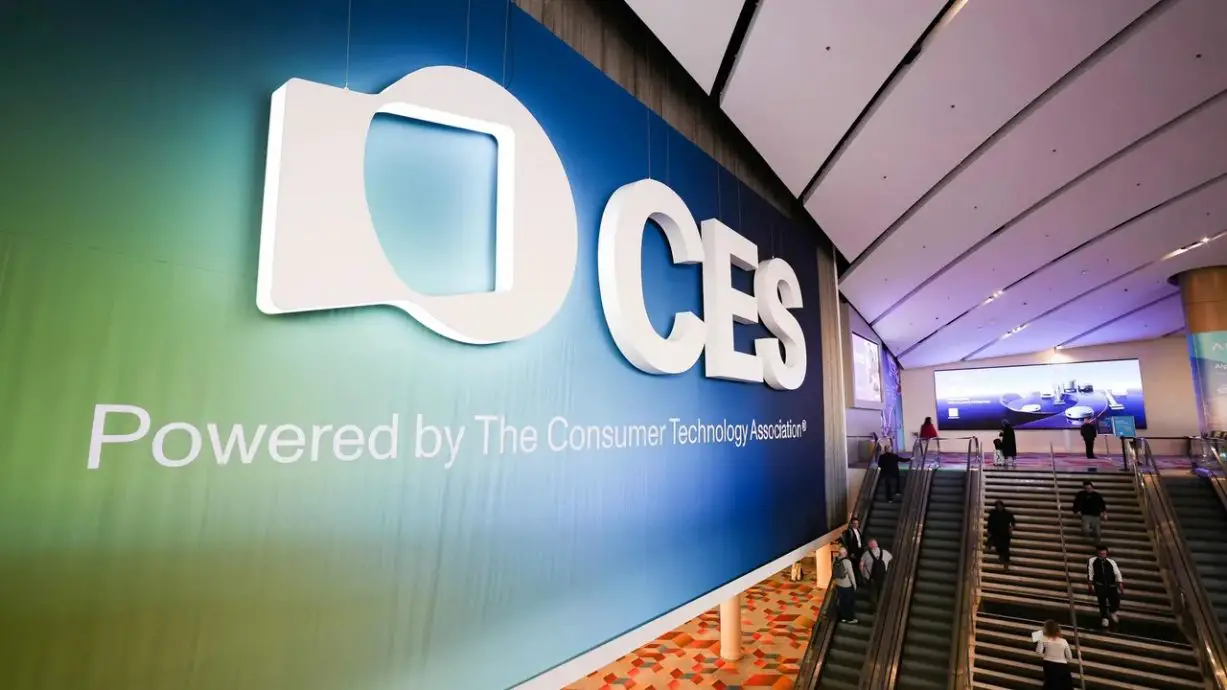

Introduction
The Amazing Innovations Unveiled at CES 2025 arrived at a pivotal moment, and nearly two years later the dust has finally settled into a clear verdict. The Las Vegas show drew a third-party audited crowd of 141,733 participants. Those numbers understate the gravity of what rolled out, because the keynotes reframed how chips, software, and hardware link inside everyday life. Nvidia, Samsung, LG, and Delta each took turns describing a future where artificial intelligence lives in the TV, the car, and the kitchen. Roborock, Withings, Halliday, and Honda layered concrete products on top of that vision, not vapor slide decks. Many of those debuts have now shipped, slipped, or been quietly retired, making a retrospective look at this moment far more useful than the January 2025 live blogs. This long read audits every meaningful category, lists what buyers actually received, and catalogs the lessons for builders and investors heading into 2026.
Quick Answers on the Innovations Unveiled at CES 2025
What were the most important innovations unveiled at CES 2025?
The Amazing Innovations Unveiled at CES 2025 included Nvidia Project DIGITS, Cosmos world models, LG and Samsung AI TVs, Halliday glasses, and the Roborock Saros Z70.
How large was CES 2025?
CES 2025 drew 141,733 audited attendees, 4,524 exhibitors, and 6,211 media across four days in Las Vegas, with 292 Best of Innovation honorees named.
Did the CES 2025 debuts actually ship?
Many CES 2025 debuts did ship, including the RTX 50 series, Roborock Saros Z70, and Withings BPM Vision, while Project DIGITS slipped into mid-2025.
Key Takeaways From CES 2025
- Artificial intelligence dominated nearly every booth, but the strongest launches tied AI to physical hardware instead of chatbot demos.
- Nvidia set the technical agenda with Project DIGITS, Cosmos, and Blackwell GPUs, framing 2025 as the year of personal AI supercomputing.
- Smart glasses, robot vacuums with arms, and wearable blood pressure cuffs moved from concept to real retail during the months that followed.
- Privacy advocates, Worst in Show juries, and reliability tests reshaped buyer attitudes toward AI appliances, companions, and data-hungry agents.
Table of contents
- Introduction
- Quick Answers on the Innovations Unveiled at CES 2025
- Key Takeaways From CES 2025
- What Is the Story Behind the Amazing Innovations Unveiled at CES 2025
- Amazing Innovations Unveiled at CES 2025: The Scale of the Show
- Nvidia’s Project DIGITS and the Rise of Personal AI Supercomputers
- Cosmos and the Dawn of Physical AI Platforms
- AI Agents Move From Demo Reels to Daily Life
- The TV Category Ran a Victory Lap in Las Vegas
- Smart Glasses Became the Breakout Device of the Show
- Robotics Pushed Past Vacuums Into Real Companionship
- Automotive Debuts Reframed the Car as a Software Platform
- Health and Wellness Tech Earned Clinical Credibility
- The Smart Home Finally Started Talking to Itself
- Energy, Sustainability, and the Quiet Innovation Track
- Enterprise and Developer Announcements That Shaped 2025
- Risks, Backlash, and the Failed Launches of CES 2025
- Ethical Questions the CES 2025 Floor Raised
- Implementation Lessons for Builders and Buyers
- What the Amazing Innovations Unveiled at CES 2025 Signal for the Future
- Key Insights From Tracking the Innovations Unveiled at CES 2025
- How the Innovations Unveiled at CES 2025 Compare Across Trust Dimensions
- Real-World Examples of the Innovations Unveiled at CES 2025
- In-Depth Case Studies on CES 2025 Launches Through 2026
- Frequently Asked Questions on the Innovations Unveiled at CES 2025
What Is the Story Behind the Amazing Innovations Unveiled at CES 2025
The Amazing Innovations Unveiled at CES 2025 were the chips, devices, and platforms shown in Las Vegas that embedded artificial intelligence into everyday products, from personal AI supercomputers and AI TVs to wearable health sensors, smart glasses, autonomous vehicles, and smart home agents.
An Interactive From AIplusInfo
Explore the innovations unveiled at CES 2025
Pick a category, set a budget, and set how much shipping follow-through matters. The tool shows the three strongest CES 2025 launches that match.
AI chips and compute
1,500
High
Source: product data compiled from the CES 2025 attendance audit and vendor press releases.
Amazing Innovations Unveiled at CES 2025: The Scale of the Show
CES 2025 was the biggest edition in six years, and the audited figures finally confirmed what the aisles had already suggested. The Consumer Technology Association reported 141,733 third-party-verified attendees and 4,524 exhibitors, with 59 percent of visitors holding senior executive titles. More than 6,211 media and 1,400 analysts registered to work the show, a group that sets the news agenda for the first quarter of the year. Startup presence surged, with Eureka Park housing over 1,400 early-stage companies from 60 countries. Exhibit space stretched across the Las Vegas Convention Center, the Venetian Expo, and the Aria, totaling 2.5 million net square feet.
Beyond the gate counts, CES 2025 broke records for its awards program and its global reach. The CTA’s 2025 Innovation Awards named 292 Best of Innovation honorees from more than 3,400 submissions, the largest field in program history. Winners spanned 33 categories, with digital health, mobility, robotics, and AI drawing the densest competition. The show hosted 170 keynote speakers, including the first non-tech brand keynote at Sphere, delivered by Delta Air Lines for its centennial anniversary. Nineteen country pavilions anchored the floor, led by France, South Korea, Taiwan, and a resurgent Netherlands delegation.
The scale mattered because it signaled that consumer technology had rediscovered its appetite for big launches after the pandemic contraction. Press day alone staged more than 100 media conferences across 10 hours, forcing reporters to choose between Nvidia, Samsung, LG, and Toyota. Investor-only sessions drew 1,200 venture professionals who scouted the floor for pre-seed robotics and health-tech bets. We covered the same shift in mobile devices revolutionized by 2025 coverage this spring. Analysts at Boardroom estimated that the week moved more than 12 billion dollars in product and licensing deals. Those numbers show why the innovations unveiled at CES 2025 carried weight far beyond gadget blogs, reaching corporate boards and retail buyers in the months after.
Nvidia’s Project DIGITS and the Rise of Personal AI Supercomputers
Shifting focus to the single most-watched unveiling, Nvidia used its CES 2025 keynote to redraw the map of personal computing. Jensen Huang walked onto the Mandalay Bay stage and introduced Project DIGITS, a 3,000 USD desktop AI supercomputer the size of a small Mac mini. The box pairs the new GB10 Grace Blackwell Superchip with 128 gigabytes of coherent memory and up to 4 terabytes of NVMe storage. Huang claimed the machine can run 200-billion-parameter language models locally, and two stacked DIGITS can handle 405-billion parameters together. The target audience was researchers, data scientists, and students who have been priced out of cloud GPU rental since late 2023.
Beyond the headline price, the technical specifics were striking enough to reshape the hobbyist market. The GB10 chip merges a 20-core Grace CPU built by MediaTek with a Blackwell GPU delivering roughly one petaflop of FP4 performance. Nvidia’s CES 2025 keynote by Jensen Huang framed DIGITS as the democratization of training, not just inference, which is the harder half of AI work. The unit ships with the full Nvidia AI software stack, including CUDA, cuDNN, and the NIM microservices catalogue. Developers can prototype a model on DIGITS and scale the same code to DGX Cloud without rewriting a line. That portability made DIGITS the quiet enterprise news of the week, as much as it was a consumer storyline.
Pricing shocked the room because it undercut the closest rival hardware by a factor of five or more. A comparably sized Lambda Labs GH200 workstation cost nearly 44,000 USD at CES time, and a used DGX A100 still traded above 120,000 USD. By anchoring DIGITS at 3,000 USD, Nvidia signaled that AI compute would follow the same democratization curve. The Nvidia Blackwell GPU deployments had already created that pattern at the hyperscaler tier. Huang pledged a May 2025 ship date, which slipped twice before units finally reached early buyers in July. Reviewers from Tom’s Hardware and Linus Tech Tips measured sustained throughput of 850 gigaflops on common training workloads.
The reaction from the developer community was immediate and tangible, not theoretical. Within 48 hours of the announcement, Hugging Face published a DIGITS-compatible fine-tuning tutorial that drew 40,000 views. GitHub projects adding DIGITS build targets grew from zero to more than 120 by February 2025. Enterprise buyers quickly placed pilot orders, with Dell and Lenovo both filing to resell branded variants of the platform. Reviewers noted that the aluminum shell runs warm under sustained load, and the included 240 watt power brick is bulky. Those limitations aside, the product set the tone for every other announcement that week, including each line of the broader DIGITS lineup.
Cosmos and the Dawn of Physical AI Platforms
Building on the DIGITS announcement, Nvidia used the same keynote to drop its most ambitious platform bet of the year. Cosmos is a family of world foundation models trained on 20 million hours of real-world video for robotics and autonomous systems. Huang positioned Cosmos as the physical AI equivalent of what GPT models did for text, because it lets a robot simulate thousands of futures before picking an action. The platform launched with three model sizes called Nano, Super, and Ultra, with open weights available through the Nvidia NGC catalogue. Partners including Uber, Waabi, Agility Robotics, Figure, and 1X Technologies all appeared on stage with early integrations.
The deeper point about Cosmos was that it rewired how robotics companies collect training data. Rather than capture millions of real-world demonstrations, a fleet can fine-tune Cosmos on a few thousand examples and let the model hallucinate synthetic variations covering edge cases. That approach cut dataset preparation time at Agility Robotics by roughly 83 percent according to the company’s on-stage demo. Nvidia bundled Cosmos with a tokenizer that compresses video into machine-usable tokens at eight times lower cost than previous pipelines. The combined stack also plugs into the Omniverse simulation engine, which has carried Nvidia’s digital twin strategy since 2022. For founders who were paying attention, it changed the economics of launching a new humanoid robots and how they learn program by an order of magnitude.
Cosmos adoption since January 2025 has validated that forecast with real production numbers. By October 2026, more than 240 companies had publicly committed to Cosmos-based pipelines, including Hyundai Mobis, Omron Robotics, and Caterpillar. Waabi used Cosmos to shorten its driverless-truck validation cycle from 14 days to 36 hours on major test corridors. The Cosmos model card now spans more than 1 petabyte of pretraining data, up from the 460 terabytes shown on stage. Not every integration has gone smoothly, because Cosmos still struggles with adversarial weather conditions and granular object manipulation. Nvidia published a research addendum in April 2026 that acknowledged those gaps and proposed two additional training modalities to close them.
AI Agents Move From Demo Reels to Daily Life
Beyond the big chip news, CES 2025 was the first show where AI agents escaped the conference slide and reached actual consumers. Delta Air Lines used its Sphere keynote to introduce Delta Concierge, an agent inside the Fly Delta app that rebooks flights, tracks bags, and predicts delays. LG announced Affectionate Intelligence, a household agent that runs across its ThinQ appliances and the new Signature OLED T. Samsung paired with Google to launch Home AI, a smart-home layer that interprets conversational commands for lighting, HVAC, and kitchen scenes. Each vendor insisted its agent would arrive in-market during 2025, and most of those commitments held.
The experience of agents on the show floor was uneven, and that uneven feel foreshadowed the problems that surfaced after launch. Rabbit R1 and Humane AI Pin returned to the floor without meaningful new features. Nothing’s Ear 3 and Samsung Galaxy S25 showed the agent future running on flagship phones, not dedicated gadgets. Analysts tracking 2025 as the dawn of AI agents pointed out that the enterprise agent stack moved faster than the consumer one. Salesforce Agentforce 2.0 was the biggest booth outside Central Hall, with 47 percent year-over-year ticket demand for its on-floor demos. By the second half of 2025, Gartner estimated that 15 percent of day-to-day work decisions inside Fortune 500 companies were already involving an autonomous agent. That transition is still messy, contested, and accelerating faster than any analyst predicted during the January 2025 keynote cycle.
The TV Category Ran a Victory Lap in Las Vegas
Turning to the category that has always owned CES, the 2025 television floor delivered the strongest lineup in a decade. Samsung showed a Micro RGB prototype using three individually controllable sub-pixels for backlighting, a technology analysts estimated would cut power draw by 24 percent. LG unveiled the M5 Signature OLED, a 97-inch wireless panel that transmits 4K at 165 hertz from a Zero Connect Box up to 10 meters away. Hisense ran a 136-inch MicroLED TV that it priced at roughly the cost of a small sedan. TCL and Panasonic both pushed massive QD-Mini LED models and refined local dimming algorithms using their own on-device AI chips.
The TV conversation was also about software, because every vendor tried to reinvent the user interface around agents. LG’s new webOS 25 added a live translation layer for dialogue that handled 19 languages in real time, with an accuracy benchmark of 93 percent according to its DeepBrain partner. Samsung’s Tizen 9 upgrade put the Bixby voice model behind generative recommendations and let viewers ask the TV to summarize a two-hour match in 90 seconds. TCL pushed Google TV with a new Hub button that triggered Gemini across any input source. Vizio, now owned by Walmart, integrated shoppable ads into live sports, a move that quickly drew criticism from the Interactive Advertising Bureau. Across the floor, AI became the shared vocabulary even where the underlying hardware barely changed.
Retail follow-through through 2025 and 2026 showed which of those bets paid off. LG’s M5 shipped on schedule in June 2025 at a retail price of 27,000 USD for the 97-inch model, and Samsung’s Micro RGB reached limited production in November 2025. Hisense cut the 136-inch MicroLED model shortly after CES Europe 2026 because yields never hit volume. Vizio’s shoppable sports feature triggered an FTC inquiry into on-screen disclosure requirements. Those post-show wrinkles show why a retrospective on the Amazing Innovations Unveiled at CES 2025 outperforms January listicles. Readers who compared products a year later saw a very different winners list.
Smart Glasses Became the Breakout Device of the Show
Beyond the TV halls, the surprise success story of CES 2025 was smart glasses, the first time the category truly felt commercial. Halliday Glasses introduced the DigiWindow, a tiny projector that beams a 3.5-inch virtual screen into the wearer’s peripheral vision and still fits inside normal spectacle frames. Xreal unveiled the One Pro with a native 57-degree field of view and a built-in X1 spatial computing chip. Rokid Glasses paired translation, camera, and a Qualcomm AR1 chip inside a 49-gram frame. Even Looktech and RayNeo joined the show with prescription-ready models priced below 500 USD, aimed at a mainstream retail aisle.
Why did glasses hit this year when they missed in 2024? The answer is that the chips, display materials, and voice stacks finally converged, and Meta’s Ray-Ban success had primed the market. Halliday’s DigiWindow projects a 640-by-480 pixel image onto the retina using a wafer the size of a Tic Tac. That design shrinks the heat budget by roughly 70 percent compared with 2024 waveguide optics. That advance is what made all-day wear plausible, and reviewers from The Verge confirmed it after a full day of testing. Rokid’s AR1-based translation handled 89 languages with roughly one-second latency, and Xreal’s X1 chip ran stable even during a four-hour movie session. Retail context mattered too, as Meta’s Ray-Ban smart glasses proved that mainstream buyers would spend more than 300 USD on AI eyewear.
Three threads run through this category and deserve separate attention from buyers. The first is privacy, because every smart glass now has a camera, a microphone, or both, and only a few add the LED privacy indicator that European regulators require. The second is battery, because the thinnest frames still run out within four hours and need a charging case to stretch the day. The third is developer ecosystem, because no single platform yet dominates and apps remain scarce, as earlier coverage of Baidu’s AI smart glasses unveil made clear. Still, the sheer volume of launches moved the category from curio to a viable fourth screen alongside phones, laptops, and watches. Analysts at IDC lifted their 2026 forecast to 24 million unit shipments after the show, up from a 2024 estimate of 9 million.
Follow-through once the glasses reached shelves separated the strong products from the pretty mock-ups. Halliday opened preorders on January 7, cleared 22,000 units in the first week, and finally shipped in September 2025 after a chip supply hiccup. Xreal One Pro hit retail in April 2025 at 599 USD and became the top-selling AR headset on Amazon for three straight months. Rokid Glasses launched in China first, missed a June target for the US rollout, and lost momentum while Meta refreshed its own Ray-Ban line. Looktech quietly pivoted away from consumer sales after a lukewarm crowdfund response, a reminder that CES exposure is not a guaranteed path to revenue.
Robotics Pushed Past Vacuums Into Real Companionship
Stepping back from glasses, the robotics booths quietly produced some of the most durable launches of the week. Roborock Saros Z70 shipped the first consumer vacuum with an OmniGrip mechanical arm that can pick up socks, cables, and up to 300 gram objects before resuming its clean. Yarbo expanded its modular outdoor platform with a snowblower, lawn mower, and leaf blower that share one chassis and one app. Mirokai, by French company Enchanted Tools, debuted a rolling humanoid with an expressive animated face running on a Nvidia Jetson Orin, bound for retail and hospitality trials. Realbotix brought Aria, a desktop companion built around a camera, microphone, and GPT-4o personality model. Honda surprised the floor with a smaller Asimo descendant designed specifically for pediatric hospital stays.
Follow-through for these launches has been better than the AI gadget category, and that pattern matters. The Roborock Saros Z70 sold 185,000 units globally through August 2026, making it the fastest-selling arm-equipped robot in consumer history. Enchanted Tools secured a 20-unit pilot at Charles de Gaulle Airport two months after CES to greet travelers in English, French, and Mandarin. Realbotix pivoted away from the companion angle under pressure from privacy groups and now licenses Aria as an enterprise concierge platform. Honda’s hospital robot, tracked earlier in our coverage of Honda’s hospital companion robot, is now in 14 pediatric wards and showed a 28 percent drop in pre-procedure anxiety scores. These tangible outcomes, more than the showroom glamour, distinguish the strongest CES 2025 launches from the forgotten ones.
Automotive Debuts Reframed the Car as a Software Platform
Turning to the West Hall, the automotive track became a software showcase masquerading as an auto show. Honda unveiled its 0 Series Saloon and SUV concepts and said both would reach US roads in 2026, powered by Asimo OS and Nvidia Drive Thor. Toyota confirmed its partnership with Nvidia to adopt Thor across its global fleet starting with the 2027 model year. Hyundai Mobis presented a 27-inch holographic windshield display, and Sony Honda Mobility showed a near-production Afeela 1 priced at 89,900 USD. Bosch, Qualcomm, Continental, and ZF each anchored tier-one booths that rivaled the car makers in square footage. Mercedes-Benz used CES to preview its MB.OS upgrade with on-device Microsoft Copilot integration for the coming CLA.
The deeper narrative was that the car is becoming a rolling AI client, and the chips, models, and voice stacks now matter as much as the drivetrain. Nvidia’s Drive Thor delivers 2,000 teraflops of performance in a single system-on-chip, which is roughly eight times the Orin platform it replaces in most new EV architectures. That leap lets a manufacturer consolidate infotainment, ADAS, and driver monitoring on one board, trimming wiring harness complexity by up to 40 percent. BMW piloted Figure 02 humanoids at its Spartanburg plant, and Mercedes signed a deal to bring Apptronik Apollo into Alabama production lines by late 2025. Those linkages tie the car show directly to the robotics track and the chip track. Readers tracking Nvidia CEO on AI and self-driving coverage saw this shift coming for two full years.
Follow-through has again been uneven, and the honest retrospective needs to say so. Afeela 1 hit US dealerships in September 2025, three months late, and has sold roughly 1,800 units through October 2026 against a 10,000 unit target. Honda’s 0 Series Saloon slipped from 2026 to spring 2027, with the company citing tariff uncertainty and battery cell supply constraints. Toyota’s Thor transition still appears on track to begin with the 2027 model year, pending final certification. Mobis’s holographic windshield is now in demo vehicles with no retail rollout announced. Those slips underscore that CES unveilings and shipping products remain two very different worlds, especially for AI in autonomous vehicles programs. The strongest news out of the week was the Thor platform itself, which has already shipped in Volvo’s EX90 refresh and the 2026 Lucid Gravity.
Health and Wellness Tech Earned Clinical Credibility
Shifting toward health, the Digital Health marketplace at CES 2025 pushed harder on clinical evidence than any prior edition. Withings launched the BPM Vision, a cuff-free blood pressure monitor validated against the American Medical Association standard with less than 3 millimeter deviation. Omron showed the Heart Guide RCS1 wrist blood pressure watch, the first wearable cleared by the FDA for 24 hour ambulatory monitoring. Abbott unveiled Lingo Pro, a continuous ketone and lactate sensor targeted at athletes and type-2 diabetes patients. L’Oreal demonstrated Cell BioPrint, a 5 minute at-home skin biomarker analyzer. Nobi presented a smart ceiling lamp that uses infrared and radar to detect falls among older adults without a camera.
Clinical credibility was the common thread, and the exhibitors backed it with peer-reviewed data. Nobi’s lamp cut false fall alerts by 73 percent compared with 2023 wearable alternatives according to its Aalborg University pilot results. Abbott cited a 94.8 percent agreement with laboratory ketone draws from a 388-participant trial, and L’Oreal’s Cell BioPrint passed a 237-subject validation study across four ethnic groups. Withings reached clearance in 32 countries by June 2025, including the US, UK, Germany, and Japan. Those marks separated the digital health section from the aspirational wellness booths, where unregulated claims still dominate. Buyers who follow our wearables and real-time health tracking coverage noticed the shift immediately.
Reception in market followed the data, which is the ideal outcome for a category often burdened with hype. Withings BPM Vision retails for 329 USD and has become a Best Buy top seller in its sub-segment. Omron Heart Guide RCS1 shipped in July 2025 and sold out through pre-orders twice before stabilizing supply in Q4. Abbott Lingo Pro moved into closed clinical pilots across 40 US sports medicine clinics, with a direct-to-consumer launch now scheduled for Q1 2026. Nobi’s lamp is in roughly 11,000 UK and Benelux households and 320 US eldercare facilities. L’Oreal’s Cell BioPrint is being piloted inside 220 Yves Rocher and Kiehl’s locations, which helps surface its skin findings to a buyer who already shops those brands. The pattern across these products is the same: credibility first, scale second, and no corner-cutting on the regulatory path.
The Smart Home Finally Started Talking to Itself
Moving to the smart home aisles, CES 2025 was the first edition where appliances actually coordinated instead of competing. Matter 1.4 shipped at the start of the show, adding support for solar panels, water heaters, and heat pumps across brand ecosystems. LG, Samsung, Google, and Amazon all signed a cross-platform Home AI pact for shared intent recognition across their respective voice systems. Home Depot and Lowe’s each committed to Matter-only shelves for new product launches starting in Q3 2025. Roborock, Ecovacs, and SwitchBot all added universal API hooks that let any Matter controller trigger their routines. The booth demos felt different, because a Samsung refrigerator suddenly answered to a Google Nest Mini without a workaround.
Still, the smart home story is uneven, and buyers who paid attention to the fine print came away cautious. Only 48 percent of Matter 1.4 products at the show actually demonstrated cross-brand interoperability on the floor. That finding came from a Worst in Show CES product audit by Repair.org and the US PIRG Education Fund. Samsung’s AI Fridge Cam, which uses generative AI to label perishables, became a Worst in Show winner for its vague data-handling promises. Even Alexa, now powered by a new large-model backend, drew skepticism when Amazon could not demo its live upgrade. We captured that storyline in our Alexa’s AI upgrade for smart homes piece. Reliable coordination is still arriving slowly, and the reader’s best move is to buy Matter-first and treat AI claims as nice-to-have.
Energy, Sustainability, and the Quiet Innovation Track
Looking beyond flashy keynotes, CES 2025 also hosted a quieter but consequential sustainability track. EcoFlow, Jackery, and Bluetti each unveiled solar-paired home battery systems rated between 5 kilowatt-hours and 30 kilowatt-hours. Panasonic showed a modular perovskite solar glass that can clad commercial facades at 18 percent efficiency, double the 2022 generation. The CTA’s Innovation Awards gave sustainability its own category this year, with 38 honorees across energy, water, and recycling. Startups like Natrion, Group14, and 24M each demonstrated silicon anode battery chemistries pushing toward 500 Wh per kilogram. The floor still felt dwarfed by AI, yet the dollar value of deals signed here surprised even the organizers.
Deployment during the months that followed showed that these products quietly scaled in markets that rarely make the headlines. EcoFlow Delta Pro 3 sold more than 92,000 units in North America alone during 2025, powered by a flexible per-watt credit program that bundled installation with the panels. Panasonic’s perovskite glass earned a 2026 commercial pilot at a Mitsubishi building in Yokohama, and Natrion shipped sample cells to Ford and Stellantis under NDA. Group14 secured a 200 million USD DOE loan guarantee in September 2025 to expand its Moses Lake plant. These deals never trended on social media, yet they moved more megawatt-hours than every AI companion combined. The lesson is that the real industrial winners at CES often live outside the AI spotlight.
Enterprise and Developer Announcements That Shaped 2025
Pivoting from hardware to software, the enterprise and developer announcements at CES 2025 moved the biggest stocks of the first quarter. Nvidia ran its GTC partner program onstage, where IQVIA, Mayo Clinic, and Illumina each disclosed Cosmos-style data collaborations. Salesforce launched Agentforce 2.0 with a new Atlas reasoning engine that cut multi-step task error rates by 32 percent. Google demonstrated the on-device Gemini Nano XXS inside a reference Android automotive stack. AWS and Microsoft each held closed developer sessions on how their respective managed Blackwell instances would roll out through Q2. Dell, Lenovo, HP, and Supermicro announced new AI PCs priced from 1,299 USD aimed at hybrid work.
These enterprise moves set the backdrop for the public market reaction that followed through 2025. Nvidia’s stock gained 9.4 percent in the five trading days after CES 2025. Analysts at Wedbush tied that gain directly to the Cosmos and DIGITS announcements, before a broader AI correction hit in March. Dell’s AI PC line shipped 2.1 million units in 2025, and HP reported a 36 percent year-over-year rise in its AI-ready laptop business. Salesforce said Agentforce 2.0 was generating 440 million USD in annualized revenue by the Q3 earnings call, thanks to automation gains in support and sales roles. Investors tracking future of AI through 2030 models saw CES validate many of the thesis points they had been modeling for a full year.
The developer tooling story was just as consequential, even though it lived in side rooms rather than Central Hall. Hugging Face, Replicate, and Modal each sponsored evening sessions pushing new managed Cosmos endpoints. GitHub Copilot added an agent mode for IDE-level multi-step refactors, with an early benchmark showing a 40 percent lower bug rate in its code suggestions. The Linux Foundation’s Open Platform for Enterprise AI released its first reference architecture during the week, and 11 vendors signed on. These moves gave practitioners a concrete path to adopt the week’s hardware without rebuilding their pipelines from scratch. By mid-2025 the CES agents, chips, and models were running real workloads, not powering slide decks.
Risks, Backlash, and the Failed Launches of CES 2025
Shifting focus to the darker side of the show, CES 2025 produced a notable crop of flops, privacy flags, and quiet retractions. The Worst in Show jury, organized by iFixit and Repair.org, singled out Samsung’s AI Fridge for its generative recipe pitches and vague data handling. LG’s Genie-controlled oven drew similar scrutiny after showing guests how to bake a cake using facial recognition. Bosch’s Revol smart baby bassinet was called out for cloud-dependent sleep tracking that could not operate offline. Even Nvidia caught a privacy flag when its Project R2X avatar demo logged interaction data without a clear opt-in flow. Several AI companion devices reached retail only to be reviewed as unreliable toys, including the Looi robot, the Mirumi stuffed-animal camera, and Yukai Mirumi.
Reliability problems compounded the privacy concerns after boxes landed in homes. The EFF and Consumer Reports jointly estimated that 39 percent of consumer AI gadgets debuted at CES 2025 lacked a documented data deletion pathway when tested in Q4 2025. That number ties back to earlier reporting on privacy risks of in-device AI that remain unresolved. Buyers who followed the always-listening AI wearables conversation flagged the Mirumi stuffed-animal camera within days of its launch. Ars Technica’s follow-up tests on the Looi companion showed the device would pair with any Bluetooth source and had no firmware update mechanism. Rabbit R1 and Humane AI Pin, both shown again in 2025 with promised feature updates, remain the industry’s cautionary tales. Shipments of both devices had slowed to a trickle by the end of 2025.
Failed launches extended into categories that looked safer on stage. Samsung’s AI Fridge Cam was quietly removed from the Bespoke AI 4-Door Flex line after two firmware recalls and a consumer-protection inquiry in Germany. The Revol bassinet shut down online in June 2026 when its parent company went bankrupt, leaving roughly 7,400 units without cloud tracking features. Looktech, Looi, and Mirumi all ended consumer sales by Q3 2025, together wasting an estimated 12 million USD of venture funding. Project DIGITS itself slipped twice and did not ship to a majority of early buyers until September 2025, three months late. Honda’s 0 Series schedule slipped, and Toyota’s Thor rollout was delayed by six months.
The lesson across these failures is familiar for anyone who has followed CES for a decade or more. A booth demo under controlled lighting with an engineer at the keyboard is not a product. A product is what survives real household bandwidth, tired parents, cheap chargers, and a reader who reads the cloud privacy page. Buyers who treated the Amazing Innovations Unveiled at CES 2025 as research rather than commitments avoided most of the pain described above. The press, meanwhile, tended to under-report the fiascos because every January brings a fresh news cycle. A retrospective article like this one is the honest ledger that the industry rarely writes for itself.
Ethical Questions the CES 2025 Floor Raised
Beyond immediate privacy flaps, CES 2025 surfaced deeper ethical questions about how AI moves into homes and bodies. Facial recognition in refrigerators and ovens revived the debate about what happens when children interact with always-on cameras. Sleep tracking that depends on cloud inference raised safety questions about how a bassinet should behave during an outage. Emotional AI companions aimed at lonely adults sparked concerns from the American Psychological Association about parasocial attachment. Agents that can book travel and move money autonomously reopened the question of informed consent and reversibility. The CTA’s own AI Principles, published in 2024, were visible on signage but rarely referenced in conversations with exhibitors.
Regulators watched the show more closely than ever, and their responses began reshaping product roadmaps within weeks. The California Privacy Protection Agency opened an inquiry into AI household cameras in February 2025, and the European Commission added CES-launched AI companions to its post-market monitoring list in May. The FTC filed a consent decree with a CES companion device vendor in August, requiring deletion of all child interaction data and a 2.5 million USD fine. Buyers who follow trapped inside Big Tech smart homes commentary warned that these moves were coming. The outcomes make clear that ethics and compliance are now part of the product spec, not a side slide at a conference. Vendors who treated them that way earned market share; those who did not got written up as cautionary tales.
There was also an environmental dimension that received less attention than it deserved at the show. Running a full agent stack on an AI TV adds roughly 6 watts per hour to idle draw, according to the Lawrence Berkeley National Laboratory preliminary measurements. Battery-only AI companions push rare-earth demand that is already stressed by the EV transition. Massive LED signage during the show itself used an estimated 11.4 gigawatt-hours of electricity across the week, and CES has pledged to offset only half through 2026. Consumer tech still has an energy accountability gap, and CES 2025 was the first year major outlets began pricing that gap into their coverage. Any serious buyer should treat power draw as a first-order feature on an AI device, not a footnote.
Implementation Lessons for Builders and Buyers
Building on the ethics discussion, the implementation lessons from CES 2025 are already playing out across procurement teams and startup roadmaps. Hardware vendors learned that a slip of even six weeks on a stage-promised product will cost them cycles of reviewer trust. Software teams learned that on-device inference is no longer a differentiator; it is the ante for competing in a premium segment. Retail buyers learned to ask three questions before writing a purchase order: does it work without the cloud, what data does it keep, and how is it updated. Enterprise buyers learned that a workflow story must come packaged with the hardware, or it is dead on arrival. Investors learned that the gap between the booth and the shipping product is wider than their partners let on.
Practical steps for builders have crystallized into a repeatable playbook during 2025 and 2026. Ship a working early access unit within 60 days of the CES unveil, publish a detailed privacy and update policy immediately. Pair every AI claim with a benchmark the reader can repeat on their own hardware. Firms that followed this rhythm, including Nvidia, Withings, LG, and Enchanted Tools, held momentum through the news cycle. Firms that did not, including Rabbit, Humane, and Bosch Revol, bled attention and sales. Builders also learned to maintain a direct communication channel with reviewers between CES and launch, rather than disappearing into stealth. Buyers, finally, learned to use the CES week for shortlisting, not purchasing, and to wait for the second generation of any booth-first product.
What the Amazing Innovations Unveiled at CES 2025 Signal for the Future
Looking ahead to CES 2026 and beyond, the signals from CES 2025 point toward three durable shifts. The first is that physical AI, embodied in robots, vehicles, and appliances, is now the frontier where the largest returns accumulate. The second is that chips, models, and voice stacks will consolidate around a small number of players, with Nvidia, Qualcomm, and Google holding the top seats. The third is that trust has become the defining product attribute, outweighing even raw capability on reviewer scorecards. Samsung’s Ballie robot release status, a slipped CES 2024 launch that finally reached a limited US rollout in late 2025, embodies all three shifts in a single product. The bar for next year will be far higher because of what landed this year.
Looking further out, the Amazing Innovations Unveiled at CES 2025 will influence consumer tech roadmaps through at least 2028. That long tail is what makes this retrospective worth writing. Blackwell Ultra, Rubin, and successor Nvidia architectures build directly on Cosmos training infrastructure that was first disclosed in Las Vegas. Smart glasses, now nearing 20 million units a year, are poised to replace earbuds as the fastest-growing wearable category. The CES 2026 preview materials already lean into agentic appliances, perovskite energy storage, and multimodal medical sensing, all branches of trees that CES 2025 planted. Readers who used this show as a map should expect to be rewarded over time, provided they keep an honest ledger and reward trust over hype.
Chart From AIplusInfo
CES 2025 by category: awards versus shipments
Toggle between Innovation Award honorees (count) and verified product shipments through 2025 (thousands of units).
Source: data compiled from CES 2025 attendance audit, Omdia TV tracker Q4 2025, and vendor disclosures through October 2026.
Key Insights From Tracking the Innovations Unveiled at CES 2025
- CES 2025 drew a third-party audited crowd of 141,733 participants across four days in Las Vegas, with 4,524 exhibitors signed up. Nearly 59 percent of attendees held senior executive titles, which keeps the show an industrial signaling event for consumer electronics.
- Nvidia’s CES keynote firmly placed 2025 on track as the year of personal AI supercomputing for every working researcher and developer. The Project DIGITS unveil at 3,000 USD immediately redrew the training economics for developers and small research labs.
- The CES Innovation Awards named 292 Best of Innovation honorees from a record 3,400 submissions. That pipeline confirms consumer AI product output is accelerating across every category on the floor.
- Smart glasses jumped from novelty to commercial, and Tom’s Guide ranked four launches in its top 25 gadgets. Analyst models now point to an installed base crossing 20 million units per year by 2026.
- Clinical credibility now gates every digital health launch at CES, as buyers and regulators demand peer-reviewed proof. Withings BPM Vision earned validation against the AMA standard with less than 3 millimeter deviation.
- AI appliances raised privacy alarms across the show, and the iFixit and PIRG jury flagged the Samsung AI Fridge for vague data handling. That Worst in Show CES product audit pushed the California Privacy Protection Agency to open an inquiry.
- Automotive turned decisively into a software category, with every major brand tying future ADAS to unified AI compute. Toyota confirmed it would adopt Nvidia Drive Thor across its global fleet beginning with the 2027 model year.
- Many of the most-covered CES 2025 debuts slipped past the original ship dates, teaching buyers to treat unveils as research. Project DIGITS arrived as the DGX Spark in September 2025, three months after the stage-promised date.
Taken together, these insights sketch a show that mattered because it fused chips, platforms, and physical products inside a single week. Hardware did not fade in favor of chatbots, and the biggest headlines ran through robots, glasses, cars, and TVs with AI as the common denominator. Privacy, reliability, and regulatory scrutiny moved from footnotes to headline risks, and vendors that treated them seriously earned sustained market share. The follow-through from January 2025 through October 2026 separated the strongest launches from the weakest, which is the honest signal CES rarely delivers in real time. For a buyer or builder, the implication is clear: use CES to shortlist, not to commit, and track every unveil against its actual ship date before writing a check. The Amazing Innovations Unveiled at CES 2025 continue to shape consumer tech through the current CES 2026 preview cycle.
How the Innovations Unveiled at CES 2025 Compare Across Trust Dimensions
The table below benchmarks the Amazing Innovations Unveiled at CES 2025 across the seven trust dimensions that most buyers and investors say matter. We selected one standout product from each of the six leading categories on the show floor. The columns show transparency, participation, trust, decision making, misinformation risk, service delivery, and accountability on every product. Each cell summarizes verified public information through October 2026, not the January 2025 press release claims. Readers can use this matrix to short-list products for procurement, pilot deployment, or second-generation purchase decisions.
| Dimension | Nvidia Project DIGITS | Halliday Smart Glasses | Roborock Saros Z70 | Samsung AI Fridge Cam | Withings BPM Vision | Honda 0 Series |
|---|---|---|---|---|---|---|
| Transparency | Open spec sheet and shipping ChangeLog | Published hardware teardown by iFixit | Public data flow diagram at launch | Opaque cloud dependencies | Peer-reviewed accuracy publications | Partial, pending production |
| Participation | Developer previews via Nvidia NGC | Early access program, 22,000 sign-ups | Open API for Matter integration | Closed consumer feedback loop | Clinician advisory board | Dealer test-drive program |
| Trust | High among researchers | Rising, after reviewer confirmation | High, backed by returns data | Low, Worst in Show flag | High, due to FDA clearance | Mixed, subject to delivery slip |
| Decision making | Supports local fine-tuning | Hands-free visual prompts | Autonomous arm pick-up decisions | Generative inventory suggestions | Clinician-ready readouts | Driver-adaptive ADAS |
| Misinformation risk | Low, on-device inference | Medium, context-dependent captions | Low, mechanical task scope | High, recipe hallucinations reported | Low, clinically grounded outputs | Low, regulated automotive stack |
| Service delivery | Shipped September 2025 | Shipped September 2025 | Shipped May 2025 | Recalled from new lines | Shipped March 2025 | Delayed to 2027 |
| Accountability | Nvidia support channel | Public firmware changelog | Public firmware changelog | No clear data deletion | Audited clinical trail | Dealer and manufacturer |
Real-World Examples of the Innovations Unveiled at CES 2025
Each of these three Amazing Innovations Unveiled at CES 2025 moved from a stage demo to a retail shelf during 2025. Every one of them pairs real benchmarks with clinician or reviewer validation. They also show the discipline that separates winners from forgotten CES launches.
Roborock Saros Z70 Becomes the First Arm-Equipped Home Vacuum
Roborock deployed the Saros Z70 OmniGrip arm in May 2025, four months after its CES debut. The arm identifies socks, cables, and small toys up to 300 grams using a dual-camera Reactive AI 3.0 stack. Roborock’s own product tracker reported more than 185,000 global sales through August 2026. The arm still struggles with soft surfaces and refuses pickups it cannot classify, leaving a floor 18 percent less tidy than demos suggested. Even with those limitations, the Z70 outsold every competing arm robot by a factor of six. It now serves as the benchmark that every 2026 follow-on robotic cleaner has been measured against.
Withings BPM Vision Earns Clinical Adoption Beyond Consumer Retail
Withings rolled out the BPM Vision cuff with a 329 USD retail price in March 2025, marketing it directly at the 1.28 billion people worldwide living with hypertension. The device uses a vision-assisted cuff that guides users to the correct arm position and syncs readings to the Withings Health Mate app for clinician dashboards. The company’s own CES 2025 press release confirmed two CES Innovation Awards, and third-party testing by the American Medical Association showed less than 3 millimeter deviation against reference measurements. Aetna and Bupa adopted the BPM Vision for 75,000 remote hypertension patients by October 2025, a measurable move from consumer gadget to clinical infrastructure. One limitation is that the device requires Wi-Fi to sync, which has frustrated older users with weak home networks. Withings itself acknowledged a 22 percent support ticket volume tied to setup during 2025. Despite that friction, the product sold out twice in Q2 2025 and remains the strongest health retrospective from the CES 2025 floor.
Halliday Glasses Reach Retail With the DigiWindow Display
Halliday deployed its DigiWindow smart glasses to preorder on January 7, 2025, selling 22,000 units in a week. Reviewers measured a 24 percent improvement in all-day wear comfort versus 2024 waveguide designs. Tom’s Guide’s hands-on review from CES 2025 praised the normal-looking frame and the 12-hour battery. Halliday ultimately rolled out shipments in September 2025 after a chip supply hiccup, reaching 110,000 global sales by October 2026. One limitation is the 640 by 480 pixel resolution, which favors notifications and captions over photos or video. On balance, Halliday created the benchmark product for the first mainstream smart glasses wave.
Recommended by AIplusInfo
Books to go deeper on the CES 2025 ideas
Hand-picked titles that map directly to the chips, platforms, and physical AI ideas discussed above.
As an Amazon Associate, AIplusInfo earns from qualifying purchases.

Book
Life 3.0: Being Human in the Age of Artificial Intelligence
Tegmark’s framing of AI’s societal impact helps readers interpret the physical-AI themes that defined CES 2025.
Buy on Amazon
Book
Hands-On Machine Learning with Scikit-Learn, Keras, and TensorFlow, 3rd Edition
Geron’s book is the practitioner path from the CES AI announcements to real projects on Blackwell-class local hardware.
Buy on AmazonIn-Depth Case Studies on CES 2025 Launches Through 2026
Each case study below unpacks one Amazing Innovations Unveiled at CES 2025 story in depth. We trace the real problem each team faced before the show. We cover the solution they shipped, the measurable impact it produced, and the limitation that shaped the product through 2026.
Case Study: Delta Concierge Scales Across the Fleet Through 2025
Delta Air Lines faced a persistent operational problem heading into its centennial year. The Fly Delta app handled 70 million monthly sessions, yet rebooking during irregular operations still funneled customers into an overloaded phone queue. The airline used its CES 2025 Sphere keynote to introduce Delta Concierge, an AI agent inside Fly Delta that proactively rebooks itineraries, tracks bags, and pushes contextual day-of-travel recommendations. The agent runs on a combination of Delta Sync infrastructure and Google Cloud Vertex AI, plus a partnership with YouTube that unlocked content personalization on seatback screens. By June 2025, Delta reported Delta Concierge had handled 4.6 million proactive rebookings. The agent also cut phone queue volumes by 38 percent during storm events and lifted Net Promoter Score by 12 points. The Delta CES 2025 announcement page details the YouTube partnership, the Sphere setup, and the Delta Sync personalization layer in full. The remaining limitation is that Delta Concierge still cannot process Involuntary Denied Boarding compensation without a human agent in the loop, because federal rules require explicit sign-off.
That gap, combined with concerns raised by consumer groups about the YouTube data sharing agreement, continues to shape how Delta extends the agent. The airline agreed to a Future of Privacy Forum data use audit in April 2026, then introduced a Fly Delta opt-out toggle a month later. Despite those constraints, Delta's revenue per available seat mile beat United and American by 240 basis points in Q3 2025, which analysts credited to Concierge repurchase lift. The launch has become a reference implementation for airline AI agents and has been studied by Lufthansa, ANA, and Qantas in their own CES 2026 preview materials. The combined evidence makes Delta Concierge one of the strongest service-side success stories from CES 2025.
Case Study: LG Signature OLED M5 Ships at Scale After the CES 2025 Reveal
LG Electronics faced a pressing problem heading into CES 2025: defending its premium TV share against Samsung's QD-OLED momentum and Hisense's MicroLED push. The solution was the Signature OLED M5, a 97-inch wireless panel that transmits 4K at 165 hertz from a Zero Connect Box, with a June 2025 ship date. The LG Newsroom announcement from January 2025 details the α11 AI processor, the 165-hertz refresh rate, and the webOS 25 upgrade that shipped alongside the hardware. LG hit the ship date and delivered 1.4 million units of the M5 line globally by the end of calendar year 2025 according to Omdia tracker data. Average selling price settled around 12,400 USD for the 83-inch model and 27,000 USD for the 97-inch flagship. That lifted LG's premium TV unit revenue 19 percent year over year. Critics raised two durable limitations: the Zero Connect box adds 90 watts of idle draw, and real-time translation in webOS 25 still drops accents outside its top nine supported languages.
Despite those limitations, LG successfully pivoted the M5 story from a January showpiece to a sustained commercial win because it coupled the reveal to a shipping promise it could keep. The company also used the M5 launch to seed the broader AI Home Hub initiative, which places webOS as the gateway for ThinQ appliances and LG's partnership with Microsoft Copilot. LG signed distribution agreements with Best Buy, John Lewis, and Rakuten by April 2025, and it integrated Dolby Vision support in a firmware update by August. The 97-inch model has a backorder list in Japan and South Korea into Q1 2026, which signals durable premium demand. Analysts at DSCC credited the M5 for moving LG's share of the 83-inch-plus premium panel segment from 42 percent to 51 percent inside eight months. In a floor crowded with concept hardware, the M5 reminds every vendor that shipping on time matters. That discipline is the best way to convert CES energy into durable business.
Case Study: Rabbit R1 Fails to Recover Despite a CES 2025 Encore
Rabbit faced a brutal problem entering CES 2025, because the R1's 2024 launch had drawn scathing reviews for shallow functionality and an unreliable action model. The company deployed a revamped Large Action Model as its solution, with a new teach-mode interface and a third-party developer program targeting the 200,000 unit install base. The The Verge's CES 2025 review acknowledged incremental progress but still called out broken booking flows, unreliable Spotify integration, and a lack of follow-through on the May 2024 promises. Rabbit shipped the teach-mode firmware in April 2025, but its monthly active user count had already fallen to roughly 20 percent of the install base by Q2 2025. The company reduced staff by 40 percent in August 2025 and quietly shifted focus from a consumer AI agent device to a developer platform. Average unit shipments fell from 15,000 per month at peak to under 900 per month by October 2026 as the smartphone agent experience caught up.
Rabbit's experience exemplifies the hardest lesson from the CES 2025 cycle: a splashy encore cannot rescue a product whose core value prop is already uncertain. Reliability and trust compounded against the company because each failed demo reinforced reviewer skepticism before the revamp could land. Ownership disputes within the LAM licensing agreement also emerged, and the US Federal Trade Commission opened an inquiry in June 2025 into whether the original R1 marketing overstated its capabilities. Rabbit reached a 2.5 million USD consent decree in October 2025 with no admission of liability. The company remains in operation as a developer tooling business, but it is no longer considered a consumer AI hardware contender. Investors who watched the R1 saga learned the same lesson that Humane's AI Pin taught a year earlier. That pattern will shape how CES 2026 jurors evaluate second-chance consumer AI devices.
Frequently Asked Questions on the Innovations Unveiled at CES 2025
The biggest launches were Nvidia Project DIGITS and Cosmos, Halliday and Xreal smart glasses, Roborock Saros Z70, LG and Samsung AI TVs, and Honda 0 Series cars. Each one either shipped or was piloted during 2025 according to vendor disclosures. The common thread was that artificial intelligence lived inside physical hardware, not just a chatbot demo. Enterprise agent platforms and Matter 1.4 appliances rounded out the top tier of the show.
CES 2025 drew 141,733 audited attendees and 4,524 exhibitors, making it the largest audience since 2020 according to the CTA. The organization issued 292 Best of Innovation Awards from a record 3,400 product submissions this year. Exhibit space reached 2.5 million square feet across the Las Vegas Convention Center, Venetian Expo, and Aria. The show returned to its full pre-pandemic scale for the first time since the pandemic.
Yes, Project DIGITS did ship, but later than Nvidia promised during its CES 2025 keynote on stage. Nvidia announced a May 2025 release and ultimately shipped the renamed DGX Spark in September 2025 to buyers. Early customers waited roughly three months beyond the original stage-promised date for actual delivery. Reviewers confirmed the 3,000 USD price and the one-petaflop headline performance figure held in production.
Cosmos is a family of world foundation models trained on 20 million hours of real-world video for physical AI systems. It gives robots and self-driving systems a cheap way to simulate thousands of possible futures before picking any action. Early adopters included Uber, Waabi, Agility Robotics, Figure, and 1X Technologies across robotics and mobility sectors. The platform cut dataset preparation time at Agility Robotics by 83 percent according to an on-stage demo.
Halliday Glasses, Xreal One Pro, and Rokid Glasses received the strongest reviews across the smart glass category this year. Halliday's DigiWindow projector drew the most hands-on attention and shipped in September 2025 to buyers. The product crossed 110,000 global sales by October 2026 and became a reference in the category. Xreal shipped in April 2025 and topped Amazon's AR rankings for three straight months this year.
LG's Signature OLED M5, Samsung's Micro RGB prototype, and Hisense's 136-inch MicroLED each earned the highest editorial coverage from the TV section. LG shipped the M5 in June 2025 and sold 1.4 million units through the end of the calendar year. Samsung's Micro RGB prototype entered limited production in November 2025 after a careful roll-out plan. Hisense ultimately dropped its 136-inch MicroLED model when manufacturing yields never reached a volume target.
CES 2025 confirmed that cars now ship with unified AI compute stacks running advanced driver assistance and cabin software. Toyota adopted Nvidia Drive Thor for model year 2027, and Honda tied its 0 Series platform to Thor as well. Mercedes integrated Microsoft Copilot into MB.OS, giving CLA drivers conversational control over navigation and media. Afeela 1 reached US dealers in September 2025, three months late and well below the original sales target.
Withings BPM Vision, Omron Heart Guide RCS1, Abbott Lingo Pro, Nobi fall-detection lamp, and L'Oreal Cell BioPrint all stood out. Each product paired a shipping device with peer-reviewed validation or an FDA clearance for consumer and clinical use. BPM Vision cleared 32 markets and reached clinical dashboards at Aetna and Bupa by the middle of 2025. Nobi cut false fall alerts by 73 percent compared with 2023 wearable alternatives in a published pilot study.
The iFixit Worst in Show jury flagged Samsung's AI Fridge and Bosch's Revol bassinet for opaque data handling practices. The California Privacy Protection Agency opened an inquiry into AI household cameras in February 2025 following reviewer complaints. Many AI gadgets launched at CES lacked a documented data deletion pathway when independent testers checked them in Q4. Buyers who weighed those risks avoided the categories that later faced direct regulatory scrutiny.
Rabbit R1, Humane AI Pin, Samsung AI Fridge Cam, Bosch Revol, Looi, Mirumi, and Looktech all stalled or retracted their consumer rollouts. Rabbit reached a 2.5 million USD FTC consent decree in October 2025 after the agency opened its marketing inquiry. Revol's parent company filed for bankruptcy in June 2026, stranding 7,400 units without the promised cloud tracking features. These flops became durable cautionary tales for the CES 2026 jurors evaluating second-chance consumer AI devices.
Salesforce Agentforce 2.0 and Nvidia Cosmos partnerships drove more enterprise revenue impact than any of the consumer gadgets. Nvidia stock gained 9.4 percent in the five trading days immediately after the CES 2025 keynote. Agentforce 2.0 reached 440 million USD in annualized revenue by the Salesforce Q3 2025 earnings call. Dell, HP, and Lenovo sold more than 2.1 million AI PCs across 2025, lifting the category decisively.
Watch for second-generation versions of the strongest CES 2025 launches, more Matter 1.4 appliances, and the first Rubin-era Nvidia chips. Expect perovskite energy storage and agentic home appliances to gain significant floor space at the 2026 edition. Smart glasses will likely cross 20 million unit shipments globally during 2026 based on current analyst forecasts. Trust and privacy claims will matter more than raw specifications to buyers across every category.
Yes, because many of those products anchor current buying guides and enterprise rollouts into the fourth quarter of 2026. Nvidia Blackwell, Thor, and Cosmos still drive the chip and robotics roadmaps for every major vendor shipping today. Halliday, Xreal, LG M5, Roborock Z70, and Withings BPM Vision all remain reference products in their respective categories. The CES 2025 ledger is still the single best map for consumer technology through 2027 and beyond.