
Introduction
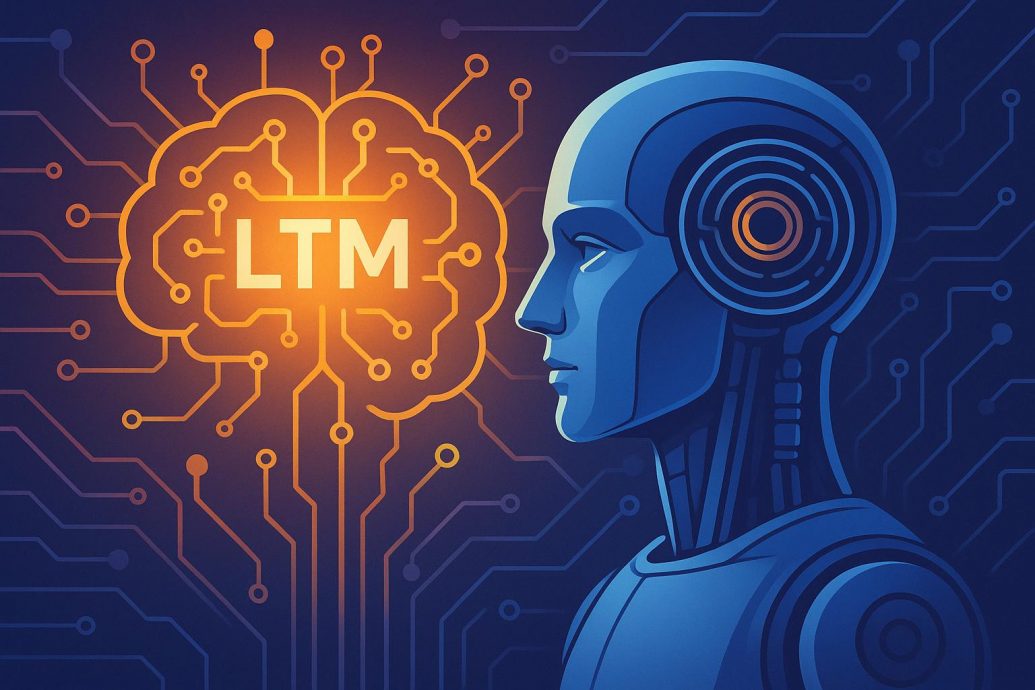
With transformative progress in large language models (LLMs), the conversation is rapidly shifting toward their next leap: persistent memory. LTM: The Future Memory of AI explores how Latent-Topic Memory (LTM) architecture proposes to overcome the memory and continuity limitations of today’s AI systems. Real breakthroughs in AI will come not just from generating content but from remembering and reasoning across time. LTM could become the foundational shift enabling machines to think like long-term collaborators rather than short-term responders.
Key Takeaways
- Latent-Topic Memory (LTM) introduces persistent vector-based memory to support long-term AI reasoning.
- LTM functions as a complementary module rather than replacing core LLM systems like GPT-4 and Claude.
- Unlike traditional context-limited models, LTM continuously learns and retains information across sessions.
- Applications of LTM could redefine AI performance in legal, healthcare, and strategic business domains.
Why Memory Matters in AI: Limitations of LLMs
LLMs like GPT-4 Turbo and Claude have expanded capabilities through vast token windows and billions of parameters. Yet a persistent limitation remains: memory retention. These models operate within a context window (for example, GPT-4 Turbo with 128k tokens) to generate coherent responses. Once the context is exceeded, older information is forgotten.
This temporary cognition reduces continuity in multi-session dialogue, long-term personalization, and cross-domain reasoning. For instance, a legal case AI assistant referencing trial data, appeals, and witness statements spanning several months requires storing and mapping these pieces comprehensively. LLMs alone do not manage this consistency, which is where LTM becomes essential.
What Is Latent-Topic Memory (LTM)?
Latent-Topic Memory (LTM) is a conceptual AI memory system designed to persist and recall high-level semantic knowledge over time. While traditional LLMs depend on fleeting session context, LTM builds a structured latent vector space to encode topics, facts, and relationships.
This architecture organizes knowledge by thematic clustering instead of simple token proximity. When a user query is submitted, the LLM consults the LTM layer, which retrieves relevant latent-topic vectors. This allows the model to surface background knowledge not present in the current input prompt.
How LTM Differs from Context Expansion Techniques
- Token Limits: GPT-4 Turbo has a 128,000-token cap per session. LTM does not impose limits based on session length. It indexes data by topic similarity.
- Session Independence: Knowledge remains in memory beyond individual sessions, allowing ongoing continuity.
- Structured Memory: Instead of embeddings or retraining, LTM keeps topic-organized vector spaces ready for dynamic queries.
- Low Inference Overhead: LTM modules can be streamlined for efficient read and write processes, keeping computational costs low during recall.
Visual Comparison: LLMs vs. LTM Memory Systems
The table below compares memory capabilities between current LLMs and the proposed LTM system:
| Feature | GPT-4 Turbo | Claude v2 | Latent-Topic Memory (LTM) |
|---|---|---|---|
| Context Window | 128k tokens | 100k tokens | Topic-based indefinite memory |
| Cross-Session Recall | Limited | Limited or personalized | Persistent across sessions |
| Data Organization | Flat token-based | User or file-specific | Latent-topic vector clustering |
| Retraining Needed | Yes (for introspection) | Partial updates | No. Uses memory read and write processes |
LTM in the Wild: Practical Scenarios for Persistent AI Memory
Healthcare: Chronic Patient Histories
Imagine an AI assistant aiding medical teams in managing long-term care for chronic illness patients. With LTM, the assistant remembers past diagnoses, lab results, observations, treatments, and drug reactions. Instead of re-uploading documents repeatedly, care teams access prior context stored and organized in a patient-specific latent-topic cluster. This builds on advances like near-infinite memory for generative AI, supporting historical alignment across sessions.
Law Firms: Case Continuity at Scale
At law firms dealing with complex litigation over decades, AI with LTM provides valuable continuity. Legal documents, deposition records, and case histories are tracked through persistent topical memory clusters. Attorneys across teams gain synchronized access to consistent insights. Unlike systems with rigid session caps, LTM ensures seamless continuity without requiring repeated input.
Strategic Market Research
In fast-changing business environments, analysts track evolving reports, benchmarks, and internal briefings. LTM enables AI tools to store past research and compare current inputs within long-term strategic memory. This approach transforms AI assistants into proactive advisors. Future integrations with systems like Gemini AI’s memory feature may further enhance strategic analysis.
How LTM Fits into Hybrid AI Architectures
LTM is not a replacement for high-performing LLMs like GPT-4, Claude, or Gemini. It acts as a persistent knowledge layer. LLMs work well for generating natural text with immediate context. LTM supports that generation by retaining contextual memories over time, similar to how humans use notebooks or memory prompts.
In a hybrid setup, an LLM handles text processing. An LTM-based vector memory handles topic organization and retrieval. A logic layer manages writing, updating, or discarding stored items. This structure mirrors advancements discussed in our overview of long short-term memory in AI, pointing toward scalable long-term learning without frequent retraining.
Expert Perspectives and Research on Long-Term AI Memory
Emerging research is experimenting with scalable memory systems. DeepMind’s RETRo and Google’s Routing Transformer Memory focus on retrieval to support extended reasoning. Still, these approaches emphasize token-level recall. LTM pursues a semantic angle, seeking to retain knowledge shaped by concepts and relationships.
Stanford researchers commented in Memory Transformers that coherent learning must incorporate structured, context-aware memory. This view aligns with LTM’s mission to make AI not only speak fluently but also think dependably across time.
Glossary
- Latent-Topic Memory (LTM): A memory concept that encodes data by thematic relevance, not by token sequence.
- Context Window: The maximum number of tokens a language model can process in one session.
- Vector Embedding Memory: A storage system using vector representations to enable concept-based recall.
- Persistent Memory Module: A subsystem allowing long-term recall and storage independent of session limits or token size.
FAQs
How does long-term memory improve AI performance?
Long-term memory helps AI retain information from past interactions. This unlocks continuity, enhanced personalization, and deep reasoning without needing repetitive data entry by users.
Can ChatGPT remember past conversations?
ChatGPT does not retain past interactions by default. Users trying the memory beta feature in ChatGPT Plus may notice memory of select details. To dive deeper, learn more about ChatGPT memory for conversations.