
Introduction
Yann LeCun’s Bold AI Rethink signals a pivotal shift in the trajectory of artificial intelligence, as Meta’s chief AI scientist co-founds a stealth-mode startup that directly opposes mainstream generative approaches like OpenAI’s GPT and Google’s Gemini. Rather than relying on massive language models trained to predict words, LeCun envisions a future of autonomous machine learning powered by symbolic reasoning, logical frameworks, and understanding grounded in the way humans process information. This move is not just a technical deviation, it is a philosophical challenge to the status quo of AI development.
Key Takeaways
- Yann LeCun has launched a startup to develop a new AI architecture focused on reasoning and understanding, not predictive text.
- He argues that current large language models (LLMs) like GPT and Gemini are fundamentally limited in their path to artificial general intelligence (AGI).
- The startup aims to develop autonomous systems capable of true inference, not mimicry.
- This rethink could reshape how the AI industry approaches AGI, ethics, and enterprise innovation.
LeCun’s Vision: A Departure from Predictive Text AI
Yann LeCun, one of the key pioneers of deep learning and a Turing Award winner, has long been vocal about the limitations of current AI paradigms. As the current AI boom revolves around token prediction and massive datasets, LeCun is betting on a more rigorous and structured alternative. His latest startup, still unnamed and in stealth mode, aims to pursue a fundamentally different path toward achieving AGI.
At the core of his vision is the idea of “autonomous machine intelligence” (an AI system that learns interactively from the world, builds mental models, and reasons through complex tasks). Unlike language models that rely on vast corpora and statistical pattern matching, LeCun’s system would function more like a thinking organism than a predictive chatbot.
Why LeCun Believes Large Language Models Fall Short
LeCun’s primary critique of LLMs is their structural inability to truly understand. In his view, models like GPT and Gemini piece together sequences of words without grasping meaning. They synthesize plausible responses based on exposure to massive datasets yet lack the logical scaffolding needed for true cognition.
Central limitations he highlights include:
- No grounded understanding: LLMs process symbols detached from real-world experience.
- Lack of memory and planning: Current systems have minimal capacity for long-term planning, decision trees, or learning across tasks.
- Inability to infer causality: Language models struggle with basic reasoning, causation, and counterfactuals.
- Static learning: They do not learn continuously and require retraining for updates.
These gaps, according to LeCun, suggest that deep learning alone is not enough for AGI. While current models may simulate intelligence through statistical fluency, they cannot replicate the autonomous flexibility of human cognition.
Symbolic AI and Cognitive Science Behind the New Framework
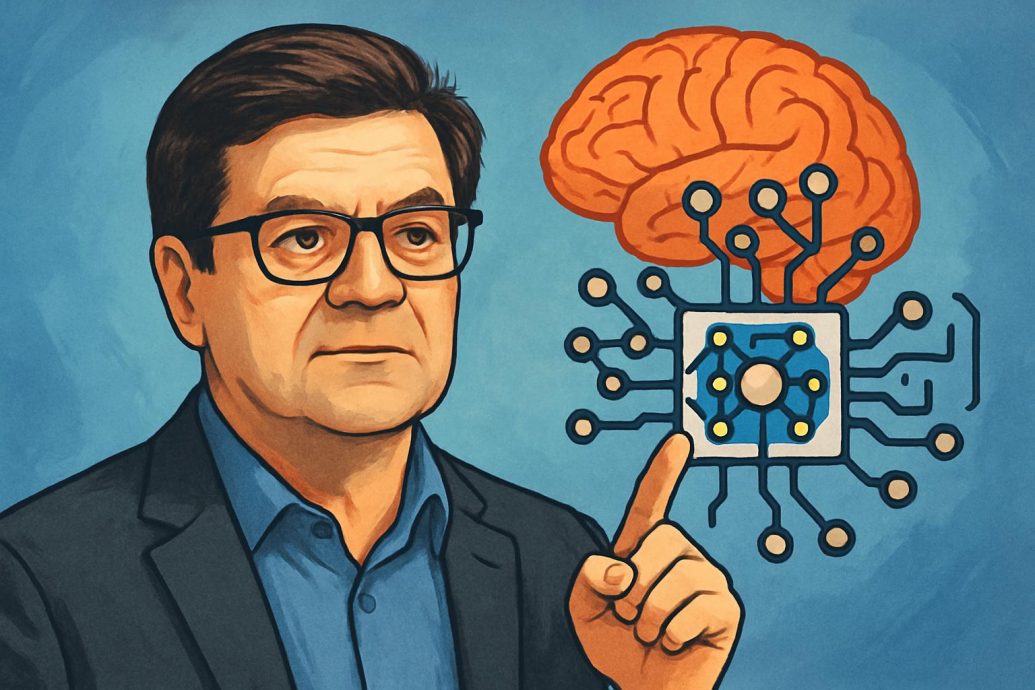
LeCun’s new approach draws inspiration from earlier AI systems, including symbolic AI and neuroscience-based architectures. Historically, symbolic AI emphasized logic, representations, and rule-based learning. Modern machine learning has mostly discarded those principles in favor of neural networks. LeCun is now advocating for a hybrid model that integrates symbolic reasoning with self-supervised learning and real-world perception.
This architecture aligns more closely with how the human brain processes information. It operates through interaction, learning by observing cause and effect, and forming internal models of the world. The design he proposes leans into cognitive sciences, reflecting a more biologically-informed blueprint for machines that can reason, reflect, and plan.
Compare and Contrast: LeCun vs GPT, Gemini, and xAI
| Feature | LeCun AI Startup | OpenAI (GPT) | Google DeepMind (Gemini) | xAI (Elon Musk) |
|---|---|---|---|---|
| Core Architecture | Symbolic + Autonomous Learning | Transformer-based LLM | Multimodal LLM | LLM with emphasis on truth-seeking |
| Learning Approach | Interactive, continual, contextual | Predictive text from large corpus | Predictive, fused modalities | Predictive, fine-tuned for accuracy |
| Use of Reasoning | Central to architecture | Limited to superficial patterns | Basic logic chaining | Some emphasis on reasoning |
| AGI Vision | Human-like inference & autonomy | Scale until emergent capabilities | Multimodal world knowledge | Truth-aligned superintelligence |
Industry Implications: Ethics, Innovation, and AI Futures
LeCun’s challenge to the dominant paradigm has ripple effects beyond the lab. If his alternative proves viable, it could redefine enterprise AI strategies. The shift may move focus from pre-trained LLMs to smaller, autonomous agents that reason in real time. These systems could provide improved explainability, adaptability, and traceability (particularly important for sectors like healthcare, finance, and legal services).
In terms of AI ethics, reasoning-based systems may offer a more transparent path. By grounding decisions in logic rather than token prediction, they may be easier to audit and align with human values. Still, their autonomy raises questions about oversight, bias, and accountability as machines begin to mirror independent thinking.
For those exploring the uncertain future of artificial intelligence, LeCun’s vision presents both a caution and an opportunity to rethink how we define progress in AI.
Expert Opinions: Is LeCun’s Path Legitimate?
Not all researchers agree that LLMs lead to a dead end. Some critics of symbolic reasoning point to the emergent capabilities within systems like GPT-4 and Gemini. These systems are already showing flexible problem-solving skills. Yet, many respected figures in the field validate LeCun’s premise as a counterbalance to current trends.
“LeCun offers a much-needed reminder that statistical language mimicry is not cognition,” said Dr. Anca Dragan, professor of AI at UC Berkeley. “True intelligence must bridge perception, grounding, and reasoning.”
Yoshua Bengio, another Turing Award winner, has shown openness to hybrid models. His support indicates a broader recognition, even among deep learning’s originators, that building future-resistant AI might involve architectural evolution. This is also echoed by experts featured in Nick Bostrom’s analysis of superintelligence.
FAQs
What is Yann LeCun’s approach to artificial intelligence?
Yann LeCun advocates for an AI model based on reasoning, planning, and symbolic understanding rather than pattern recognition. His focus is on building systems that learn autonomously through interaction and logic, guided by principles grounded in cognitive science.
How is LeCun’s AI different from ChatGPT?
ChatGPT is a large language model designed to predict and generate human-like text based on statistical patterns in data. LeCun’s AI aims to go beyond language simulation by developing reasoning systems that can learn from their environment, infer cause and effect, and adapt over time.
Can symbolic reasoning lead to AGI?
Symbolic reasoning offers a path to AGI by enabling systems to understand context, infer logic, and apply knowledge in novel situations. Many experts believe combining it with other techniques, such as neural learning, increases the likelihood of achieving true general intelligence.