
Introduction
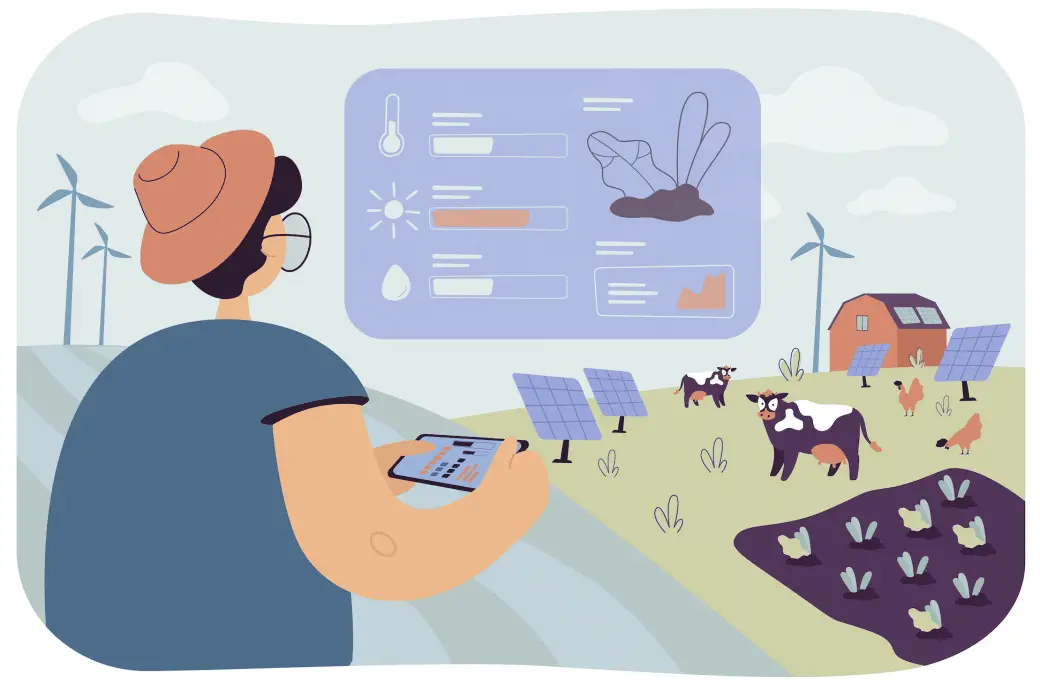
The world faces an unprecedented agricultural challenge: feeding a global population expected to surpass 9.7 billion by 2050 while arable land continues to shrink, water resources decline, and climate volatility intensifies. The global smart farming and agriculture IoT market is valued at approximately USD 41.6 billion in 2025 and is projected to reach USD 102.2 billion by 2035, expanding at a compound annual growth rate of 9.4 percent. Smart farming integrates artificial intelligence, Internet of Things sensors, drone technology, satellite imagery, and automated machinery into a connected ecosystem that transforms how food is produced, monitored, and distributed. Precision agriculture IoT tools have been demonstrated to lift average crop yields by 10 to 25 percent while simultaneously reducing water consumption by up to 30 percent and pesticide use by up to 20 percent. Sensor costs have dropped over 55 percent in the past five years, lowering adoption barriers for farms of all sizes and geographies. This article explores how AI and IoT are powering the smart farming revolution, what technologies drive it, and what challenges remain as agriculture enters its most data-driven era. From soil sensors in Iowa cornfields to satellite-connected livestock trackers in rural Australia, smart farming is no longer experimental; it is operational and scaling rapidly.
Key Questions
What is smart farming using AI and IoT?
Smart farming using AI and IoT is a data-driven agricultural approach that integrates connected sensors, machine learning analytics, drones, GPS-enabled machinery, and cloud platforms to monitor crops, soil, weather, and livestock in real time, enabling precise resource management and higher yields.
How does IoT help in agriculture?
IoT helps in agriculture by deploying connected sensors and devices across fields and livestock operations that collect real-time data on soil moisture, temperature, crop health, and animal behavior, enabling farmers to make precise decisions that reduce waste and improve productivity.
What are the benefits of AI in farming?
AI in farming delivers benefits including predictive yield forecasting, automated pest and disease detection, precision irrigation scheduling, optimized fertilizer application, and autonomous harvesting, collectively increasing productivity while reducing input costs and environmental impact.
Key Takeaways
- Sensor costs have dropped over 55 percent in the past five years, making precision agriculture accessible to smallholder farmers and operations in developing nations.
- The global smart farming and agriculture IoT market is projected to grow from USD 41.6 billion in 2025 to USD 102.2 billion by 2035, driven by precision farming adoption and connected agricultural ecosystems.
- Smart farm IoT tools lift average crop yields by 10 to 25 percent while reducing water consumption by up to 30 percent and pesticide use by up to 20 percent.
- Over 35 percent of large-scale farms implemented at least one digital farming solution in 2023, and the rate of adoption is accelerating through government subsidies and falling hardware costs.
Table of contents
- Introduction
- Key Questions
- Key Takeaways
- How AI and IoT Are Transforming Agriculture
- The IoT Sensor Ecosystem for Modern Farms
- AI-Powered Crop Monitoring and Disease Detection
- Precision Irrigation and Water Management
- Drone Technology and Aerial Intelligence
- AI-Driven Livestock Monitoring and Management
- Autonomous Farm Machinery and Robotics
- Smart Greenhouse Technology and Controlled Environment Agriculture
- Data Analytics and Farm Management Platforms
- Supply Chain Optimization and Post-Harvest Technology
- Challenges and Barriers to Smart Farming Adoption
- Ethical Dimensions and Data Governance in Smart Farming
- Real-World Examples of Smart Farming in Action
- Case Studies in Smart Farming Implementation
- The Business Case for Smart Farming Investment
- What the Future Holds for Smart Farming
- Key Insights
- Frequently Asked Questions
Defining Smart Farming with AI and IoT
Smart farming using AI and IoT is the integration of artificial intelligence analytics, Internet of Things sensor networks, GPS-guided machinery, and cloud computing platforms into agricultural operations to enable real-time monitoring, data-driven decision-making, and automated resource management across crop production and livestock management.
Smart Farm Impact Simulator
Model the productivity, resource savings, and environmental impact of deploying AI and IoT technologies across your farming operation. Adjust inputs to see projected outcomes.
Farm Profile
Configure your farm profile to explore the projected impact of smart farming technologies.
How AI and IoT Are Transforming Agriculture
Agriculture is undergoing its most significant technological transformation since the mechanization era, as artificial intelligence and Internet of Things technologies converge to create farming systems that are precise, predictive, and increasingly autonomous. Connected sensors deployed across fields gather continuous data on soil moisture levels, nutrient concentrations, temperature, humidity, and crop growth patterns, transmitting this information to cloud platforms where AI algorithms convert raw data into actionable insights. Machine learning models analyze historical yield data alongside real-time sensor readings and weather forecasts to generate recommendations for irrigation timing, fertilizer application rates, and harvest scheduling that optimize both productivity and resource efficiency. The precision farming segment accounts for approximately 52 percent of the agriculture IoT market, reflecting the dominant role that site-specific crop management plays in driving technology adoption. Automated farming has evolved from isolated automation of individual tasks to connected ecosystems where every decision is informed by data flowing between sensors, machines, and analytics platforms. The convergence of AI and IoT in agriculture is creating a new paradigm where farming decisions are guided by data rather than intuition, reducing waste while increasing the productivity of every acre under cultivation.
This transformation extends beyond crop production to encompass the entire agricultural value chain, from soil preparation and planting through harvesting, storage, and distribution. Supply chain visibility powered by IoT tracking enables farmers to monitor produce quality during transport, reducing post-harvest losses that account for an estimated one-third of all food produced globally. Predictive analysis capabilities adapted from retail and logistics are being applied to agricultural markets, helping farmers time their sales for optimal pricing and coordinate logistics more efficiently. Government programs are accelerating adoption, with the European Union's Farm-to-Fork strategy earmarking EUR 10 billion for precision agriculture adoption by 2030 and the USDA investing over USD 2 billion annually in rural broadband to support smart farm connectivity. The economics of smart farming are becoming increasingly compelling, as demonstrated returns on technology investment attract both venture capital and institutional agricultural lending toward precision agriculture solutions. The question for most farming operations is no longer whether to adopt smart farming technologies but how quickly and at what scale to deploy them.
The IoT Sensor Ecosystem for Modern Farms
The foundation of every smart farming operation is the network of IoT sensors that collect the granular, real-time data on which all AI-driven decisions depend. Soil sensors measure moisture content, nutrient levels, pH, temperature, and electrical conductivity at multiple depths, providing a detailed picture of the growing environment that guides irrigation and fertilization decisions. Weather stations deployed across farm properties collect hyperlocal climate data including temperature, rainfall, wind speed, solar radiation, and humidity that supplements regional forecasts with field-level precision. CropX's soil-sensor and irrigation-optimization platform, used across farms in the United States and Europe, has been documented to reduce water use by up to 20 percent while improving crop uniformity. Livestock monitoring sensors track animal location, body temperature, activity levels, feeding behavior, and reproductive indicators, enabling early detection of illness and optimized herd management. The sensor ecosystem transforms the farm from an opaque environment where conditions are checked periodically into a transparent, continuously monitored system where every variable is measured and tracked.
The connectivity infrastructure supporting agricultural IoT has evolved rapidly to address the unique challenges of rural deployment, where traditional cellular and broadband coverage often falls short. LoRaWAN networks enable long-range, low-power communication that allows sensors deployed across thousands of acres to transmit data reliably without the high energy consumption of cellular connections. IoT trends shaping industries include the expansion of satellite-based IoT connectivity, with Low Earth Orbit satellite providers closing the coverage gap in remote agricultural regions where no terrestrial network reaches. The hardware segment represents over 44 percent of the agriculture IoT market in 2026, reflecting the critical role that physical sensing and connectivity devices play in the smart farming ecosystem. Edge computing capabilities are enabling real-time data processing at the sensor level, reducing latency and bandwidth requirements while ensuring that time-critical decisions like irrigation activation happen instantly. The declining cost of sensors, processors, and connectivity modules continues to lower the barrier to entry, making precision agriculture accessible to mid-sized and small-scale farming operations that could not justify the investment even five years ago.
Multi-parameter sensor arrays are advancing toward systems that combine soil intelligence, plant health monitoring, and atmospheric data into integrated units that provide comprehensive growing condition assessments from a single deployment point. Emerging sensor technologies include hyperspectral imaging devices that detect crop stress before visible symptoms appear, acoustic sensors that monitor pollinator activity, and underground sensors that track root zone conditions with unprecedented granularity. The next generation of agricultural sensors will incorporate self-calibration, self-diagnostic, and energy-harvesting capabilities that reduce maintenance requirements and extend operational lifetimes in harsh field conditions.
AI-Powered Crop Monitoring and Disease Detection
Building on the sensor data foundation, artificial intelligence is transforming how farmers monitor crop health and detect diseases, enabling interventions that were impossible when field scouting relied entirely on human observation. Computer vision systems mounted on drones, satellites, and ground-based platforms analyze multispectral and hyperspectral imagery to identify crop stress, nutrient deficiencies, and disease symptoms across entire fields in minutes rather than the days that manual scouting requires. Machine learning models trained on millions of annotated crop images can distinguish between dozens of diseases, pest infestations, and environmental stresses with accuracy rates that rival trained agronomists. Researchers at the Indian Institute of Information Technology Allahabad developed CVGG-16, a new AI model specifically designed for efficient crop disease detection, illustrating the pace of innovation in agricultural computer vision. Computer vision applications in agriculture extend beyond disease detection to encompass yield estimation, fruit counting, weed identification, and maturity assessment that optimize harvest timing. AI-powered crop monitoring shifts disease management from reactive treatment after symptoms are visible to proactive prevention where interventions occur before damage spreads, saving both crops and chemical inputs.
The integration of crop monitoring AI with IoT sensor networks creates a comprehensive surveillance system that combines aerial imagery with ground-level environmental data. Satellite platforms provide broad coverage for large-scale monitoring, while drone-mounted sensors deliver the high-resolution imagery needed for individual plant assessment. Deep learning techniques enable models that improve continuously as they process more data from diverse growing conditions, climates, and crop varieties, making them more accurate and reliable over time. Real-time pest and disease early warning systems powered by AI analyze weather patterns, crop growth stage, and historical outbreak data to predict when and where threats are most likely to emerge. These predictive capabilities enable farmers to apply treatments precisely where and when they are needed, reducing pesticide use by up to 20 percent while maintaining or improving crop protection outcomes. The environmental benefits of precision pest management extend beyond the farm to include reduced chemical runoff into waterways and decreased impact on beneficial insect populations.
Mobile applications that bring AI-powered disease detection directly to farmers' smartphones are democratizing access to diagnostic expertise that was previously available only through expensive consultations or laboratory analysis. Farmers can photograph a suspicious leaf or fruit, upload it to a cloud-based AI system, and receive a diagnosis with treatment recommendations within seconds. These tools are particularly valuable in developing nations where extension service coverage is limited and crop losses from undetected diseases can be devastating for smallholder farmers who operate without the safety nets available to large commercial operations.
Precision Irrigation and Water Management
Among the most impactful applications of smart farming technology, precision irrigation powered by AI and IoT addresses one of agriculture's most pressing challenges: managing water resources sustainably in the face of increasing scarcity and climate variability. IoT soil moisture sensors deployed at multiple depths across fields provide continuous readings that feed into AI algorithms, which calculate precise irrigation schedules based on crop water requirements, soil characteristics, weather forecasts, and growth stage. Variable-rate irrigation systems apply water at different rates across a field based on real-time sensor data, ensuring that every zone receives exactly the amount needed rather than the uniform application that wastes water in some areas while underwatering others. Smart farming technologies have demonstrated water savings of up to 30 percent compared to traditional irrigation practices, a figure with enormous significance given that agriculture accounts for approximately 70 percent of global freshwater withdrawals. Artificial intelligence and climate change are deeply connected in agriculture, where precision water management reduces both resource consumption and the energy-intensive pumping that contributes to farming's carbon footprint. Precision irrigation represents the clearest example of smart farming's value proposition: using technology to produce more food with fewer resources while reducing environmental impact.
The economic benefits of smart irrigation extend beyond water savings to encompass reduced energy costs, lower fertilizer waste from leaching, improved crop quality, and decreased disease pressure from overwatering that creates favorable conditions for fungal pathogens. Automated irrigation controllers connected to IoT sensor networks can activate and adjust irrigation systems without human intervention, operating around the clock to maintain optimal soil moisture levels during critical growth periods. Smart cities and connected infrastructure share many technological parallels with smart irrigation, as both domains rely on sensor networks, data analytics, and automated control systems to optimize resource distribution across complex systems. Drip irrigation systems paired with IoT monitoring have proven particularly effective in arid and semi-arid regions, where water conservation is not just an economic consideration but a survival imperative. The integration of weather forecast data into irrigation AI models enables proactive scheduling that accounts for expected rainfall, reducing unnecessary irrigation events that waste both water and energy.
Watershed-level water management is emerging as an application where smart farming data aggregated across multiple farms enables coordinated resource allocation that benefits entire agricultural communities. Shared sensor networks and collaborative data platforms allow neighboring farms to optimize water use collectively, reducing competition for limited groundwater resources and ensuring more equitable access during drought conditions. Government water agencies are exploring how IoT data from precision agriculture can inform regional water policy, creating feedback loops between farm-level optimization and basin-level resource management.
Drone Technology and Aerial Intelligence
Transitioning from ground-level monitoring to aerial perspectives, drone technology has become an essential component of the smart farming toolkit, providing rapid, cost-effective coverage of large agricultural areas that would require days to survey on foot. Agricultural drones equipped with multispectral cameras capture imagery that reveals crop health patterns invisible to the naked eye, identifying stressed plants through variations in light reflectance across different wavelengths. AI algorithms process drone imagery to generate detailed field maps showing crop vigor, weed distribution, disease outbreaks, and irrigation effectiveness at resolution levels that satellite imagery cannot match. John Deere's acquisition of Sentera in May 2025 underscored the strategic importance of drone-based remote imagery, integrating high-resolution agricultural sensing directly into the company's precision agriculture platform. Companies using drone delivery technologies are expanding into agricultural applications, where drones not only capture data but also deliver targeted inputs like pesticides, herbicides, and fertilizers to specific field zones identified through AI analysis. Agricultural drones compress the time between data collection and decision-making from days to hours, enabling the rapid response that makes the difference between catching a problem early and suffering significant crop losses.
The capabilities of agricultural drones extend well beyond imaging to encompass active field management tasks that reduce labor requirements and improve application precision. Spray drones apply crop protection chemicals and liquid fertilizers with centimeter-level accuracy, reducing chemical usage by targeting only the areas where treatment is needed rather than broadcasting across entire fields. Seeding drones enable rapid replanting of failed areas and cover crop establishment without the soil compaction caused by heavy machinery. Agricultural robots and drones are converging into integrated autonomous fleets that handle multiple farming tasks from planting through monitoring and harvesting. The regulatory environment for agricultural drones is maturing rapidly, with most major farming nations now having established frameworks that permit commercial agricultural drone operations under defined conditions. Flight automation software enables drone operations by farm staff without specialized piloting skills, making aerial intelligence accessible to operations that cannot justify dedicated drone operators.
The data management challenge associated with drone operations is significant, as each flight generates gigabytes of high-resolution imagery that must be processed, analyzed, and integrated with other farm data sources. Cloud-based processing platforms have addressed this challenge by providing scalable computing resources that convert raw drone imagery into actionable field maps within hours of data capture. The integration of drone data with ground-level sensor readings and satellite imagery creates multi-layered spatial intelligence that provides the most comprehensive view of field conditions available to modern farmers.
AI-Driven Livestock Monitoring and Management
While crop applications dominate smart farming headlines, AI and IoT are delivering equally transformative results in livestock management, where animal welfare, productivity, and disease prevention all benefit from continuous automated monitoring. Connected sensors attached to individual animals or embedded in feeding and watering systems track vital signs, movement patterns, rumination behavior, and feed intake, generating continuous data streams that AI algorithms analyze to detect illness, estrus, and behavioral anomalies. GPS-enabled livestock trackers enable virtual fencing that controls animal movement without physical barriers, reducing infrastructure costs while improving pasture utilization through rotational grazing optimization. Australia's AgriWebb and Agersens have developed IoT-enabled livestock platforms specifically designed for the country's vast pastoral operations, where manual monitoring of dispersed herds across millions of acres is impractical. Robots running farms illustrates how automation is replacing manual labor in animal husbandry, from robotic milking systems that operate on demand to automated feeding systems that adjust rations based on individual animal needs. AI-driven livestock monitoring transforms animal management from periodic observation to continuous, individualized care that improves welfare outcomes while reducing labor costs and enabling earlier intervention when health issues arise.
The dairy industry has been particularly aggressive in adopting AI and IoT monitoring, driven by the direct relationship between animal health, welfare, and milk production that makes monitoring investments immediately measurable in economic terms. Robotic milking systems that incorporate AI analyze milk composition, flow rates, and conductivity in real time to detect mastitis and other health conditions before they reduce production or contaminate the milk supply. Automated feeding systems adjust individual rations based on each animal's production level, body condition, and lactation stage, optimizing nutrition while reducing feed waste. DeLaval's acquisition of milkrite InterPuls expanded the company's connected milking technology portfolio, reflecting the industry's consolidation around IoT-enabled dairy management platforms. Precision livestock farming extends to poultry operations, where environmental sensors monitor temperature, humidity, ammonia levels, and lighting conditions within barns to maintain optimal growing conditions. The data generated by livestock IoT systems feeds into breeding analytics that identify the genetic characteristics associated with the highest productivity, health, and welfare outcomes.
Aquaculture represents a growing frontier for IoT monitoring, where sensors track water quality parameters including dissolved oxygen, pH, temperature, and salinity to maintain the precise conditions that farmed fish require. AI systems analyze feeding behavior and growth rates to optimize feed conversion ratios, reducing the industry's largest operating cost while minimizing the environmental impact of excess feed. The integration of livestock monitoring data with supply chain tracking creates traceability systems that document an animal's complete history from birth through processing, meeting growing consumer demand for transparency in food production.
Autonomous Farm Machinery and Robotics
As AI and IoT mature in agricultural settings, the logical progression is toward autonomous machinery that can perform field operations with minimal human intervention, addressing the chronic labor shortages that threaten farming productivity worldwide. GPS-guided tractors and harvesters navigate fields with centimeter-level precision, following optimized paths that reduce overlap, minimize soil compaction, and ensure uniform coverage across every pass. John Deere's June 2025 launch of F8 and F9 Series forage harvesters incorporated advanced automation features that reflect the industry's trajectory toward fully autonomous field operations. Self-driving tractors equipped with obstacle detection and route optimization can operate through the night and in conditions where human operators would need to stop, effectively extending the productive hours available during time-critical planting and harvest windows. Robotic weeding systems use computer vision to distinguish crops from weeds and apply targeted removal through mechanical or laser methods, eliminating herbicide use in treated areas entirely. Autonomous farm machinery is solving agriculture's most intractable challenge: the growing gap between the labor that farming requires and the workforce willing and able to perform it.
The robotics ecosystem for agriculture extends beyond large machinery to include specialized robots designed for tasks that require dexterity and precision that traditional equipment cannot provide. Fruit-picking robots equipped with soft grippers and computer vision can harvest delicate produce without damage, addressing one of the most labor-intensive and difficult-to-automate agricultural tasks. Robotics and manufacturing principles are being adapted for agricultural contexts, where variable terrain, weather conditions, and biological variability create challenges that controlled factory environments do not present. Greenhouse robots handle planting, pruning, spraying, and harvesting in controlled environments where the consistent conditions enable higher levels of automation than open-field agriculture currently supports. The integration of autonomous equipment with IoT sensor networks creates closed-loop systems where machines respond directly to field conditions detected by sensors, applying inputs precisely where and when data indicates they are needed. Fleet management platforms coordinate multiple autonomous units operating simultaneously across a farm, optimizing task allocation and routing to maximize coverage while minimizing energy consumption and equipment wear.
The transition to autonomous farming raises important questions about the economics of technology investment, particularly for mid-sized operations that must balance the cost of robotic systems against the savings from reduced labor and improved precision. Leasing and service models are emerging that make autonomous machinery accessible without the capital expenditure of outright purchase, enabling smaller operations to access technology that was previously available only to the largest farming enterprises. Training and technical support infrastructure is developing to ensure that farm operators can manage and maintain automated systems without relying exclusively on manufacturer service teams.
Smart Greenhouse Technology and Controlled Environment Agriculture
Moving from open-field applications to controlled environments, smart greenhouse technology represents the most intensive application of AI and IoT in agriculture, where every growing variable can be monitored and adjusted with precision impossible in outdoor settings. IoT sensors within smart greenhouses monitor air temperature, humidity, CO2 concentration, light intensity, root zone temperature, and nutrient solution composition continuously, feeding data to AI systems that maintain optimal conditions around the clock. Automated climate control systems adjust ventilation, heating, cooling, shading, and supplemental lighting in response to real-time sensor readings and predictive models that anticipate environmental changes before they affect plant growth. Smart greenhouses reduce water consumption by up to 90 percent compared to open-field cultivation through recirculating hydroponic and aeroponic systems monitored by IoT sensors. Impact of AI in smart homes shares technological parallels with smart greenhouse automation, as both domains use sensor networks and intelligent control systems to optimize complex environments. Smart greenhouses represent the frontier of precision agriculture, where the complete control of growing conditions enables year-round production with resource efficiency that open-field farming cannot match.
Vertical farming operations take controlled environment agriculture to its most intensive level, stacking growing layers within urban and suburban structures where proximity to consumers reduces transportation costs and food waste. AI manages the complex interplay of variables across multiple growing levels, optimizing energy use while maintaining consistent conditions that maximize crop quality and yield. The economics of vertical farming are improving as LED lighting efficiency increases, renewable energy costs decline, and AI-driven automation reduces the labor component that has historically made indoor farming financially challenging. Urban food security, reduced food miles, and year-round local production are driving investment into smart greenhouse and vertical farming operations in regions where arable land is limited or climate conditions restrict traditional agriculture.
Data Analytics and Farm Management Platforms
The intelligence layer that connects every smart farming component is the farm management platform, where data from sensors, machinery, drones, satellites, and market sources converges to provide a unified decision-making environment. Cloud-based platforms aggregate data from across the farming operation, applying AI analytics to generate recommendations for planting decisions, input applications, harvest timing, and marketing strategies. Machine learning from theory to practice drives the analytical engines within these platforms, with models that improve their recommendations as they process more data from diverse farming conditions. CropIn and other farm management providers offer platforms that integrate field data with market intelligence, weather forecasts, and supply chain logistics into comprehensive operational dashboards. The software segment of the agriculture IoT market is projected to grow at the fastest rate through 2030, reflecting the increasing value that analytics and decision support tools deliver relative to hardware infrastructure. Farm management platforms are the brain of the smart farming operation, translating the raw data collected by IoT sensors into the precise, timely decisions that make the difference between average and exceptional agricultural outcomes.
The democratization of agricultural data analytics through mobile applications and simplified interfaces is bringing precision farming capabilities to smallholder farmers who manage the majority of the world's food production. Generative AI interfaces are making complex analytics accessible through natural-language queries, enabling farmers to ask questions about their operations and receive plain-language recommendations without technical expertise. The role of AI in boosting automation in agriculture is amplified by platforms that integrate prescriptive analytics, which go beyond describing what is happening to recommend exactly what actions to take. Data interoperability standards are evolving to ensure that information from different equipment manufacturers, sensor providers, and analytics platforms can be combined into unified views, addressing the fragmentation that has historically limited the value of agricultural data.
Supply Chain Optimization and Post-Harvest Technology
Smart farming's impact extends well beyond the field to encompass the supply chain infrastructure that connects agricultural production to consumers, where IoT tracking and AI optimization reduce waste and improve food quality. Connected sensors in storage facilities, transport vehicles, and distribution centers monitor temperature, humidity, and atmospheric composition to maintain optimal conditions for perishable produce throughout the cold chain. AI-powered demand forecasting analyzes market data, weather patterns, seasonal trends, and historical sales to help farmers time their harvests and market entries for maximum returns. Food robotics transforming the industry illustrates how automation extends from farm to fork, with robotic sorting, grading, and packaging systems that maintain quality while reducing labor requirements. Post-harvest losses account for approximately one-third of all food produced globally, representing both an enormous economic waste and a significant contributor to food insecurity that IoT-enabled supply chain monitoring directly addresses. Smart supply chain technology closes the final gap in the precision agriculture ecosystem, ensuring that the efficiency gains achieved through AI-driven cultivation are not lost to waste and spoilage between the farm gate and the consumer's table.
Blockchain integration with IoT supply chain tracking is creating immutable records of food provenance that satisfy growing consumer demand for transparency about how and where their food was produced. Traceability systems that document a product's journey from seed to shelf enable rapid identification and containment of food safety issues, reducing the scope and cost of recalls while protecting public health. Smart cities and connected infrastructure are integrating urban food distribution networks with rural production data, creating coordinated systems that optimize food logistics across entire metropolitan regions.
Challenges and Barriers to Smart Farming Adoption
Despite the compelling benefits, smart farming adoption faces significant challenges that must be addressed to realize the technology's full potential across the diverse landscape of global agriculture. Rural connectivity remains the single largest infrastructure bottleneck, as many farming regions lack the reliable internet access that IoT systems require, though satellite-based solutions are beginning to close this gap. The initial capital investment required for sensors, connectivity infrastructure, automation equipment, and software platforms can be prohibitive for smaller operations, particularly in developing countries where credit access is limited. Data privacy and ownership concerns are growing as farmers generate increasingly valuable datasets about their operations, raising questions about who controls this information and how it can be used by technology providers, insurers, and commodity traders. Fog computing in machine learning addresses some connectivity challenges by processing data at the network edge rather than requiring constant cloud communication, but infrastructure gaps remain significant. Digital literacy among farming populations varies enormously, and technology that cannot be understood and operated by actual farmers will fail regardless of its technical sophistication. The smart farming revolution will achieve its full potential only when the barriers of connectivity, cost, data governance, and digital literacy are addressed as deliberately as the technology itself is developed.
The interoperability challenge deserves specific attention, as the agricultural technology ecosystem remains fragmented across equipment manufacturers, sensor providers, software platforms, and data formats that often cannot communicate effectively. Farmers who invest in one manufacturer's ecosystem may find themselves locked into proprietary systems that limit their ability to integrate best-of-breed solutions from other providers. Open standards and interoperable platforms are becoming critical priorities for industry organizations and policy makers who recognize that fragmentation undermines the value proposition of smart farming. Environmental concerns about the electronic waste generated by sensor networks, the energy consumption of data centers, and the carbon footprint of manufacturing IoT hardware represent emerging considerations that the industry must address. The cybersecurity risks of connected farming systems are also significant, as IoT devices deployed across remote agricultural properties present attack surfaces that could compromise both operational data and automated control systems.
Ethical Dimensions and Data Governance in Smart Farming
The ethical considerations surrounding smart farming extend beyond data privacy to encompass fundamental questions about equity, sustainability, corporate concentration, and the appropriate role of technology in food production systems. The consolidation of agricultural data in the hands of a few large technology companies raises concerns about market power, as these firms gain unprecedented visibility into farming operations that could be leveraged for commercial advantage. Smallholder farmers in developing countries, who produce the majority of the world's food, risk being left behind by a technological revolution that primarily benefits large commercial operations with the capital and infrastructure to adopt smart farming tools. AI ethics and responsible governance are directly relevant to agricultural technology, where decisions made by algorithms affect food security, livelihoods, and environmental outcomes for billions of people. Government agricultural policies must balance the promotion of technological innovation with protections that ensure small-scale farmers can participate in and benefit from the smart farming transition. The ethical challenge of smart farming is ensuring that a technology revolution driven by data and capital does not deepen the inequalities that already characterize global agricultural systems.
Environmental sustainability claims associated with smart farming require scrutiny to ensure they reflect genuine resource savings rather than marketing narratives designed to attract investment and consumer approval. Life cycle assessments of smart farming systems must account for the energy and resources consumed in manufacturing, deploying, and maintaining IoT infrastructure, not just the operational savings they deliver. Ethical implications of advanced AI in agriculture include questions about the appropriate boundaries of algorithmic decision-making in food systems where cultural, ecological, and social considerations may be difficult to quantify in data models. Indigenous and traditional farming knowledge represents a valuable resource that smart farming systems should integrate rather than displace, recognizing that centuries of agricultural experience contain insights that data alone cannot replicate.
Real-World Examples of Smart Farming in Action
CropX's soil-sensor and irrigation-optimization platform provides a clear demonstration of how IoT-driven precision agriculture delivers measurable resource savings for commercial farming operations. The platform, deployed across farms in the United States and Europe, uses multi-depth soil sensors combined with AI analytics to generate field-specific irrigation recommendations that account for soil variability, crop stage, and weather forecasts. The measurable outcome is a documented reduction in water use by up to 20 percent while simultaneously improving crop uniformity, demonstrating that environmental sustainability and agricultural productivity can be advanced together. The limitation is that soil sensor deployment requires calibration for local soil types and ongoing maintenance that adds operational complexity, and the platform's value depends on farmers having irrigation infrastructure capable of variable-rate application. Source: Coherent Market Insights IoT agriculture analysis
Thailand's HandySense B-Farm platform, launched in February 2025, demonstrates how government-backed smart farming initiatives can make IoT technology accessible to smaller farming operations in developing agricultural economies. The platform integrates sensors, AI analytics, and IoT connectivity into a unified farm management system designed for the specific crop types, soil conditions, and climate patterns found in Thai agriculture. The measurable outcome includes improved farm management efficiency and resource optimization for participating farmers who previously relied entirely on traditional practices and intuition. The limitation is that rural connectivity infrastructure in many Thai provinces remains insufficient to support real-time IoT applications, requiring hybrid approaches that combine local data processing with periodic cloud synchronization. Source: Nation Thailand reporting
John Deere's acquisition of Sentera in May 2025 illustrates how major agricultural equipment manufacturers are integrating AI-powered imagery analysis into their precision agriculture ecosystems to create end-to-end smart farming platforms. The acquisition brought high-resolution drone-based crop imagery and machine learning analytics directly into the John Deere Operations Center, enabling farmers to access aerial field intelligence alongside their equipment telemetry and agronomic data. The measurable outcome is a more integrated decision-making environment where imagery analysis, equipment control, and farm management converge on a single platform, reducing the fragmentation that has limited precision agriculture adoption. The limitation is that Deere's ecosystem approach creates vendor lock-in concerns for farmers who prefer to integrate best-of-breed solutions from multiple providers rather than committing to a single manufacturer's platform. Source: MarketsandMarkets agricultural IoT analysis
Case Studies in Smart Farming Implementation
Precision Irrigation Optimization in California's Central Valley
California's Central Valley, which produces approximately 25 percent of the nation's food on 1 percent of its farmland, faces chronic water scarcity that has made precision irrigation not just an efficiency measure but an existential necessity. The problem was that traditional flood and furrow irrigation methods wasted enormous volumes of water through runoff, evaporation, and application to areas where crops could not use it, while regulatory pressure on groundwater extraction continued to intensify. The solution involved deploying dense networks of soil moisture sensors at multiple depths across fields, connected to AI-driven irrigation management platforms that calculate precise water requirements for each field zone based on real-time conditions and weather forecasts. The measurable impact includes water savings of 20 to 30 percent compared to traditional methods, improved crop yields through optimized soil moisture management, and compliance with increasingly strict groundwater sustainability requirements. The limitation is the significant upfront investment in sensor infrastructure and variable-rate irrigation equipment, which requires financing mechanisms that not all operations can access. The ongoing debate concerns the equitable allocation of water savings between environmental restoration and additional agricultural production. Source: Grand View Research agriculture IoT market report
AI-Driven Crop Disease Detection in Indian Agriculture
India's agricultural sector, which employs nearly half the country's workforce, faces enormous crop losses from plant diseases that spread rapidly across diverse growing regions with limited extension service coverage. The problem was that smallholder farmers lacked access to timely diagnostic expertise, resulting in delayed or incorrect treatment decisions that reduced yields and wasted resources on ineffective interventions. The solution leveraged AI-powered mobile applications and IoT sensor networks that enable farmers to photograph symptomatic plants and receive instant disease identification and treatment recommendations, supplemented by environmental monitoring that predicts disease risk based on weather and crop conditions. The measurable impact includes faster disease identification, reduced crop losses through earlier intervention, and decreased pesticide use through more targeted application. The limitation is that mobile connectivity in rural India remains inconsistent, and AI models trained primarily on research datasets may perform less accurately on the diverse crop varieties and growing conditions found in smallholder agriculture. The controversy centers on whether technology solutions alone can address systemic agricultural challenges that also require institutional support, market access, and financial inclusion. Source: Precedence Research IoT agriculture analysis
IoT-Connected Livestock Management in Australia
Australia's vast pastoral operations span millions of hectares where traditional methods of monitoring livestock health, movement, and breeding performance are impractical due to the sheer scale and remoteness of the land. The problem was that infrequent manual inspections meant that animal health issues, straying, and predation often went undetected for days, resulting in welfare concerns, production losses, and regulatory compliance challenges. The solution deployed GPS-enabled ear tags and collar sensors connected through satellite IoT networks that transmit animal location, activity level, and behavioral data to cloud-based AI analytics platforms. The measurable impact includes reduced livestock losses, improved herd management efficiency, optimized pasture utilization through virtual fencing, and better compliance with welfare documentation requirements. The limitation is that satellite connectivity costs remain significant for operations monitoring thousands of animals, and battery life constraints require periodic sensor replacement that is logistically challenging across remote properties. The case demonstrates how IoT connectivity solutions adapted for extreme remoteness can bring precision management capabilities to agricultural operations that conventional technology cannot reach. Source: OpenPR smart farming market report
The Business Case for Smart Farming Investment
The financial returns from smart farming technology investments are becoming increasingly well-documented, providing the evidence base that justifies capital allocation toward precision agriculture across operations of all sizes. Smart farm IoT tools have been demonstrated to lift average crop yields by 10 to 25 percent while simultaneously reducing water consumption by up to 30 percent and pesticide use by up to 20 percent, creating a triple benefit of higher revenue, lower costs, and reduced environmental impact. The precision farming segment accounts for approximately 38 percent of the global market, reflecting the dominant commercial position of technologies that deliver the most immediate and measurable returns on investment. Government incentive programs in many regions cover up to 50 percent of technology implementation costs, with USDA grants, EU agricultural digitization funding, and equivalent programs in Asia-Pacific significantly reducing the effective cost of adoption. Carbon credit markets are creating additional revenue streams for smart farming operations that can document emissions reductions through precision resource management. The business case for smart farming has moved from projections to proof, with documented returns across diverse farming systems, climates, and crop types validating that precision agriculture technology investments pay for themselves within two to five years.
The investment landscape for agricultural technology reflects growing confidence in smart farming's commercial trajectory, with venture capital, corporate strategic investments, and institutional agricultural lending all flowing toward precision agriculture solutions. Measuring ROI on AI investments is particularly important in agriculture, where the variability of weather, markets, and growing conditions makes it essential to evaluate technology performance across multiple seasons rather than single-year snapshots. The competitive dynamics of agricultural markets are shifting, as early adopters of smart farming technology build data assets and operational capabilities that compound in value over time, creating advantages that laggards find increasingly difficult to close.
What the Future Holds for Smart Farming
The trajectory of smart farming points toward fully connected agricultural ecosystems where AI, IoT, robotics, and biotechnology converge to create farming systems that are more productive, more sustainable, and more resilient than anything achievable through any single technology alone. Autonomous farming operations where fleets of robotic equipment handle planting, monitoring, treatment, and harvesting with minimal human intervention are moving from research demonstrations to commercial deployments. Generative AI will provide farmers with natural-language interfaces that make complex analytical tools accessible without technical expertise, democratizing precision agriculture capabilities across the global farming community. The integration of genomic data with IoT field intelligence will enable crop management strategies tailored to the specific genetic characteristics of each variety, creating a new level of precision that optimizes the relationship between genetics and growing conditions. The future of AI in business extends to agriculture as one of the most significant commercial opportunities for AI deployment in the coming decade. The future of farming will be defined by the seamless integration of biological knowledge, environmental data, and artificial intelligence into systems that produce more food, on less land, with fewer resources, while regenerating the ecosystems that agriculture depends upon.
The most critical question facing the future of smart farming is whether the technology revolution will be inclusive enough to benefit the smallholder farmers who produce the majority of the world's food but have the least access to capital, connectivity, and technical support. International development organizations, agricultural technology companies, and government agencies are increasingly focused on creating pathways for smallholder adoption through subsidized hardware, mobile-first applications, and cooperative technology sharing models. Climate adaptation will drive accelerating adoption as weather volatility makes traditional farming practices increasingly unreliable and the real-time responsiveness of smart farming systems becomes a competitive necessity rather than an optional advantage. The convergence of digital agriculture with carbon markets, environmental regulation, and consumer transparency demands will create economic incentives that reinforce the sustainability benefits of precision farming, aligning commercial interests with environmental stewardship in ways that have rarely been possible in agriculture's history.
Key Insights
- CropX's soil-sensor platform has documented water use reductions of up to 20 percent while improving crop uniformity, demonstrating the practical returns of IoT-driven precision irrigation.
- The global smart farming and agriculture IoT market is valued at approximately USD 41.6 billion in 2025 and is projected to reach USD 102.2 billion by 2035, expanding at a CAGR of 9.4 percent driven by connected farming systems and real-time data analytics.
- Smart farm IoT tools have been demonstrated to lift crop yields by 10 to 25 percent while simultaneously reducing water consumption by up to 30 percent and pesticide use by up to 20 percent, delivering a triple benefit of productivity, savings, and sustainability.
- The precision farming segment accounts for approximately 52 percent of the agriculture IoT market, reflecting the dominant commercial position of site-specific crop management in driving technology adoption globally.
- Sensor costs have dropped over 55 percent in the past five years, making precision agriculture accessible to mid-sized and smallholder operations that could not justify the investment previously.
- Over 35 percent of large-scale farms implemented at least one digital farming solution in 2023, and government programs in some regions cover up to 50 percent of technology implementation costs.
- The European Union's Farm-to-Fork strategy has earmarked EUR 10 billion for precision agriculture adoption by 2030, while the USDA invests over USD 2 billion annually in rural broadband to underpin smart farm connectivity.
| Dimension | Traditional Farming | Smart Farming with AI and IoT |
|---|---|---|
| Decision Making | Based on experience, intuition, seasonal averages, and periodic observation | Guided by real-time sensor data, predictive analytics, and AI-generated recommendations |
| Water Management | Uniform irrigation schedules based on calendar or visual assessment | Variable-rate, sensor-driven irrigation optimized for each field zone and growth stage |
| Pest and Disease Control | Calendar-based or reactive spraying after visible symptoms appear | Predictive detection through AI imagery analysis and targeted application to affected areas |
| Yield Optimization | Dependent on generalized best practices applied uniformly | Precision management tailored to specific soil, weather, and crop conditions across each field |
| Labor Requirements | High manual labor for monitoring, maintenance, and operations | Reduced through automation, autonomous machinery, and remote monitoring capabilities |
| Environmental Impact | Higher resource consumption and chemical input per unit of production | Reduced water use, pesticide application, and fertilizer waste through precision targeting |
| Data and Visibility | Limited record-keeping with delayed access to field condition information | Continuous real-time monitoring with comprehensive data archives for analysis |
| Cost Structure | Lower technology costs but higher labor and input costs per unit of production | Higher technology investment with lower marginal costs and scalable efficiency gains |
Frequently Asked Questions
Smart farming using AI and IoT is an agricultural approach that integrates connected sensors, artificial intelligence analytics, drones, GPS-guided machinery, and cloud platforms to monitor and manage crops, livestock, and resources in real time. The technology enables data-driven decisions that optimize water use, fertilizer application, pest management, and harvest timing. This approach is transforming agriculture from intuition-based practice into a precision science.
IoT sensors deployed across farms measure soil moisture, temperature, nutrient levels, humidity, light intensity, and other environmental variables, transmitting data wirelessly to cloud platforms for analysis. These sensors operate continuously, providing real-time readings that feed into AI algorithms generating actionable recommendations. Connectivity options include cellular, LoRaWAN, satellite, and Bluetooth, depending on the farm's location and infrastructure.
High-value crops such as fruits, vegetables, wine grapes, and specialty crops benefit most immediately due to the significant per-acre returns that justify technology investment. Broad-acre crops like corn, wheat, and soybeans also benefit substantially through precision application of water, fertilizer, and crop protection chemicals at scale. The technology is increasingly being adapted for diverse agricultural systems including greenhouse horticulture, forestry, and aquaculture.
Smart irrigation systems powered by AI and IoT sensors have demonstrated water savings of 20 to 30 percent compared to traditional irrigation methods. These savings are achieved through variable-rate application that matches water delivery to actual soil moisture needs rather than applying uniform amounts based on schedules. In smart greenhouse environments, water savings can reach up to 90 percent through recirculating hydroponic systems.
Precision agriculture is a farming management strategy that uses IoT sensors, GPS mapping, drone imagery, and AI analytics to observe, measure, and respond to variability within fields. The approach enables site-specific management where inputs like water, fertilizer, and pesticides are applied at variable rates based on the conditions of each zone. Precision farming accounts for approximately 52 percent of the agriculture IoT market.
Smart farming technology costs range from a few hundred dollars for basic soil sensor kits to hundreds of thousands for comprehensive autonomous equipment and integrated platform deployments. Government incentive programs in many regions cover up to 50 percent of implementation costs, and sensor prices have dropped over 55 percent in five years. Leasing and subscription models are making technology accessible without large capital outlays.
Small farms can benefit from AI and IoT through mobile-first applications, affordable sensor kits, and cooperative technology sharing models that reduce individual investment requirements. Generative AI interfaces are making precision agriculture analytics accessible through natural-language queries without technical expertise. Government programs and development organizations are specifically targeting smallholder adoption through subsidized hardware and training initiatives.
Agricultural drones capture multispectral imagery that reveals crop health, weed distribution, disease outbreaks, and irrigation effectiveness across large areas in minutes. They also perform active tasks including precision spraying, seeding, and fertilizer application with centimeter-level accuracy. John Deere's acquisition of Sentera in 2025 reflects the strategic importance of integrating drone-based imaging into precision agriculture platforms.
AI detects crop diseases by analyzing images captured by drones, satellites, or smartphone cameras using computer vision models trained on millions of annotated examples. These systems identify visual patterns associated with specific diseases, nutrient deficiencies, and pest damage with accuracy that rivals trained agronomists. Mobile applications bring diagnostic capability directly to farmers, providing instant identification and treatment recommendations.
Rural farms can choose from cellular networks, LoRaWAN long-range low-power networks, satellite-based IoT connectivity, NB-IoT, and Bluetooth depending on coverage, data throughput needs, and budget. Satellite connectivity through LEO providers is closing the gap in the most remote regions. Hybrid approaches that combine satellite backhaul with terrestrial networks often deliver the best balance of coverage and cost.
Smart farming reduces environmental impact through precision water management that cuts consumption by up to 30 percent, targeted pest control that reduces pesticide use by up to 20 percent, and optimized fertilizer application that minimizes runoff into waterways. Carbon credit markets are creating additional incentives for farming operations that document emissions reductions through precision resource management. The technology enables sustainable intensification where higher production is achieved with lower environmental cost.
Virtual fencing uses GPS-enabled sensors attached to livestock that define boundaries through audio and mild electrical cues rather than physical barriers, controlling animal movement without traditional fencing infrastructure. The technology enables rotational grazing optimization that improves pasture health while reducing the cost of maintaining physical fences across large properties. AI algorithms optimize grazing patterns based on pasture condition data from IoT sensors.
Farm IoT data security is an evolving concern as connected systems create larger attack surfaces across remote agricultural properties. Best practices include encryption, access controls, regular firmware updates, and partnering with technology providers that prioritize cybersecurity. Data ownership and privacy governance are critical considerations that farmers should address contractually before deploying IoT systems.
Government programs supporting smart farming include the EU's Farm-to-Fork strategy with EUR 10 billion earmarked for precision agriculture, USDA grants and rural broadband investments exceeding USD 2 billion annually, and various national programs in Asia-Pacific offering subsidies covering up to 50 percent of technology costs. These programs are accelerating adoption by reducing financial barriers and supporting infrastructure development in rural regions.
The future of smart farming includes fully autonomous farming operations, generative AI providing natural-language farm management guidance, genomic data integration for variety-specific crop management, and carbon market integration that rewards precision resource management. Market projections anticipate the smart farming sector growing from USD 41.6 billion in 2025 to over USD 100 billion by 2035. The most critical challenge will be ensuring that the technology benefits smallholder farmers as well as large commercial operations.