
Introduction
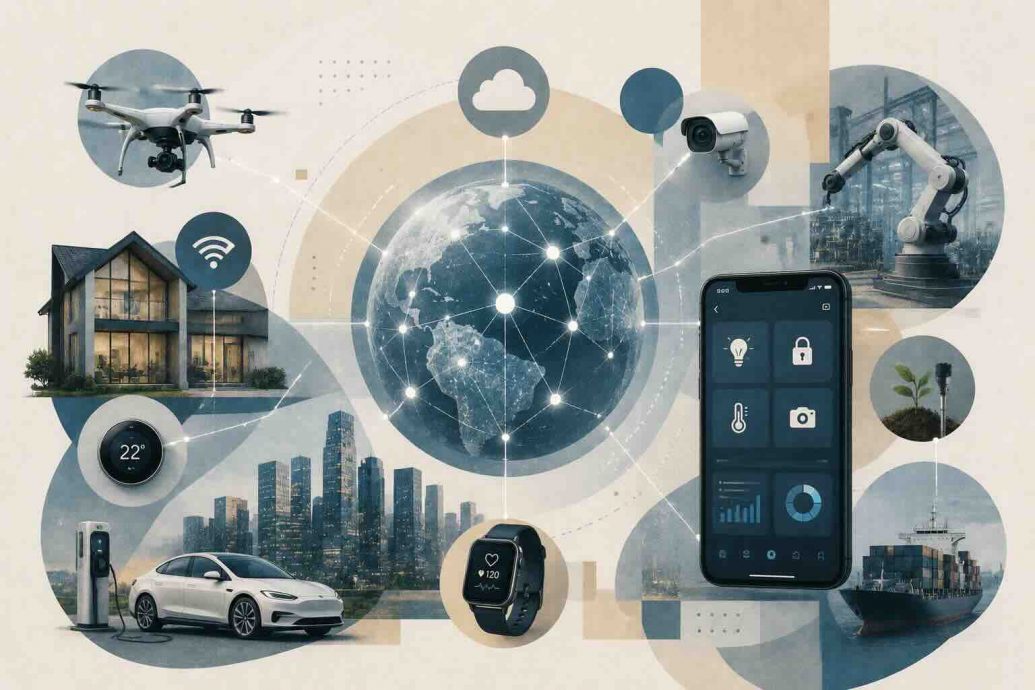
The top iot startups and apps to watch in 2026 are the connected-device companies and apps turning billions of sensors into real decisions. IoT has moved past hype into infrastructure, and the scale behind it is now hard to ignore. IoT Analytics counts 21.1 billion connected devices online at the close of 2025, with growth accelerating toward 2030. That reach is why investors, builders, and operators are watching this connected space so closely again. This guide profiles the startups and apps shaping industrial, consumer, and security IoT throughout the year. It pairs every pick with market data, measured outcomes, and the real risks of connected hardware. Knowing what the Internet of Things is also means knowing edge AI, mounting security threats, and where the capital is moving.
Quick Answers on the Top IoT Startups and Apps for 2026
Which IoT startups should you watch in 2026?
Watch TRACTIAN and Tulip in industrial IoT, Particle in connectivity, Oura in wearables, and Armis in security. Each turns sensor data into action with AI.
How big is the IoT market in 2026?
The global IoT market is projected near $1.055 trillion in 2026, with 21.1 billion connected devices online and double-digit annual growth across most segments.
What makes an IoT app worth using in 2026?
The best IoT apps unify many devices, run AI locally, secure data by default, and deliver measurable savings in energy, downtime, or labor.
Key Takeaways
- Industrial IoT leads 2026, with predictive maintenance startups like TRACTIAN and Tulip cutting downtime and defects.
- Consumer hubs such as Alexa, Google Home, and SmartThings remain the default apps for connected smart homes.
- Edge AI and AIoT are the defining technical shift, moving inference onto devices and away from the cloud.
- Security is the biggest risk, as botnets and default credentials expose poorly secured connected devices.
Table of contents
- Introduction
- Quick Answers on the Top IoT Startups and Apps for 2026
- Key Takeaways
- What Is the IoT Startup and App Landscape in 2026?
- Why IoT Investment Is Surging Again
- How to Evaluate the Top IoT Startups Worth Backing
- Industrial IoT Startups Leading Predictive Maintenance
- Smart Home and Consumer IoT Apps Worth Watching
- IoT Connectivity Platforms Powering Global Devices
- Agriculture and Environmental IoT Innovators
- Healthcare and Wearable IoT Breakthroughs
- The Best IoT Apps for Managing Connected Devices
- Bringing IoT Into Your Business Operations
- Security Risks Facing IoT Startups and Their Users
- Ethics, Privacy, and Data Governance in Connected Tech
- What the Top IoT Startups Reveal About the Future of Connected Technology
- Key Insights
- IoT Companies Putting Innovation Into Practice
- Deeper Lessons From Real IoT Deployments
- Common Questions About the Top IoT Startups and Apps for 2026
What Is the IoT Startup and App Landscape in 2026?
The top iot startups and apps to watch in 2026 are the connected-device firms and apps using sensors, edge AI, and cloud platforms to turn machine data into measurable savings, safety, and automation.
An Interactive From AIplusInfo
IoT Segment and Scale Explorer
Pick a connected-device segment and a fleet size to see the value at stake and how fast the market is moving in 2026.
Estimates blend the article research, including AIoT growth from KaaIoT and device counts from IoT Analytics. Figures are illustrative, not financial advice.
Why IoT Investment Is Surging Again
Capital is flowing back into connected hardware because the underlying numbers finally justify the bets. Fortune Business Insights expects the global market to reach $1.055 trillion in 2026, up sharply from the prior year. The narrower devices segment alone carries a 14.34 percent annual growth rate through 2031, according to market trackers. Investors like the recurring software revenue layered on top of sensors, which steadily improves once-thin hardware margins. Cheaper sensors, broader 5G coverage, and mature cloud tooling lowered the practical cost of launching a connected product. Component prices have fallen for years, so a small team can ship hardware that once demanded a corporate budget. These tailwinds explain why the top iot startups and apps to watch in 2026 span industrial, consumer, and security niches at the same time. Each of those niches now has buyers with budget, urgency, and a measurable problem a startup can solve.
The clearest driver is artificial intelligence, which turns raw sensor feeds into decisions worth paying for. KaaIoT puts the AIoT market scale on a steep climb from about $25 billion toward $81 billion by 2030. That growth reflects buyers who want analytics and recommendations, not just busy dashboards that nobody ever opens. Predictive maintenance, energy optimization, and safety monitoring now carry clear and defensible return on investment. Enterprises pay for measurable outcomes, so startups that prove real savings win budgets faster than feature-led rivals. The fusion of machine learning and connected sensors is the thread that ties almost every winning pitch together. This same logic plays out across factories, farms, and hospitals that want their systems to act, not merely report.
Geography and policy add a third tailwind that founders rarely mention in pitch decks. Reshoring and factory modernization in North America and Europe pull industrial sensors into older plants. Energy mandates push building owners toward connected meters, thermostats, and automated controls that cut waste. Supply-chain visibility became a board-level concern after years of shortages and shipping disruption. Each pressure creates a buyer with budget, urgency, and a measurable problem a startup can solve. Insurance and compliance requirements add yet another nudge, since connected monitoring can lower risk and premiums. Governments in several regions now fund digital infrastructure that quietly subsidizes early connected deployments. That demand base is wide enough to support dozens of credible companies, not just a handful.
How to Evaluate the Top IoT Startups Worth Backing
Building on that demand, the harder question is which connected companies actually deserve your attention. Start with the security model, since a weak update path can sink an otherwise strong product. Ask whether the startup owns a defensible layer, such as data, connectivity, or hard-won device integrations. Look for measured customer outcomes like downtime avoided or energy saved, not vanity counts of shipped units. Retention and expansion inside existing accounts reveal whether the product becomes essential or stays a pilot. Watch how a startup handles security disclosures, since transparency there signals real engineering maturity. Check whether reference customers will speak on record about results, not just appear as logos on a slide. These filters separate the genuine top iot startups and apps to watch in 2026 from the long tail of demo-stage hopefuls.
The strongest evaluation lens is the layer of the stack a startup truly controls. Hardware-only firms face thin margins and brutal manufacturing logistics that slow their path to scale. Connectivity and platform plays scale margins faster because software costs little to replicate across customers. Founders who pair sensors with edge AI tend to defend pricing better than commodity device makers. Beware companies whose only edge is cheaper hardware, since a larger rival can usually undercut them. The durable moats sit in proprietary data, deep integrations, and switching costs that lock customers in. Reading a guide to IoT device management helps frame how device fleets are secured, updated, and retired at scale. Weigh funding and partnerships too, since enterprise sales cycles can outlast a startup’s cash runway.
Industrial IoT Startups Leading Predictive Maintenance
Shifting to the factory floor, industrial IoT is the most commercially mature corner of the market. TRACTIAN equips motors and pumps with vibration and temperature sensors that stream into an AI platform. The system flags bearing wear or misalignment before a failure halts an entire production line. Tulip takes a broader view, digitizing frontline work with apps that connect machines, tools, and operators. Both target the same costly enemy, which is unplanned downtime that idles expensive equipment and staff. A single hour of stopped production can erase a week of carefully planned efficiency gains. That hard arithmetic is why factories were among the earliest and most willing buyers of connected sensing. This is the practical face of improving predictive maintenance inside heavy industry today.
Predictive maintenance works because failures rarely happen without measurable warning signs in the data. A motor about to fail vibrates differently, draws more current, and often runs hotter than usual. Edge models catch those signatures locally and trigger a work order before the breakdown occurs. Prescriptive systems go further, recommending the exact fix and the best window to perform it. Maintenance shifts from a fixed calendar to a condition-based rhythm driven by what the data shows. That change alone can stretch the working life of costly machines well beyond their original schedules. Manufacturers adopt this to protect throughput, since a single stalled line can cost thousands per minute. The payoff is fewer surprises, longer asset life, and maintenance teams that plan instead of firefight.
Beyond the marquee names, a deep bench of industrial startups targets narrower slices of the plant. Some focus on energy metering, others on machine vision for quality, and others on worker safety. Startup Savant maintains a curated list of IoT startups that captures how crowded and specialized this segment has become. Buyers increasingly want one platform that ingests many sensor types rather than a dozen point tools. Open protocols and clean APIs have become genuine selling points rather than afterthoughts in this segment. Larger industrial vendors now acquire promising startups to fill gaps in their own connected portfolios. That consolidation pressure rewards startups with open integrations and strong data models underneath the dashboards. It also pushes weaker single-feature vendors toward acquisition or quiet shutdown within a few years.
Looking at adoption, industrial IoT still meets friction inside older facilities with aging equipment. Legacy machines lack modern interfaces, so retrofitting sensors and gateways takes real engineering effort. Connectivity inside metal-heavy plants can be unreliable, which complicates real-time monitoring at the edge. Change management matters too, since technicians must trust alerts before they act on them. A false alarm that stops a healthy machine can quickly sour a plant’s confidence in the system. Vendors counter this by tuning models on each site’s data before alerts ever reach the floor. The startups that win invest heavily in onboarding, integration support, and clear proof of savings. These same lessons apply when extending connected sensing into logistics, energy, and utilities.
Smart Home and Consumer IoT Apps Worth Watching
Turning to the home, consumer IoT is dominated by a few large hubs and many niche devices. Amazon Alexa, Google Home, and Samsung SmartThings remain the apps most households actually open daily. SmartThings offers the broadest device compatibility, while Google Home keeps setup simple for casual users. The Matter standard is slowly easing the pain of mixing brands across one connected household. Our coverage of Alexa’s AI upgrade for smart homes shows how voice assistants are growing more capable and context-aware. Each hub now leans on cloud AI to interpret natural requests and chain several devices together. Apple Home rounds out the group with a privacy-first stance that appeals to cautious buyers. These platforms set the baseline that every smart home startup must either match or cleverly avoid.
The most interesting consumer startups compete on a single experience the big hubs handle poorly. Quilt, for example, focuses on room-by-room climate control with AI-driven heat pump systems. Others target security cameras, energy monitoring, water leak detection, or elder-care sensing in the home. These companies win by solving one problem deeply rather than chasing a sprawling device catalog. Strong local automation often beats cloud-dependent gadgets on speed, reliability, and everyday privacy for households. Buyers increasingly notice when a device responds instantly instead of waiting on a distant server to answer. The risk is platform dependence, since a single hub policy change can strand a small accessory maker overnight.
Stepping back, consumer IoT lives or dies on reliability, privacy, and the dreaded setup experience. Shoppers abandon devices that drop offline, demand constant app updates, or feel creepy about data. Trends from Matter and smart home trends at CES point toward local control, interoperability, and clearer consent as selling points. Startups that nail a calm, dependable experience can carve loyal niches beneath the giants. The winners treat the app as the product, not an afterthought bolted onto hardware. That discipline is what separates a lasting brand from a gadget that ends up in a drawer.
IoT Connectivity Platforms Powering Global Devices
Beyond apps and sensors, connectivity is the invisible layer that makes every connected product work. Particle and EMnify give startups global cellular connectivity, device management, and security without building it themselves. These platforms handle SIM provisioning, data routing, and over-the-air updates across many countries at once. A hardware startup can launch faster by renting this plumbing instead of negotiating with carriers directly. Pricing usually scales with data and devices, so costs track growth rather than crushing an early product. Global coverage also spares founders from re-certifying hardware for every new country they enter. Reading %s shows why fleet-wide control matters as device counts climb into the millions. Connectivity vendors scale margins well because one platform serves thousands of customers with shared infrastructure.
Connectivity platforms also became the natural home for security and lifecycle features buyers now demand. They enforce signed firmware, rotate credentials, and isolate compromised devices before damage spreads across a fleet. EMnify focuses solely on IoT, which lets it tune networking and security for machine traffic. Particle bundles hardware, software, and cloud tools so small teams can prototype and then scale. Approaches like secure federated learning for IoT hint at how future platforms will train models without centralizing sensitive data. Carrier-agnostic SIMs let a single device roam across networks, which improves uptime in weak-signal locations. Built-in observability also helps teams spot a failing device long before a customer ever notices. The category is sticky, since swapping connectivity providers across a deployed fleet is painful and risky.
Agriculture and Environmental IoT Innovators
Moving outdoors, agriculture has become one of the most compelling proving grounds for connected sensing. xFarm digitizes farms with soil, weather, and crop sensors that feed analytics for better decisions. Growers use the data to time irrigation, cut fertilizer waste, and document compliance for buyers. Our guide to smart farming with AI and IoT explains how connected fields raise yields while trimming water and chemical use. The same sensor logic extends to vineyards, greenhouses, and livestock monitoring across large operations. Connected weather stations let growers act on microclimate data specific to a single field or block. Satellite and drone imagery increasingly pair with ground sensors to give a fuller picture of crop health. These tools matter most where margins are thin and weather swings can erase an entire season.
Environmental monitoring is a close cousin, applying the same sensors to air, water, and infrastructure. Startups track air quality, detect pipeline leaks, and watch water systems for contamination in real time. Cities deploy these networks to manage flooding, noise, and pollution across dense urban districts. Our overview of %s shows how municipal sensing supports cleaner and more responsive public services. The data also feeds climate reporting that regulators and investors increasingly demand from large organizations. Low-cost sensors now blanket neighborhoods, giving officials a block-by-block view of pollution and noise. When paired with analytics, that detail turns raw readings into targeted action rather than vague alarm. Reliability is critical here, since a missed leak or false reading carries real public consequences.
The hard part outdoors is power, connectivity, and survival in harsh and remote conditions. Field sensors must run for years on small batteries or harvested solar energy without service visits. Coverage gaps push these devices toward low-power wide-area networks rather than power-hungry cellular links. Approaches for using IoT to monitor traffic help route data from scattered nodes through a single connected backbone. Dust, heat, moisture, and animals all conspire to break hardware that looked fine in the lab. Startups that engineer for ruggedness and long battery life earn trust that flashy demos never will.
Healthcare and Wearable IoT Breakthroughs
Turning to health, wearables and connected medical devices are the fastest-growing slice of consumer IoT. Oura sells a smart ring packed with sensors that track sleep, heart rate, and recovery. Continuous glucose monitors, connected inhalers, and remote patient monitors extend the same idea into clinical care. Our look at wearables for real-time health tracking shows how always-on sensing shifts health from occasional checkups to constant signals. Hospitals use connected devices to watch patients remotely and catch deterioration earlier than scheduled rounds. Healthcare is the fastest-growing IoT vertical, expanding at well over 20 percent a year by most estimates. Aging populations and clinician shortages push providers toward sensing that extends care beyond the hospital walls. This segment grows fastest because the outcomes, when they work, can be genuinely life-changing.
Healthcare IoT carries the highest stakes, so accuracy and trust outrank novelty every single time. A consumer fitness estimate can be loose, but a clinical alert must be dependable and validated. Regulators scrutinize medical claims, which slows startups but protects patients from unproven connected gadgets. Data sensitivity is extreme, since leaked health readings cause harm that no refund can undo. The best companies invest early in clinical validation, security, and clear consent for every data use. A single false alert can erode a clinician’s trust and stall an otherwise promising rollout. Reimbursement also shapes the market, since providers adopt fastest when insurers actually pay for monitoring. That rigor is the price of admission for any startup touching real medical decisions.
Remote patient monitoring shows the model at its best when sensors and clinicians work together. Connected scales, blood-pressure cuffs, and pulse oximeters stream readings into a dashboard nurses review daily. Early warnings let care teams intervene before a manageable issue becomes an emergency room visit. Asimily reports that unpatched device vulnerabilities are widespread in healthcare, underscoring how exposed connected medical fleets remain. That gap between clinical promise and security reality defines the segment’s central tension right now. Startups that close it, rather than ignore it, will earn durable trust from health systems.
Looking across the wearable field, the competitive pressure from large platforms is intense. Apple, Samsung, and Google bundle health sensing into devices that millions already own and wear. Independent startups must offer accuracy, comfort, or insight that the incumbents do not match. Oura succeeded by owning the ring form factor and a subscription that funds ongoing software. Differentiation increasingly comes from the insights a device surfaces, not the raw sensors it carries. Partnerships with clinicians and insurers can give an independent wearable a foothold the giants lack. Battery life, comfort, and data clarity decide whether people keep wearing a device past month one. The graveyard of abandoned fitness bands is a warning that hardware alone never builds a moat.
The Best IoT Apps for Managing Connected Devices
Choosing among management apps, the right tool depends on whether you run a home or a fleet. For homes, SmartThings, Google Home, and Apple Home centralize control across lights, locks, and cameras. For business fleets, platforms like PTC ThingWorx and Siemens Insights Hub manage thousands of industrial assets. OpenRemote offers an open-source path for teams that want to avoid vendor lock-in entirely. The right choice depends on scale, since a four-device home and a four-thousand-device plant share almost nothing. Interoperability through standards like Matter is gradually letting one app speak to more brands at once. Our practical guide on how to control IoT devices walks through pairing, grouping, and automating devices without chaos. The best app hides complexity, surfaces the few controls that matter, and stays reliably online.
Management apps increasingly compete on automation intelligence rather than the raw number of supported devices. Good apps learn routines, suggest energy savings, and flag a device that suddenly behaves abnormally. Strong dashboards group devices by room, site, or function so operators are not overwhelmed. Security features now sit at the center, including credential management and isolation of risky devices. Role-based access keeps a contractor from touching systems that only a site manager should control. Audit logs and alerts turn the management app into a record of who changed what and when. Patterns from IoT in the retail industry show how retailers coordinate sensors, cameras, and inventory tags through one interface. For any deployment, the management layer is where convenience and security either come together or fall apart.
Bringing IoT Into Your Business Operations
In practice, adopting IoT works best when you start narrow and prove value before scaling. Pick one measurable use case, such as monitoring a critical machine or tracking high-value inventory. Choose a connectivity platform that handles security, global SIMs, and updates so your team avoids plumbing. Change default credentials immediately and enforce signed firmware to close the most common attack paths. Pilot on a small fleet, capture baseline metrics, and compare results before committing a larger budget. Define success in plain numbers up front, such as hours saved or failures avoided each month. Bring the people who will use the system into the pilot, since their trust decides adoption. This disciplined path is how the top iot startups and apps to watch in 2026 move from a demo into dependable daily operations.
Integration is usually the real work, since IoT data only matters once it reaches existing systems. Sensor readings must flow into maintenance tools, inventory systems, or analytics where decisions actually happen. A simple ingestion pattern publishes device messages to a broker that downstream services then consume. Teams often underestimate the data engineering required to clean, store, and act on streaming sensor feeds. Messy or missing data quietly undermines analytics, so quality checks belong in the pipeline from day one. A clear data model also makes it far easier to add new device types later without rework. Reviewing a guide to IoT device management early prevents an unmanaged sprawl of devices nobody can patch or account for. Budget for this glue work, because it determines whether a pilot ever becomes a durable system.
The most common failure is treating IoT as a gadget purchase rather than an operational change. Hardware that nobody monitors, updates, or acts on quickly becomes expensive shelfware gathering dust. Successful programs assign clear ownership, define the metric that matters, and review it on a schedule. They also plan for the full device lifecycle, including secure retirement when sensors reach end of life. A minimal publish-subscribe setup can connect a sensor to a dashboard in a single afternoon. Start small, measure honestly, and expand only once the first use case clearly pays for itself.
Security Risks Facing IoT Startups and Their Users
Despite the upside, security is the shadow hanging over every connected device discussion in 2026. Botnets recruit poorly secured cameras and routers to launch record-breaking denial-of-service attacks. Vectra notes that roughly 20 percent of devices still ship with default credentials, leaving easy entry points for attackers to exploit at scale. Infrequent firmware updates leave known flaws unpatched for months or even years on deployed devices. Supply-chain compromises have pre-infected millions of units before they ever reached a customer’s shelf. One recent botnet drove a denial-of-service attack peaking near 30 terabits per second, a record scale. Edge and VPN exploitation also rose sharply as a favored route for gaining initial access to networks. These weaknesses make IoT both a powerful tool and a sprawling new attack surface.
The core problem is that tiny devices cannot run the security stacks that protect laptops and servers. Limited memory and processing power leave little room for agents, encryption, or constant monitoring. Many devices also lack a secure update mechanism, so a discovered flaw can stay open indefinitely. Attackers move laterally from a hacked thermostat into the corporate network behind it. Network segmentation that isolates devices is one of the few defenses that reliably contains this spread. Cheap consumer gear is the usual culprit, since price pressure pushes security far down the priority list. Edge and VPN exploitation rose sharply as initial-access routes during the past year of incidents. Defenders must assume devices will be probed and design networks that contain a breach.
For teams deploying connected hardware, a few disciplined habits prevent most common compromises. Change default passwords, segment device networks, and require signed firmware before any update installs. Monitor traffic for the sudden spikes that signal a device has joined a botnet. Approaches like secure federated learning for IoT let models improve without shipping raw sensitive data off the device. Buyers can also insist on a software bill of materials so they know what runs inside each device. Regular penetration testing and a public disclosure process signal a vendor that takes threats seriously. Vendors share responsibility, so buyers should demand a clear security and update commitment in writing. Treating security as a feature, not an afterthought, is what keeps a deployment from becoming a liability.
Ethics, Privacy, and Data Governance in Connected Tech
Choosing among priorities, ethics and privacy now sit alongside performance in serious IoT decisions. Connected devices watch our homes, bodies, and workplaces, generating intimate data that demands careful handling. Clear consent, data minimization, and transparent retention policies separate trustworthy products from surveillance gadgets. Concepts behind %s show that smarter systems must also be accountable for the data they hold. Workers deserve a say when sensors track their movements, output, and safety on the job. Regulations on connected data are tightening across many regions, raising the cost of careless collection. Privacy by design, where data is minimized from the start, is becoming a practical buying requirement. The companies that treat governance as a feature will outlast those that treat it as paperwork.
Governance is becoming a competitive advantage as regulators and buyers scrutinize how connected data is used. Data ownership questions grow thorny when a device maker, platform, and user all claim rights. Bias can creep into IoT analytics, from flawed health readings to uneven smart city sensing. Insights from smart city deployments reveal how public deployments must balance efficiency against fairness and consent. Strong governance means documenting data flows, limiting access, and giving people real control over deletion. Without it, even a technically brilliant product can collapse under a single trust-shattering breach.
What the Top IoT Startups Reveal About the Future of Connected Technology
Looking ahead, the top iot startups and apps to watch in 2026 point clearly toward intelligence moving onto the devices themselves. Edge AI lets sensors analyze data locally, cutting latency, cost, and dependence on the cloud. KaaIoT projects the AIoT market climbing toward $81 billion by 2030 as this shift accelerates. The next leap is agentic systems that not only predict failures but also act on them autonomously. Prescriptive maintenance already recommends the fix and the timing, closing the loop between data and action. Smaller, cheaper AI chips now make this local intelligence affordable even on battery-powered sensors. As models shrink, more of the decision-making moves to the device and less depends on a connection. This trajectory turns connected devices from passive reporters into active participants in operations.
Convergence is the second clear signal across nearly every segment of the market. Connectivity, AI, and security are merging into unified platforms rather than separate tools bolted together. The ideas behind the Internet of Everything expand as cars, buildings, and supply chains link into shared data fabrics. Standards like Matter reduce fragmentation, letting devices from rival brands cooperate inside one system. This consolidation favors platforms that integrate broadly over point products that solve one narrow task. Digital twins, which mirror physical assets in software, increasingly sit on top of these unified data fabrics. The result is fewer isolated gadgets and more connected systems that share context across an entire operation. Buyers increasingly want fewer vendors, deeper integration, and a single accountable security perimeter.
The defining tension of the next few years is intelligence racing ahead of trustworthiness. Devices grow smarter and more autonomous while their security and governance still lag behind. Startups that solve safety, privacy, and reliability will capture the durable enterprise budgets. Those that chase features while ignoring the attack surface will struggle once a breach lands. The market is large enough to reward many winners across industrial, consumer, and health niches. Regulation will likely tighten, rewarding teams that built governance in early rather than bolting it on later. Expect the strongest exits to come from companies that own both the intelligence and the trust layer. The companies that pair real intelligence with real accountability will define connected technology this decade.
Chart From AIplusInfo
The IoT Market by the Numbers, 2024 to 2035
Connected IoT devices worldwide, in billions
Source: device counts from IoT Analytics and market value from Fortune Business Insights.
Key Insights
- IoT Analytics counts 21.1 billion connected devices at the end of 2025, a base expanding toward 39 billion by 2030.
- Fortune Business Insights values the IoT market near $1.055 trillion in 2026, a leap that pulls fresh capital into connected hardware.
- The IoT devices segment carries a 14.34 percent CAGR toward $534 billion through 2031, showing durable double-digit demand beneath the headline totals.
- KaaIoT puts the AIoT market on a steep path, climbing from roughly $25 billion in 2025 to $81 billion by 2030 at a 26 percent rate.
- Vectra warns that about 20 percent of devices ship with default credentials, the single most exploited weakness in connected device fleets today.
- Failory tracks 18 IoT unicorns in 2026, with Oura near $11 billion and Armis near $6 billion in valuation.
- Startup Savant maintains a deep roster of IoT startups, reflecting how crowded industrial, consumer, and security niches have become.
Taken together, these numbers describe a market that has matured from novelty into infrastructure. Growth is broad rather than concentrated, spreading across industrial, consumer, agricultural, and health niches. Artificial intelligence is the common thread, since buyers now pay for decisions instead of raw data. Security remains the soft underbelly, with default credentials and slow updates exposing millions of devices. The startups that combine measurable outcomes with serious security will earn the durable enterprise budgets. That balance, more than any single gadget, defines who leads connected technology through the decade.
| Dimension | TRACTIAN | Tulip | Particle | Oura | Armis |
|---|---|---|---|---|---|
| Primary segment | Industrial IoT | Manufacturing ops | Connectivity | Wearables | Security |
| Core use case | Predictive maintenance | Frontline app platform | Device connectivity | Sleep and recovery | Asset visibility |
| Funding or valuation signal | Venture-backed | $120M Series D | Venture-backed | $11B valuation | $6B valuation |
| Edge vs cloud | Edge plus cloud | Cloud plus edge | Cloud platform | On-device sensing | Network and cloud |
| Target user | Plant managers | Production teams | Hardware startups | Consumers | Security teams |
| Security posture | Built-in monitoring | Platform controls | Signed firmware | Encrypted health data | Core product |
| Standout metric | Downtime avoided | 30 to 70 percent fewer defects | Global SIM fleet | Subscription retention | Agentless coverage |
IoT Companies Putting Innovation Into Practice
TRACTIAN’s Predictive Maintenance for Heavy Machinery
Among the industrial names, TRACTIAN deployed vibration and temperature sensors across motors and pumps inside busy manufacturing plants. The platform streams those readings to edge and cloud models that detect bearing wear and misalignment early. Customers use the alerts to schedule repairs before a failure idles a line costing thousands of dollars per minute. In documented programs, predictive maintenance like this cut unplanned downtime by as much as 30 percent on critical assets. Startup Savant documents TRACTIAN’s focus on intelligent industrial monitoring for real-time asset tracking and predictive analytics. The clear limitation is retrofitting, since older machines need added sensors, gateways, and reliable connectivity inside metal-heavy plants. Even so, the approach shows why predictive maintenance anchors the most commercially proven corner of connected technology.
Particle’s Connectivity Behind Millions of Devices
Beyond the factory, Particle gives hardware startups cellular connectivity, device management, and security as one rented platform. Teams have deployed Particle to provision SIMs, route data, and push over-the-air updates without negotiating with carriers. That plumbing helps founders launch products in weeks instead of months, joining a base of 21.1 billion connected devices now online. Particle bundles hardware, firmware, and cloud tools so a small team can prototype and then scale globally. The limitation is dependence, because migrating a deployed fleet off one connectivity platform stays painful and risky. Switching providers means re-flashing devices in the field, which few teams attempt once a product ships at volume. Still, renting this layer remains far faster than building global networking and security entirely from scratch.
xFarm’s Sensors Digitizing Working Farms
Out in the fields, xFarm equips farms with soil, weather, and crop sensors feeding one decision platform. Farms that have deployed xFarm time irrigation, cut fertilizer waste, and document compliance from continuous plot data. Growers using the system have trimmed water use by up to 30 percent while protecting yields across seasons. The company digitizes operations so farmers meet legal requirements while improving output season over season. Startup Savant lists xFarm among agricultural IoT startups tackling thin margins and increasingly unpredictable weather. The limitation is the harsh environment, where power, connectivity, and rugged hardware constrain every outdoor deployment. Despite that, connected sensing gives farmers a precision they never had with manual field scouting alone.
Deeper Lessons From Real IoT Deployments
Case Study: Tulip Cutting Manufacturing Defects
Manufacturers struggled with manual, paper-based processes that produced inconsistent quality and frequent, costly production defects. Tulip built and deployed a frontline operations platform connecting machines, tools, and workers through guided digital apps. Operators follow on-screen work instructions while connected sensors capture each step for traceability and later analysis. The platform pulls live data from the floor so supervisors can see bottlenecks as they actually happen. Startup Savant reports customers seeing 30 to 70 percent reductions in defects after rolling the system out. Production also ran roughly 30 percent faster once teams replaced paper checklists with guided, connected workflows. That combination of fewer defects and faster output is exactly the result manufacturers struggle to buy elsewhere.
The company raised a $120 million Series D in January 2026, signaling strong investor conviction in the model. Recognition from analyst groups followed, reinforcing Tulip’s standing among serious manufacturing execution platforms. The limitation is complexity, since execution systems demand real integration work and disciplined change management to succeed. Teams that skip training or rush the rollout rarely capture the full 30 to 70 percent reductions in defects on offer. Strong onboarding and clear ownership separate the plants that succeed from those that stall after a pilot. Still, the deployment shows how connected frontline data converts directly into measurable quality and speed gains.
Case Study: Oura Turning a Ring Into a Health Platform
Consumers struggled to get continuous health insight without wearing a bulky watch they had to charge nightly. Oura built a smart ring packing sleep, heart rate, and temperature sensors into a comfortable everyday form. A subscription funds ongoing software, turning a one-time gadget into a durable, recurring-revenue health platform. Failory tracks Oura among 18 IoT unicorns, citing an $11 billion valuation that reflects strong consumer demand. The limitation is medical accuracy, since consumer sensing can mislead users who treat estimates as clinical diagnoses. Regulators and clinicians still draw a firm line between wellness signals and validated diagnostic readings. The case shows how form factor, comfort, and recurring software build a moat that fitness bands never did.
Case Study: Armis Securing Unmanaged Connected Devices
Enterprises faced a sprawling fleet of unmanaged IoT and operational devices that traditional security tools could not see. Armis built an agentless platform that discovers, classifies, and continuously monitors every connected asset on the network. The system spots risky behavior and isolates compromised devices before attackers move deeper into core systems. Failory lists Armis among the roster of IoT unicorns, citing a valuation near $6 billion driven by strong enterprise demand. Security teams gain visibility into devices that never accept an agent, from cameras to medical equipment. The limitation is cost and scope, since the platform targets large organizations rather than small teams or homes. The case underscores that visibility, not just connectivity, is what keeps a growing device fleet defensible.
Common Questions About the Top IoT Startups and Apps for 2026
Industrial names like TRACTIAN and Tulip lead the field through predictive maintenance and connected frontline operations. Particle powers the connectivity layer that many smaller hardware startups quietly depend on. Consumer and security players such as Oura and Armis round out a genuinely diverse list. Each company pairs sensors with artificial intelligence to turn raw device data into useful decisions.
Amazon Alexa, Google Home, and Samsung SmartThings remain the leading consumer hubs for most connected households. SmartThings offers the broadest device compatibility along with cleaner organization than its main rivals. Honeywell Home focuses on adaptive climate routines that learn from how a household actually lives. For industrial settings, PTC ThingWorx and Siemens Insights Hub manage connected operations at far larger scale.
Fortune Business Insights values the global IoT market near $1.055 trillion in 2026 across all components. IoT Analytics separately counts roughly 21.1 billion connected devices at the close of 2025. The narrower IoT devices segment sits closer to $273 billion using a tighter definition. Growth rates range from about 14 percent to over 23 percent depending on the scope measured.
AIoT is the fusion of artificial intelligence with IoT sensors, networks, and connected hardware. It lets devices analyze their own data locally and act without constant calls to the cloud. KaaIoT estimates the AIoT market climbing from about $25 billion toward $81 billion by 2030. Startups use this approach for predictive and increasingly prescriptive maintenance across many industries.
Botnets recruit poorly secured connected devices to launch some of the largest recorded denial-of-service attacks. Roughly 20 percent of devices still ship with default credentials that attackers exploit easily. Infrequent firmware updates leave known vulnerabilities unpatched for months or even years at a time. Supply-chain compromises like BadBox have pre-infected millions of units before they ever reached customers.
Edge AI runs machine learning models on or near the device instead of in a distant cloud. Sensors feed vibration, heat, and current data into that local inference engine continuously. The system flags likely failures before they happen, which cuts expensive and disruptive downtime. Prescriptive systems then recommend the specific repair and the best window to perform it.
Most early-stage IoT startups prioritize growth and market share well ahead of near-term profit. Thin hardware margins and long enterprise sales cycles slow their path toward sustainable breakeven. Funding rounds like Tulip’s $120 million Series D extend the runway for ambitious roadmaps. Connectivity and software-led models tend to scale their margins faster than pure hardware businesses.
Manufacturing remains the largest vertical for industrial IoT spending by a wide margin. Healthcare is the fastest-growing segment thanks to wearables and remote patient monitoring programs. Agriculture, logistics, and energy follow closely as connected sensing proves its value outdoors. Smart cities deploy IoT for traffic, lighting, and utilities at full municipal scale.
Begin with one measurable use case such as monitoring a single critical asset or fleet. Choose a connectivity platform that handles security, global SIM management, and over-the-air updates. Change default credentials immediately and enforce signed firmware before any update ever installs. Pilot on a small fleet and capture baseline metrics before scaling across the whole operation.
An IoT app is the user-facing layer people use to control and view their connected devices. A platform handles connectivity, device management, data ingestion, and security underneath that interface. Consumer apps like SmartThings often sit on top of larger platforms such as AWS IoT. Startups frequently sell the platform itself and ship a companion app alongside it.
Artificial intelligence automates anomaly detection and routine maintenance scheduling across large device fleets. It tends to augment skilled technicians rather than remove the need for them entirely. Humans still handle installation, tricky exception cases, and the physical repairs themselves. The shift moves staff toward oversight, judgment, and higher-value analysis of the data.
Simple monitoring projects can show measurable value within roughly three to six months of launch. Predictive maintenance often pays back inside a year through downtime that teams successfully avoid. Complex multi-site rollouts take longer to integrate and prove out across many locations. Clear baseline metrics defined up front make the eventual return far easier to measure.
Failory tracks roughly 18 IoT unicorns as of early 2026 across several connected categories. Oura reached an $11 billion valuation in the wearables and health-sensing market. Security firm Armis sits near $6 billion while Verkada sits near $5 billion. These valuations reflect strong and durable demand for connected hardware and device security.
Check the strength of its security model and the reliability of its update mechanism first. Assess whether the startup owns a defensible data, connectivity, or device integration layer. Look for measurable customer outcomes rather than vanity counts of devices shipped or connected. Funding, customer retention, and integration breadth together signal whether a company has staying power.