
Introduction
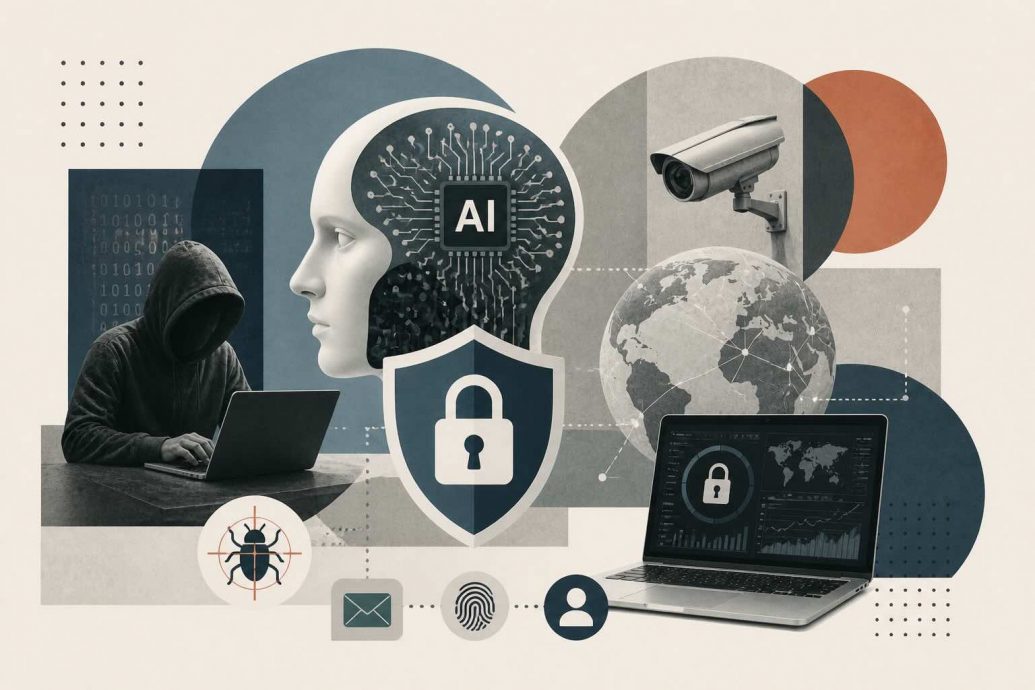
Cyberattacks are escalating in frequency, sophistication, and financial impact at a pace that traditional security measures can no longer match, making artificial intelligence essential infrastructure for organizations defending their digital assets. The global AI in cybersecurity market was valued at approximately USD 29.64 billion in 2025 and is projected to reach USD 167.77 billion by 2035, expanding at a compound annual growth rate of 18.93 percent. Organizations that extensively deployed AI and automation across their security operations experienced an average reduction of USD 2.2 million in data breach costs compared to those not using these technologies, according to the IBM Cost of a Data Breach Report. Two out of three organizations reported deploying security AI and automation across their security operations centers in 2024, marking a 10 percent increase from the prior year. The dual nature of AI in cybersecurity creates a unique challenge: the same technologies that strengthen defenses also empower attackers with tools for crafting more convincing phishing campaigns, generating sophisticated malware, and executing deepfake-driven fraud. This article examines how AI is reshaping both sides of the cybersecurity battlefield, from automated threat detection and incident response to the emerging risks of AI-powered attacks and the governance frameworks needed to manage them. The stakes extend beyond individual organizations to encompass national security, critical infrastructure protection, and the integrity of digital economies worldwide.
Key Questions
What is AI in cybersecurity?
AI in cybersecurity refers to the application of machine learning, deep learning, natural language processing, and behavioral analytics to detect, prevent, analyze, and respond to cyber threats in real time, enabling automated defense at speeds and scale that human analysts alone cannot achieve.
How does AI improve cybersecurity?
AI improves cybersecurity by analyzing vast volumes of network traffic, user behavior, and system logs to identify anomalous patterns, predict emerging threats, automate incident response, and reduce the time between threat detection and containment from hours to seconds.
Can AI be used for cyberattacks?
AI can be weaponized for cyberattacks through techniques including AI-generated phishing emails, automated vulnerability discovery, deepfake-powered social engineering, polymorphic malware that evades detection, and large-scale credential stuffing powered by machine learning.
Key Takeaways
- 48 percent of security professionals expect future ransomware campaigns to be AI-driven, while deepfakes are projected to account for 70 percent of crypto crime by 2026.
- The AI in cybersecurity market is projected to grow from USD 29.64 billion in 2025 to USD 167.77 billion by 2035, driven by escalating threat complexity and enterprise adoption of automated security solutions.
- Organizations extensively using AI in security operations save an average of USD 2.2 million per data breach compared to those relying on traditional approaches alone.
- Two-thirds of organizations deployed security AI and automation in their security operations centers in 2024, a 10 percent increase year over year.
Table of contents
- Introduction
- Key Questions
- Key Takeaways
- Understanding AI in Cybersecurity
- The Evolving Cyber Threat Landscape
- How AI Powers Defensive Cybersecurity
- AI in Threat Detection and Incident Response
- AI-Powered Attacks and Offensive Capabilities
- Deepfakes, Social Engineering, and Trust Erosion
- Securing AI Systems Against Exploitation
- AI for Cloud and Network Security
- The Cybersecurity Workforce and AI Augmentation
- Regulatory Landscape and Compliance Automation
- Ethical Considerations in AI-Powered Security
- Real-World Examples of AI in Cybersecurity
- Case Studies in AI Cybersecurity Implementation
- The Business Case for AI Cybersecurity Investment
- What the Future Holds for AI in Cybersecurity
- Key Insights
- Frequently Asked Questions
Understanding AI in Cybersecurity
AI in cybersecurity is the deployment of machine learning algorithms, behavioral analytics, deep learning models, and natural language processing to automatically detect, analyze, predict, and respond to cyber threats across network, endpoint, cloud, and application environments, operating at speeds and scale beyond human capability.
AI Cybersecurity Threat & Defense Simulator
Model the balance between AI-powered defensive capabilities and evolving threat sophistication across your organization. Adjust parameters to see how AI investment shifts security outcomes.
Security Profile
Adjust your security profile to model AI cybersecurity impact.
The Evolving Cyber Threat Landscape
The cybersecurity threat landscape has grown dramatically more complex and dangerous as digital transformation expands the attack surface that organizations must defend across cloud environments, remote workforces, IoT devices, and interconnected supply chains. The average cost of a data breach reached USD 4.45 million in 2023, with critical infrastructure organizations facing even higher costs that reflect the operational and societal impact of successful attacks. Ransomware activity increased 13-fold in the first half of 2023 based on its share of overall malware detections, reflecting the industrialization of cybercrime through ransomware-as-a-service platforms that lower barriers to entry for attackers. Nation-state actors, organized criminal groups, and hacktivist collectives are each deploying increasingly sophisticated tactics that blend technical exploitation with social engineering in multi-stage campaigns that evade traditional security controls. The global cybersecurity workforce gap exceeds 3.5 million unfilled positions, creating a structural shortage that automation and AI are uniquely positioned to address. The escalating volume, velocity, and variety of cyber threats has made AI not just an enhancement to cybersecurity but a fundamental requirement for any organization operating at scale in the modern digital environment.
The proliferation of Internet of Things devices and increasing connectivity across networks has dramatically expanded the attack surface that cybercriminals can target. IoT trends and their security implications demonstrate how billions of connected devices create entry points that traditional perimeter-based security models cannot adequately protect. Remote and hybrid work arrangements, which now characterize approximately 22 percent of the U.S. workforce, have distributed corporate data and applications across home networks, personal devices, and cloud services that operate outside the traditional security perimeter. Supply chain attacks that compromise trusted software vendors to distribute malware through legitimate update channels have emerged as one of the most dangerous and difficult-to-detect threat vectors. The convergence of these trends creates a security environment where the volume of data that must be monitored, the number of potential entry points, and the sophistication of attacks all exceed the capacity of human analysts working without AI assistance.
How AI Powers Defensive Cybersecurity
AI is transforming defensive cybersecurity through capabilities that span the entire security lifecycle, from proactive threat hunting and vulnerability assessment through real-time detection and automated incident response. Machine learning algorithms analyze network traffic patterns, user behavior, system logs, and application activity to establish baselines of normal operations, enabling the detection of subtle anomalies that indicate potential threats human analysts would miss in the noise. Behavioral analytics powered by AI continuously monitor user and entity behavior to identify compromised accounts, insider threats, and lateral movement within networks that traditional signature-based detection cannot catch. Security Information and Event Management platforms enhanced with AI process millions of security events per second, correlating data across multiple sources to identify the complex attack patterns that characterize modern multi-stage intrusions. The role of AI in boosting automation extends deeply into cybersecurity, where automated threat detection and response systems operate at machine speed to contain incidents before they escalate. AI-powered defensive cybersecurity compresses the time between threat detection and response from hours or days to seconds, fundamentally changing the economics of cyberattacks by making successful intrusions more costly and less profitable for attackers.
The specific defensive capabilities that AI enables span multiple security domains, each addressing distinct aspects of the protection challenge. Endpoint detection and response platforms use machine learning to identify malicious processes, unusual file modifications, and suspicious network connections on individual devices across an organization's fleet. Network detection and response systems analyze traffic flows using deep learning models that identify command-and-control communications, data exfiltration, and lateral movement patterns that would be invisible to rule-based systems. Cloud security posture management tools use AI to continuously assess cloud configurations against security best practices, identifying misconfigurations and compliance violations before they can be exploited. Adversarial machine learning research informs the development of more robust defensive AI systems that can withstand attempts to manipulate or evade detection algorithms. Email security platforms powered by natural language processing analyze message content, sender behavior, and contextual signals to detect sophisticated phishing campaigns that bypass traditional filters. The integration of these AI-powered tools into unified security platforms creates defense-in-depth architectures that protect organizations across every attack vector simultaneously.
Vulnerability management is another domain where AI delivers significant defensive value by prioritizing the thousands of vulnerabilities that organizations must address with limited resources. Machine learning models assess vulnerability severity, exploitability, asset criticality, and environmental context to generate prioritized remediation lists that focus security teams on the risks that matter most. Penetration testing enhanced by AI automates the discovery and exploitation of weaknesses across complex environments, enabling continuous security assessment that replaces the periodic testing that leaves organizations exposed between assessments. Threat intelligence platforms use natural language processing to analyze open-source intelligence, dark web forums, and security research publications, distilling vast amounts of unstructured information into actionable indicators of compromise and threat actor profiles.
AI in Threat Detection and Incident Response
While the previous section covered AI's broad defensive role, threat detection and incident response deserve deeper examination as the capabilities where AI delivers the most immediate and measurable impact on security outcomes. AI-powered threat detection operates on the principle that malicious activity, no matter how carefully disguised, generates behavioral patterns that differ from legitimate operations in ways that machine learning can identify. Security orchestration, automation, and response platforms integrate AI across the incident lifecycle, automatically triaging alerts, enriching them with contextual intelligence, executing containment actions, and generating forensic timelines that accelerate investigation. Cybersecurity audit processes are being enhanced by AI tools that continuously evaluate security postures rather than relying on periodic manual assessments that can miss rapidly evolving threats. The proportion of organizations using security AI extensively rose from 28 percent in 2023 to 31 percent in 2024, reflecting growing confidence in automated detection and response capabilities. False positive reduction is one of AI's most practical contributions, as machine learning models trained on an organization's specific environment learn to distinguish genuine threats from benign anomalies, reducing alert fatigue that undermines human analyst effectiveness. AI-driven incident response transforms security operations from reactive firefighting into proactive threat management, where automated systems handle routine incidents while human analysts focus on the complex, strategic challenges that require creative problem-solving.
The integration of AI with Security Operations Center workflows is creating a new operational model where human and machine capabilities complement each other across the detection and response pipeline. Automated playbooks handle common incident types like malware infections, phishing compromises, and unauthorized access attempts with predefined response sequences that execute in seconds. Surging demand for cybersecurity innovation is driving investment in AI-powered SOC platforms that provide analysts with contextualized threat intelligence, recommended actions, and automated evidence collection that accelerates investigation. Real-time threat hunting powered by AI continuously searches for indicators of compromise across the environment, identifying threats that have evaded initial detection layers. The cumulative effect is a security operations capability that scales with the organization's digital footprint rather than requiring proportional increases in analyst headcount.
AI-Powered Attacks and Offensive Capabilities
The cybersecurity community is grappling with a fundamental paradox: the same AI technologies that strengthen defenses are being adopted by threat actors to create attacks that are faster, more convincing, and harder to detect than anything previously possible. AI-generated phishing emails use natural language processing to craft messages that are grammatically perfect, contextually relevant, and psychologically manipulative, eliminating the spelling errors and awkward phrasing that traditionally helped recipients identify fraudulent communications. AI enhances sophisticated phishing scams through personalization that analyzes target profiles from social media and corporate data to craft messages that reference real projects, colleagues, and events, making them nearly indistinguishable from legitimate correspondence. More than 95 percent of security professionals believe that dynamic content generated through large language models makes detecting phishing attempts more challenging. Deepfake technology enables voice cloning and video manipulation that facilitate business email compromise, executive impersonation, and social engineering attacks at unprecedented levels of sophistication. The weaponization of AI for offensive cyber operations represents a paradigm shift where the attacker's toolkit becomes as sophisticated as the defender's, creating an arms race that will define cybersecurity for the coming decade.
The scope of AI-powered offensive capabilities extends well beyond phishing to encompass automated vulnerability discovery, malware generation, and large-scale attack orchestration. Polymorphic malware powered by AI can continuously modify its code to evade signature-based detection while maintaining its malicious functionality, creating variants faster than traditional security tools can generate signatures. Dangers of AI security risks include the use of machine learning to automate the discovery and exploitation of zero-day vulnerabilities, compressing the timeline from discovery to weaponization that organizations depend on for patching. Credential stuffing attacks powered by AI can test millions of stolen credential combinations against authentication systems while mimicking human behavior patterns that evade bot detection. 48 percent of security professionals expect future ransomware campaigns to be AI-driven, incorporating automated target selection, negotiation, and payload delivery. Russia's AI-enhanced cyber threats demonstrate how nation-state actors are integrating AI into their offensive cyber operations, raising the sophistication bar for all defenders.
The accessibility of AI tools has democratized offensive capabilities, lowering the skill barrier for launching sophisticated attacks and enabling less technically proficient threat actors to operate at levels previously reserved for nation-state operators. AI-as-a-service offerings on dark web forums provide ready-made tools for generating phishing content, crafting malware, and automating reconnaissance activities. Impersonation scams accounted for USD 12.5 billion in losses across the United States in 2023, a figure that is expected to grow as AI makes impersonation more convincing and scalable. The challenge for defenders is that the pace of AI development favors attackers, who need only find one weakness, while defenders must protect against every possible attack vector simultaneously.
Deepfakes, Social Engineering, and Trust Erosion
Among the most alarming AI-powered threats, deepfakes represent a convergence of synthetic media technology and social engineering that undermines the fundamental trust that organizations and individuals place in audio and video communications. Deepfake technology uses deep learning to create convincing fabrications of real people's faces and voices, enabling fraud schemes where attackers impersonate executives in video calls to authorize fraudulent transfers or extract sensitive information. Understanding deepfakes and their creation is essential for cybersecurity professionals who must defend against attacks that exploit the human tendency to trust audiovisual evidence over text-based communication. Deepfakes are projected to be responsible for 70 percent of crypto crime activity by 2026, and cryptocurrency-related losses surged 53 percent from 2022 to 2023, reflecting the growing intersection of synthetic media and financial fraud. How to spot a deepfake has become a critical skill for employees at all organizational levels, as attackers increasingly target non-technical staff through convincing voice and video impersonations. Deepfake-powered social engineering attacks exploit the gap between the rapid advancement of synthetic media creation tools and the slower development of reliable detection and authentication technologies.
The societal implications of deepfake technology extend beyond individual organizations to threaten democratic processes, media credibility, and public trust in digital communications. AI and election misinformation demonstrates how synthetic media can be deployed to manipulate public opinion, fabricate political statements, and undermine electoral integrity at scale. Fighting back against explicit AI deepfakes has become a priority for technology platforms, law enforcement agencies, and legislative bodies working to protect individuals from non-consensual synthetic media. Content authentication frameworks using cryptographic signatures and provenance tracking are emerging as technical solutions that enable verification of media authenticity. The entertainment industry, financial services sector, and government agencies are each developing sector-specific responses to deepfake threats that combine technological detection tools with procedural safeguards and employee training. Organizations that establish multi-factor verification protocols for high-value transactions and sensitive communications can significantly reduce their exposure to deepfake-powered fraud.
Securing AI Systems Against Exploitation
As organizations deploy AI across their operations, the security of AI systems themselves has become a critical cybersecurity concern, as adversaries increasingly target the models, training data, and infrastructure that power artificial intelligence. The IBM Cost of a Data Breach Report 2025 found that 13 percent of surveyed organizations reported breaches of AI models or applications, with 60 percent of those breaches leading to compromised data and 31 percent causing operational disruption. Shadow AI, the unsanctioned use of AI tools by employees without organizational oversight, adds an average of USD 670,000 per breach compared to organizations with controlled AI usage. Adversarial attacks in machine learning exploit vulnerabilities in AI models by feeding them carefully crafted inputs designed to cause misclassification, data extraction, or model manipulation. Model poisoning attacks corrupt training data to introduce backdoors that attackers can later exploit, while model inversion attacks extract sensitive information from trained models. Enterprises are blocking 18.5 percent of all AI and machine learning transactions, a 577 percent increase over nine months, reflecting growing concerns about AI data security. Securing AI systems requires a fundamentally different approach than traditional application security, encompassing model integrity, training data provenance, inference pipeline protection, and runtime monitoring that most organizations have not yet developed.
The generative AI security market specifically is expanding rapidly, growing from approximately USD 8.65 billion in 2025 to a projected USD 35.50 billion by 2031 at a 26.5 percent CAGR. Agentic AI systems that can autonomously execute tasks introduce new security challenges, requiring runtime guardrails, policy enforcement, and isolation mechanisms to prevent misuse or unintended harmful actions. Cybersecurity 2025 and the risks of automation explores how the accelerating deployment of AI across business operations creates security responsibilities that many organizations are not yet equipped to handle. SentinelOne's August 2025 acquisition of Prompt Security and Palo Alto Networks' July 2025 acquisition of Protect AI both reflect the industry's recognition that securing AI workloads requires specialized capabilities beyond traditional cybersecurity tools. Organizations must develop AI-specific security policies that govern model access, data handling, output validation, and incident response procedures tailored to the unique risks that AI systems present.
AI for Cloud and Network Security
Transitioning from AI system protection to infrastructure defense, cloud and network security represent the largest application domains for AI-driven cybersecurity, reflecting the critical role that these environments play in modern enterprise operations. The network security segment accounts for approximately 37 percent of the AI in cybersecurity market, driven by the rising complexity and frequency of attacks targeting network infrastructure. AI-powered network detection and response systems analyze traffic patterns across millions of data flows to identify command-and-control communications, lateral movement, data exfiltration, and anomalous protocol usage that rule-based systems cannot detect at scale. Cloud security posture management tools enhanced by machine learning continuously evaluate cloud configurations against hundreds of security benchmarks, identifying misconfigurations that create exploitable vulnerabilities. Data privacy and security concerns are amplified in cloud environments where data traverses shared infrastructure and compliance boundaries that require continuous automated monitoring. AI-driven cloud and network security enables organizations to maintain visibility and control across distributed, dynamic environments that change too rapidly for manual security management to track effectively.
Zero-trust architecture, which assumes no user or device should be trusted by default regardless of their location on the network, relies heavily on AI for continuous authentication and authorization decisions. Behavioral biometrics powered by machine learning verify user identity through typing patterns, mouse movements, and interaction habits that are unique to individuals and extremely difficult for attackers to replicate. Digital identity as a cybersecurity priority reflects the growing recognition that identity verification is the most critical security control in environments where traditional perimeter boundaries have dissolved. API security is emerging as a critical AI application area, as organizations expose increasing amounts of functionality and data through application programming interfaces that create new attack vectors. Microsegmentation powered by AI dynamically isolates workloads based on real-time risk assessment, containing potential breaches before they can spread across connected systems.
The Cybersecurity Workforce and AI Augmentation
The global cybersecurity talent shortage, which exceeds 3.5 million unfilled positions, creates a structural challenge that AI is uniquely positioned to address through augmentation rather than replacement of human security professionals. AI handles the high-volume, repetitive tasks that consume the majority of analyst time, including alert triage, log analysis, indicator correlation, and routine incident response, freeing experienced professionals for strategic work. Emerging jobs in AI within cybersecurity include AI security engineers, machine learning threat analysts, adversarial AI researchers, and AI governance specialists who bridge the gap between data science and security operations. The proportion of organizations extensively using AI in prevention workflows rose from 28 percent in 2023 to 31 percent in 2024, demonstrating that AI augmentation is becoming operational standard practice. Security teams augmented by AI can handle workloads that would otherwise require significantly larger teams, enabling organizations to maintain effective security programs despite the hiring challenges that affect the entire industry. AI augmentation transforms the cybersecurity workforce from a capacity-constrained bottleneck into a scalable capability where human expertise is amplified by machine intelligence rather than overwhelmed by alert volume.
Professional development for cybersecurity practitioners increasingly requires AI literacy alongside traditional security skills, as the tools and techniques used by both defenders and attackers evolve around machine learning capabilities. Working with AI in real-world collaboration provides instructive models for security teams learning to operate effectively alongside automated systems. Security operations centers are evolving from rooms full of analysts monitoring dashboards into hybrid environments where AI handles routine operations while human experts focus on threat hunting, strategy, and the creative problem-solving that remains beyond machine capabilities. The most effective security organizations are those that develop their human and AI capabilities in parallel, recognizing that neither alone is sufficient to address the current threat landscape.
Regulatory Landscape and Compliance Automation
As AI transforms both cybersecurity threats and defenses, the regulatory environment is evolving rapidly to establish governance frameworks that ensure responsible deployment while maintaining organizational accountability. The EU AI Act has introduced risk-based classifications that affect how organizations deploy AI across security operations, with specific requirements for transparency, human oversight, and impact assessment. The U.S. government allocated USD 12.72 billion for cybersecurity initiatives in 2024, reflecting the national security priority assigned to digital defense infrastructure. AI governance trends and regulations are converging around principles of transparency, accountability, and proportionality that apply directly to AI-powered security tools. GDPR, HIPAA, PCI DSS, and sector-specific regulations each impose data protection requirements that AI can automate but must also comply with, creating a dual role where AI both enforces and is subject to regulatory controls. Regulatory compliance in AI-driven cybersecurity requires organizations to maintain transparency about their automated decision-making while demonstrating that AI systems operate within the legal and ethical boundaries that govern data protection and security operations.
Compliance automation powered by AI is streamlining the enormous documentation, monitoring, and reporting burden that regulatory frameworks impose on organizations operating across multiple jurisdictions. Automated compliance monitoring tools continuously assess organizational practices against regulatory requirements, flagging deviations before they escalate into violations. AI ethics and laws intersect directly with cybersecurity regulation, as the ethical use of AI in surveillance, threat detection, and incident response must balance security objectives against privacy rights and civil liberties. Organizations that establish robust AI governance frameworks for their cybersecurity operations gain both regulatory compliance advantages and operational benefits from well-defined policies governing automated security decisions. The regulatory landscape will continue to evolve as legislators and regulators develop deeper understanding of AI's capabilities and risks within the cybersecurity context.
Ethical Considerations in AI-Powered Security
The ethical dimensions of AI in cybersecurity extend beyond regulatory compliance to encompass fundamental questions about surveillance, privacy, algorithmic bias, and the appropriate boundaries of automated security decision-making. AI-powered security monitoring systems that analyze user behavior, communications, and network activity necessarily involve surveillance capabilities that must be balanced against employee privacy expectations and legal protections. Algorithmic bias in threat detection systems can result in disproportionate scrutiny of certain user groups based on demographic characteristics, behavioral patterns, or organizational roles, creating equity concerns that mirror broader AI bias challenges. Dangers of AI bias and discrimination are particularly consequential in cybersecurity, where false positive identifications can trigger investigations, access restrictions, and professional consequences for individuals incorrectly flagged by automated systems. The autonomous capabilities of AI security systems raise questions about the level of human oversight required before automated actions that affect individuals, such as account lockouts, access revocations, and forensic investigations, are executed. Ethical AI security requires organizations to establish clear governance frameworks that define the boundaries of automated surveillance, ensure algorithmic fairness, maintain meaningful human oversight, and provide transparent appeal mechanisms for individuals affected by automated security decisions.
The offensive use of AI by security researchers and penetration testers introduces additional ethical complexity, as the tools developed for legitimate security testing can be repurposed for malicious activity. Dangers of AI and unintended consequences in cybersecurity include the possibility that defensive AI innovations inadvertently provide blueprints for offensive capabilities that threat actors can adapt and deploy. The open-source nature of many AI security research tools creates a dual-use dilemma where the transparency that enables collective defense also provides adversaries with access to cutting-edge attack methodologies. Responsible disclosure frameworks must evolve to address the unique characteristics of AI-powered vulnerabilities and exploits that differ from traditional software security issues.
Real-World Examples of AI in Cybersecurity
Microsoft's expansion of AI-driven cybersecurity tools across its security ecosystem in March 2026 demonstrates how major technology platforms are integrating machine learning throughout their defensive infrastructure. The company's Security Copilot platform uses generative AI to assist security analysts with incident investigation, threat intelligence summarization, and response script generation, reducing the time required for complex security operations. The measurable outcome includes faster incident resolution, reduced analyst workload for routine tasks, and improved consistency in threat response procedures across global enterprise deployments. The limitation is that AI-assisted security tools can generate confidently worded but incorrect analysis, requiring human validation that introduces delay and creates dependency on analyst expertise that the tool is designed to supplement. Source: OpenPR industry reporting
CrowdStrike's December 2025 enhancement of its AI-powered endpoint protection platform and its July 2025 collaboration with NVIDIA for GPU-optimized threat detection illustrate the convergence of specialized hardware and security AI. The partnership integrates GPU-accelerated AI pipelines with large language models to enable faster threat detection, real-time anomaly recognition, and accelerated response times across the millions of endpoints that CrowdStrike protects globally. The measurable outcome is reduced detection-to-response time and improved identification of sophisticated threats that traditional pattern-matching approaches miss. The limitation is the significant computational resources required for GPU-accelerated security AI, which may create cost barriers for smaller organizations that cannot justify the infrastructure investment. Source: MarketsandMarkets generative AI cybersecurity analysis
Palo Alto Networks' January 2026 expansion of AI integration for automated threat response and its July 2025 acquisition of Protect AI reflect a comprehensive strategy to embed artificial intelligence throughout the cybersecurity product lifecycle. The Protect AI acquisition specifically addresses the emerging challenge of securing AI workloads and models, extending Palo Alto's Security Operating Platform to protect AI-specific infrastructure that most cybersecurity tools are not designed to defend. The measurable outcome is an expanded platform capability that addresses both traditional cyber threats and the new attack surfaces created by enterprise AI deployments. The limitation is the integration complexity of acquiring and merging specialized AI security capabilities into an existing product platform while maintaining the operational continuity that enterprise customers require. Source: MarketsandMarkets generative AI cybersecurity report
Case Studies in AI Cybersecurity Implementation
AI-Driven SOC Modernization at Enterprise Scale
Large enterprises managing security across distributed global operations face the challenge of processing millions of security events daily while maintaining the response speed that prevents breaches from escalating into business-critical incidents. The problem was that traditional SOC operations relying on human analysts could not scale to match the growing volume and sophistication of threats, with alert fatigue causing critical warnings to be missed among thousands of daily notifications. The solution involved deploying AI-powered SIEM and SOAR platforms that automatically triage alerts, correlate events across multiple data sources, and execute predefined response playbooks for common incident types. The measurable impact includes reduced mean time to detect and respond, significant decrease in false positive investigation time, and the ability to maintain effective security operations without proportional analyst hiring. The limitation is that AI-driven SOC tools require extensive tuning to organizational environments and can initially generate high false positive rates until models are trained on sufficient local data. The ongoing challenge is maintaining model accuracy as the threat landscape evolves and organizational environments change. Source: IBM Cost of a Data Breach Report and industry analysis
AI-Powered Phishing Defense in Financial Services
Financial services organizations face among the highest volumes and most sophisticated varieties of phishing attacks, driven by the direct monetary value of successful compromises and the richness of customer data these institutions manage. The problem was that traditional email security filters based on known signatures and simple heuristics failed to catch AI-generated phishing messages that were grammatically perfect, contextually relevant, and personalized to individual targets. The solution deployed natural language processing models that analyze email content, sender behavior, communication patterns, and contextual signals to identify sophisticated phishing attempts that bypass conventional filters. The measurable impact includes dramatic reduction in successful phishing compromises, decreased time to identify and quarantine malicious messages, and improved employee confidence in email security. The limitation is the computational cost of analyzing every incoming message with deep learning models and the ongoing arms race between phishing generation and detection AI. The controversy centers on the privacy implications of AI systems that analyze email content and communication patterns to detect threats. Source: Lakera AI security trends analysis
Securing Generative AI Deployments in Healthcare
Healthcare organizations deploying generative AI for clinical documentation, diagnostic support, and patient communication face unique security challenges at the intersection of AI risk and healthcare data protection. The problem was that generative AI tools processing protected health information created new attack surfaces for data extraction, model manipulation, and unauthorized access that traditional HIPAA-focused security controls were not designed to address. The solution involved implementing AI-specific security layers including prompt injection detection, output filtering, model access controls, and runtime monitoring that complement existing healthcare cybersecurity frameworks. The measurable impact includes reduced risk of data exposure through AI systems, compliance with both HIPAA and emerging AI governance requirements, and maintained clinical utility of AI tools without compromising patient data security. The limitation is the nascent state of AI security tools specifically designed for healthcare environments, requiring significant customization and ongoing adaptation. The case demonstrates how organizations in regulated industries must develop AI security capabilities that address both traditional cybersecurity requirements and the novel risks that AI systems introduce. Source: Fortune Business Insights AI cybersecurity market analysis
The Business Case for AI Cybersecurity Investment
The financial justification for AI cybersecurity investment has moved from theoretical projections to demonstrated returns, as organizations with extensive AI deployment in security operations report measurably lower breach costs and faster incident resolution. Organizations using AI extensively in prevention workflows experienced an average reduction of USD 2.2 million in data breach costs, making AI deployment one of the highest-return cybersecurity investments available. 82 percent of IT decision-makers planned to invest in AI-driven cybersecurity in the near term, with 67 percent of organizations increasing generative AI investments after recognizing strong value from early adoption. Measuring ROI on AI investments in cybersecurity is more straightforward than in many domains because the costs of breaches, the time savings from automation, and the staffing efficiencies are all quantifiable. The competitive implications are significant, as organizations that automate their security operations build capabilities that compound over time through improved threat intelligence, more accurate detection models, and institutional knowledge captured in automated playbooks. The business case for AI cybersecurity investment rests on the demonstrable reality that organizations using AI extensively experience significantly lower breach costs, faster detection and response, and more effective security operations than those relying on traditional approaches alone.
The cybersecurity insurance market is also evolving in response to AI adoption, with insurers increasingly considering an organization's AI security maturity when underwriting cyber risk policies. Future cybersecurity trends indicate that AI capability will become a standard requirement in cyber insurance assessments, creating financial incentives for adoption beyond direct operational benefits. Managed security service providers are incorporating AI throughout their offerings, making enterprise-grade AI security accessible to mid-market organizations that lack the resources to build these capabilities in-house.
What the Future Holds for AI in Cybersecurity
The trajectory of AI in cybersecurity points toward increasingly autonomous defense systems, more sophisticated AI-powered attacks, and a regulatory landscape that must evolve rapidly to govern the use of AI on both sides of the security equation. Autonomous security operations will progress from automated playbook execution to AI systems that independently investigate complex threats, make containment decisions, and adapt defensive strategies without human intervention for routine incidents. By 2026, 40 percent of development teams will routinely use AI-based auto-remediation for insecure code, transforming application security from a testing-phase activity into a continuous, automated process embedded in the development lifecycle. The future of AI in cybersecurity will be shaped by the arms race between offensive and defensive AI, where each advancement on one side drives innovation on the other. Quantum computing introduces both threat and opportunity, as the eventual ability to break current encryption standards will require AI-driven migration to quantum-resistant algorithms across global digital infrastructure. The future of AI in cybersecurity will be defined by the speed at which defensive AI can adapt to offensive innovations, the effectiveness of governance frameworks in preventing AI misuse, and the ability of organizations to build security cultures that embrace AI as a partner rather than a replacement for human expertise.
The convergence of AI cybersecurity with broader enterprise AI governance will create integrated frameworks where security, compliance, ethics, and operational oversight are managed through unified platforms. International cooperation on AI cybersecurity standards will become increasingly critical as threat actors operate across jurisdictions and AI capabilities develop at different rates across regions. Cybersecurity leaders tackling generative AI threats are pioneering approaches that will eventually become standard practice as the technology matures and threat patterns stabilize. The organizations and nations that invest most strategically in AI cybersecurity capabilities today will establish the institutional knowledge, technical infrastructure, and governance frameworks that provide lasting competitive and security advantages in an increasingly contested digital landscape.

Key Insights
- The generative AI cybersecurity market specifically is growing from USD 8.65 billion in 2025 to USD 35.50 billion by 2031 at a 26.5 percent CAGR, driven by the need to secure AI workloads and agentic systems.
- The AI in cybersecurity market is valued at approximately USD 29.64 billion in 2025 and projected to reach USD 167.77 billion by 2035 at a CAGR of 18.93 percent, reflecting the strategic priority organizations place on automated security capabilities.
- Organizations extensively using AI in security operations save an average of USD 2.2 million per breach compared to those without AI, making AI deployment one of the highest-return cybersecurity investments available.
- Two out of three organizations deployed security AI in their SOCs in 2024, with extensive usage rising from 28 percent in 2023 to 31 percent in 2024, demonstrating accelerating enterprise adoption.
- Shadow AI usage adds an average of USD 670,000 per breach, while 13 percent of organizations reported breaches of AI models or applications in the IBM 2025 report.
- Impersonation scams powered by AI accounted for USD 12.5 billion in U.S. losses in 2023, and deepfakes are projected to be responsible for 70 percent of crypto crime activity by 2026.
- 48 percent of security professionals expect future ransomware campaigns to be AI-driven, while ransomware activity increased 13-fold in early 2023 based on its share of malware detections.
| Dimension | Traditional Cybersecurity | AI-Powered Cybersecurity |
|---|---|---|
| Threat Detection | Signature-based pattern matching that identifies known threats but misses novel attacks | Behavioral analytics and anomaly detection that identify unknown threats through pattern deviation |
| Response Speed | Minutes to hours for human-driven investigation and manual containment actions | Seconds for automated detection, triage, and containment of routine incident types |
| Scalability | Limited by analyst headcount and constrained by alert fatigue during high-volume periods | Scales with computational resources, processing millions of events per second without degradation |
| False Positives | High volume of false alerts that overwhelm analysts and reduce effective detection rates | Machine learning models reduce false positives by learning organizational context and normal behavior |
| Threat Intelligence | Manual collection and analysis of indicators from limited source sets | Automated aggregation and correlation across thousands of sources with real-time enrichment |
| Vulnerability Management | Periodic assessments with manual prioritization based on severity scores | Continuous assessment with context-aware prioritization based on exploitability and asset criticality |
| Compliance | Manual documentation and periodic audits with significant preparation effort | Continuous automated monitoring and reporting with real-time deviation alerting |
| Cost Per Incident | Higher average breach costs due to longer detection and response timelines | USD 2.2 million lower average breach cost for organizations with extensive AI deployment |
Frequently Asked Questions
AI in cybersecurity is the use of machine learning, deep learning, behavioral analytics, and natural language processing to detect, prevent, and respond to cyber threats automatically. These technologies analyze vast amounts of security data to identify anomalous patterns and predict emerging threats at speeds that human analysts cannot match. The global market for AI in cybersecurity is projected to grow from USD 29.64 billion in 2025 to over USD 167 billion by 2035.
AI detects cyber threats by establishing baselines of normal behavior across networks, endpoints, and user activities, then identifying deviations that indicate potential malicious activity. Machine learning models process millions of security events per second, correlating data across multiple sources to identify the complex attack patterns that characterize modern intrusions. Behavioral analytics enable detection of insider threats, compromised accounts, and lateral movement that signature-based tools cannot identify.
AI can significantly reduce ransomware risk by detecting the behavioral indicators that precede encryption events, including unusual file access patterns, lateral movement, and command-and-control communications. Automated response systems can isolate affected endpoints within seconds of detection, containing ransomware before it spreads across networks. 48 percent of security professionals expect future ransomware campaigns to be AI-driven, making AI-powered defense essential for keeping pace with evolving threats.
AI-powered phishing attacks use natural language processing to generate messages that are grammatically perfect, contextually relevant, and personalized to individual targets using data harvested from social media and corporate sources. These attacks are significantly harder to detect because they lack the traditional indicators like spelling errors and generic greetings that trained users rely on for identification. Over 95 percent of security professionals believe that LLM-generated content makes phishing detection more difficult.
Organizations that extensively deploy AI and automation in security operations save an average of USD 2.2 million per data breach compared to those without AI capabilities. These savings come from faster detection and containment, reduced investigation time, and more effective remediation that limits the scope of damage. The average cost of a data breach reached USD 4.45 million in 2023, making AI's cost reduction impact substantial.
A deepfake cyberattack uses AI-generated synthetic video or audio to impersonate trusted individuals for fraud, social engineering, or manipulation purposes. Attackers can clone voices and create convincing video of executives to authorize fraudulent transactions or extract sensitive information. Deepfakes are projected to be responsible for 70 percent of crypto crime by 2026, and impersonation scams cost USD 12.5 billion in the U.S. in 2023.
AI automates compliance monitoring by continuously assessing organizational practices against regulatory requirements including GDPR, HIPAA, PCI DSS, and sector-specific standards. Automated systems maintain documentation, track configuration changes, and generate audit-ready reports without the manual effort that traditional compliance requires. AI compliance tools also adapt to regulatory changes, updating monitoring criteria as requirements evolve.
Adversarial AI refers to techniques that exploit vulnerabilities in machine learning models to cause misclassification, evade detection, or extract sensitive information from trained systems. Attack methods include model poisoning, evasion attacks, model inversion, and data extraction that target the AI systems organizations rely on for security. Understanding adversarial AI is essential for building robust defensive systems that can withstand manipulation.
AI will not replace cybersecurity professionals but will transform their roles by automating routine tasks like alert triage, log analysis, and incident response playbook execution. The global cybersecurity workforce gap exceeding 3.5 million positions makes AI augmentation essential rather than optional. New roles including AI security engineers, adversarial AI researchers, and AI governance specialists are emerging alongside traditional security positions.
AI systems face unique security challenges including model poisoning, adversarial inputs, data extraction, and prompt injection attacks that traditional security tools are not designed to address. The IBM 2025 report found that 13 percent of organizations reported breaches of AI models, with 60 percent leading to data compromise. Securing AI requires specialized capabilities including model integrity monitoring, training data protection, and inference pipeline security.
Zero-trust security is a framework that assumes no user, device, or network should be trusted by default, requiring continuous verification for every access request. AI supports zero-trust through behavioral biometrics, continuous authentication, and dynamic access decisions that evaluate risk in real time. Machine learning enables the continuous assessment of user behavior, device health, and contextual signals that zero-trust architecture requires to function at scale.
Government regulation of AI in cybersecurity operates through frameworks including the EU AI Act, sector-specific regulations like HIPAA and PCI DSS, and national cybersecurity strategies that mandate specific security capabilities. The U.S. government allocated USD 12.72 billion for cybersecurity initiatives in 2024, while the EU AI Act introduces risk-based classifications affecting AI deployment in security operations. Regulatory requirements are evolving rapidly to address both the defensive use of AI and the offensive threats it enables.
The cybersecurity skills gap refers to the estimated 3.5 million unfilled cybersecurity positions worldwide that create structural workforce shortages affecting organizations across all sectors. AI addresses this gap by automating high-volume tasks that would otherwise require additional analysts, enabling existing teams to handle larger workloads. The gap is expected to persist as digital transformation continues to expand the attack surface faster than the workforce can grow.
AI protects cloud environments through continuous security posture assessment, real-time threat detection across distributed infrastructure, and automated response to misconfigurations and policy violations. Cloud security AI monitors workload behavior, network traffic, and access patterns to identify threats that exploit the dynamic nature of cloud environments. The cloud security segment represents one of the fastest-growing areas of AI cybersecurity investment.
The future of AI in cybersecurity includes autonomous security operations, AI-driven code remediation embedded in development pipelines, quantum-resistant encryption migration, and increasingly sophisticated AI-powered attacks that require equally advanced defenses. By 2026, 40 percent of development teams will use AI-based auto-remediation for insecure code. The market is projected to exceed USD 167 billion by 2035, reflecting the technology's trajectory toward becoming the foundation of enterprise security operations.