
Introduction
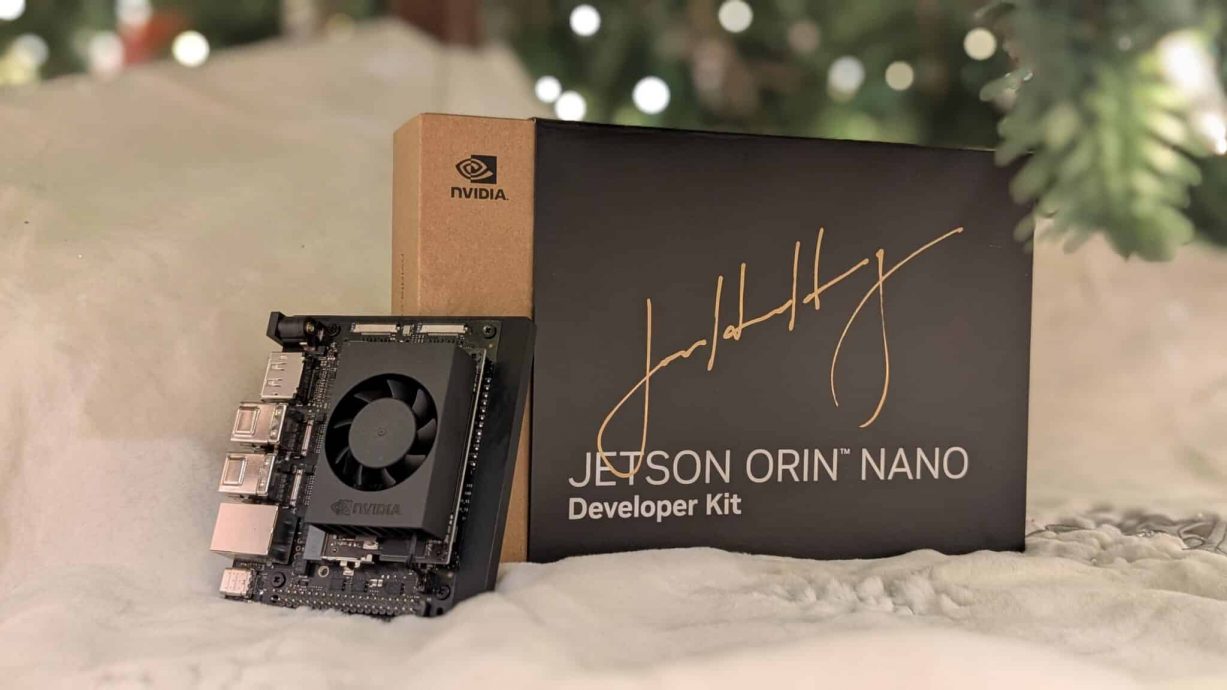
The Nvidia personal AI supercomputer has moved from a CES 2025 stage promise into a shipping product that sits on thousands of developer desks today. Jensen Huang first unveiled it as the $3,000 Project DIGITS personal computer, promising up to one petaflop of FP4 AI performance per Nvidia’s own January 2025 press release. The platform shipped as DGX Spark in October 2025 and now sells through six major OEM partners worldwide. A current 128GB configuration lists at $6,950, while a trimmed 64GB variant starts at $4,999 for a lower entry point. The reason the launch matters is not the price alone, but the shift it marks toward local inference, fine-tuning, and experimentation for frontier-scale models. This guide unpacks the architecture, benchmarks, trade-offs, and who should actually buy one in 2026. By the end you will know when desk-side Grace Blackwell beats a cloud cluster for your specific workload.
Quick Answers on Nvidia’s Personal AI Supercomputer
What is the Nvidia personal AI supercomputer?
It is DGX Spark, a desk-side system built on the GB10 Grace Blackwell Superchip with 128GB of unified memory, up to one FP4 petaflop of AI compute, and Nvidia’s full DGX software stack for local model work.
How much does the Nvidia personal AI supercomputer cost in 2026?
The 64GB Nvidia personal AI supercomputer starts at $4,999 and the 128GB configuration now lists at $6,950, up from its $3,000 announcement price.
What size models can a Nvidia personal AI supercomputer actually run?
A single Nvidia personal AI supercomputer runs models up to 200 billion parameters at FP4, and two linked units stretch that ceiling to roughly 405 billion parameters.
Key Takeaways on Nvidia’s Desk-Side AI Platform
- DGX Spark puts Grace Blackwell silicon inside a desk-side box that pulls from a normal wall outlet, folding supercomputer-class AI work into a developer workstation footprint.
- The 128GB unified memory pool lets a single unit load large models without VRAM shuffling, but 273 GB/s LPDDR5x bandwidth caps decode throughput compared with discrete Blackwell cards.
- Prices have climbed sharply since launch, so the right buyer today is a founder, researcher, or team with a steady local-inference workload rather than a casual hobbyist.
- The strategic story is bigger than any single machine: local AI compute is becoming a real tier beside cloud and edge, with Apple Silicon and AMD Strix Halo closing in fast.
Table of contents
- Introduction
- Quick Answers on Nvidia’s Personal AI Supercomputer
- Key Takeaways on Nvidia’s Desk-Side AI Platform
- What Is Nvidia’s Personal AI Supercomputer?
- Unpacking What DGX Spark Actually Delivers
- Inside the Grace Blackwell GB10 Architecture
- How Unified Memory Rewrites the Local AI Playbook
- Petaflop Performance Claims Meet Real-World Benchmarks
- Pricing Trajectory From $3,000 to $6,950 and What It Means
- Setting Up a DGX Spark for Local Model Work
- Software Stack: DGX OS, NIM, and the CUDA Advantage
- Memory Bandwidth: The Real Bottleneck Developers Face
- Who Should Actually Buy a Personal AI Supercomputer
- How It Compares to Mac Studio, Strix Halo, and RTX Workstations
- Risks of Betting a Startup on Desk-Side Compute
- Ethics and Accessibility of AI Democratization
- Implementation Lessons From DGX Spark in Practice
- Impact on Researchers, Students, and Independent Developers
- Enterprise Patterns for Clustering Multiple Units
- The Future of Personal AI Compute Through 2028
- Key Insights on the Nvidia Personal AI Supercomputer
- Real-World Examples of Nvidia Personal AI Supercomputer in Use
- Deeper Case Studies in Personal AI Supercomputer Adoption
What Is Nvidia’s Personal AI Supercomputer?
The Nvidia personal AI supercomputer is DGX Spark, a desk-side system built on the GB10 Grace Blackwell Superchip with 128GB of unified coherent memory and up to one FP4 petaflop of AI compute. It brings datacenter-class prototyping onto a single developer desk running from a standard power outlet.
An Interactive From AIplusInfo
Personal AI Supercomputer Workload Planner
Estimate what a Nvidia DGX Spark can do with your specific LLM workload. Move the controls to see decode throughput, time to serve, and memory headroom change in real time against LMSYS benchmark data.
8B parameters
1
500
Est. decode throughput
49.7 tok/s
Single-stream autoregressive generation
Est. time per response
10.1 s
For the selected token count
At 20B parameters single stream, DGX Spark delivers roughly 49.7 tokens per second of decode throughput, matching LMSYS’s measured GPT-OSS 20B result in Ollama. A 500-token response takes about 10 seconds.
Benchmark reference: LMSYS DGX Spark Performance Analysis (Oct 2025). Decode throughput models extrapolated from LMSYS-published measured points and scale with batch for small models.
Unpacking What DGX Spark Actually Delivers
Building on the Definition, the Nvidia personal AI supercomputer is DGX Spark. Nvidia announced this retail name for the system as Project DIGITS at CES in January 2025. The machine packages a Grace Blackwell GB10 Superchip and 128GB of unified coherent memory. It also carries up to four terabytes of NVMe storage inside a compact, power-efficient chassis. Nvidia built the hardware with MediaTek, which contributed to the ARM CPU side of the Superchip. The design target is simple and radical at once: put a petaflop-class AI machine in reach of every serious practitioner. The design target is simple and radical at once: put a petaflop-class AI machine in reach of every serious practitioner. Early buyers report that the compact profile fits office environments where a rack system would be impractical.
Nvidia pitched DGX Spark as the first true desk-side AI supercomputer, not a workstation with a card bolted on. The distinction matters because traditional AI workstations rely on discrete GPUs. Those GPUs top out at 48 or 96 GB of dedicated VRAM, forcing developers to shard or quantize large models aggressively. The Spark’s unified memory pool, by contrast, lets a single 70B or 120B parameter model load without any manual sharding. That architecture choice is the center of the value proposition.
It is why Nvidia frames the box as a supercomputer rather than a mini PC. The launch unit shipped running the Linux-based DGX OS, so a developer gets the same toolchain the DGX rack systems in cloud regions use. That architecture choice is the center of the value proposition. It is why Nvidia frames the box as a supercomputer rather than a mini PC. A developer using the platform benefits from lower memory-copy overhead at every stage of model loading.
Target users span a broad band, from solo researchers prototyping new fine-tuning recipes to lab teams running weekly experiments on frontier models. Students and academics benefit because they no longer need a cloud GPU grant to touch a 70B parameter dense model in a serious way. Enterprises use the unit for secure on-premise prototyping, which keeps sensitive data off managed inference endpoints. The platform also ties neatly into DGX Cloud for seamless scale-up, which is part of how Nvidia protects its cloud revenue even as it sells a desk-side box. The platform also ties neatly into DGX Cloud for seamless scale-up, which is part of how Nvidia protects its cloud revenue even as it sells a desk-side box. Teams that need to burst into cloud resources during peak loads find the hybrid pattern particularly smooth to adopt.
Inside the Grace Blackwell GB10 Architecture
Building on that product frame, the engineering behind DGX Spark centers on the GB10 Grace Blackwell Superchip. The GB10 pairs a 20-core ARM Grace CPU with a Blackwell GPU on the same package. The two parts link via Nvidia’s NVLink-C2C interconnect, which keeps latency low between them. That link gives the CPU and GPU access to a single, coherent memory pool rather than two separate address spaces. For AI workloads this coherence matters, because moving a 70-billion-parameter weight matrix across a PCIe bus is a wall-clock killer in any discrete-GPU setup. For AI workloads this coherence matters, because moving a 70-billion-parameter weight matrix across a PCIe bus is a wall-clock killer in any discrete-GPU setup. Developers report meaningful time savings during model warm-up on Spark compared with discrete-GPU rigs.
The Blackwell GPU inside the GB10 carries fifth-generation Tensor Cores and the latest-generation CUDA cores. Both are tuned for the FP4 and FP8 numerical formats that current frontier inference workloads rely on. Nvidia quotes up to one petaflop of AI performance at FP4 precision. That figure places the box in the compute class of early-era datacenter accelerators. That is not a casual claim: a petaflop was, less than a decade ago, the rated performance of a national laboratory system occupying an entire rack. Today it sits on a shelf in a startup garage, drawing power from a standard outlet. That is not a casual claim: a petaflop was, less than a decade ago, the rated performance of a national laboratory system occupying an entire rack. Today it sits on a shelf in a startup garage, drawing power from a standard outlet.
The 20-core Grace CPU is not a backup processor but a first-class data-movement engine for the GPU. Grace coordinates model loading, tokenizer logic, data preprocessing, and the orchestration layers that modern agent frameworks demand. Developers who have worked with x86 plus discrete GPU setups report a smoother end-to-end pipeline, because context switches and host-to-device copies happen inside a single coherent address space. The Grace side also runs the KV cache for long-context workloads, which keeps the Blackwell GPU fed without constant memory round-trips. The Grace side also runs the KV cache for long-context workloads, which keeps the Blackwell GPU fed without constant memory round-trips. Reviewers have noted the practical impact on streaming inference and long-context chat sessions.
Network and expansion details round out the picture nicely for cluster-ready buyers. Nvidia exposes a pair of QSFP ports on the Spark, which is what enables the two-unit clustering path for larger models. Storage tops out at 4TB of NVMe, enough to hold a reasonable cache of open weights alongside working datasets. Power draw sits in a desktop envelope, with Tom’s Hardware measuring an idle floor around 35W and peak loads that stay well below a legacy workstation tower. The platform is engineered to live on a desk, not in a server closet, and the thermal design reflects that choice.
How Unified Memory Rewrites the Local AI Playbook
Stepping back from the silicon, the unified memory design is the single architectural choice that defines DGX Spark’s value. In a conventional workstation with a discrete GPU, system RAM and VRAM are separate pools, and moving a model from one to the other costs seconds or minutes. Developers routinely watched a 70B parameter model stall at load time because its weights had to flow across a PCIe bus one chunk at a time. DGX Spark erases that step: the full 128GB pool is addressable by both the Grace CPU and the Blackwell GPU without a copy. That changes how developers structure their experiments, because iteration speed stops being gated by data transfer.
The practical payoff is that models which previously required cloud-tier VRAM, such as a 70-billion-parameter dense network in FP8, now fit on a single desk-side machine. For agent builders, that means prototyping tool-using chains with real frontier-scale behavior rather than toy 7B models. For researchers, it means running a fine-tune pass overnight without renting an H100 instance. There is a real ceiling, of course, and the LMSYS benchmark team’s October 2025 report documents how bandwidth, not capacity, becomes the next constraint. Still, the capacity floor itself is a meaningful shift, because it changes which classes of experiment are feasible outside a hyperscaler.
Petaflop Performance Claims Meet Real-World Benchmarks
Shifting from architecture to measured performance, the petaflop claim deserves careful inspection because peak theoretical numbers rarely translate cleanly into throughput for real models. LMSYS tested DGX Spark on a representative suite of open-weight models in October 2025. The findings paint a nuanced picture for prospective buyers, with headline strengths offset by specific bandwidth limits. On GPT-OSS 20B running in Ollama, the Spark hit 2,053 tokens per second prefill and 49.7 decode. An RTX Pro 6000 Blackwell workstation reached 10,108 prefill and 215 decode on the same workload. The Spark trails the top discrete card by roughly four times. That gap is informative: it is wide, but not absurd for a box at a fraction of the price.
The prefill versus decode split is where the real DGX Spark story lives. Prefill throughput runs in the thousands of tokens per second across model sizes, which means the first-token latency on long-context queries is competitive. Decode throughput drops hard at larger model sizes, with the Llama 3.1 70B in FP8 benchmark producing only 2.7 tokens per second per sequence at batch one. That pattern is not a Spark defect but a direct consequence of its LPDDR5x memory bandwidth, which is the gating resource for autoregressive decoding. A developer running Llama 3.1 8B at batch 32 can still pull 368 tokens per second in decode, which shows the batching compensation that smaller models allow.
Image and video workloads tell a different and more flattering story. Tom’s Hardware ran Flux.2 Klein 9B through ComfyUI on both DGX Spark and an AMD Strix Halo system. The Spark produced new images every 60 seconds after the first load. The Strix Halo system took roughly four times as long per iteration, when it worked at all. On LTX-2 video generation the AMD platform hit ROCm errors that prevented any output. The Spark pushed 720p video clips in just over three minutes per iteration. That places it within reach of indie creators who want local video generation without cloud subscriptions. Benchmark context matters, which is why serious buyers should match Spark to their actual workloads rather than trusting a headline number alone.
Pricing Trajectory From $3,000 to $6,950 and What It Means
Turning to the money side of the launch, the pricing arc tells a story the spec sheet alone does not. Nvidia unveiled Project DIGITS at CES 2025 with a $3,000 starting price, a figure that drove huge developer enthusiasm and preorder interest. The product then shipped as DGX Spark in October 2025 at a revised $3,999 for the 128GB configuration, roughly a third higher than the announcement number. By February 2026 the same configuration had climbed to $4,699, and by October 2026 Implicator.ai tracked the 128GB list price at $6,950. That is more than double the original announcement, and partner-assembled systems have been quoted between $7,000 and $9,000 depending on storage and chassis options.
Nvidia introduced a 64GB variant in October 2026 at $4,999 to open a lower entry tier. The lower tier sells exclusively through Acer, Asus, Dell, Gigabyte, HP, and MSI rather than a Founders Edition channel. That variant drops the model-size ceiling from 200B parameters to 100B at FP4, while keeping the same 273 GB/s memory bandwidth per unit. Two linked 64GB units cost a total of $9,998 together, which is roughly $3,048 more than a single 128GB system that hits the same 200B parameter capacity. On paper the dual-64 path offers double the aggregate bandwidth, but independent validation of that scaling claim is still thin. Buyers reading the price ladder should test their specific workload before committing.
The pricing drift matters strategically because it reshapes the ROI math for small teams. A $3,000 box pays back against six to nine months of moderate cloud inference spend for many workloads. A $6,950 box pushes that payback horizon out to twelve or eighteen months, which matters as the ongoing AI chip wars keep shifting competitor pricing. Competing options have also moved significantly during the same 12-month pricing window. A GMKtec Ryzen AI Max+ 395 mini PC with 128GB sold at $3,650 at Spark’s October 2026 announcement. Apple’s Mac Studio with 128GB unified memory sits in a similar price band. A reasoned purchase today weighs the full lifecycle cost against those alternatives, not against the 2025 headline.
Setting Up a DGX Spark for Local Model Work
Moving from purchase to deployment, the first hour with a DGX Spark follows a pattern that a Linux-fluent developer will find familiar. The unit arrives preloaded with Nvidia’s DGX OS, a Linux distribution tuned for Grace Blackwell. The image comes preconfigured with the CUDA toolkit, PyTorch, and the NIM microservice runtime. A first-time user plugs in a monitor, a keyboard, and ethernet, then walks through the standard account creation and update flow. From there, pulling a model is a matter of running the Nvidia model launcher or a familiar command like ollama pull for a quantized open-weight checkpoint. The friction most new users hit is network configuration for remote SSH access and the first-time DGX OS firewall setup. Both are well covered in The New Stack’s developer guide.
The real setup choice to make early is whether to treat the box as a headless server or an interactive workstation. Headless mode treats DGX Spark like a remote GPU host. Users SSH in from a laptop, run inference or training jobs, and keep the chassis in a quiet office corner. Interactive mode uses the unit as a direct desktop, with Jupyter, VS Code, and a browser running locally on the Grace CPU side. The headless pattern scales better for team settings because multiple users can share one box through standard Linux job management. The interactive pattern suits a solo researcher who wants fast iteration without a second machine. Most buyers end up in a hybrid mode: headless for long-running training, interactive for exploratory notebook sessions.
Software Stack: DGX OS, NIM, and the CUDA Advantage
Beyond the hardware, the DGX Spark software story is where Nvidia’s broader moat shows up. DGX OS is a Linux distribution purpose-built for Grace Blackwell silicon, with kernel modules, drivers, and user-space libraries pre-staged for CUDA 12 and newer. A developer who has struggled with CUDA driver mismatches on a stock Ubuntu install will notice the difference immediately: everything simply works out of the box. That reliability sounds mundane, yet it compounds over months of daily use because every lost hour to a driver incompatibility is an hour a researcher is not shipping. For teams, that reliability shows up as fewer tickets, smoother onboarding, and more consistent reproducibility across machines.
Nvidia NIM microservices sit one layer above DGX OS, packaging common open-weight models into ready-to-serve container images with tuned inference kernels. A Llama 3.1 70B deployment that might take an afternoon on a vanilla stack lands as a one-command NIM pull on DGX Spark. That packaging matters for small teams because it compresses the time from “we need a local inference endpoint” to “we have one serving requests” into minutes. NIM also carries sensible defaults for KV cache management, continuous batching, and quantization, which non-ML-specialist engineers can lean on without deep tuning. The flip side is that NIM shortcuts can obscure the underlying knobs, so sophisticated users may still prefer raw PyTorch or vLLM for research work.
The broader CUDA ecosystem is the real strategic advantage in the current competitive landscape. Years of effort from the open-source community have made CUDA the default target for PyTorch, JAX, TensorRT, vLLM, SGLang, and dozens of other inference and training frameworks. A developer buying a DGX Spark steps into a software estate that has absorbed billions of hours of optimization work. Competing platforms from AMD and Apple have improved sharply in 2026, but they still lag in breadth of first-class framework support and in tooling maturity. For a team that values time to first shipped model over absolute silicon value, that ecosystem gap is usually the deciding factor.
Model availability also deserves a note for buyers planning fine-tunes or prototypes. The Nvidia GPU Cloud (NGC) catalog, combined with the Nvidia Llama Nemotron agentic models, gives DGX Spark users a curated library of checkpoints tuned for Grace Blackwell silicon. These Nemotron variants ship with NIM-compatible containers and FP4 weights that fit within the 128GB unified memory envelope. Combined with permissively licensed open weights from Meta, Mistral, Alibaba, and Deepseek, a Spark owner in late 2026 has dozens of production-grade models to choose from. That inventory removes a major blocker that haunted earlier local-AI efforts, where open weights lagged frontier closed models by generations.
Memory Bandwidth: The Real Bottleneck Developers Face
Turning from software to the one hard limit everyone hits, the Spark’s 273 GB/s LPDDR5x memory bandwidth is the single most important technical constraint for buyers to understand. LMSYS called this “the main limiting factor” in their October 2025 benchmark report, and the pattern shows up in every autoregressive decode result. Compared with the discrete RTX Pro 6000 Blackwell card, DGX Spark has roughly a quarter of the bandwidth budget per unit time. The RTX pulls memory at well over a terabyte per second. That gap sits within the broader GPU, TPU, and NPU chip landscape. The physics drives the four-times decode throughput deficit on GPT-OSS 20B and the 2.7 tokens per second on Llama 3.1 70B. Peak compute is plentiful on Spark; feeding that compute is the bottleneck.
The engineering workarounds for this bandwidth gap are real but imperfect. Speculative decoding using EAGLE3 has delivered up to a two-times throughput lift on models like Llama 3.1 8B, which effectively buys back some of the lost ground. Larger batch sizes also help with smaller models, lifting Llama 3.1 8B decode from 20.5 tokens per second at batch one to 368 tokens per second at batch 32. Those techniques matter because they shift the Spark from a research toy into a credible local serving platform for smaller models under moderate load. Clustering two units via QSFP ports doubles aggregate bandwidth on paper, which Nvidia claims yields up to 1.7-times the single-unit throughput on specific benchmarks like Qwen 3.8 27B.
What this means for the buying decision is simple to state and often ignored. A buyer whose workload leans on autoregressive decoding of very large dense models at batch one should look past DGX Spark toward a discrete RTX 5090 or Pro 6000 workstation. A buyer whose workload lives in smaller models with batching, in image or video generation, or in experimentation rather than production serving, is well matched to Spark. The 128GB capacity is the headline, but decode bandwidth is the deciding spec for anyone planning to serve users rather than just prototype. Understanding this trade-off turns a potentially disappointing purchase into a well-matched one.
Who Should Actually Buy a Personal AI Supercomputer
Building on that bandwidth reality, the buyer profile for DGX Spark is narrower than Nvidia’s marketing suggests. Teams and individuals who ship frontier-model prototypes weekly, who need isolated workloads for regulated data, or who run image and video generation at scale are the clearest fits. Students, hobbyists, and casual LLM users rarely justify the current $4,999 to $6,950 price band, because cloud rentals handle their load at a fraction of total cost. A good heuristic is to total current cloud GPU prototyping spend and estimate payback. If cloud spend exceeds roughly $350 to $500 per month, Spark starts to pencil out. A good heuristic is to total current cloud GPU prototyping spend and estimate payback. If cloud spend exceeds roughly $350 to $500 per month, Spark starts to pencil out. Teams should also factor in lost engineering hours from cloud orchestration friction when calculating true total cost.
Enterprise teams occupy a specific sweet spot where the box earns its keep. Regulated industries, legal and medical research teams, and any group working with data that cannot leave the building benefit from the Spark’s air-gapped potential. Pair that with Nvidia’s seamless DGX Cloud escape hatch and the hybrid pattern becomes attractive: prototype locally, scale only when ready, and keep sensitive context off third-party endpoints. For teams comparing options, the cost side of local versus cloud LLM inference deserves a careful lifecycle analysis rather than a single headline price comparison. For teams comparing options, the cost side of local versus cloud LLM inference deserves a careful lifecycle analysis rather than a single headline price comparison. A reasoned evaluation includes power, floorspace, and ongoing maintenance alongside the hardware purchase price.
How It Compares to Mac Studio, Strix Halo, and RTX Workstations
Shifting to the competitive view, DGX Spark no longer has the personal AI supercomputer category to itself in late 2026. Apple’s Mac Studio with the M3 Ultra chip ships up to 512GB of unified memory at the top end. That capacity doubles Spark’s ceiling and runs on the mature Apple Silicon toolchain for creative and ML work. AMD’s Ryzen AI Max+ 395 Strix Halo platform targets the same desk-side AI niche at roughly half the price, with GMKtec mini PCs shipping at $3,650 for 128GB configurations. Each option has its own mature buyer community and roadmap signals to watch.
Nvidia’s own discrete GPU workstation path uses the RTX 5090 or Pro 6000 Blackwell card. That path delivers the raw decode performance Spark lacks, at higher power draw and a tower form factor. A full-tower workstation also occupies substantially more desk space than the compact Spark chassis. Nvidia’s own discrete GPU workstation path uses the RTX 5090 or Pro 6000 Blackwell card. That path delivers the raw decode performance Spark lacks, at higher power draw and a tower form factor. A full-tower workstation also occupies substantially more desk space than the compact Spark chassis. A full-tower RTX workstation also occupies substantially more desk space than the compact Spark chassis.
Each alternative wins on a specific axis, so the decision is less about a single best box and more about workload fit. Mac Studio wins on absolute memory capacity and quiet operation, and on first-party software for creative workflows. Strix Halo wins on price per gigabyte of memory, at the cost of a less mature ML software stack. It also carries the ROCm issues that Tom’s Hardware documented in October 2025. RTX 5090 workstations win on sheer decode throughput for small to medium dense models, provided a 32GB VRAM ceiling fits the workload. DGX Spark wins on the full Nvidia DGX software stack, on the clustering path, and on parity with the production environment many teams already deploy into. DGX Spark wins on the full Nvidia DGX software stack, on the clustering path, and on parity with the production environment many teams already deploy into. The matching software estate between DGX Spark and rack-scale DGX systems means less integration friction when scaling a workload up.
For teams that want to avoid lock-in, there is a middle path: buy a Spark for the production-stack parity and keep a Mac Studio for the creative side. That pattern is appearing in several startup offices through 2026, and it leverages the strengths of both platforms without a long-term commitment to either architecture. Open-source LLM runners like local LLM tooling on Mac and NIM on DGX Spark can serve the same model with compatible APIs, so switching cost is lower than it looks. The buyer who understands the trade-off between capacity, bandwidth, and ecosystem maturity will make the right call for their specific workload. The buyer who understands the trade-off between capacity, bandwidth, and ecosystem maturity will make the right call for their specific workload. A short pilot with a representative model is almost always worth the time, because the right answer varies by workload.
Risks of Betting a Startup on Desk-Side Compute
Moving to the risk side of the ledger, a founder considering DGX Spark as the basis of a product should think carefully about a few concrete failure modes. The first is pricing volatility, which the $3,000 to $6,950 trajectory illustrates sharply. A team that raised capital expecting ten Spark units at the original price now faces a $40,000 budget overrun. The same hardware ambition costs substantially more today than at CES 2025. Supply chain concentration is a second risk: DGX Spark availability is gated through six partner OEMs, none of whom commit to specific volume guarantees for individual customers. The third risk is architectural lock-in to CUDA, which binds forward-looking engineering decisions to Nvidia’s roadmap.
Software maturity is another concern that LMSYS flagged explicitly, consistent with broader observations that AI hardware sits at a critical turning point. Early drivers, early kernel tuning, and early framework support mean that benchmark numbers may shift sharply over a six-month window, and not always upward. Teams that deployed Spark in late 2025 for production serving, not just prototyping, hit some of these bumps directly. The pragmatic hedge is to keep a cloud fallback contract active, so a sudden software regression or a hardware failure does not strand customer-facing workloads. A startup that bets entirely on local Spark serving without that fallback is making a fragile infrastructure choice.
Finally, there is the broader market risk of the personal AI compute category moving sideways. Apple, AMD, and emerging silicon designers from Groq and other AI chip rivals are pushing aggressively into the same niche. A founder who sinks capital into a specific hardware pattern in 2026 may find that pattern commoditized or outflanked by 2028. The sensible response is not to avoid Spark, but to treat it as a working platform for the next 24 months rather than a 60-month capital commitment. Equipment refresh cycles for AI silicon are compressing, and plans should reflect that compression.
Ethics and Accessibility of AI Democratization
Beyond the commercial calculus, the ethical frame of the Nvidia personal AI supercomputer launch deserves attention. Jensen Huang framed DGX Spark as putting a supercomputer on every desk, which echoes the democratization narrative that has surrounded personal computing since the 1970s. The accessibility story has real weight: a researcher in a modestly funded university lab can now touch model classes that previously required a cloud grant from a large vendor. For independent developers and open-source contributors, local access to frontier-scale weights accelerates the exploration of new techniques without a gatekeeper deciding which experiments are worth compute. Early sanctions on advanced AI compute exports have also cut certain regions off from the current generation of personal AI hardware.
That democratization is uneven, though, and the current $4,999 to $6,950 price tag places DGX Spark out of individual reach for most of the world. A device that costs more than the median annual income in many countries cannot honestly be called universal. Platform-shift ethics also apply to the environmental footprint of distributed compute, where thousands of desk-side units may draw more total power than a handful of efficient datacenter pods. Serious consideration of accessibility must look at the full stack: price, power, software licensing, and language or regional inclusion. Nvidia’s current trajectory delivers real benefits to a narrow band of well-funded users, and the broader democratization claim remains more aspiration than fact. Serious consideration of accessibility must look at the full stack: price, power, software licensing, and language or regional inclusion.
Implementation Lessons From DGX Spark in Practice
Pulling back to real-world adoption patterns, the first full year of DGX Spark deployment has produced some useful lessons. Research groups at universities report that the box compresses fine-tuning iteration cycles from overnight cloud jobs to interactive sessions. Some teams cut a two-week sprint down to three days. A European legal AI startup deployed four units to isolate client-document fine-tuning workloads from their main inference stack, which addressed a specific regulatory concern that cloud hosting had raised. The most consistent feedback across these early adopters is that software stack maturity, not raw hardware performance, has been the dominant factor in time to productive use. Teams that staged a pilot deployment before a full fleet purchase reported smoother onboarding and clearer ROI data.
Clustering patterns are also emerging in the field, with some teams running two or three Spark units linked through QSFP cables to tackle larger model work. The production latency and throughput playbook the broader industry has built up applies cleanly to Spark clusters. Independent validation of the two-unit bandwidth claim is still sparse though. Teams reporting wins with clustering emphasize that the orchestration layer matters: NIM handles two-node configurations more smoothly than custom PyTorch distributed setups for most users. A single engineer can get a two-Spark 200B-parameter deployment running in a day with NIM, which would have been a multi-week project on cloud GPUs two years ago. A single engineer can get a two-Spark 200B-parameter deployment running in a day with NIM, which would have been a multi-week project on cloud GPUs two years ago.
The failure modes are informative too, and worth studying before fleet decisions. Teams that over-committed to local serving before validating workload-fit have scaled back to hybrid patterns, keeping Spark for prototyping and routing production traffic through DGX Cloud or alternative cloud endpoints. Pricing surprises forced some buyers to delay planned fleet expansions, with one small consultancy postponing a planned four-unit purchase after the 128GB price jumped beyond their budget. These lessons underscore the central theme: DGX Spark is a credible and sometimes transformative tool for the right workload, and it is an expensive mistake for the wrong one. A savvy buyer who matches workload characteristics to platform choice always wins the cost analysis. A buyer who carefully matches workload to platform wins the cost-benefit tradeoff on this hardware.
Impact on Researchers, Students, and Independent Developers
Looking at the research community specifically, DGX Spark’s arrival has reshaped the texture of academic AI work in practical ways. A graduate student with a modest advisor grant can run fine-tuning passes on a 70B-parameter model without filing a compute request to a central cluster. That access matters because it changes which research questions are feasible for a single student to pursue over a semester. Reproducibility also benefits, because a published paper can share a configuration that any peer institution with a Spark can rerun locally. Reproducibility also benefits, because a published paper can share a configuration that any peer institution with a Spark can rerun locally.
Independent developers and open-source maintainers see a parallel benefit from desk-side access. A contributor to vLLM, SGLang, or home fine-tuning tools like Axolotl can test performance characteristics on a reference Grace Blackwell platform without negotiating cloud credits. That lowers the barrier to meaningful upstream contributions on the exact hardware that production deployments increasingly target. Learning paths also open up: Nvidia’s free AI courses now assume a Grace Blackwell developer environment that Spark provides at desk-side, which shortens the ramp for new entrants. The compound effect is a visibly healthier open-source AI ecosystem, with more diverse contributors and faster iteration on inference frameworks. The compound effect is a visibly healthier open-source AI ecosystem, with more diverse contributors and faster iteration on inference frameworks.
Enterprise Patterns for Clustering Multiple Units
Turning to enterprise teams scaling beyond a single researcher, the clustering story around DGX Spark is maturing but still rough at the edges. Nvidia’s official clustering path uses the QSFP ports on each unit, with ConnectX networking providing the fabric for two-unit configurations. Nvidia claims this setup supports models up to 405 billion parameters at FP4, which places the cluster in the frontier dense-model class on paper. Real-world validation of that claim beyond Nvidia’s own internal benchmarks is still thin, which is a caveat every enterprise should test against its own workload before committing capital. Real-world validation of that claim beyond Nvidia’s own internal benchmarks is still thin, which is a caveat every enterprise should test against its own workload before committing capital.
Beyond two units, the architecture becomes less tidy, which contrasts with purpose-built offerings like Nvidia’s cost-effective generative AI supercomputer line. A three or four Spark cluster requires custom orchestration that Nvidia does not officially support. Most teams exploring that path fall back to standard Kubernetes or Ray setups for job scheduling. Storage sharing, model-weight distribution, and user authentication across a fleet of desk-side boxes is production AI work. Enterprise teams considering this path should also plan for ongoing driver updates across the fleet, which Nvidia does not automate at desk-side scale.
The local-first version adds friction that small teams should budget for. The value proposition at that scale often shifts for teams planning multi-year deployments. Rather than replacing a cloud cluster, a Spark fleet complements one for isolated or latency-sensitive workloads while cloud absorbs peak load. Storage sharing, model-weight distribution, and user authentication across a fleet of desk-side boxes is production AI work. The local-first version adds friction that small teams should budget for.
Operational maturity around backup, patching, and hardware refresh is another consideration enterprise buyers often underestimate. A rack of Oracle-deployed Blackwell GPUs ships with managed firmware updates, telemetry pipelines, and service-level agreements that Oracle’s Blackwell GPU deployments illustrate at hyperscale. A fleet of desk-side Sparks requires an internal team to replicate even a fraction of that operational layer. Enterprises choosing local Spark deployment should budget for the operations work explicitly, not just the hardware purchase. The teams that have done well have treated Spark fleets as research infrastructure with modest operational demands, not as managed production services. The teams that have done well have treated Spark fleets as research infrastructure with modest operational demands, not as managed production services.
The Future of Personal AI Compute Through 2028
Looking ahead over the next 24 months, the personal AI compute category is likely to look very different by 2028. Apple is expected to continue stretching unified memory capacity on Mac Studio, with plausible paths to 1TB or more at the top configuration. AMD’s Strix Halo successor should narrow the software gap that currently limits broader adoption, with ROCm maturity a leading indicator of that catch-up pace. Nvidia itself will almost certainly launch a Spark successor on a next-generation Grace Blackwell or Grace Rubin platform, and competitive pressure means that successor should offer meaningfully higher memory bandwidth. Industry watchers expect a Spark successor on an updated platform to land in 2027, which should narrow the bandwidth gap.
Silicon economics also point toward broader category expansion as foundry capacity grows. Industry analysts expect per-unit costs to decline as production scales, widening the buyer pool from today’s early adopters toward smaller research teams. Independent chip designers in the US and Asia are prototyping competing architectures aimed at the same desk-side niche. Meaningful shipments are expected in 2027 from several of these efforts. That competitive push will likely improve raw performance per dollar and lift the availability of alternatives beyond the current Nvidia and Apple duopoly.
The broader architectural trend worth watching is agent-first workstation design, part of the shift toward personal supercomputers for data processing. The design tunes the box around persistent agent workloads rather than one-shot inference. That design implies larger KV caches, better interconnect for multi-model orchestration similar to Project Ceiba AWS and Nvidia supercomputer integrations, and direct integration with local tool-execution sandboxes. Several startup silicon designers have hinted at purpose-built agent accelerators, and the category may fragment between general AI workstations and agent-specific appliances. Pricing dynamics will likely cut in the buyer’s favor as competition heats up, reversing the 2025 to 2026 climb that DGX Spark went through. A sensible planning horizon assumes personal AI compute halves in effective cost per token every 18 to 24 months through 2028. A sensible planning horizon assumes personal AI compute halves in effective cost per token every 18 to 24 months through 2028, consistent with broader silicon trends.
The deeper strategic shift is that local AI compute becomes a third real tier alongside cloud and edge, with distinct workloads mapping to each. Cloud remains the home of frontier training and peak-load inference serving at scale. Edge handles ambient and device-local inference on phones, laptops, and appliances. Personal AI supercomputers occupy the middle ground, serving prototyping, research, regulated-data workloads, and specific small-scale production serving with real cost advantages. That tiered picture is now clear enough to plan around. Buyers who structure their 2027 and 2028 compute strategy with this map will outperform teams still treating it as cloud versus laptop. The DGX Spark launch is the moment the middle tier became real.
Chart From AIplusInfo
DGX Spark Decode Throughput by Model Size
Tokens per second of autoregressive decoding, measured by LMSYS on a single DGX Spark unit in October 2025. Toggle to compare prefill throughput on the same models.
Source: LMSYS DGX Spark Performance Analysis, October 13, 2025. Measurements taken on a single 128 GB DGX Spark unit running SGLang or Ollama. Decode is per-sequence tokens per second; prefill is tokens per second end to end.
Key Insights on the Nvidia Personal AI Supercomputer
- According to Implicator.ai pricing data, DGX Spark’s 128GB configuration climbed from $3,000 at announcement to $6,950 by October 2026.
- Nvidia’s official GB10 Superchip specifications confirm up to one FP4 petaflop of AI performance on a desk-side box running from a standard wall outlet.
- LMSYS’s October 2025 benchmark report measured 2,053 tokens per second prefill and 49.7 decode on GPT-OSS 20B, about four times slower than RTX Pro 6000 Blackwell.
- The LMSYS benchmark analysis flagged the 273 GB/s LPDDR5x memory bandwidth as the main limiting factor for autoregressive decoding on larger dense models.
- Stanford’s Biomni research team, documented in Nvidia’s higher-education deployment roundup, reported roughly 80 tokens per second on a 120-billion-parameter GPT-OSS model matching cloud GPU instance speed.
- Signal65’s RAG-by-day enterprise case study found a single DGX Spark serves up to 8 users at under $600 per seat for a 30B-parameter workload.
- Nvidia claims clustering two units via QSFP ports delivers up to 1.7 times single-unit performance, though the Implicator.ai pricing story notes that scaling claim lacks independent third-party validation yet.
- Tom’s Hardware found that Flux.2 Klein 9B image generation runs in 60 seconds per iteration on DGX Spark versus roughly four minutes on an AMD Strix Halo system.
The pattern across every data point is the same: DGX Spark is a credible local AI platform when workload matches silicon, and a frustrating one when it does not. Capacity is generous and software maturity is strong, which is why research teams and small groups serving 4 to 8 users have reported real wins. Decode bandwidth caps the box at prototyping and modest-scale serving, rather than high-throughput production. The pricing climb has narrowed the universe of buyers for whom the math works, pushing the sweet spot toward teams with sustained local-inference needs rather than casual users. Treating DGX Spark as the first commodity instance of a new tier beside cloud and edge gives the most accurate forecasting lens for 2027 planning.
| Dimension | DGX Spark 128GB | Mac Studio M3 Ultra 128GB | GMKtec Ryzen AI Max+ 395 128GB | RTX 5090 Workstation |
|---|---|---|---|---|
| Starting price (late 2026) | $6,950 | $4,999 to $5,999 range | $3,650 | $3,500 to $4,500 for build |
| Unified memory | 128 GB coherent | 128 GB unified | 128 GB unified | Discrete 32 GB GDDR7 VRAM |
| Memory bandwidth | 273 GB/s LPDDR5x | Approximately 800 GB/s | Approximately 256 GB/s | Over 1,500 GB/s on VRAM |
| Max model at FP4/FP8 | 200B params single unit | Up to 500B at MLX quant | Similar 100 to 200B range | Limited by 32 GB VRAM |
| ML software maturity | CUDA, NIM, PyTorch, vLLM | MLX, PyTorch MPS | ROCm, improving | CUDA full ecosystem |
| Form factor and power | Compact, 35W idle | Silent, under 10W idle | Mini PC, low power | Tower, 400W plus GPU draw |
| Clustering path | QSFP two-unit official | Thunderbolt 5, informal | No official clustering | NVLink depending on card |
Real-World Examples of Nvidia Personal AI Supercomputer in Use
Stanford Biomni Local Prototyping
Stanford’s research team working on the Biomni biological agent framework deployed DGX Spark to prototype training and evaluation pipelines before scaling to larger GPU clusters. The team ran a 120-billion-parameter GPT-OSS model in MXFP4 quantization via Ollama and reported roughly 80 tokens per second of generation throughput. That matches large cloud GPU instances for their prototyping workload. That measurement matters because it validates the Spark’s value proposition at the upper end of the model-size envelope, where decode bandwidth normally struggles most. The limitation Stanford notes is that the Spark workflow only handles the prototyping phase. Final training and evaluation runs still require cluster-scale resources, so the box complements rather than replaces. The Biomni team documented their results in Nvidia’s higher-education deployment roundup, which notes feedback loops cut from days of cloud wait time to hours of local iteration.
IceCube Antarctic Observatory AI Deployment
The University of Wisconsin-Madison IceCube Neutrino Observatory deployed DGX Spark at the South Pole for AI models on neutrino data. Computing director Benedikt Riedel of the Wisconsin IceCube Particle Astrophysics Center led the deployment. The remote site has extreme power and bandwidth constraints, so a desk-side unit on a single envelope works where racks would not be viable. Riedel reported that DGX Spark “allows us to deploy AI in a compartmentalized and easy fashion, at low cost.” The phrase describes on-site inference capability where cloud round-trips are impractical. The 35-watt idle power draw saved hundreds of watts versus a traditional rack, and the absence of datacenter cooling makes the unit viable at outposts. The known limitation is that decode-heavy workloads still bottleneck on bandwidth, so the team runs smaller models rather than attempting frontier dense inference, as the Nvidia higher-education report documents. This deployment illustrates the extreme case for local AI compute: when you cannot reach the cloud, the box on your desk is your only compute option.
NYU ICARE Radiology Agent Framework
NYU’s Global AI Frontier Lab deployed DGX Spark to run the ICARE project end-to-end locally, led by faculty fellow Lucius Bynum at the Center for Data Science. ICARE uses collaborating AI agents to evaluate how closely AI-generated radiology reports match expert sources across hundreds of imaging studies per day. Imaging data stays on site rather than routing through cloud endpoints. The data-sovereignty benefit matters for protected health information, which is why on-premise processing is a near-requirement for medical AI research. Bynum reported that running 70-billion-parameter LLMs locally on the DGX Spark “completely changed my workflow,” saving hours of cloud-cost accounting each week and letting him focus iteration on the tool. The limitation the team acknowledges is that DGX Spark fits research iteration but not high-throughput serving. Production use would still require cloud infrastructure per the deployment roundup Nvidia published alongside its official spec sheet.
Recommended by AIplusInfo
Books to go deeper on personal AI compute
Hand-picked practitioner titles that map directly to the DGX Spark workflows described above.
As an Amazon Associate, AIplusInfo earns from qualifying purchases.

Book
Deep Learning (Adaptive Computation and Machine Learning series)
The canonical foundations reference for anyone running neural-network workloads on DGX Spark or any other personal AI supercomputer.
Buy on Amazon
Book
Hands-On Large Language Models: Language Understanding and Generation
A practitioner guide for running and fine-tuning the open-weight LLMs that DGX Spark’s 128GB unified memory is designed to host.
Buy on Amazon
Book
AI Engineering: Building Applications with Foundation Models
Chip Huyen’s playbook for engineering foundation-model systems, written for the exact workflows DGX Spark teams run locally.
Buy on AmazonDeeper Case Studies in Personal AI Supercomputer Adoption
Case Study: Harvard Kempner Institute Epilepsy Research
The Harvard Kempner Institute for the Study of Natural and Artificial Intelligence faced a compute-bound research problem. The team needed to prioritize which of roughly 6,000 genetic mutations warrant costly wet-lab testing. Co-director Bernardo Sabatini and senior AI computing engineer Bala Desinghu needed a way to run protein-structure and neuronal-function prediction models iteratively, without queueing cluster time for every experimental hypothesis. They deployed DGX Spark as a local workflow validation platform. The box confirms each model pipeline before scaling the compute-intensive runs to the institute's larger GPU cluster, saving central-cluster queue time. The deployment pattern suits teams balancing local iteration with cluster-scale production runs.
The measured impact was substantially faster hypothesis iteration across the research pipeline. The team could trial a new mutation-prioritization model on Spark in hours, then push the validated pipeline onto the central cluster when results warranted. Over several months of use the Kempner researchers reduced the latency between hypothesis and preliminary model output. That tightened the loop between computational and wet-lab researchers meaningfully across projects. Research productivity rose across the Kempner epilepsy work as administrative cluster queueing dropped sharply. The acknowledged limitation is that final production prediction runs across all 6,000 mutations still require the central cluster, so the Spark did not replace the shared resource. The story illustrates the hybrid pattern emerging across research computing. A local prototyping tier supports occasional access to larger shared resources, per the Nvidia Kempner profile and other published deployment notes.
Case Study: ISTA LLMQ Open-Source Fine-Tuning Platform
The Institute of Science and Technology Austria faced a problem scaling its open-source LLMQ fine-tuning software project: shared cluster slots were a bottleneck for iteration. ISTA needed a reference platform where models up to 7 billion parameters could fit alongside training data in unified memory. The team deployed a DGX Spark-based HP ZGX Nano AI Station as the solution. Before the Spark deployment, ISTA researchers had to negotiate time on shared GPU clusters for every LLMQ iteration, which slowed development and fragmented experimentation across conflicting schedules. The LLMQ project focuses on making LLM quantization and fine-tuning more accessible, and the Spark provides a stable, replicable baseline that other contributors can target.
Results included the ability to run complete fine-tuning cycles on-desk rather than in queued cluster slots. That measurably reduced dependency on central infrastructure for small and mid-size model experimentation. The team reports that the unified memory architecture particularly suited the training-and-data co-location required by their quantization research. The limitation they note is the 7-billion-parameter ceiling for the specific workflow they tested: larger models would require the two-unit cluster path or a different platform entirely. Nvidia's published ISTA case documentation confirms both the platform fit and the specific model-size constraint. LLMQ now ships with Spark-tested reference configurations, which lowers the barrier for other quantization researchers to contribute.
Case Study: Signal65 RAG-by-Day Fine-Tuning-by-Night Workload
Analyst firm Signal65 investigated a common small-team problem: how to share expensive AI hardware across daytime inference and overnight fine-tuning. Signal65 deployed DGX Spark as the solution, with daytime RAG inference serving concurrent users and overnight LoRA fine-tuning absorbing the idle hours. The workloads share the same 128GB memory pool and never run simultaneously. That pattern is what makes the time-slicing work for small teams. The specific model tested was Nemotron-3-Nano-30B-A3B, a 30-billion-parameter architecture that comfortably fits the Spark's capacity envelope. The daytime inference workload supported up to four concurrent users with a 7.9-second time to first token at 39 tokens per second generation throughput.
The overnight fine-tuning phase pushed 425 tokens per second of training throughput and completed 500-step LoRA runs in about 45 minutes on the same hardware. Signal65's cost analysis estimated under $600 per seat when the box is amortized across eight users, a figure attractive against cloud GPU inference pricing for sustained small-team workloads. The known limitations include the 30-billion-parameter ceiling in this configuration and the acknowledged "several non-obvious sharp edges" in setup that the Signal65 team references without fully detailing. Readers should note that the research was commissioned by Nvidia, which the Signal65 case summary states explicitly. Performance and cost claims should be interpreted with that disclosure in mind. The pattern is nevertheless valid for teams considering DGX Spark as a shared small-team resource.