
Introduction
China is reshaping global education by embedding artificial intelligence directly into classrooms at every level of its school system. The country’s Ministry of Education launched the AI Plus Education Action Plan in April 2026, targeting a comprehensive AI education system by 2030 that spans kindergarten through university. With over 6,000 AI companies operating nationally and a core AI sector projected at 1.2 trillion yuan (roughly $174 billion), China is channeling this industrial momentum directly into its schools. The initiative builds on nearly a decade of planning, beginning with AI references in the 13th Five-Year Plan and accelerating through pilot programs across 184 schools designated as national AI education bases in 2024. The speed and scale of this transformation have no parallel in any other country’s education system. A survey of 530,000 teachers across 19 provinces revealed that 85.17 percent of Chinese educators already believe AI helps expand their teaching resources. This convergence of policy ambition, technological capacity, and classroom adoption positions China’s education system at the center of AI’s growing role in education worldwide.
Quick Answers About China’s AI Classroom Revolution
What is China’s AI Plus Education initiative?
China’s AI Plus Education initiative is a national action plan launched in April 2026 by the Ministry of Education to integrate artificial intelligence across all levels of schooling, from kindergarten through university, with full implementation targeted by 2030.
How are Chinese schools using AI in classrooms right now?
Chinese schools deploy AI-powered tools including adaptive learning engines, smart blackboards with speech recognition, automated grading systems, and classroom behavior analysis platforms that process real-time student engagement data across more than 500 schools nationwide.
What are the main risks of AI in Chinese classrooms?
Key risks include student data privacy concerns, facial recognition surveillance, algorithmic bias that may reinforce educational inequalities, reduced teacher autonomy, and high infrastructure costs that could widen the gap between urban and rural schools.
Key Takeaways
- China’s AI Plus Education Action Plan mandates AI integration from kindergarten through university by 2030, backed by a $3.3 billion national strategy.
- Platforms like Squirrel AI have educated over 24 million students through adaptive learning, while iFLYTEK’s smart classroom tools operate in more than 400 schools.
- A national survey found that 14.77 percent of Chinese teachers use AI tools daily, and 82.68 percent rely on AI embedded in smart teaching platforms.
- Privacy advocates raise concerns about facial recognition monitoring, behavioral tracking, and the absence of robust student data protection frameworks in Chinese schools.
Table of contents
- Introduction
- Quick Answers About China’s AI Classroom Revolution
- Key Takeaways
- What Is China’s AI Plus Education Initiative?
- The Policy Architecture Behind AI in Chinese Schools
- How Smart Classrooms Work in China
- Adaptive Learning Engines Reshaping Student Outcomes
- AI Tools Powering Chinese Education
- Bridging the Urban-Rural Divide With Intelligent Platforms
- Teacher Training and the AI Literacy Push
- AI-Powered Assessment and Grading Systems
- Facial Recognition and Behavioral Monitoring in Schools
- Student Data Privacy Under China’s AI Education Model
- Algorithmic Bias and the Equity Question
- Global Competition in AI-Driven Education
- How Other Nations Compare to China’s Strategy
- Costs, Infrastructure, and Implementation Barriers
- What Parents and Students Think About AI Classrooms
- The Future of AI in Chinese Education by 2030
- Risks and Ethical Dilemmas That Remain Unresolved
- Why China’s Classroom Experiment Matters to the World
- Key Insights on AI in Chinese Classrooms
- How China’s AI Classroom Tools Are Being Applied Across Sectors
- In-Depth: What Happened When Chinese Cities Went All-In on AI Education
- Frequently Asked Questions on China’s AI Classroom Transformation
What Is China’s AI Plus Education Initiative?
China’s AI Plus Education initiative is a national strategy that mandates the integration of artificial intelligence into the country’s entire education system, from primary schools through lifelong learning programs, with the goal of establishing a comprehensive AI-driven learning infrastructure by 2030. The plan was jointly issued by the Ministry of Education and four other government bodies on April 10, 2026, and represents the most ambitious state-led effort worldwide to embed AI literacy into a national curriculum at every level. It encourages AI-powered personalized learning, intelligent tutoring, data-driven instruction, and the promotion of future classrooms and smart learning environments across China’s education landscape.
AI Education Impact Calculator
Estimate the scale and cost of deploying AI classroom technology in a school district based on China’s real deployment data.
At this scale, your district would match approximately 11% of iFLYTEK’s Bengbu city deployment (875 schools, 400,000 students). China’s benchmark cost is roughly $110 per student per year for a full AI classroom suite.
The Policy Architecture Behind AI in Chinese Schools
China’s push to integrate AI into classrooms did not emerge overnight but rather evolved through a carefully sequenced series of national plans and policy directives. The Ministry of Education issued its first AI Innovation Action Plan for Institutions of Higher Education in 2018, focusing primarily on expanding AI research capacity and graduate-level talent pipelines at Chinese universities. That effort broadened considerably over the following years, moving from university labs down into primary and secondary schools. The 14th Five-Year Plan (2021 to 2025) prioritized expanding smart hardware infrastructure in rural schools through the county-level high school revitalization initiative, equipping classrooms with digitized blackboards and internet connectivity. In May 2025, the Ministry published detailed curriculum standards extending AI instruction across the full K-12 spectrum, marking the first time AI became a formal part of the national curriculum at every grade level. The April 2026 AI Plus Education Action Plan represents the culmination of this trajectory, shifting from pilot programs and guidance documents to a nationwide implementation mandate. The timing aligns with China’s 15th Five-Year Plan (2026 to 2030), which emphasizes securing a leading position in AI industry applications across all sectors.
The policy framework operates across multiple government agencies, not just the Ministry of Education alone. Five ministries co-issued the April 2026 plan, reflecting the cross-cutting nature of AI integration in schools. The National Development and Reform Commission collaborates on optimizing AI infrastructure investment, while the Ministry of Science and Technology contributes to research funding and talent development programs. A joint guideline released by the Ministry and eight other departments in April 2025 emphasized building an AI-based education system that integrates smart classrooms, AI-assisted instruction, and intelligent management. This multi-agency approach distinguishes China’s strategy from the more fragmented education technology policies seen in Western countries. Local governments also play a critical role in implementation, with cities like Hangzhou mandating a minimum of 10 class hours of AI education per academic year starting from the 2026 semester.
The government’s education work report for 2026 vowed to advance and expand the AI Plus Initiative across key sectors, with education positioned as a primary proving ground. China plans to build a national educational smart computing service platform that will link national computing hubs, technology enterprises, and universities to pool resources for classroom applications. Policymakers aim to establish joint development mechanisms between higher education institutions and primary schools to co-create AI curricula and applications, effectively lowering the barrier to entry for innovation at every school level. The government will also promote the construction of future classrooms, future schools, and advanced training centers that serve as demonstration sites for the rest of the country to follow. Recognizing potential bottlenecks such as insufficient computing power, poor data quality, and weak foundational models, the ministry is adopting an application-first approach that prioritizes funding for proven tools over speculative research projects.
How Smart Classrooms Work in China
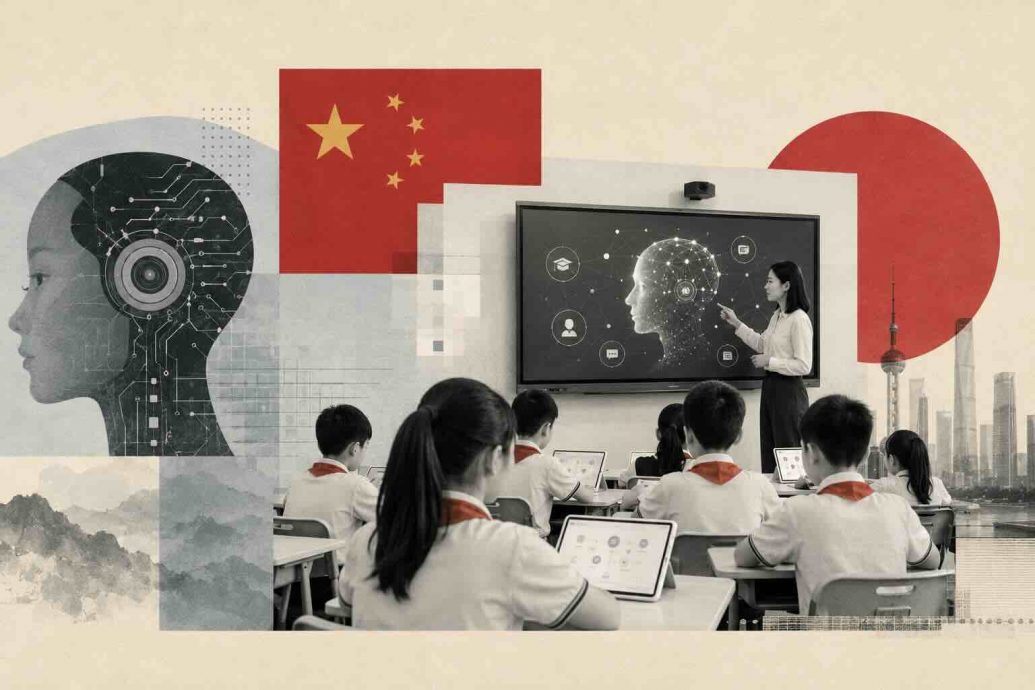
Building on the policy foundation that connects national strategy to local schools, China’s smart classrooms combine hardware and software into integrated teaching environments. A typical smart classroom in China features an AI-powered infrared blackboard that integrates speech recognition, automated speech assessment, natural language understanding, and optical character recognition into a single teaching surface. These blackboards allow teachers to interact with digital content while maintaining the familiar physical format of traditional instruction. Students interact with AI through tablets, learning devices, and platform interfaces that track their progress in real time. The classroom itself becomes a data-generating environment where every interaction, from quiz responses to reading speed, feeds into analytics dashboards that teachers can review between lessons. This combination of familiar teaching tools and sophisticated backend intelligence is what makes China’s model distinct from simpler laptop-in-classroom approaches used elsewhere.
AI-powered classroom analysis systems developed by institutions like East China Normal University have been put into regular use in more than 500 schools across 15 provincial-level regions. These systems analyze recorded classroom sessions and generate diagnostic reports within 15 minutes, providing teachers with detailed feedback on their teaching effectiveness. To date, such systems have processed over 19,000 classroom videos, and the results have been used to support teaching research, classroom reflection, and continuous teacher training. Physical education teachers in some schools use robots to provide real-time feedback and assistance in refining students’ middle-distance running techniques. At Beijing 101 Middle School, an AI-based listening and speaking system has been incorporated into English classes, while in Fujian Province teachers use AI combined with big data technology to personalize instruction for individual learners.
The National Smart Education Platform aggregates 29,000 high-quality courses and uses AI recommendation algorithms to synchronize premium courses from elite schools in Guangzhou, Shenzhen, and Beijing to underdeveloped regions across provinces like Yunnan and Gansu. This platform enables students in remote areas to access top-tier classrooms in real time, breaking geographical barriers that have historically reinforced educational inequality in China. In some pilot schools, AI tools are already being used to grade children’s artwork, monitor facial expressions during lectures, and screen students for psychological concerns. Technologies such as virtual reality and extended reality are enabling students to develop AI-based solutions for environmental protection and cultural conservation projects. More than half of schools in China have already established their own digital management platforms that collect and organize data on students, teachers, teaching methods, and research activities.
Adaptive Learning Engines Reshaping Student Outcomes
While smart classrooms provide the physical infrastructure, adaptive learning engines represent the intelligence layer that personalizes each student’s educational journey through China’s AI transformation. These engines use machine learning algorithms to analyze individual learning patterns, behavioral data, and academic performance, then generate customized learning content and personalized teaching arrangements tailored to each student’s needs. The approach shifts education from a teacher-centered broadcast model to a student-centered adaptive experience where the system adjusts difficulty levels, pacing, and content selection based on continuous assessment. Companies like Squirrel AI and iFLYTEK have built their platforms on this principle, processing millions of student interactions to refine their algorithms over time. The result is a system that functions much like a private tutor, identifying knowledge gaps and addressing them before they compound into larger learning deficits. Revolutionizing education with AI depends on exactly this kind of granular adaptation at scale.
Squirrel AI, founded in 2014, operates what it calls a large adaptive model, a combination of education-specific AI systems trained and evaluated by human educators and students from preschool through 12th grade. The company has educated more than 24 million students in China with its AI tutoring, and in some cases has fully replaced in-person lessons with AI-driven instruction. Its platform breaks each subject into thousands of micro-knowledge points and maps student mastery across them, creating a highly detailed picture of what each learner knows and does not know. By 2019, Squirrel AI had opened 2,000 learning centers in 200 cities and raised over $180 million in funding, achieving a valuation above $1 billion. The system is now expanding internationally, with learning centers opening in the United States to address teacher shortages, where an estimated 400,000 teaching positions went unfilled in recent years. Research conducted with 512 junior high school students across Beijing, Zhejiang, and Sichuan showed a meaningful correlation between AI adaptive learning paths and improvements in English academic self-efficacy.
AI Tools Powering Chinese Education
The transition from adaptive learning theory to practical classroom tools requires a closer look at the specific technologies that Chinese educators rely on daily. iFLYTEK, one of China’s national AI team companies designated by the State Council, has built a product ecosystem that covers the full teaching cycle from lesson preparation through grading and student assessment. Its flagship Changyan Smart Classroom products integrate speech recognition, speech testing, natural language understanding, and OCR into an infrared smart blackboard that teachers use as the primary classroom interface. The company’s smart classroom platform, now in version 5.0, helps teachers realize data-driven teaching by generating personalized student learning plans and enabling independent study through AI-guided recommendations. iFLYTEK has also developed specialized products such as a Digital Math Homework system and Personalized Learning Manual that adapt to individual student performance patterns. At Tsinghua University, AI-powered learning companions support more than 220 pilot courses spanning multiple disciplines, allowing chemical engineering students and others to review materials and practice exercises at any time.
The tools extend well beyond traditional academic subjects into areas that might surprise observers outside China. AI-powered smart sports equipment helps physical education teachers provide real-time biomechanical feedback to students, while some schools use AI assistants that review previous day’s key points and assess students’ English reading levels before each class begins. The range of available AI educational tools is substantial, with over 700 AI tools developed to support teaching, research, and professional learning as of late 2024. Among teachers, AI tools embedded in smart teaching platforms are the most widely used category, adopted by 82.68 percent of educators, followed by general-purpose large language models used by 76.2 percent. This widespread adoption reflects the fact that AI in Chinese classrooms is no longer experimental but has become part of routine pedagogical practice. A large-sample assessment of 530,000 teachers across 19 provincial-level regions found that only 3.41 percent of Chinese teachers have never used AI tools in their work.
The cost of deploying these tools varies dramatically depending on the scope and vendor. Government procurement records show that iFLYTEK charged a single school approximately 1,744,000 yuan (about $254,000) for its full suite of smart classroom software in 2022. At city scale, iFLYTEK’s Bengbu contract reached 1.586 billion yuan, covering 875 schools and 400,000 students at roughly 800 yuan per student per year. Squirrel AI takes a different approach, offering schools free access to its platform for 1.5 to 2 years before subscription fees begin, which may attract budget-constrained administrators but raises questions about long-term sustainability. The commercial dynamics of how technology has changed teaching in China are shaped by these pricing models, which determine how quickly and widely AI tools spread across the country’s 200 million student population.
Bridging the Urban-Rural Divide With Intelligent Platforms
The pricing and deployment models just described carry profound implications for one of China’s most persistent education challenges: the gap between well-resourced urban schools and underfunded rural institutions. China’s 9-year compulsory education system mandates equal access to education, but the quality of instruction varies enormously between a Beijing experimental school and a rural classroom in Gansu Province. AI advocates within the Chinese government see intelligent platforms as a way to close this gap by distributing high-quality teaching resources digitally, bypassing the physical limitations that have kept rural students behind their urban peers for decades. The National Smart Education Platform is central to this strategy, using AI recommendation algorithms to push premium courses from elite schools in first-tier cities directly to classrooms in underdeveloped regions. Controlled experiments conducted in schools using AI smart devices showed measurable improvements in learning outcomes for rural students who previously had no access to specialized instruction.
Research from a Frontiers in Psychology study evaluated the effectiveness of AI smart devices across 8 experimental and 8 standard classes in both urban and rural schools. The intelligent recognition system equipped with AI devices captured students’ learning states in real time, provided feedback to teachers, and enabled flexible adjustment of teaching strategies. The results showed improvements in teaching quality metrics when AI devices were introduced, particularly in rural settings where baseline instructional quality was lower. This finding supports the government’s thesis that AI can serve as an equalizer, though critics note that the technology itself introduces new dependencies and costs. Few AI tools are built with rural infrastructure constraints in mind, and internet connectivity, while vastly improved, remains inconsistent in the most remote areas. The gap between having an AI platform available and having the digital literacy to use it effectively represents a second-order inequality that AI in online education must still address.
Teacher Training and the AI Literacy Push
Even the most advanced AI tools are only as effective as the teachers who wield them, a reality that has pushed China into the largest AI teacher training program ever attempted. Between 2018 and 2021, the Ministry of Education launched two rounds of pilot programs promoting AI-assisted teacher development across 103 cities, counties, and universities. By the end of 2024, these programs had provided AI literacy training for over 2.97 million teachers and resulted in the development of more than 700 AI tools designed specifically for teaching, research, and professional learning. The Guide to Artificial Intelligence General Education in Primary and Secondary Schools, released in 2025, lays out responsibilities for teachers to customize learning using AI, conduct evaluations, and promote collaboration with parents through AI-powered communication tools. Over half of China’s school principals had already reported that their schools carried out AI-assisted teaching activities as early as 2021, according to research comparing AI and teaching assistants in educational contexts.
A growing concern is what some educators call the AI generation gap: students are using AI fluently while many teachers still explain AI concepts using static slides and outdated materials. Huawei has responded to this challenge by proposing a teachers-first strategy and building an AI teaching practice platform designed to help educators become AI designers, collaboration nodes, and decision-makers rather than passive users of pre-built tools. The company has partnered with Zhejiang Normal University to embed AI literacy into preservice teacher training programs, compressing days of lesson preparation into hours through AI-assisted planning. The cities leading this transition, including Hangzhou, which mandated AI classes and released AI competency standards for teachers in 2026, are creating models that other regions will eventually replicate. The data from China’s 530,000-teacher digital literacy survey shows that 81 percent of teachers believe AI saves lesson preparation time, suggesting that once trained, educators quickly recognize the practical value of these tools. Local governments are strengthening the integration of AI and big data to enhance evidence-based education evaluation at every school level.
AI-Powered Assessment and Grading Systems
Teacher training efforts gain practical significance when connected to one of AI’s most transformative applications in Chinese classrooms: automated assessment and intelligent grading. Traditional examination systems in China require enormous human labor to administer, grade, and analyze, particularly for standardized tests taken by millions of students simultaneously. AI-powered assessment tools now handle much of this workload, from automated essay scoring that evaluates structure, grammar, and argumentation to real-time speaking assessments that grade students’ pronunciation and fluency using speech recognition models trained on millions of voice samples. iFLYTEK’s automated speaking assessment system has become particularly influential, deployed in computerized English listening and speaking examinations across multiple provinces. The system processes student speech through multiple deep learning models that evaluate pronunciation accuracy, intonation patterns, vocabulary usage, and response coherence in near real time. These automated grading systems reduce the time between test-taking and feedback from weeks to minutes, allowing students and teachers to act on results while the material is still fresh.
Beyond standardized testing, AI assessment tools are being used to evaluate less traditional student outputs. Some pilot schools in China use AI to grade children’s artwork, analyzing elements like composition, color use, and technique against rubrics developed by art educators and embedded into machine learning models. The AI Plus Education plan envisions a future where intelligent teaching systems analyze diagnostic reports on student performance and automatically generate remediation plans tailored to individual weaknesses. Digital student archives that track learning trajectories over multiple years are being built to help teachers understand not just how a student performed on a single test but how their knowledge development has progressed across subjects and grade levels. These systems tie into broader efforts to create comprehensive quality evaluation frameworks that move beyond simple test scores to capture creativity, collaboration, and critical thinking skills. The tension between these ambitious assessment goals and the reality of measuring complex human capabilities through algorithmic systems remains one of the central challenges facing AI-powered education transformation.
Facial Recognition and Behavioral Monitoring in Schools
Assessment systems represent one facet of AI’s data-gathering capacity in Chinese schools, but a more controversial dimension involves the use of facial recognition and behavioral monitoring technologies. Some schools in China have installed camera systems that use AI to analyze students’ facial expressions during lectures, tracking metrics such as attention level, confusion, drowsiness, and emotional engagement. These systems generate real-time reports that appear on teachers’ dashboards, allowing educators to see which students are disengaged and adjust their teaching accordingly. In a primary school outside Shanghai documented by the Wall Street Journal, students wore headbands equipped with electrodes that pick up brain signals, sending real-time neural data to teachers for monitoring concentration levels. The data was also shared with parents, creating a multi-stakeholder surveillance system that extends beyond the classroom walls.
Classrooms equipped with these monitoring tools function as laboratories where student behavior is continuously quantified, analyzed, and fed back to authority figures. Uniforms with embedded tracking chips have been used in some schools to monitor student location and attendance, while AI-powered cameras analyze health indicators and engagement patterns. Teachers in these environments report that the monitoring tools have improved student discipline and attention, leading to better academic performance on standardized tests. The AI classroom analysis system deployed across 500 schools captures and processes video of teaching sessions, providing diagnostic feedback that can identify whether a teacher is spending too much time lecturing versus facilitating discussion. These tools reflect a view that comprehensive data collection improves educational outcomes, a premise that many Western educators and privacy advocates find deeply troubling. The intersection of China’s approach to social monitoring and its education system raises questions that extend far beyond pedagogy into fundamental debates about childhood autonomy and digital rights.
Critics point out that the long-term psychological effects of growing up under constant algorithmic observation are unknown and potentially significant. Children who learn to perform for cameras and brain-wave sensors may develop different relationships with attention, authenticity, and self-regulation than those educated in less monitored environments. The susceptibility of these systems to false readings adds another layer of concern, as students may be incorrectly flagged as disengaged due to cultural differences in facial expression or neurological variation. Education experts have noted the lack of robust privacy protections for student biometric and behavioral data, leaving open questions about who owns this data, how long it is retained, and whether it could be used for purposes beyond education. The Chinese government’s investment in this model suggests confidence in its benefits, but the ethical implications remain subjects of ongoing international debate.
Student Data Privacy Under China’s AI Education Model
The behavioral monitoring infrastructure described above generates enormous volumes of student data, raising urgent questions about privacy protections in China’s AI-driven education system. Every interaction with an AI learning platform, from quiz answers to reading speed to time spent on each problem, creates a digital footprint that companies and schools store for analysis. Adaptive learning engines require continuous data collection to function effectively, meaning that opting out of data sharing often means opting out of the AI-powered education entirely. China’s Data Security Law and Personal Information Protection Law provide some legal framework for data governance, but their application to the specific context of minors in educational settings remains underdeveloped. The AI Plus Education plan acknowledges security risks, and the ministry is collaborating with national agencies to address computing bottlenecks and data quality issues, but concrete student data protection standards specific to classroom AI have not yet been codified. Without explicit protections tailored to the educational context, student data flows between schools, technology vendors, and government agencies with minimal transparency about how it is used or retained.
Research comparing Chinese and Western media coverage of AI privacy in education found significant differences in emphasis and framing. Chinese media more frequently address AI-driven educational innovation and data security supervision at the institutional level, while paying less attention to individual student privacy concerns and AI proctoring disputes that dominate Western coverage. Both Chinese and Western media recognize the role of universities as experimental fields for AI technology, but the balance between innovation promotion and privacy protection differs sharply. The commercial relationships between AI education companies and schools complicate the privacy picture, as companies like iFLYTEK and Squirrel AI collect vast datasets on student learning behavior that become proprietary assets used to improve their algorithms and attract new customers. Parents often have limited visibility into what data is collected, how algorithms process it, and whether it influences decisions about their children’s educational trajectory. The growing use of adversarial machine learning techniques to probe AI system vulnerabilities adds another dimension to data security concerns in educational settings.
Algorithmic Bias and the Equity Question
Data privacy concerns naturally connect to a deeper structural issue: the risk that AI systems trained on non-representative datasets will reinforce existing educational inequalities rather than reduce them. AI systems deployed in Chinese classrooms learn from datasets that disproportionately reflect the experiences, performance patterns, and linguistic norms of students in well-resourced urban schools. When these models are applied to students from different socioeconomic backgrounds, minority language groups, or rural communities, they risk producing biased outputs that disadvantage already marginalized learners. Algorithmic bias in education can manifest in subtle ways, from adaptive learning engines that misjudge a student’s ability level because the training data did not include students with similar backgrounds, to automated grading systems that penalize dialect variations in spoken language assessments. While top-tier institutions like Tsinghua and Peking University often receive recognition for AI achievements, these success stories risk overshadowing deeper systemic issues that affect the majority of China’s students.
Research published in Frontiers in Education found that Chinese university students expressed concerns about algorithmic bias and ethical issues as significant risks of AI in education. Students identified dependence and reduced independent thinking, accuracy and information quality, and data security alongside algorithmic fairness as their primary worries. These concerns are not theoretical: AI models used for automated essay scoring have been shown to perform unevenly across student populations when the training data does not represent the full diversity of writing styles and cultural perspectives. The equity question also extends to access, as the cost structure of AI education tools means that wealthier schools and districts can afford more sophisticated systems while rural and economically disadvantaged schools may receive only basic or outdated versions. UNESCO has emphasized the need for robust regulatory frameworks and ethical guidelines that prioritize privacy protection, promote transparency in AI decision-making, and mitigate potential biases arising from AI algorithms in educational settings. China’s approach to these challenges will shape whether AI narrows or widens the ethical dimensions of artificial intelligence in practice.
Global Competition in AI-Driven Education
China’s domestic AI education experiment does not exist in isolation but rather forms one front in an intensifying global competition to produce AI-literate workforces. The global AI in education market reached an estimated $6.4 billion in 2025 and is projected to grow to approximately $79.6 billion by 2034, exhibiting a compound annual growth rate above 31 percent. China’s own contribution to this market is significant, with the government committing $3.3 billion to its national AI education strategy and mandating eight hours of AI coursework per year for primary school students. The United States, by contrast, lacks a unified federal mandate for AI education, though over 250 CEOs from companies including Microsoft, Airbnb, and Uber have publicly demanded that computer science and AI education be made available to all American students. These business leaders warned that failing to act could represent a $660 billion economic mistake and risk the United States falling further behind China and South Korea in technology literacy.
The competitive dynamics extend beyond financial investment to fundamental philosophical differences in how countries approach AI in schools. China views AI as a tool for developing creative thinking and practical problem-solving skills, embedding it into the curriculum as a foundational competency alongside reading and mathematics. Many European and American campuses, by contrast, have focused more on deploying AI detectors and enforcing academic integrity policies than on teaching students to use AI productively. South Korea has joined China in mandating AI education in schools, creating a regional bloc in East Asia where AI literacy is treated as a core educational requirement rather than an optional enrichment activity. OpenAI’s publication of its Industrial Policy for the Intelligence Age in early 2026, which advocated aligning education policy with workforce development in the AI era, suggests that American technology companies recognize the gap and are pushing for policy changes. The question is whether democratic governance structures can match the speed and coherence of China’s centralized approach to curriculum reform.
How Other Nations Compare to China’s Strategy
Comparing national strategies reveals both the strengths and limitations of China’s centralized approach relative to the decentralized models favored by other major economies. The United States has invested heavily in AI research through agencies like DARPA and the National Science Foundation, but education policy remains primarily a state-level responsibility, resulting in a patchwork of AI education initiatives that vary enormously in quality and ambition. The European Union has taken a regulatory-first approach through the AI Act, which imposes requirements on AI system transparency and risk classification but does not mandate AI education in schools. Japan has integrated programming and computational thinking into its national curriculum but has not matched China’s scale of AI-specific investment in classroom technology and teacher training. India has ambitious plans for digital education through initiatives like the National Education Policy 2020, but infrastructure gaps in rural areas limit the practical reach of AI tools in classrooms.
The contrast between China’s approach and Western strategies is most stark in the treatment of AI as a subject versus AI as a tool. China is doing both simultaneously, teaching AI as a distinct academic subject from first grade while also embedding AI tools into every other subject as a means of enhancing instruction. Most other countries treat these as separate initiatives, with AI education housed in computer science departments and AI tools deployed independently by individual schools or districts. The integrated approach gives Chinese students exposure to AI both as consumers and as builders, creating a feedback loop between learning about AI and learning with AI that few other education systems replicate at scale. Research published by the World Education Blog found that 38 percent of Chinese school principals reported carrying out AI-assisted teaching activities as early as 2021, a figure that has likely grown substantially under the new national mandate. The countries that fail to develop comparable programs risk producing graduates who are consumers of AI rather than creators, a disadvantage that will compound over decades as AI becomes central to every industry.
Costs, Infrastructure, and Implementation Barriers
International comparisons often overlook the practical obstacles that China must overcome to turn policy ambitions into classroom realities across its vast and diverse educational landscape. The cost structures for AI deployment in schools vary dramatically, and the price of commercially developed software products represents a significant barrier for many schools. Government procurement records reveal that iFLYTEK’s full suite of smart classroom software cost one school approximately $254,000 in 2022, a figure that would strain the budget of most rural schools operating with minimal discretionary funding. Even iFLYTEK’s massive Bengbu city contract, covering 875 schools and 400,000 students at roughly $110 per student per year at the contract level, requires substantial ongoing public investment that not every municipality can sustain. Squirrel AI’s strategy of offering free access for 1.5 to 2 years before subscription fees begin addresses the initial cost barrier but creates uncertainty about long-term affordability and vendor lock-in.
Computing infrastructure represents another bottleneck that the Ministry of Education has acknowledged explicitly in the AI Plus Education plan. AI tools that perform real-time analysis of student behavior, adaptive content delivery, and natural language processing require significant server capacity, network bandwidth, and data storage that many schools lack. The ministry’s plan to build a national educational smart computing service platform aims to address this by pooling resources from national computing hubs and technology companies, but the rollout timeline remains unclear. Rural schools face compounded challenges: weaker internet connectivity, less reliable power supply, fewer technically trained staff, and buildings not designed to support dense digital infrastructure. The 14th Five-Year Plan invested heavily in providing internet connections to nearly every school, but connection speed and reliability still vary greatly between a fiber-optic-equipped Beijing school and a satellite-connected classroom in western China. The gap between policy announcements and implementation reality is where many ambitious technology initiatives have historically stalled.
What Parents and Students Think About AI Classrooms
Implementation barriers are not limited to infrastructure and funding; public perception among parents and students shapes how quickly and deeply AI embeds itself in Chinese schools. Chinese parents have historically placed enormous value on academic achievement, and many see AI tutoring tools as a way to give their children a competitive edge in the intensely competitive examination system. The success of products like iFLYTEK’s AI learning tablets, which parents can purchase directly for home use, reflects genuine consumer demand for AI-enhanced education. When COVID-19 forced China’s 200 million students to attend classes from home, companies like iFLYTEK and Squirrel AI were well positioned to market their AI-powered devices as essential learning tools, and adoption accelerated rapidly. Parents who previously relied on expensive private tutors discovered that AI tutoring platforms could deliver personalized instruction at a fraction of the cost, with Squirrel AI marketing its service at roughly 30 percent of the price of hiring a human tutor.
Student attitudes toward AI in education are more nuanced and include significant reservations alongside appreciation for convenience. Research conducted at a Chinese private university found that students demonstrated moderate familiarity with AI tools and willingness to use them in coursework. Positive attitudes toward AI’s value in education were evident, but concerns about dependence and reduced independent thinking emerged as the most prominent worry among students surveyed. The fear that AI will do the cognitive work that students should be doing themselves reflects a tension between efficiency and genuine learning that educators worldwide share. Some Chinese students reported that AI-generated learning pathways felt restrictive, noting that the system decides the order of topics rather than allowing student-directed exploration. The psychological impact of growing up in AI-monitored classrooms is a question that research has barely begun to address, as the first generation of students educated entirely within this system has not yet reached adulthood. Parents who embrace AI for its academic benefits may not fully appreciate the surveillance dimensions that accompany the personalized learning features they value.
The Future of AI in Chinese Education by 2030
Student and parent experiences in current classrooms provide a preview of the much more ambitious system that China aims to build over the next four years. By 2030, the government envisions an AI education system that is vertically and horizontally connected, meaning it spans every grade level from kindergarten through lifelong learning while also integrating across academic subjects, administrative functions, and policy-making processes. The plan envisions future classrooms where intelligent teaching systems automatically analyze diagnostic reports, generate remediation plans, and adapt in real time to each student’s learning trajectory without requiring teacher intervention for routine instructional decisions. Digital student archives that track individuals from their earliest school years through university and into professional development are designed to create a continuous record of capability development that employers and government agencies could access. Smart study companions, essentially AI tutoring agents embedded in learning devices, are intended to accompany students through their entire educational journey, adapting their teaching style and complexity level as the learner matures.
The infrastructure ambitions are equally expansive. China plans to link national computing hubs, technology enterprises, and universities into a unified educational computing platform that provides schools with on-demand access to the processing power required for AI-intensive applications. The government aims to construct what it calls future schools, institutions designed from the ground up to integrate AI into every aspect of operations from facility management to curriculum delivery. Teacher certification processes will incorporate AI competency assessments, meaning that future educators will need to demonstrate proficiency with AI tools as a condition of their professional qualification. The ministry is also planning to use AI for macro-level educational planning, deploying predictive models that anticipate demographic shifts and reallocate educational resources before shortages develop. The intersection of AI in education and workforce development is a central theme, with the government explicitly linking classroom AI to its broader strategy of cultivating what officials describe as the AI talent dividend. Understanding machine learning fundamentals will be as essential for Chinese students as understanding basic science or mathematics.
The geopolitical implications of this educational transformation extend well beyond the classroom. If China succeeds in producing a generation of workers who are not just AI-literate but AI-native, having grown up with AI as a constant companion in their learning environment, the implications for global economic competition are profound. These students will enter the workforce with an intuitive understanding of AI capabilities and limitations that workers educated in less AI-integrated systems may lack. The risk for other countries is not simply that China produces more AI engineers but that it produces a broader population of citizens who can work effectively alongside AI systems in every sector from manufacturing to healthcare to creative industries. Whether this advantage materializes depends on whether China can resolve the privacy, equity, and quality challenges that currently constrain its AI education ambitions.
Risks and Ethical Dilemmas That Remain Unresolved
The promise of China’s 2030 vision sits alongside a series of unresolved risks and ethical dilemmas that could undermine its long-term effectiveness and international credibility. The most fundamental concern is whether algorithmic systems designed and trained by commercial companies should have this much influence over children’s educational experiences. Educators in some Chinese schools report feeling pressured to conform to algorithm-driven lesson plans and grading systems, a dynamic that reduces their pedagogical discretion and transforms the teaching profession from a creative practice into a data-following exercise. Students guided predominantly by AI-generated learning pathways may lose agency in self-regulating their own learning, developing a dependency on external systems for direction that could limit their capacity for independent intellectual exploration. These concerns about teacher autonomy and student agency represent structural tensions within the AI education model that technology alone cannot resolve.
The surveillance dimensions of AI in Chinese classrooms also raise ethical questions that extend beyond individual privacy to the kind of citizens this system produces. Children who learn from an early age that their facial expressions, brain waves, physical movements, and every academic interaction are monitored and analyzed may internalize surveillance as a normal condition of learning and, eventually, of working and living. The normalization of continuous monitoring in educational settings could produce a generation with fundamentally different expectations about privacy, autonomy, and the role of technology in mediating human relationships. The ethical frameworks that UNESCO and other international bodies have proposed for AI in education emphasize principles of transparency, fairness, and respect for student autonomy, principles that are difficult to reconcile with systems designed to maximize data collection for algorithmic optimization. China’s Cyberspace Administration has issued guidelines requiring that AI content upholds core socialist values and respects intellectual property rights, but the application of these principles to the specific context of children’s educational data remains vaguely defined.
Why China’s Classroom Experiment Matters to the World
The unresolved tensions within China’s system do not diminish the significance of the experiment itself, which is producing data and outcomes that will shape AI education policy globally for decades. China is conducting the largest real-world experiment in AI-integrated education ever attempted, involving hundreds of millions of students, millions of teachers, thousands of schools, and billions of dollars in public and private investment. The results of this experiment, whether positive or negative, will provide evidence that every other country’s education policymakers will need to reckon with. If AI-powered personalized learning delivers sustained improvements in student outcomes at scale, the pressure on other nations to adopt similar approaches will become enormous. If the surveillance and bias concerns prove more damaging than the educational benefits, China’s experience will serve as a cautionary case study for countries considering their own AI education strategies.
The global AI in education market’s projected growth from $6.4 billion to nearly $80 billion by 2034 suggests that the commercial forces driving AI adoption in schools will intensify regardless of the ethical debates. China’s experience is creating a de facto standard for what AI-integrated education looks like at national scale, and companies like iFLYTEK, Squirrel AI, and their competitors are building products that could eventually be exported to education systems worldwide. The 2026 UNESCO Associated Schools Network Global Conference in Hainan brought together representatives from more than 50 countries to discuss AI in education, and the consensus that emerged emphasized keeping AI as a tool to optimize teaching rather than a substitute for human educators. China’s AI education model offers both the most advanced implementation of this principle and the most visible examples of what happens when the boundary between tool and substitute becomes blurred. The question that every country now faces is not whether to use AI in classrooms but how to do so in ways that preserve the human relationships, critical thinking capacities, and individual freedoms that education at its best is meant to cultivate.
The stakes of getting this balance right cannot be overstated. Education shapes the cognitive, social, and ethical development of entire generations, and the tools used to deliver education influence not just what students learn but how they think, what they value, and how they relate to technology throughout their lives. China’s decision to place AI at the center of its education system is a bet on the future that will be judged by its effects on real children over real decades. The rest of the world is watching, learning, and deciding how much of China’s model to embrace, adapt, or reject. What is certain is that the era of AI in classrooms is not approaching; it has arrived, and China is writing its first chapters faster than any other nation on earth.
Key Insights on AI in Chinese Classrooms
- China’s AI Plus Education Action Plan, launched in April 2026, mandates AI integration across all school levels with full implementation by 2030, backed by a $3.3 billion national strategy.
- The global AI in education market reached an estimated $6.4 billion in 2025 and is projected to surge to $79.6 billion by 2034, growing at a CAGR of 31.35 percent.
- Squirrel AI has educated over 24 million students in China using its large adaptive model, and is now expanding to the United States to address teacher shortages.
- A national survey of 530,000 teachers across 19 provinces found that 85.17 percent believe AI helps expand teaching resources, and 14.77 percent use AI tools every day.
- iFLYTEK’s Bengbu city contract covers 875 schools and 400,000 students at approximately $110 per student per year, with the full software suite costing a single school about $254,000.
- AI classroom analysis systems operate in over 500 schools across 15 provincial regions, having processed over 19,000 classroom videos and generating diagnostic reports within 15 minutes.
- China’s Ministry of Education designated 184 primary and secondary schools as national AI education pilot sites in 2024, serving as models for the broader national rollout.
- Over 250 CEOs including Microsoft and Uber warned that failing to match China’s AI education push could represent a $660 billion mistake for the United States.
These data points converge on a clear conclusion: China is not merely experimenting with AI in education but industrializing it at a pace and scale that no other country has matched. The combination of centralized policy mandates, massive public investment, commercial ecosystem development, and teacher training infrastructure creates a system designed to embed AI into every aspect of the educational experience. The question is no longer whether AI will play a role in Chinese classrooms but whether the pace of adoption is outrunning the development of the ethical safeguards, privacy protections, and equity measures needed to ensure that the technology serves all students equally. The statistics reveal both the promise of AI-driven personalization and the risks of building an education system increasingly dependent on commercial algorithms and continuous surveillance. Countries around the world are now forced to position themselves relative to China’s approach, either by accelerating their own AI education investments or by articulating a different vision of what technology-enhanced learning should look like.
| Dimension | AI-Integrated Approach (China) | Traditional/Limited AI Approach |
|---|---|---|
| Transparency | AI dashboards provide real-time analytics on student performance, teacher effectiveness, and resource allocation | Annual or quarterly assessments with delayed feedback loops and manual data compilation |
| Participation | Students interact with AI companions, adaptive exercises, and personalized content daily | Students follow uniform lesson plans with limited opportunities for individualized engagement |
| Trust | Algorithmic recommendations build trust through measurable outcomes but risk opacity about how decisions are made | Trust rests on teacher expertise and human judgment, which is transparent but inconsistent across schools |
| Decision Making | AI systems recommend learning paths, flag at-risk students, and auto-generate remediation plans | Decisions rely on teacher intuition, standardized test scores, and parent conferences |
| Misinformation | AI content filters and curated knowledge bases reduce exposure to inaccurate materials | Teachers manually curate resources with varying degrees of quality control and verification |
| Service Delivery | Personalized instruction at scale through adaptive engines serving millions of students simultaneously | One-size-fits-all instruction limited by class sizes and teacher capacity |
| Accountability | Continuous data trails document every instructional decision and student outcome | Accountability depends on periodic evaluations and self-reported teaching outcomes |
How China’s AI Classroom Tools Are Being Applied Across Sectors
iFLYTEK’s Smart Classroom Deployment in Bengbu City
iFLYTEK secured a massive contract worth 1.586 billion yuan with Bengbu city in Anhui Province to deploy its full smart classroom ecosystem across 875 schools serving approximately 400,000 students. The deployment included AI-powered infrared blackboards, automated speaking assessment tools for English language classes, personalized learning manuals, and data-driven teaching platforms that generate individualized student reports. The system processed student interactions across all subjects, building detailed profiles of each learner’s strengths and weaknesses that teachers could access through dashboard interfaces. Teachers using the platform reported significant reductions in lesson preparation time and more targeted interventions with struggling students. Critics note that the contract’s scale creates significant vendor dependency, as migrating 875 schools away from iFLYTEK’s ecosystem would be extraordinarily difficult and expensive, according to analysis by ChinaTalk. The per-student cost of approximately $110 per year appears modest but represents a substantial ongoing public expenditure for a city-level government that must balance education technology against other infrastructure priorities.
Squirrel AI’s Adaptive Tutoring Network
Squirrel AI built China’s largest AI adaptive tutoring network by combining proprietary machine learning algorithms with a physical network of learning centers where students receive one-on-one AI-driven instruction. The company’s platform breaks each academic subject into thousands of micro-knowledge points and continuously maps each student’s mastery level, identifying gaps and generating targeted practice problems in real time. By 2025, Squirrel AI had educated over 24 million students and earned recognition as one of Time magazine’s Best Inventions for its intelligent adaptive learning system. The platform delivers tutoring at approximately 30 percent of the cost of hiring a human tutor, a value proposition that resonated strongly with Chinese parents during the COVID-19 period when physical tutoring centers were closed. Limitations include the system’s directive approach: students cannot choose their own learning sequence, as the AI decides the order of topics based on its knowledge graph, which some educators argue undermines the development of self-directed learning skills. The company’s expansion into the United States raises questions about whether a model developed within China’s specific educational culture and testing system will translate effectively to American students and schools.
East China Normal University’s Classroom Analysis System
East China Normal University developed an AI-powered classroom analysis system that has been deployed across more than 500 schools in 15 provincial-level regions, processing over 19,000 recorded classroom sessions. The system analyzes video recordings of teaching sessions and generates comprehensive diagnostic reports within 15 minutes, evaluating factors such as the balance between lecture and discussion time, student engagement patterns, questioning techniques, and pacing. Teachers receive actionable feedback that helps them identify specific aspects of their instructional practice that could be improved, making the system a tool for continuous professional development rather than punitive evaluation. The results have been used to support teaching research, promote reflective practice, and design targeted training programs for educators who need support in specific pedagogical areas. The system’s reliance on video analysis raises privacy considerations, particularly regarding the recording and storage of classroom footage that includes identifiable student faces and behavior. The university positions the system as an enhancement to teacher capacity rather than a monitoring tool, though the boundary between supportive feedback and surveillance remains a point of discussion among educators affected by the program.
In-Depth: What Happened When Chinese Cities Went All-In on AI Education
Case Study: Hangzhou’s Mandatory AI Curriculum
Hangzhou, the hometown of DeepSeek and a major technology hub in Zhejiang Province, became one of the first Chinese cities to mandate AI education for all primary and secondary school students in 2026. The city’s education bureau released detailed curriculum plans alongside AI competency standards for teachers, requiring a minimum of 10 class hours of AI instruction per academic year. The curriculum is graduated by age: first and second graders learn to recognize AI applications in daily life and interact with AI devices, while older students progress to designing simple AI projects and using AI tools for research and creative work. Schools have flexibility to incorporate AI projects into local curricula or arrange AI learning during after-school programs. The mandate emphasizes responsible and ethical AI use, with age-appropriate instruction on protecting privacy beginning in the earliest grades. The rapid timeline from policy announcement to classroom implementation reflects the advantages of China’s centralized education governance, though teachers in some schools have reported feeling underprepared to teach AI concepts that they are still learning themselves.
Case Study: Tsinghua University’s AI Learning Companions
Tsinghua University deployed AI-powered learning companions across more than 220 pilot courses spanning science, engineering, humanities, and social sciences, creating one of China’s most comprehensive university-level AI education integration programs. The system functions as an always-available study partner that students can query for explanations, practice problems, and review materials, effectively extending instructor availability beyond lecture hours. Yuan Bingjie, a chemical engineering student at Tsinghua, described how the AI companion enabled flexible review of complex materials and practice exercises at any time, eliminating the need to wait for office hours or teaching assistant availability. The university positions the AI companion as a supplement to human instruction rather than a replacement, maintaining professor-led lectures and seminar discussions alongside the AI tool. Early evidence suggests that students using the companion engage with course materials more frequently and perform better on practice assessments. The program has attracted international attention, including visits from Chinese school administrators who want to understand how AI companions could be adapted for K-12 settings, and from foreign educators interested in replicating the model in their own institutions.
Case Study: The National Smart Education Platform’s Rural Reach
China’s National Smart Education Platform represents one of the most ambitious attempts to use AI for educational equity, aggregating 29,000 high-quality courses and using recommendation algorithms to distribute them to schools in underdeveloped regions. The platform targets areas like Yunnan’s Shuijiang and Gansu’s Linhe, where students historically had no access to the specialized instruction available in wealthy coastal cities. By synchronizing courses from elite schools in Guangzhou, Shenzhen, and Beijing through real-time streaming and AI-curated content recommendations, the platform allows remote students to access instruction that would otherwise require physical relocation to a different province. During the COVID-19 pandemic, the platform’s user base expanded dramatically as schools nationwide shifted to remote learning and rural schools that had recently received internet connections were able to access the digital library for the first time. The platform’s effectiveness is constrained by the quality of internet connectivity in rural areas, the digital literacy of local teachers who must facilitate AI-delivered content, and the cultural mismatch between courses designed for urban students and the lived experiences of rural learners. Despite these limitations, the platform demonstrates that AI can serve as a distribution mechanism for educational quality at national scale, even if the equity gap it seeks to close requires more than technology alone to resolve.
Frequently Asked Questions on China’s AI Classroom Transformation
China’s AI Plus Education initiative is a national action plan launched in April 2026 by the Ministry of Education and four other government bodies. It mandates the integration of artificial intelligence across all levels of schooling, from kindergarten through university and lifelong learning. The goal is to establish a comprehensive AI education system by 2030.
Squirrel AI alone has educated over 24 million students through its adaptive learning platform. iFLYTEK’s Bengbu city contract covers 400,000 students across 875 schools. Combined with other platforms and the National Smart Education Platform’s 29,000 courses, tens of millions of Chinese students interact with AI education tools regularly.
According to a survey of 530,000 teachers across 19 provincial-level regions, 14.77 percent use AI tools every day and only 3.41 percent have never used them. AI tools embedded in smart teaching platforms are used by 82.68 percent of teachers, and 85.17 percent believe AI helps expand teaching resources.
iFLYTEK and Squirrel AI are the two largest players in China’s AI education market. iFLYTEK develops smart blackboards, speech assessment tools, and comprehensive classroom management platforms used in hundreds of schools. Squirrel AI specializes in adaptive learning with its proprietary large adaptive model serving millions of students.
Yes, some Chinese schools have installed camera systems that analyze students’ facial expressions during lectures. These systems track attention levels, confusion, drowsiness, and emotional engagement. Some schools also use brain-wave monitoring headbands and tracking chips in school uniforms, drawing criticism from privacy advocates.
China mandates AI education from primary school through a centralized national plan backed by $3.3 billion in investment. The United States lacks a unified federal mandate for AI education. Over 250 American CEOs have warned that this gap could cost the U.S. $660 billion in economic value.
The global AI in education market reached approximately $6.4 billion in 2025. Projections estimate it will grow to between $41 billion and $79.6 billion by 2030 to 2034, depending on the research source. The market is expanding at a compound annual growth rate exceeding 31 percent.
China’s National Smart Education Platform distributes 29,000 high-quality courses from elite urban schools to underdeveloped rural regions using AI recommendation algorithms. AI classroom devices have been tested in rural schools and shown to improve learning outcomes, aiming to break geographical barriers.
Key risks include student data privacy concerns due to extensive collection without robust protections, facial recognition surveillance that normalizes monitoring, algorithmic bias against marginalized students, reduced teacher autonomy, and high costs that could widen the urban-rural gap.
By the end of 2024, China’s AI-assisted teacher development programs had provided AI literacy training for over 2.97 million teachers across 103 cities, counties, and universities. These programs began in 2018 and resulted in the development of more than 700 AI teaching tools.
Squirrel AI is China’s leading adaptive learning platform, founded in 2014. It uses a large adaptive model that breaks subjects into thousands of micro-knowledge points and maps each student’s mastery level. The system generates personalized practice problems and adjusts difficulty in real time.
Costs vary significantly by vendor and scale. iFLYTEK charged approximately $254,000 for a full software suite at one school. Its Bengbu city contract works out to roughly $110 per student per year across 875 schools. Squirrel AI offers free access for 1.5 to 2 years before subscription fees begin.
China’s official position is that AI should enhance teachers rather than replace them. Education leaders at the 2026 UNESCO conference stressed that well-trained teachers remain the core of quality education. Surveys show 81 percent of Chinese teachers believe AI saves preparation time.
By 2030, China aims to have a fully connected AI education system spanning all grade levels. Plans include future classrooms built from the ground up for AI, digital student archives tracking lifelong learning, smart study companions, and AI-integrated teacher certification requirements.