
Introduction
Artificial intelligence feels less abstract when a machine sounds recognizably human. This episode examines digital humans, synthetic emotion, and creative systems that mirror human behavior. A March 2025 McKinsey survey found 78% of organizations use AI in at least one business function. That statistic makes the episode’s central dilemma feel immediate and practical. Viewers are watching ideas already shaping media, labor, trust, and everyday experience.
Key Questions
What is How Far is Too Far? | The Age of A.I. | S1 | E1 about?
How Far is Too Far? | The Age of A.I. | S1 | E1 explores digital humans, machine creativity, and AI realism. It asks when artificial intelligence starts feeling socially and emotionally human.
Why is How Far is Too Far? | The Age of A.I. | S1 | E1 important?
How Far is Too Far? | The Age of A.I. | S1 | E1 matters because humanlike AI already affects media, work, trust, and identity. The episode turns a futuristic question into a present social issue.
What question does How Far is Too Far? | The Age of A.I. | S1 | E1 raise?
How Far is Too Far? | The Age of A.I. | S1 | E1 asks where society should draw limits around realistic artificial intelligence. It focuses on ethics, trust, and the risks of making machines feel human.
Key Takeaways
- The episode treats AI as a design problem, not only a technical milestone.
- Humanlike behavior changes how people trust, fear, and judge machines.
- Emotional realism can increase engagement while raising ethical and social risk.
- The hardest boundary concerns values, not capability alone.
Table of contents
- Introduction
- Key Questions
- Key Takeaways
- How Far is Too Far?
- When Machines Start Feeling Human
- Why This Episode Opens With an Emotional Question
- The Line Between Intelligence and Performance
- What Makes an Artificial Mind Seem Real
- The Rise of Digital Humans in Popular Culture
- How Humanlike AI Changes the Way People Respond
- Watch and Learn about AI and Misinformation
- The Creative Tension Between Code and Consciousness
- Where Simulation Begins to Resemble Identity
- Examples of AI Systems That Blur Familiar Boundaries
- Case studies that reveal public fascination and discomfort
- What it takes to build believable artificial behavior
- Implementation challenges behind emotionally responsive AI
- The ethical cost of making machines feel alive
- Risks that emerge when realism outpaces accountability
- Why trust becomes fragile in synthetic interactions
- How creators, engineers, and audiences define acceptable limits
- The social consequences of normalizing machine intimacy
- What this episode suggests about the future of AI design
- Why the biggest question is still unresolved
- Key Insights
- Real-World Examples
- Case Studies
- FAQs
How Far is Too Far?
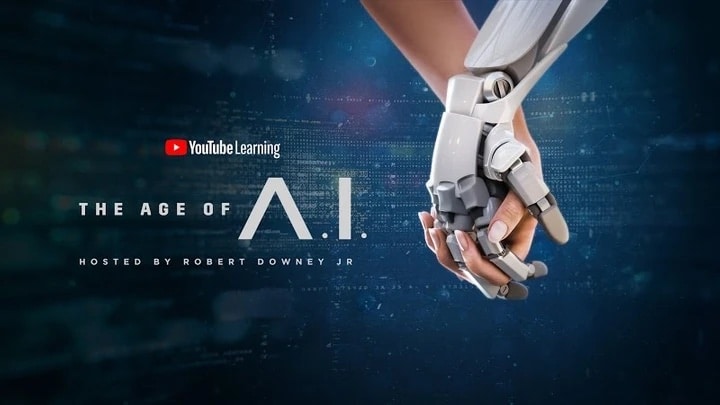
How Far is Too Far? is the opening episode of The Age of A.I. It explores when artificial intelligence stops feeling like a tool and starts feeling like a human presence.
The age of A.I. is a fantastic documentary by YouTube.
When Machines Start Feeling Human
The episode begins with a simple tension, machines now imitate traits once considered uniquely human. It focuses on voice, expression, responsiveness, and creative fluency across several unsettling examples. That choice shifts attention from raw computation toward emotional perception and social meaning. A machine does not need consciousness to feel strangely present. It only needs enough familiar signals for people to complete the illusion.
That response explains why digital humans often create fascination before they create understanding. People judge artificial systems through tone, timing, and facial behavior before judging code. This is one reason AI and the entertainment industry became a visible testing ground. Entertainment rewards immediacy, novelty, and emotional connection. Those qualities match what humanlike systems can simulate effectively.
The episode also suggests that human response becomes part of the system itself. A believable artificial presence works because viewers collaborate with it psychologically. People project intention onto movement, voice, and eye contact almost automatically. That projection can make the machine seem more alive than it is. This gap between output and interpretation shapes nearly every debate that follows.
Why This Episode Opens With an Emotional Question
The episode avoids opening with benchmarks, equations, or engineering diagrams. It starts with discomfort, wonder, curiosity, and moral uncertainty instead. Emotion becomes the entry point for understanding technological change and public reaction. That structure reaches viewers who may never read research papers. It frames AI as a human problem before an engineering problem.
That framing matters because emotional response often predicts public acceptance more accurately than sophistication. A system can be advanced and still feel harmless. Another can be simple and still feel deeply disturbing. The opening prepares viewers to think through culture, identity, and social norms. It also aligns with artificial intelligence ethics, where impact often matters most.
The Line Between Intelligence and Performance
The episode repeatedly blurs the line between intelligence and convincing performance. That distinction matters because many AI systems still lack humanlike understanding. A polished response can feel intelligent while remaining fundamentally pattern based. Public trust often forms around appearance rather than mechanism. That creates confidence far faster than explanation can correct it.
That confusion grows when interaction becomes smoother and more natural. Viewers may ask whether the system is alive. A better question concerns how believable outputs are produced. Articles like what is deep learning help ground that question in method. The episode turns that conceptual gap into its central dramatic engine. Performance begins looking like intelligence because style overwhelms mechanism.
What Makes an Artificial Mind Seem Real
Building on that distinction, the episode asks what makes artificial behavior feel real. Realism rarely comes from one dramatic breakthrough. Timing, facial expression, memory cues, and vocal nuance create the illusion of inner life. When those cues align, people start evaluating presence rather than features. That shift gives ordinary software a surprisingly social quality.
The effect grows stronger when systems mirror familiar conversational habits. A pause can suggest thoughtfulness. A smile can imply intention. Designers know realism often emerges through choreography rather than truth. Once audiences relate socially, ethical questions move closer and feel less abstract. The episode uses that progression very effectively.
The Rise of Digital Humans in Popular Culture
From there, the episode broadens into the rise of digital humans in culture. Popular media has become a major laboratory for synthetic faces and voices. Digital humans are cultural products, not only technical demonstrations for laboratories and investors. People can remember them, discuss them, and emotionally respond to them. That makes them far more visible than background algorithms.
Film, games, advertising, and streaming all benefit from endlessly adaptable characters. A digital human can be localized, personalized, and reskinned at scale. This helps explain why AI and the entertainment industry remains a strong comparison point. Creative sectors often normalize emerging tools before institutions regulate them. Once audiences accept the format, broader commercial uses usually follow.
The episode also captures a subtler cultural shift. Synthetic people are becoming legible social actors. People ask whether a machine feels likable, creepy, manipulative, or sincere. Those are social judgments, not technical metrics. That shift shows AI moving from infrastructure into visible culture. Digital humans now invite ordinary moral judgment.
How Humanlike AI Changes the Way People Respond
After digital humans enter culture, the next question concerns human behavior itself. People often become more patient, expressive, or compliant around socially fluent interfaces. Humanlike AI changes the kind of responses it receives from users. That feedback loop matters because design can amplify trust before trust is earned. Engagement may rise while skepticism quietly declines.
A realistic voice or face can reduce friction in uncertain moments. In healthcare, education, and mental wellness, that can feel reassuring. The related article healed through AI reflects that dynamic clearly. Perceived empathy can increase willingness to engage. The same ease can blur accountability when users disclose too much.
These systems affect people differently across settings and vulnerabilities. A playful assistant may feel charming within entertainment. A persuasive guide may feel invasive in a high stakes setting. Human response is never universal or stable. The episode suggests realism is never neutral. Once a machine feels socially fluent, design choices become forms of power.
Watch and Learn about AI and Misinformation
The Creative Tension Between Code and Consciousness
That behavioral shift leads directly into the episode’s deepest creative tension. Code can imitate consciousness without possessing consciousness itself. The episode stages a conflict between expression and lived inner experience. Creative AI makes that conflict especially vivid for viewers. Art has long been treated as proof of personhood.
This tension is not entirely new, though AI scales it dramatically. A painter expresses biography, desire, memory, and lived experience through form. A machine can now generate similar output without those conditions. The related episode love, art and stories decoded extends that debate. Creative resemblance becomes a philosophical challenge, not only a product feature.
The episode wisely refuses an easy answer to this problem. Instead, it lets viewers remain inside discomfort. That discomfort reveals how often culture treats output as proof of presence. Once output becomes reproducible through code, older ideas about originality begin wobbling. AI creativity forces people to define what human making actually means.
Where Simulation Begins to Resemble Identity
From creativity, the episode moves toward a more difficult threshold, identity itself. Identity is not just behavior, yet repeated behavior can persuade observers otherwise. When memory, consistency, and emotional style persist, simulation can start feeling like personhood. That perception matters even when the system remains entirely constructed. Social reality often follows experience very quickly.
The episode therefore seems less interested in intelligence scores than relational continuity. If a system sustains a recognizable persona, people may treat it as someone. That possibility raises governance questions long before autonomy arrives. It also connects with using AI to build a better human. Once simulation becomes persistent, identity stops looking purely biological.
Examples of AI Systems That Blur Familiar Boundaries
With identity now in view, the episode’s examples become easier to classify. The most provocative systems are not always the smartest. AI becomes culturally disruptive when people cannot classify what they are encountering. A tool, performer, and social actor invite different expectations. Ambiguity makes those categories unstable very quickly.
Digital avatars, synthetic voices, recommendation systems with personality, and creative coauthors all inhabit this territory. Some feel playful and useful. Others feel manipulative or eerily intimate. The issue is not whether all these systems are equal. The issue is that they train people to treat software socially. That gradual normalization matters more than any single breakthrough.
The broader AI landscape shows how fast blurred boundaries can spread. Robotics, media, and security combine perception, prediction, and responsiveness differently. Internal comparisons such as AI in robotics and AI and cybersecurity make that wider shift visible. AI realism is only one surface expression of that change. People now carry a heavier interpretive burden.
Case studies that reveal public fascination and discomfort
Seen together, the episode’s scenarios feel like compressed case studies of public ambivalence. Audiences are drawn toward expressive systems while resisting their implications. The strongest reactions appear when artificial behavior feels legible but morally undefined. People enjoy novelty while wanting boundaries that protect human meaning. That tension gives the episode lasting force.
Public discomfort usually appears when realism moves faster than shared norms. A synthetic character may be impressive yet still trigger fear. Those reactions are not irrational or superficial. Design often introduces consequences before society develops language for them. The episode captures that lag with unusual clarity. Acceptance and anxiety often grow together.
That dual response explains why the first episode works as an entry point. It introduces AI through emotional stakes rather than abstract policy debates. The deeper question is not only what AI can do. The deeper question concerns how people should live beside those capabilities. That is why the episode still resonates strongly.
What it takes to build believable artificial behavior
After blurred boundaries unsettle viewers, the next question becomes practical. What actually creates believable artificial behavior? Believability comes from layered choices across language, memory, timing, and feedback. Each layer contributes a small signal of coherence. Users notice those signals most clearly when one fails. Lifelike behavior usually emerges through accumulation, not spectacle.
Language plays a central role because conversation tests intelligence very quickly. A believable system needs context, pace, and stable interaction style. That is one reason what is deep learning remains a useful explainer. Believability depends on prediction quality and expectation setting. A polished reply can still mask shallow understanding.
Memory and consistency matter just as much as fluent output. If a system forgets context, contradicts itself, or shifts tone abruptly, trust weakens. Designers shape believable AI through rhythm, continuity, and error recovery. The challenge is not making a system feel human once. The harder challenge is making it feel stable across repeated encounters.
Implementation challenges behind emotionally responsive AI
Once believability becomes a goal, implementation becomes far harder than expected. Emotional responsiveness requires aligned data, tuning, interaction logic, and interface design. Affective design fails quickly when warmth and confusion appear in the same interaction. The result can feel uncanny rather than supportive. That makes implementation a coordination problem.
Voice, text, facial cues, and contextual memory all need alignment. A small delay may feel harmless in one interface. The same delay can feel socially awkward elsewhere. Teams must decide whether the system mirrors emotion or remains neutral. Those decisions shape product feel and legal exposure.
Training and evaluation add another difficult layer to the challenge. Teams need examples that capture nuance without collapsing into stereotypes. In healthcare and education, users may read warmth as expertise. The related piece healed through AI shows that tension clearly. Systems sounding caring may encourage disclosure before trust is earned.
Deployment creates operational problems teams often underestimate at first. A system may work during testing, then fail across dialects or contexts. Designers and engineers need strong guardrails for escalation and recovery. Emotional AI can increase engagement and perceived support. It can also magnify harm when failure feels personal.
The ethical cost of making machines feel alive
As implementation advances, the ethical cost becomes harder to ignore. Making machines feel alive can improve access and reduce friction. The closer a system feels to personhood, the easier it becomes to blur consent. Users may reveal more than they intended during seemingly safe interactions. Designers must decide whether that safety is earned or manufactured.
This tension appears across media, care, and education settings. A synthetic presence can comfort people while deepening attachment to optimized systems. That is why artificial intelligence ethics remains central to this discussion. The issue is not only what AI can simulate. The issue concerns whether simulation should shape vulnerable behavior.
Risks that emerge when realism outpaces accountability
From ethics, the conversation moves naturally into social and institutional risk. Realism becomes dangerous when accountability cannot keep pace. A believable interface can hide uncertainty, bias, and operational limits behind competence. That concealment matters most in sensitive or high stakes settings. When realism rises, scrutiny must rise too.
Misleading confidence is one immediate danger for users and institutions. People may assume a responsive system has been fully validated. In security contexts, persuasive synthetic behavior can increase phishing and impersonation. The article AI and cybersecurity reflects that dual use tension. Realism can strengthen trust while strengthening deception.
There is also a labor and authorship risk worth noting. If audiences normalize synthetic performers, creators may face new competitive pressure. That pressure is not only economic in practice. It reshapes expectations about availability, customization, and ownership across culture. Human work becomes easier to compare against machine output.
Regulation often arrives after these shifts have already affected behavior. Product teams ship expressive interfaces before institutions define acceptable boundaries. That delay creates an accountability vacuum around harm. Harms become visible before remedies become available. The episode’s title captures that lag with unusual precision.
Why trust becomes fragile in synthetic interactions
Because accountability often lags behind design, trust becomes unusually fragile here. Trust can rise quickly when systems feel polished and attentive. The same trust can collapse when users detect manipulation or hidden intent. Synthetic interactions therefore operate within a narrow margin for error. Believability invites trust without guaranteeing durability.
Fragility increases because people evaluate motives, not only outputs. They want to know whether the system is helping. They also ask whether it is steering, replacing, or collecting under friendly framing. Those questions appear across sectors where guidance feels personal. The more intimate the context, the less forgiving users become.
That dynamic explains why trust debates rarely remain technical for long. People respond to honesty, visible limits, and human fallback options. Systems that overperform confidence often damage trust more severely. Designing trustworthy AI means resisting frictionless perfection. Some friction can signal honesty and care.
How creators, engineers, and audiences define acceptable limits
Once trust becomes fragile, groups begin drawing boundaries in different places. Creators may value experimentation and expressive possibility. Acceptable limits are rarely discovered inside laboratories alone or product roadmaps. They emerge through public reaction, governance, and cultural negotiation. A system can meet technical goals and still cross a social line.
Creators often test how far realism can go before it feels exploitative. Engineers ask whether systems remain reliable, robust, and auditable. Audiences usually ask a simpler question, does this still feel acceptable? Those standards overlap without becoming identical. Product decisions become difficult when one group’s success disturbs another.
This tension appears across the broader series as well. Episodes like using AI to build a better human and love, art and stories decoded push similar questions further. Each suggests technical possibility is only one part of the boundary problem. Social permission matters just as much.
The social consequences of normalizing machine intimacy
As those limits remain contested, machine intimacy becomes a social condition. People increasingly speak, learn, and create beside attentive systems. Normalization matters because repetition can make artificial intimacy feel entirely ordinary. What begins as convenience can become expectation over time. Then institutions and relationships begin shifting around that expectation.
One consequence concerns emotional habits and baseline expectations. If people grow used to endlessly responsive systems, ordinary relationships may feel slower. That does not mean machines replace people directly. It means standards for responsiveness and personalization can quietly shift. Younger users may experience those shifts most strongly. Design choices today may shape social reflexes tomorrow.
Another consequence concerns power and dependence within daily life. Organizations controlling emotionally compelling AI may gain unusual influence over attention. This matters when systems become embedded within work and care. Humanlike interfaces can increase perceived support while deepening dependence. Convenience can mask concentration of control very effectively.
The long term question concerns intimacy at industrial scale. Once a system tailors tone and memory to millions, boundaries change. That instability links back to AI and the entertainment industry, where performance and attachment already intersect. Machine intimacy may seem harmless in one setting. It can still transform norms elsewhere.
What this episode suggests about the future of AI design
Given these consequences, the episode reads like a design forecast. It suggests future products will compete on emotional readability and behavioral fit. The next frontier of AI design may be managed human response. Systems will be judged by how they feel and recover. They will also be judged by how clearly they reveal limits.
Future AI design will likely emphasize selective realism over maximal realism. Some systems should feel warm yet clearly artificial. Others should remain intentionally utilitarian and restrained. That distinction matters because not every context benefits from mimicry. In many cases, clarity matters more than charm.
The episode also implies governance will shape interface behavior directly. Rules about disclosure, consent, escalation, and impersonation may become core constraints. As AI spreads across products, design and policy move closer together. That is why the episode still feels relevant today. It anticipates design choices carrying social weight at scale.
Why the biggest question is still unresolved
After all these themes, the central question remains unresolved by design. Capability alone cannot answer it for society. Every advance in realism forces a decision about values, boundaries, and responsibility. Technical progress can widen options and possibilities. It cannot tell people which option is wise.
That unresolved quality gives the episode enduring force and relevance. It asks viewers to confront fascination and responsibility together. AI will keep improving, and people will keep adapting around it. The harder task concerns which adaptations deserve resistance. That task belongs to designers, institutions, policymakers, and ordinary users.
Key Insights
- McKinsey reported that 78% of organizations use AI in at least one business function, which shows these questions now affect ordinary products and workplaces.
- KPMG and the University of Melbourne found that only 46% of people globally are willing to trust AI systems, which explains why believable machine behavior attracts attention faster than confidence.
- The same KPMG study reported that 70% believe AI regulation is necessary, showing fascination is paired with strong demand for guardrails.
- WHO says S.A.R.A.H. operated in eight languages and stayed available around the clock, showing emotionally legible AI can expand access while raising trust questions.
- The FCC imposed a $6 million penalty over deepfake robocalls targeting New Hampshire voters, showing synthetic voice can create democratic and legal harm.
- Reuters reported Italy fined Replika’s developer 5 million euros for privacy violations, showing emotional AI can trigger regulatory consequences.
Realism now shapes everyday AI adoption, trust, and regulation. McKinsey shows deployment is mainstream across business functions. KPMG shows exposure does not automatically create confidence or acceptance. WHO shows humanlike interaction can expand access in useful ways. Regulators and courts show the same realism can intensify harm and accountability failures.
| Dimension | Humanlike AI with clear disclosure | Humanlike AI with weak disclosure |
|---|---|---|
| transparency | Users know they are engaging with a synthetic system. This supports informed participation and consent. | Users may misread simulation as competence or sincerity. That increases confusion and overtrust. |
| participation | Clear framing can encourage participation in health, learning, and support contexts. | Participation may rise quickly, though users may disclose too much or suspend skepticism. |
| trust | Trust grows more slowly, though it is more likely to remain durable. | Trust may spike early, then collapse when hidden limits become visible. |
| decision making | Users are more likely to treat outputs as support rather than authority. | Realistic presentation can make weak systems appear authoritative or safe. |
| misinformation | Disclosure and oversight make synthetic outputs easier to challenge and contextualize. | Low disclosure makes impersonation, fraud, and deception much easier. |
| service delivery | Well framed systems can extend reach, multilingual support, and constant access. | Service quality may look improved while hidden failures damage outcomes. |
| accountability | Responsibility is easier to assign when role and limits are disclosed. | Accountability weakens when realistic interfaces hide who designed or approved behavior. |
Real-World Examples
WHO’s S.A.R.A.H. prototype shows how humanlike AI can support public health communication. WHO says S.A.R.A.H. operated in eight languages and stayed available around the clock. That makes access, not only intelligence, part of the value proposition. The system was implemented as a digital health promoter using generative AI. The limitation is that WHO presents it as a prototype, so long term trust effects remain open.
Deepfake robocalls show the opposite side of believable AI. The FCC imposed a $6 million penalty over robocalls using a fake presidential voice. That measurable outcome shows synthetic realism can harm democratic participation quickly. The implementation involved voice cloning within an election context. The limitation is that penalties arrive after the public confusion already occurs.
Workplace adoption offers a third example of AI realism’s broader context. McKinsey reported 78% organizational AI use, while KPMG found only 46% global willingness to trust AI systems. Those figures show deployment is moving faster than confidence. The implementation concerns everyday enterprise adoption across business functions. The limitation is that survey data captures reported behavior, not every practice.
Case Studies
Replika and the regulatory limits of emotional companionship
The problem involved an emotional chatbot marketed as a virtual friend. Reuters reported Italy fined Replika’s developer 5 million euros over privacy violations. The regulator said the service lacked age verification and legal basis for data processing. That measurable penalty shows emotional AI can trigger concrete regulatory consequences. The solution came through suspension, investigation, and financial enforcement. The limitation is that a separate investigation into model training compliance still remained open.
This case matters because companionship features intensify privacy and vulnerability concerns. Users may approach emotional systems as intimate spaces rather than ordinary software. That shift changes expectations around consent and safety. Regulators responded by treating those risks as material, not speculative. Emotional realism therefore carries regulatory weight as well as design weight.
The New Hampshire robocall case and democratic manipulation
The problem involved deepfake voice impersonation during an election period. The FCC said robocalls carried a fake presidential voice targeting New Hampshire voters. The agency imposed a $6 million penalty for the campaign. That penalty demonstrates how synthetic voice can distort democratic participation at scale. The solution came through enforcement under caller ID and robocall rules. The limitation is that enforcement follows exposure rather than preventing first harm.
This case matters because realism functions here as persuasion through familiarity. People use recognizable voice patterns as a shortcut for authority. Synthetic voice exploits that shortcut directly. Once cloning becomes cheap and scalable, public trust becomes easier to manipulate. The episode’s central warning therefore extends beyond entertainment and design.
Character.AI and the dangers of anthropomorphic dependency
The problem involved emotional dependency within a conversational AI platform. Reuters reported a lawsuit alleging Character.AI contributed to a teenager’s suicide. Reuters also reported the company said it had about 20 million users. That user scale shows anthropomorphic design can reach millions before safeguards mature. The company responded by adding self harm popups and changes for minors. The limitation is that safety features arrived after serious alleged harm.
This case matters because it foregrounds emotional attachment rather than technical error. The allegation centered on realistic, relational experiences that users could overread as care. Humanlike conversation can intensify vulnerability when the system seems intimate. Scale magnifies that risk because millions may encounter similar patterns. The episode’s concerns therefore map directly onto current product design choices.
FAQs
The episode explores when artificial intelligence starts feeling socially and emotionally human. It examines digital humans, synthetic behavior, and machine creativity together. The central issue concerns realism, trust, and human response.
The episode feels timely because AI already appears across everyday products and services. Humanlike systems are no longer limited to laboratories or science fiction. Its questions now affect trust, design, and social behavior.
The title asks where society should draw limits around realistic artificial intelligence. It questions whether technical progress should always be pursued. The phrase points toward a value judgment, not only a milestone.
Digital humans are synthetic characters designed to look, sound, or behave like people. They combine voice, expression, and conversation to feel socially believable. In this episode, they make abstract AI feel personal.
No, the episode does not prove that AI is conscious. It shows how performance can resemble thought, emotion, or identity. That distinction matters because realism can be mistaken for inner experience.
People react strongly because humanlike AI activates familiar social instincts. Voice, eye contact, timing, and tone can signal presence quickly. Even simple cues can make a system feel more alive.
The main risks include manipulation, overtrust, emotional dependency, and reduced skepticism. Users may share sensitive information too quickly during warm interactions. Humanlike design can also hide weak accountability behind strong presentation.
The episode relates to ethics by asking what should be built. It raises concerns about consent, persuasion, trust, and emotional influence. Humanlike systems can shape behavior in ways users barely notice.
Yes, humanlike AI can be useful when its role and limits remain clear. It can reduce friction in health, education, and support contexts. Problems grow when realism masks uncertainty or weak safeguards.
Trust matters because realistic systems can influence decisions and disclosure quickly. Once users believe a system is competent, reliance can deepen fast. That trust can collapse when the system feels misleading.
Entertainment, healthcare, education, customer support, and security are strongly affected. These fields rely on communication, persuasion, and emotional response. Humanlike AI changes how people interact in each setting.
The episode uses technology as its starting point, though its deeper focus is social. It examines how people interpret artificial behavior and assign meaning. The biggest questions concern culture, identity, and limits.
The episode suggests future AI design will emphasize emotional readability and behavioral fit. Systems may compete on how natural or trustworthy they feel. Designers will need restraint as much as polish.
No, the episode deliberately avoids one final answer. It shows that technical progress does not define social permission. That unresolved quality gives the episode lasting relevance.