
Introduction – The Rise of Fully Automated Robot-Powered Coffee Shops
The global coffee robot market reached an estimated $700 million in 2026 and is projected to grow to $2.79 billion by 2034 at a compound annual growth rate of 18.8%. Behind these numbers lies a transformation that is quietly reshaping how millions of people get their daily caffeine fix in airports, hospitals, malls, and office buildings around the world. RoboCafe represents a new category of fully automated food service where robotic arms, artificial intelligence, and precision engineering replace human baristas entirely for drink preparation and delivery. These are not simply upgraded vending machines with a fancy exterior designed to impress passing shoppers. They are sophisticated systems that grind beans, tamp espresso, froth milk, pour latte art, and deliver finished drinks to customers in under ninety seconds with near-perfect consistency across every cup served. The RoboCafe concept has evolved from a quirky novelty into a serious commercial proposition that addresses the hospitality industry’s most pressing challenges around labor, cost, and scalability. From Dubai’s Festival City Mall to Las Vegas shopping centers and California hospitals, robotic cafes are proving that automation and quality coffee can coexist in spaces where traditional coffee shops simply cannot operate profitably or reliably.
Key Questions On RoboCafe
What is a RoboCafe?
A RoboCafe is a fully automated coffee shop that uses robotic arms and AI-powered systems to prepare, serve, and deliver specialty coffee drinks without human baristas, operating around the clock in high-traffic commercial locations.
How much does a robotic barista cost?
Robotic barista systems range from $15,000 for basic kiosk models to over $100,000 for fully automated multi-product cafe units, with most mid-range commercial systems priced between $25,000 and $60,000 per unit.
Can robot baristas make latte art?
Advanced robotic barista systems equipped with six-axis collaborative arms can replicate human barista movements, including grinding beans, tamping espresso, frothing milk, and creating latte art with up to 98% brewing consistency.
Key Takeaways
- Consumer surveys indicate that 75% of users enjoy robotic cafe experiences, though 60% of respondents prefer a blend of human and robot service rather than full automation.
- The robotic coffee bar market was valued at approximately $990 million in 2026 and is expected to reach $1.83 billion by 2035, growing at a CAGR of 13.11% as labor shortages and contactless service demand accelerate adoption worldwide.
- Companies like Richtech Robotics have deployed over 300 robot solutions across U.S. restaurants, hospitals, hotels, and casinos, with their ADAM barista robot generating over $32,000 in revenue during its first 30 days of operation.
- Robotic cafe systems deliver a 20-25% reduction in labor costs per location while offering 24/7 service capability that traditional staffed coffee shops cannot match economically.
Table of contents
- Introduction – The Rise of Fully Automated Robot-Powered Coffee Shops
- Key Questions On RoboCafe
- Key Takeaways
- How Robotic Arms Are Redefining the Coffee Experience
- Why Robotic Cafes Are Emerging Across the Globe
- The Engineering Behind a Six-Axis Robotic Barista
- How Dubai’s RoboCafe Pioneered Fully Automated Service
- Cafe X and the Birth of the Robot Barista Kiosk
- How ADAM the AI-Powered Barista Is Scaling Nationwide
- The Business Case for Investing in a Robotic Cafe
- Comparing the Leading Robotic Cafe Systems
- Where Robotic Cafes Work Best
- How Consumers Actually Experience Robot-Served Coffee
- Ethical Dimensions of Automating Barista Work
- Technical Challenges That Slow Robotic Cafe Adoption
- The Role of AI in Next-Generation Robotic Cafes
- Real-World Market Projections and Industry Growth
- Lessons from Failed Robotic Cafe Experiments
- How Robotic Cafes Will Reshape Coffee Culture
- Key Insights
- Real-World Examples
- Case Studies
- Frequently Asked Questions On Robot Cafe
How Robotic Arms Are Redefining the Coffee Experience
A RoboCafe is a fully automated coffee service concept that uses robotic arms, artificial intelligence, and precision brewing equipment to prepare specialty coffee drinks without human baristas handling the preparation process. These systems typically feature six-axis collaborative robot arms that replicate human barista movements including grinding, tamping, frothing, and pouring with consistency rates reaching 98% across all beverages served. RoboCafes operate in formats ranging from compact standalone kiosks to full-scale cafe environments with seating and automated delivery bots.
Why Robotic Cafes Are Emerging Across the Globe
The hospitality sector faces a labor shortage that extends across borders, affecting coffee shops and restaurants in nearly every major market on every continent simultaneously. Finding and retaining skilled baristas has become one of the most persistent operational challenges for cafe owners who compete with other industries for the same limited pool of workers. Turnover rates in food service remain among the highest of any industry, creating a cycle of constant hiring, training, and rehiring that drains management time and operational budgets every quarter. RoboCafes emerged as a direct response to this structural problem, offering a staffing model that requires only one or two human attendants instead of a full team of trained baristas working multiple shifts daily. The concept gained significant momentum during the COVID-19 pandemic when contactless service transformed from a luxury preference into a genuine public health necessity for millions of consumers. The convergence of labor scarcity, rising wages, pandemic-driven behavior changes, and advancing robotics technology created a perfect environment for robotic cafes to move from experimental curiosity to commercial reality.
The geographic spread of robotic cafe deployments tells a compelling story about the universality of the challenges these systems address across different markets and cultures. Dubai launched its RoboCafe in Festival City Mall with German-manufactured robots that prepare drinks and deploy smaller autonomous bots for table delivery service. Singapore’s Ella robot, created by entrepreneur Keith Tan, has evolved through six generations and expanded into the Philippines, solving labor shortages that Tan experienced firsthand in his own traditional cafes. Chinese manufacturers like Anno Robot have deployed automated barista kiosks in more than sixty countries, capitalizing on the nation’s manufacturing expertise and competitive pricing structure. The growing interest in AI-enabled smart kitchens and robotic food preparation systems extends well beyond coffee into a broader transformation of how food and beverages are produced and served commercially.
Asia leads the global adoption curve, but North America is rapidly closing the gap through both homegrown startups and international deployments reaching new markets aggressively. Cafe X, founded in San Francisco in 2015 by Hong Kong entrepreneur Henry Hu, became one of the earliest Western robotic coffee concepts and now operates about a dozen locations in U.S. airports and high-traffic venues. Richtech Robotics, based in Las Vegas, launched its Clouffee & Tea brand in February 2025 with plans to scale to dozens of locations within three years. Y Combinator-backed Yummy Future operates three robotic cafe stores with consecutive month-over-month revenue growth, proving that the model can attract serious venture capital from top-tier investors. The landscape of food robotics in the industry now includes dozens of companies building everything from simple kiosk units to full humanoid barista systems powered by NVIDIA AI platforms.
The Engineering Behind a Six-Axis Robotic Barista
The technical foundation of most robotic cafes rests on six-axis collaborative robot arms, which are industrial mechanisms originally developed for manufacturing and adapted for the precision demands of specialty coffee preparation. These arms provide the range of motion needed to perform every step of espresso preparation, from picking up a portafilter and positioning it under a grinder to tamping with consistent pressure and placing the portafilter into a commercial espresso machine accurately. The six axes of rotation allow the arm to move in ways that closely mimic human wrist, elbow, and shoulder movements without the fatigue, inconsistency, or injury risks associated with repetitive manual barista work over long shifts. Sensors embedded throughout the arm measure force, position, and speed to ensure that every movement meets exact specifications programmed into the brewing software controlling the entire process.
Brewing consistency represents one of the strongest technical advantages that robotic barista systems deliver over their human counterparts in commercial coffee service. Anno Robot, a Chinese manufacturer with deployments across sixty countries, reports that its systems achieve up to 98% brewing consistency while minimizing waste through precise ingredient control maintained across thousands of consecutive drinks. The dose precision of advanced systems reaches plus or minus 0.004 ounces, which is a level of accuracy that even the most experienced human barista cannot maintain consistently during a busy morning rush. Every cup receives identical grind settings, water temperature, extraction timing, and milk texturing parameters that produce a drink matching the programmed recipe specification exactly. The integration of AI in robotics applications allows these systems to monitor and adjust variables in real time, compensating for environmental factors like humidity and ambient temperature changes.
The ability of advanced robotic baristas to perform latte art represents a milestone that signals these machines have moved well beyond simple vending into genuine specialty coffee preparation territory. Latte art requires precise control of milk texture, temperature, pouring speed, and cup angle, which are skills that human baristas spend months or years developing through daily practice and repetition. Robotic systems equipped with vision AI can now execute multiple latte art patterns by controlling pour rate and position with mechanical precision that eliminates the variability inherent in manual technique. This capability matters commercially because latte art has become a visual quality signal that consumers use to judge whether a coffee meets specialty standards before they take their first sip. Patents covering robotic latte art and cocktail preparation are expanding the intellectual property landscape of this rapidly evolving technology sector.
The software architecture powering modern robotic cafes extends far beyond simple recipe execution into sophisticated operational management and customer interaction systems. NVIDIA-powered vision AI allows robots like Richtech’s ADAM to detect customer presence, identify individuals, engage in multilingual conversation, and take verbal orders through natural language processing before preparing the requested beverage. Machine learning algorithms track customer preferences over time and can suggest personalized drink recommendations based on previous orders, time of day, and seasonal beverage trends. IoT connectivity enables remote monitoring, predictive maintenance scheduling, and real-time performance analytics that help operators optimize their robotic cafe fleet across multiple locations simultaneously. The combination of physical robotics and cognitive AI creates a system that improves its own performance continuously through data-driven learning loops.
RoboCafe Deployment Simulator
Model the financial and operational impact of deploying a robotic barista in your location. Adjust inputs to compare scenarios and find your break-even point.
Location & System Configuration
Projected Performance
Equipment Cost
Annual Operating Cost
Profit Margin
Deployment Analysis
Adjust inputs above to generate your analysis.

How Dubai's RoboCafe Pioneered Fully Automated Service
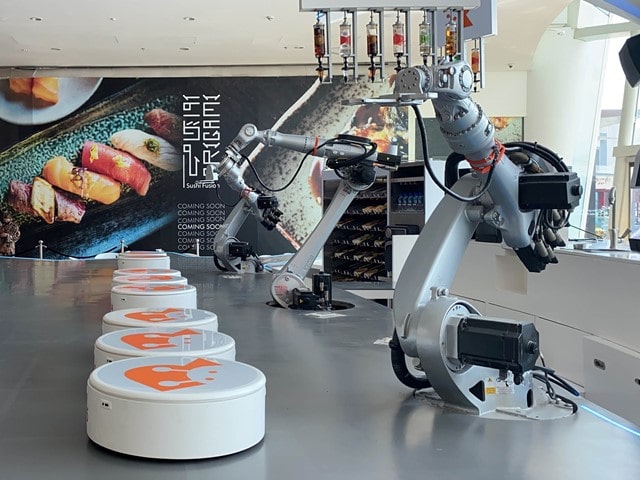
While robotic cafes existed in experimental forms for years prior, the concept entered mainstream consumer awareness when Dubai launched its RoboCafe in Festival City Mall as part of the UAE government's artificial intelligence initiative. The cafe featured German-manufactured robotic arms that prepare coffees and snacks entirely without human intervention during the food and drink preparation process itself. Customers place orders through touchscreen tablets at futuristic-designed tables and watch as the main robotic arm assembles their beverage before placing it onto a smaller autonomous delivery bot. The delivery bot then navigates to the customer's table and presents the finished order, completing the entire transaction without any human contact throughout the service experience.
The Dubai RoboCafe demonstrated several principles that have since become standard across the global robotic cafe industry's approach to design and customer experience. Transparency in the preparation process builds trust, which is why the robots operate in full view of customers rather than behind walls or enclosures. Entertainment value drives social media sharing, which generates free marketing exposure that traditional cafes must purchase through advertising spend. At timed intervals, the Dubai RoboCafe robots perform coordinated choreography with music, turning drink preparation into a theatrical experience that keeps customers engaged and encourages repeat visits. The concept of combining robotic cafe operations with entertainment has become a template for operators worldwide who understand that novelty attracts initial customers while consistent quality retains them.
The RoboCafe's launch was delayed from its planned opening by two years because the COVID-19 pandemic shut down public venues across the UAE before restrictions eased enough for commercial operation. This delay proved paradoxically beneficial because the pandemic dramatically shifted consumer preferences toward contactless service options in exactly the spaces where robotic cafes operate most effectively. When the cafe finally opened, the appetite for touchless dining experiences had grown enormously among consumers who now viewed human-free food preparation as a genuine safety advantage rather than merely a technological curiosity. The post-pandemic consumer mindset created favorable conditions for robotic cafe concepts globally, with operators reporting that hygiene and contactless service have become primary selling points alongside speed and consistency.
Cafe X and the Birth of the Robot Barista Kiosk
Henry Hu was a twenty-three-year-old college dropout from Hong Kong when he conceived the idea for Cafe X, a coffee kiosk featuring a robotic barista that would eliminate the mechanical tasks of drink preparation while preserving human hospitality elements. He left Babson College during his second year, sold his car, and used a $100,000 Thiel Fellowship to build the first prototype from sheet metal with two friends who shared his vision for automated coffee service. The prototype featured a modified Mitsubishi industrial arm nicknamed Gordon that served over 400 cups of coffee on its first day of public operation in San Francisco in January 2017. Cafe X was designed to be staffed by one or two human product specialists who would educate customers about coffee origins and brewing methods while the robot handled all physical preparation tasks.
The business model that Cafe X established became influential across the entire robotic cafe industry because it demonstrated that automation and human hospitality could work together productively. Product specialists functioned as a cross between a sommelier and an Apple Store Genius, offering free flights of espresso and explaining single-origin roasts while Gordon prepared orders with mechanical precision at the kiosk. By early 2018, Cafe X had raised $5.1 million across two funding rounds and opened its first fully automated coffee shop alongside additional kiosk locations in high-traffic San Francisco venues. The company's approach showed that the differences between automation versus AI matter practically in how robotic systems are deployed in consumer-facing environments where human interaction still carries significant value.
Cafe X has since evolved through eight years of real-time testing to develop its current Robotic Coffee Bar platform, which features built-in nitrogen generators, multiple delivery bay windows, and custom point-of-sale software refined through serving over 100,000 drinks. The company now operates roughly a dozen locations primarily in U.S. airports, where the 24/7 service capability and compact footprint of robotic kiosks deliver maximum value in environments where traditional cafes face high rents and difficult staffing conditions. Cafe X's expansion into Massachusetts General Hospital demonstrated that healthcare environments represent another strong market where consistent service during all hours addresses a genuine unmet need for staff and visitors alike. The company achieved return on investment within eight months at that hospital location, establishing a benchmark for other operators evaluating robotic cafe deployments in institutional settings.
How ADAM the AI-Powered Barista Is Scaling Nationwide
Richtech Robotics has emerged as one of the most visible players in the American robotic cafe market through its ADAM barista robot, a dual-arm humanoid system powered by NVIDIA AI that can engage customers in conversation, take verbal orders, and prepare specialty beverages with precision. ADAM's egg-shaped design deliberately avoids the uncanny valley effect that makes some consumers uncomfortable around robots that look too human, maintaining an approachable robotic aesthetic while retaining enough humanoid features to feel conversational and friendly. The robot uses NVIDIA's Isaac Sim platform for machine vision training, allowing it to identify customers approaching the counter, recognize equipment and ingredients, and adapt to environmental changes in real time during busy service periods.
The company launched its first consumer-facing cafe concept called Clouffee & Tea at Town Square in Las Vegas on February 9, 2025, with ADAM serving hundreds of guests daily across a menu of milk teas, coffees, and desserts. In its first thirty days of operation, ADAM generated over $32,000 in revenue at a single location, demonstrating a payback timeline that makes the technology financially compelling for operators evaluating robotic cafe investments seriously. Richtech has deployed more than 300 robot solutions across the United States in restaurants, retail stores, hotels, healthcare facilities, casinos, senior living homes, and factories for partners including the Texas Rangers, Golden Corral, Hilton, Sodexo, and Boyd Gaming. The breadth of these deployments across robotics impacting the workplace in multiple industries suggests that food and beverage service is just one application within a much larger automation transformation.
A pivotal regulatory milestone came when the LA County Department of Public Health and the National Sanitation Foundation granted first-ever approval for a dual-arm robot barista cafe at Kaiser Permanente Hospital in Santa Clarita, California. This approval created a formal pathway for robotic food and beverage operations to expand across the United States without requiring individual facility-level regulatory approvals in every new jurisdiction. ADAM now serves Peet's Coffee products at the Kaiser location through a joint venture called Zipphaus Plus, which combines Richtech's robotics expertise with Zipphaus's cafe management operations for a hybrid model. Plans call for additional ADAM deployments at more Kaiser facilities, universities, and airports by the end of 2025, with Richtech expecting to expand Clouffee & Tea to dozens of locations within two to three years.
In May 2025, Richtech expanded ADAM's capabilities with an artisanal espresso system that works with equipment commonly found in existing cafes, including precision grinders, distribution tools, and hand-pressed espresso machines. This advancement eliminated a key barrier for operators who had already invested in expensive commercial espresso equipment and did not want to replace it with proprietary robotic brewing systems that might limit their menu options. ADAM can now work alongside existing cafe infrastructure rather than requiring a complete equipment overhaul, which lowers the entry barrier for traditional coffee shop owners considering a robotic upgrade to their operations. The system debuted at the National Restaurant Association Show, where attendees could interact with ADAM and taste the artisanal espresso products that the robot prepared using genuine craft techniques rather than automated push-button processes.
The Business Case for Investing in a Robotic Cafe
The financial argument for robotic cafes rests on a combination of labor cost reduction, extended operating hours, improved consistency, and reduced waste that together create a compelling return on investment across various deployment scenarios. A mid-range robotic barista system costing $25,000 serving 200 cups per day at $5.00 per cup can generate approximately $365,000 in annual sales revenue against raw material costs of roughly $37,000 per year for ingredients. Labor savings from eliminating one full-time barista position add approximately $19,000 annually, while the automation's precision reduces ingredient waste by controlling exact portions for every drink prepared. Industry reports indicate that robotic cafe locations achieve a 20-25% reduction in labor costs compared to traditionally staffed coffee shops of equivalent volume.
The 24/7 operating capability of robotic cafes creates revenue opportunities that traditional staffed operations simply cannot capture without incurring prohibitive overtime and late-night shift premium costs. Airports, hospitals, university campuses, and corporate offices all have demand for coffee service during early morning, late evening, and overnight hours when staffing a human barista is economically impractical. A robotic kiosk serving just 50 additional cups during off-hours generates meaningful incremental revenue with essentially zero additional labor cost beyond ingredient replenishment. The understanding that robots can operate where humans cannot work efficiently gives robotic cafes a structural advantage in environments where round-the-clock service creates differentiated customer value.
CafeXbot, a multi-product robotic cafe system priced at approximately $100,000, has demonstrated that well-placed robotic cafes can generate beyond 100% return on investment annually, with the best locations achieving over 300% ROI. These figures reflect the economics of serving multiple product categories including coffee, hot chocolate, ice cream, milkshakes, tea, and bakery items from a single automated unit that requires no dedicated staff for food preparation. The multi-product approach distinguishes premium robotic cafe systems from single-category robotic barista kiosks because it captures spending from a wider demographic, including families with children who purchase ice cream and hot chocolate alongside adult coffee orders. The practical payback period for most well-located robotic cafe installations ranges from six to eighteen months, making the investment attractive compared to the multi-year timeline typical of traditional cafe buildouts requiring lease commitments and full staffing.
Comparing the Leading Robotic Cafe Systems
The robotic cafe market includes several distinct categories of systems that serve different operational needs, investment levels, and customer experience goals for operators worldwide. Fully automated standalone systems like CafeXbot and Cafe X's Robotic Coffee Bar provide complete end-to-end beverage preparation without human intervention during the drink-making process itself. Collaborative robot systems like Richtech's ADAM work alongside human employees, handling repetitive tasks while humans manage customer interaction and ingredient replenishment duties. Smart kiosk systems offer the simplest deployment model, functioning essentially as premium automated vending machines with robotic elements that enhance the brewing process beyond what traditional vending can achieve.
Cafe X pioneered the kiosk format with its compact footprint designed for airports and high-traffic public venues where space is limited and expensive per square foot. ADAM from Richtech Robotics differentiates through its conversational AI capabilities and humanoid design that creates an interactive customer experience beyond simple drink preparation and dispensing. Ella, the Singaporean robot barista now in its sixth generation, focuses on solving cafe labor shortages while maintaining the human oversight that many Asian market consumers still expect. Chinese manufacturers like Anno Robot compete on price and scale, offering deployments in over sixty countries with systems designed for 24/7 operation in locations where reliability and low maintenance requirements matter most. The diverse approaches to connected robotic kitchen concepts reflect different market priorities around cost, experience, and operational complexity.
The most significant competitive differentiator emerging across robotic cafe systems is not brewing quality but rather the ability to integrate with existing cafe infrastructure without requiring complete equipment replacement. Richtech's recent expansion to support standard commercial espresso machines allows operators to layer robotic automation onto their existing equipment investment, which dramatically reduces the cost and disruption of adoption. This modular approach contrasts with closed systems that require proprietary equipment and create vendor lock-in that limits menu flexibility and increases long-term operating costs for owners. The companies that will likely dominate the market are those offering platform-agnostic robots that can adapt to any cafe's existing setup rather than forcing operators into a single ecosystem.
Where Robotic Cafes Work Best
High-traffic locations with consistent demand and limited space for traditional cafe operations represent the ideal deployment environments for robotic cafe systems currently available on the market. Airports are among the strongest use cases because travelers need coffee during all hours, including early mornings and late nights when human-staffed cafes are typically closed or operating with minimal selection. Cafe X has expanded aggressively into major U.S. airports, where its 24/7 service capability and mobile app ordering system reduce traveler wait times while maintaining consistent quality regardless of the time. The compact kiosk format requires significantly less floor space than a traditional cafe, which translates to lower lease costs in airport terminals where rent per square foot ranks among the highest of any commercial real estate in the country.
Healthcare facilities have emerged as a surprisingly strong market for robotic cafe deployments because they combine round-the-clock demand with strict hygiene requirements and chronic staffing challenges in food service. ADAM's installation at Kaiser Permanente Hospital in Santa Clarita demonstrated that medical staff and visitors welcome automated coffee service, particularly during overnight shifts when the hospital cafeteria is closed. The LA County health department's first-ever approval of a dual-arm robot barista cafe created a regulatory template that simplifies expansion into additional healthcare facilities across the region. Corporate campuses and university buildings offer similar characteristics with high foot traffic, predictable demand patterns, and environments where traditional cafe staffing is difficult or uneconomical.
The most underestimated opportunity for robotic cafes lies in residential buildings and co-working spaces where a full-service cafe cannot justify its fixed costs but residents and members still want quality coffee available without leaving the premises. Premium apartment buildings in major cities have begun installing robotic coffee systems in common areas as an amenity that adds value to the property without requiring the building management company to operate a food service business with all its regulatory and staffing complexities. Co-working spaces can offer members quality robotic coffee as part of their membership package, eliminating the need for a staffed barista station that adds operational complexity. These smaller-scale deployments benefit from the same automation advantages as large commercial installations but serve different markets where convenience and amenity value drive adoption rather than pure volume economics.
How Consumers Actually Experience Robot-Served Coffee
Consumer reactions to robotic cafes reveal a nuanced picture where enthusiasm for technology, appreciation for convenience, and attachment to human connection all influence whether automation succeeds in capturing lasting loyalty from coffee drinkers. Survey data from 2025 indicates that approximately 75% of consumers who visit robotic cafes report enjoying the experience, which suggests that the concept appeals to a strong majority while leaving meaningful room for improvement. A separate study found that 60% of respondents prefer a blended model combining human and robot service rather than full automation, which explains why the most successful deployments maintain at least one human staff member to handle exceptions and provide warmth.
The entertainment value of watching a robotic arm prepare your drink creates a shareable moment that drives organic social media exposure for robotic cafe brands across all major platforms. Customers frequently photograph and video record the preparation process, generating marketing content that traditional cafes cannot replicate through conventional advertising campaigns alone. The novelty factor attracts first-time visitors, but operators report that repeat business depends on drink quality meeting the same standards that customers expect from their favorite human-operated specialty coffee shop. Consistency becomes the retention mechanism because customers learn that their order will taste identical every time, eliminating the variability that occurs when different human baristas prepare the same drink with slightly different techniques across different shifts.
The strongest resistance to robotic cafes comes from consumers who view coffee as a social ritual centered on human connection rather than merely a functional caffeine delivery mechanism. Specialty coffee culture has cultivated an appreciation for barista craftsmanship, origin storytelling, and the personal relationships that develop between regular customers and their favorite baristas over time. These experiential elements are difficult for robotic systems to replicate even with advanced conversational AI, because the emotional connection between a human customer and a machine fundamentally differs from the bond between two people sharing a moment over a carefully prepared cup. Robotic cafes are most successful when they complement rather than compete with human-centric coffee culture, serving different occasions and locations where convenience matters more than connection to most customers.
Ethical Dimensions of Automating Barista Work
The expansion of robotic cafes raises legitimate concerns about displacement of barista positions that provide employment for hundreds of thousands of workers in the food service industry globally. Barista work has traditionally served as an accessible entry point for young people, students, immigrants, and career changers who may lack formal qualifications for other employment opportunities in the professional workforce. Each fully automated robotic cafe kiosk that replaces a staffed coffee shop eliminates two to five full-time positions that someone depended upon for their livelihood and daily routine. The cumulative impact of widespread robotic cafe adoption on employment patterns in hospitality deserves serious examination rather than dismissal behind optimistic narratives about new jobs being created elsewhere.
Proponents of robotic cafes argue that automation creates different kinds of employment opportunities rather than simply eliminating positions from the total labor market. Robotics technicians, AI engineers, cafe fleet managers, and customer experience designers represent new roles that did not exist in traditional coffee shop operations but are essential for robotic cafe companies to function and scale. Richtech Robotics alone employs teams of engineers, marketing professionals, and operational staff to support its growing network of ADAM deployments across the country. The question of whether AI could replace humans in food service is not binary but rather involves a restructuring of roles that shifts the human contribution from physical drink preparation toward creative, technical, and interpersonal work.
The most responsible robotic cafe operators explicitly position their technology as a complement to human workers rather than a replacement, maintaining staff for roles that benefit from empathy and judgment. Richtech's president Matt Casella has stated publicly that robots work best alongside humans and that having human staff in robotic cafe locations is their winning formula for the foreseeable future. This hybrid approach acknowledges that certain aspects of hospitality, including recognizing a regular customer's mood, handling complaints with emotional intelligence, and creating the welcoming atmosphere that defines great cafes, remain beyond the reach of even the most advanced AI systems available today. Companies that frame automation as augmentation rather than elimination position themselves more favorably with consumers, regulators, and the communities where they operate.
Technical Challenges That Slow Robotic Cafe Adoption
Equipment reliability in food service environments presents engineering challenges that differ substantially from the clean, controlled conditions where industrial robots typically operate in manufacturing settings. Coffee shops generate steam, moisture, milk residue, syrup spills, and particulate matter from grinding that accumulate on robotic components and accelerate mechanical wear on precision moving parts. A robotic arm that operates flawlessly in a laboratory demonstration may experience unexpected failures after weeks of continuous operation in a humid, high-traffic cafe environment with constant temperature fluctuations. Maintenance requirements for robotic cafe systems often exceed what traditional cafe owners are equipped to handle, requiring specialized technicians who combine mechanical, electrical, and food safety expertise in a single skill set.
Menu flexibility remains constrained by the physical limitations of what current robotic arm configurations can prepare within a compact kiosk or counter-mounted footprint. Most robotic barista systems excel at espresso-based drinks and can handle tea and cold beverages competently, but struggle with food items, complex layered drinks, or preparations that require manual dexterity beyond what six-axis arms currently deliver reliably at commercial speed. Expanding the menu to include baked goods, sandwiches, or hot food requires additional specialized equipment that increases the system's complexity, cost, and maintenance demands significantly. The evolution toward multi-product systems like CafeXbot, which serves coffee, ice cream, hot chocolate, milkshakes, and bakery items from one unit, represents progress but also introduces more potential failure points.
Regulatory approval for robotic food service varies dramatically across jurisdictions, creating a patchwork of requirements that complicates nationwide scaling for any robotic cafe company regardless of technological maturity. The LA County health department's first-ever approval for Richtech's ADAM at Kaiser Permanente required a novel regulatory review process because no existing framework covered dual-arm robot barista operations in a healthcare setting previously. Each new market may require similar pioneering approvals that consume months of regulatory engagement before a single cup of coffee can be served commercially. The development of standardized Samsung's Bot Chef and similar systems from established manufacturers may eventually help create industry standards that simplify the regulatory path for all robotic food service operators.
Integration with existing point-of-sale systems, delivery platforms, and loyalty programs adds software complexity that can undermine the operational simplicity that makes robotic cafes attractive in the first place for non-technical operators. A robotic cafe must process payments through established gateways, communicate with mobile ordering apps, track inventory levels for automatic replenishment alerts, and generate sales reports that integrate with the operator's accounting systems smoothly. Cafe X has spent eight years building custom POS software, which illustrates the depth of software engineering required beyond the physical robotics to create a commercially viable automated coffee operation.
The Role of AI in Next-Generation Robotic Cafes
Artificial intelligence is transforming robotic cafes from mechanical drink dispensers into adaptive systems that learn, predict, and personalize the coffee experience for each customer over time. Generative AI and large language model reasoning now enable robots to engage in genuine conversations with customers, recommending drinks based on preferences, explaining menu options in multiple languages, and creating memorable interactions that build brand affinity. Richtech's ADAM speaks four languages and can detect customer emotions through facial recognition, allowing it to adjust its interaction style based on whether a customer appears hurried, relaxed, or indecisive at the ordering counter. These capabilities represent what the robotics industry calls embodied AI, where cloud-based intelligence meets physical robotic capability in customer-facing environments.
Predictive analytics powered by AI enable robotic cafes to optimize operations in ways that human-managed cafes cannot match at equivalent cost and consistency across locations. Machine learning algorithms analyze sales patterns by hour, day, and season to adjust ingredient stocking levels, reducing both waste and stockout incidents that result in lost sales. AI-driven quality control systems use computer vision to inspect every drink before delivery, verifying that milk foam texture, drink color, and presentation meet programmed quality standards without relying on human visual inspection during busy periods. The integration of robot-powered restaurant concepts with advanced AI creates a feedback loop where every drink served generates data that improves future performance automatically.
The frontier of robotic cafe technology lies in humanoid robots that combine physical manipulation capabilities with genuine emotional intelligence powered by advanced AI reasoning models. Companies are actively developing robots that can recognize returning customers by face, recall their previous orders without being asked, and adjust their conversational tone based on real-time emotional cues detected through facial expression and voice analysis. This level of personalization could eventually match or exceed what human baristas deliver, because a robot's memory never fades and its attention never wanders during a long shift. The question of whether consumers will embrace this level of AI-driven personalization or find it unsettling remains unanswered as the technology moves from prototype demonstrations into real-world commercial deployment.
Real-World Market Projections and Industry Growth
The robotic cafe industry sits within a broader automated food service market that is experiencing explosive growth driven by converging technological, economic, and social forces across multiple global regions simultaneously. The robot coffee kiosk market was valued at approximately $100 million in 2023 and is projected to reach $400 million by 2030, growing at a compound annual growth rate of roughly 25% according to industry research firms tracking the sector. The broader coffee robot market, which includes all automated coffee preparation systems, reached an estimated $700 million in 2026 and is expected to grow to $2.79 billion by 2034 at an 18.8% CAGR. North America is registering the highest growth rate at approximately 40.8% among all global regions, driven by acute labor shortages and strong consumer technology adoption.
The robotics cafe sector specifically is expected to grow at approximately 25% annually, reflecting the increasing viability of fully automated cafe concepts rather than just individual robotic barista units deployed within existing operations. Industry experts predict that by 2030, automation could play a role in nearly 90% of coffee shops in some form, from fully automated kiosks to collaborative robots assisting human baristas with repetitive tasks during peak periods. The global coffee consumption trend supports this growth trajectory, with the International Coffee Organization reporting that consumption reached 167 million sixty-kilogram bags in 2022 and continues to increase at approximately 2% annually across all major markets worldwide.
Younger consumers represent the demographic most likely to drive robotic cafe adoption because they prioritize speed, novelty, and digital integration over the traditional cafe experience that older demographics tend to value more. Research shows that over 60% of millennials express openness to using automated services for their coffee purchases, and Gen Z consumers who grew up with technology-mediated experiences in every aspect of life show even higher comfort levels. As these demographics become the dominant coffee-spending cohorts globally, their preferences will accelerate the transition toward robotic cafe formats in locations where convenience and efficiency matter more than the sit-down cafe atmosphere that has defined coffee culture for decades.
Lessons from Failed Robotic Cafe Experiments
Not every robotic cafe concept has succeeded, and understanding the failures provides important context for evaluating which models are likely to thrive in the long run commercially. Zume Pizza, a fully automated pizza operation in California, closed its doors in 2023 after initially opening to great fanfare in 2015, demonstrating that automation alone does not guarantee commercial viability in food service without sustainable unit economics. Several early Cafe X locations with seating areas closed permanently, suggesting that the full cafe format faces challenges that the compact kiosk model avoids, including higher rent, more complex operations, and competition with established coffee chains on their own terms. McDonald's shut down its AI drive-through technology in July 2024 after three years of testing, showing that even the largest restaurant operators struggle to make automated customer interaction work reliably.
The common thread across robotic cafe failures is an overemphasis on technology novelty at the expense of fundamental business principles that determine whether any food service concept survives past its initial buzz period. Consumers will visit a robotic cafe once out of curiosity, but they return only if the product quality matches or exceeds alternatives available nearby at comparable or lower prices. Location selection, pricing strategy, menu relevance, and operational reliability matter as much for robotic cafes as they do for traditional coffee shops, and no amount of technological sophistication can compensate for getting these basics wrong. The companies that succeed long-term in the robotic cafe space are those that treat the robot as a means to achieve better coffee and service rather than as the product itself.
The most instructive failure pattern involves robotic cafe concepts that attempted to eliminate human presence entirely rather than redefining the human role within an automated operation. Fully unmanned cafes face challenges around maintenance, ingredient replenishment, customer complaint handling, and the general feeling of desolation that an empty automated space can project to passersby deciding whether to enter. The hybrid model, where one or two humans work alongside robots, has consistently outperformed fully unmanned concepts in customer satisfaction, revenue per location, and operational reliability across multiple markets globally. This finding aligns with broader research on automation showing that human-machine collaboration outperforms full automation in complex service environments where unpredictable situations require adaptive judgment.
How Robotic Cafes Will Reshape Coffee Culture
The spread of robotic cafes will not eliminate traditional coffee shops but will create a parallel ecosystem where automated and human-operated formats coexist and serve different consumer needs in complementary ways. High-end specialty coffee shops will continue to thrive by offering experiences that robots cannot replicate, including barista championships, cupping sessions, origin education, and the social atmosphere of a third-place gathering spot. Robotic cafes will dominate grab-and-go occasions where speed and consistency matter more than ambiance, particularly in transit hubs, institutional settings, and commercial locations where traditional cafe economics are challenging. The market will stratify between premium human-crafted coffee experiences and automated convenience-focused formats, with each serving a distinct segment.
The technology's trajectory suggests that within a decade, encountering a robotic barista in a hospital lobby, airport terminal, or office building will be as unremarkable as using a self-checkout kiosk at a grocery store today. Consumer acceptance data already shows strong positive reception among the majority of users, and familiarity tends to accelerate acceptance as more people experience the technology firsthand in their daily routines. The robotic cafe sector is expected to grow by 25% annually, driven by both new deployments in underserved locations and retrofits of existing food service operations seeking to reduce costs. The ongoing maturation of the technology through automation and AI integration will continue to expand capabilities while reducing costs, making robotic cafes accessible to an ever-wider range of operators and locations.
The ultimate measure of robotic cafe success will not be whether they replace human baristas but whether they make quality coffee accessible in places and at times where it was previously unavailable to the people who want it most. Hospital workers on overnight shifts, travelers in airports at three in the morning, students studying late in university libraries, and residents of buildings without nearby cafes all represent underserved coffee consumers whose needs traditional cafe formats cannot address economically. If robotic cafes fulfill this accessibility mission while maintaining quality standards that justify the price customers pay, they will have earned a permanent and valued place in the global coffee ecosystem alongside the human baristas whose craft they complement rather than replace.
Key Insights
- Industry experts predict that by 2030, automation could play a role in nearly 90% of coffee shops in some form, from fully automated kiosks to collaborative systems assisting human baristas during peak service periods.
- The global coffee robot market reached $700 million in 2026 and is projected to grow to $2.79 billion by 2034 at an 18.8% CAGR, driven by labor shortages and contactless service demand across hospitality.
- Richtech Robotics has deployed over 300 robot solutions across the U.S. in restaurants, hospitals, hotels, casinos, and retail, with partners including Hilton, Sodexo, Golden Corral, and Boyd Gaming.
- ADAM generated over $32,000 in revenue in its first 30 days at a single Clouffee & Tea location, demonstrating rapid payback potential for operators investing in robotic barista technology.
- The robot kitchen market overall is expected to grow at a CAGR of 24.6% from 2026 to 2030, with North America registering the highest regional growth rate at 40.8%.
- Advanced robotic barista systems achieve up to 98% brewing consistency with dose precision of ±0.004 ounces, exceeding human capability during high-volume service periods.
- The LA County health department granted first-ever approval for a dual-arm robot barista cafe at Kaiser Permanente Hospital, creating a regulatory pathway for robotic food service expansion nationwide.
| Dimension | Traditional Staffed Cafe | Robotic Cafe (Kiosk) | Robotic Cafe (Full Service) |
|---|---|---|---|
| Operating Hours | Limited by staffing; typically 12-16 hours | 24/7 with minimal human oversight | 24/7 with 1-2 human attendants |
| Drink Consistency | Varies by individual barista skill and fatigue | 98% consistency through automated dosing | 98% consistency with human finishing touches |
| Labor Cost | 25-35% of revenue; sensitive to minimum wage | Near zero for preparation; minimal for maintenance | 50-70% reduction versus fully staffed equivalent |
| Setup Cost | $250,000-$500,000+ for full buildout | $15,000-$60,000 per kiosk unit | $100,000-$300,000 per full installation |
| Customer Interaction | Personal, relationship-driven, varies by employee | Minimal; touchscreen or app-based ordering | AI-powered conversation plus human hospitality |
| Menu Flexibility | Unlimited; constrained only by barista skill | Limited to programmed beverages; expandable with updates | Broader menu including food items with additional equipment |
| Space Required | 800-2,000+ square feet with seating | 20-50 square feet for kiosk footprint | 200-600 square feet with minimal seating |
| Social Atmosphere | Community gathering space; "third place" | Transactional; grab-and-go oriented | Limited atmosphere; focused on experience and speed |
Real-World Examples
Cafe X at Massachusetts General Hospital – Healthcare Deployment
Cafe X installed a robotic coffee kiosk at Massachusetts General Hospital to address the need for consistent coffee service during all operating hours, including overnight shifts when traditional cafes close and hospital staff have no access to quality beverages. The system operates 24/7 with mobile app ordering and on-site kiosk ordering, serving espresso drinks, nitro coffee, and specialty beverages without requiring dedicated barista staff during overnight and early morning hours. The deployment achieved full return on investment within eight months of operation, establishing a financial benchmark that other healthcare facilities have referenced when evaluating similar installations. Staff feedback highlighted the reliability and consistency of the service, particularly during overnight shifts when the alternative was limited to basic vending machine coffee. The limitation is that the kiosk format cannot provide the seating and social atmosphere that some hospital staff value during break periods. Source: Cafe X Commercial
Richtech Robotics Clouffee & Tea, Las Vegas – First AI Barista Cafe
Richtech Robotics opened its first Clouffee & Tea location at Town Square in Las Vegas on February 9, 2025, featuring the ADAM robot barista serving milk teas, coffees, and desserts while engaging customers in AI-powered conversation. ADAM generated over $32,000 in revenue during its first thirty days and served hundreds of guests daily using NVIDIA-powered machine vision and natural language processing for verbal order-taking. The location maintains one to two human staff members for ingredient replenishment, customer assistance, and food item preparation that the robot does not handle, demonstrating the hybrid model that Richtech advocates for optimal customer experience. The Las Vegas deployment proved that robotic barista technology could attract consistent consumer traffic beyond the initial novelty period in a highly competitive food and beverage market. The limitation is that the single-location model has not yet been proven across multiple markets with different consumer demographics and competitive dynamics. Source: Food On Demand
ADAM at Kaiser Permanente Hospital – Regulatory Milestone
The deployment of Richtech's ADAM robot barista at Kaiser Permanente Hospital in Santa Clarita, California, marked the first time the LA County Department of Public Health approved a dual-arm robot barista cafe for commercial operation in a healthcare facility. The installation operates through the Zipphaus Plus joint venture, serving Peet's Coffee products to hospital staff and visitors since its August 2025 launch with positive reception from both groups. The regulatory approval created a formal precedent that simplifies future robotic cafe deployments in healthcare facilities across LA County without requiring the same pioneering approval process for each new location. Plans call for expanding ADAM deployments to additional Kaiser facilities and beginning rollouts to universities and airports by the end of 2025 to validate the model across different institutional environments. The limitation remains that each new jurisdiction outside LA County may require its own regulatory review, and the healthcare environment presents unique food safety requirements. Source: Richtech Robotics
Case Studies
Cafe X – From Dorm Room to Airport Kiosks
Henry Hu dropped out of Babson College at twenty-three with a $100,000 Thiel Fellowship and a conviction that robots could make better coffee more efficiently than the existing cafe model allowed for the average consumer. The problem he identified was that human baristas spent most of their working time performing mechanical tasks like grinding, tamping, and pouring that added no creative value while being expensive and inconsistent across employees and shifts. The solution was a modified Mitsubishi industrial arm inside a kiosk that could serve 120 cups per hour with precision that eliminated human variability in the brewing process entirely. Cafe X opened its first kiosk in San Francisco in January 2017, served over 400 cups on day one, and subsequently raised $5.1 million to expand into multiple locations.
The company has since evolved through eight years of real-world testing into its current Robotic Coffee Bar platform, which features built-in nitrogen generators, multiple delivery bays, and custom software refined through over 100,000 drinks served. Cafe X now operates approximately a dozen locations primarily in U.S. airports, where 24/7 service capability and compact footprint deliver maximum value in expensive, high-traffic environments. The limitation that has constrained Cafe X's growth is the challenge of maintaining community atmosphere and the human connection that some consumers expect from coffee service, which contributed to the closure of several sit-down Cafe X locations that attempted to compete directly with traditional cafes on experiential grounds. Source: VICE
Richtech Robotics – Building a Robot Service Empire
Richtech Robotics faced the challenge of proving that robotic hospitality solutions could generate consistent revenue across diverse deployment environments beyond one-off novelty installations that impress at trade shows but fail in daily commercial operation. Their ADAM robot was initially deployed for event leasing, generating $857,000 in fiscal year 2024 from a single contract for 25 units over 60 months at $5.25 million, demonstrating that demand existed at scale for robotic service solutions in commercial settings. The company went public in late 2023 and expanded aggressively by deploying over 300 robots across restaurants, hotels, casinos, hospitals, senior living homes, and Walmart Ghost Kitchen locations nationwide, building a track record of operational reliability.
The launch of Clouffee & Tea in February 2025 and the Kaiser Permanente hospital deployment marked Richtech's transition from technology provider to operator, proving the concept in consumer-facing environments where revenue generation and customer satisfaction could be measured directly rather than inferred from client reports. ADAM's first thirty days generated over $32,000 in revenue at a single location, and the LA County regulatory approval created a scalable pathway for healthcare and institutional deployments across the country. The controversy centers on whether a publicly traded company with a current market capitalization subject to tech-sector volatility can sustain the capital investment required to scale dozens of cafe locations while simultaneously supporting its enterprise robotics business across multiple industries. Source: Modern Retail
Dubai RoboCafe – Government-Backed Automation Showcase
The UAE government identified robotic food service as a strategic initiative to boost tourism and demonstrate the nation's commitment to artificial intelligence technology that would attract international visitors and business investment. The RoboCafe in Dubai Festival City Mall was conceived as a showcase facility featuring German-manufactured robots for beverage preparation and locally produced autonomous delivery bots for table service in a fully contactless environment. The concept had been in development for over two years before its public launch was delayed by the COVID-19 pandemic, which ironically created stronger consumer demand for the contactless service model that the RoboCafe was designed to provide.
The facility demonstrated that robotic cafes could function as both commercial ventures and tourism attractions, drawing visitors who came specifically to watch robots prepare their drinks and perform choreographed entertainment routines. The measurable impact included significant social media exposure from visitors sharing their experience online, which served as organic marketing for Dubai's broader technology and innovation narrative as a destination for global business and tourism. The limitation is that the government-backed model may not reflect the economic realities that private operators face when deploying similar technology without subsidized support for development, real estate, and marketing that a national tourism initiative provides. Source: VOI
Frequently Asked Questions On Robot Cafe
A RoboCafe uses six-axis robotic arms and AI-powered systems that replicate actual barista techniques including grinding, tamping, frothing, and pouring, producing specialty-grade drinks with up to 98% consistency. Traditional vending machines use pre-mixed ingredients and push-button dispensing without replicating craft brewing techniques. Robotic cafes offer customizable drink parameters, multiple milk options, and in some cases genuine latte art that vending machines cannot produce. The customer experience includes interactive ordering through touchscreens or verbal communication rather than simple button selection.
Robotic cafe investments range from $15,000 for basic kiosk barista units to over $100,000 for full multi-product automated cafe systems like CafeXbot. Mid-range commercial systems from established manufacturers typically cost between $25,000 and $60,000 per unit excluding installation and location costs. Payback periods range from six to eighteen months at well-trafficked locations, with some premium deployments achieving return on investment in under eight months. Ongoing costs include ingredients, maintenance, software subscriptions, and minimal staffing for replenishment.
Advanced robotic barista systems can prepare the full range of espresso-based specialty drinks including lattes, cappuccinos, flat whites, and macchiatos with professional-quality milk texturing. Some systems, including Richtech's ADAM with its new artisanal espresso attachment, can work with standard commercial espresso equipment to produce hand-pressed espresso shots. Latte art capability exists in premium systems that use vision AI to control pour rate and cup positioning with precision matching skilled human baristas. The consistency of robotic preparation often exceeds human capability during high-volume periods when fatigue affects manual technique.
Robotic cafes can exceed traditional cafe hygiene standards because they eliminate human handling during the preparation process where most contamination risks occur in food service. The LA County Department of Public Health and National Sanitation Foundation have granted regulatory approval for dual-arm robot barista operations at Kaiser Permanente Hospital in California. Automated cleaning cycles run between drink preparations, reducing cross-contamination risk compared to busy manual operations where cleaning protocols may be rushed during peak hours. Remote monitoring systems alert operators to any maintenance needs or hygiene issues before they affect service quality.
The most successful robotic cafe models maintain one to two human staff members per location for ingredient replenishment, customer assistance, equipment maintenance, and handling situations that require human judgment and empathy. Richtech Robotics explicitly positions its technology as a complement to human workers rather than a replacement, describing the hybrid human-robot model as their winning formula. Fully unmanned robotic cafes have generally underperformed models that maintain some human presence for customer interaction and operational oversight. New job categories including robotics technicians, AI engineers, and fleet managers are emerging as the industry scales.
Airports represent the largest single category of robotic cafe deployments due to their 24/7 demand patterns, high foot traffic, and expensive real estate that favors compact automated formats. Healthcare facilities including hospitals have emerged as a strong growth market, with Richtech's ADAM operating at Kaiser Permanente and plans for expansion to additional medical campuses in progress. Corporate offices, university campuses, shopping malls, and hotel lobbies round out the primary deployment environments where consistent demand and space constraints favor automated service. Residential buildings and co-working spaces represent an emerging market for smaller-scale installations.
Most robotic barista systems prepare espresso-based drinks in forty-five to ninety seconds from order placement to completion, which is comparable to or faster than a skilled human barista during normal service conditions. Yummy Future's system can prepare drinks in as fast as forty-five seconds during single-order service while maintaining quality specifications throughout the preparation process. During peak demand periods, robotic systems maintain consistent preparation times because they do not experience the slowdown that affects human baristas processing multiple orders simultaneously. Some kiosk systems can begin preparing a mobile order before the customer physically arrives at the pickup location.
Equipment failures in robotic cafe systems are handled through remote monitoring that detects issues before they cause complete service interruption in most modern deployments. Maintenance can often be performed remotely through software updates and diagnostic tools that identify the specific component requiring attention before a technician arrives on site. Basic training for daily cleaning and restocking can be completed in under thirty minutes according to Cafe X, while more complex repairs require specialized technicians. Operators typically maintain service agreements with the robot manufacturer that include response time guarantees for equipment failures.
Industry data indicates that robotic cafe locations achieve 20-25% reduction in labor costs per location compared to traditionally staffed operations of similar volume and menu complexity. CafeXbot reports that well-placed robotic cafe installations can generate beyond 100% return on investment annually, with the best locations achieving over 300% ROI through multi-product offerings. The 24/7 operating capability captures revenue during hours when traditional cafes are closed, adding incremental sales with near-zero additional labor cost. Traditional cafes typically generate three to nine percent profit margins while automated cafes can achieve significantly higher margins through structural labor cost advantages.
Precise ingredient portioning through automated dosing reduces coffee and milk waste compared to manual preparation where baristas estimate quantities based on visual judgment during busy service periods. Reduced staffing requirements decrease the environmental footprint associated with employee commuting and uniform laundering that traditional multi-employee cafe operations generate. Energy consumption varies by system but most robotic cafe units are designed for energy efficiency, with some consuming as little as one kilowatt of power during operation. The full lifecycle environmental impact including manufacturing and eventual disposal of robotic equipment has not been comprehensively studied across the industry.
Modern robotic cafe systems offer extensive drink customization through digital ordering interfaces that allow customers to adjust milk type, sweetness level, ice amount, and shot count before the robot begins preparation. Multiple milk alternatives including oat, almond, soy, and coconut can be loaded into separate containers for automated dispensing based on customer selection without cross-contamination. AI-powered systems can remember returning customers' previous orders and preferences, offering personalized recommendations through facial recognition and mobile app integration. Allergen information is tracked digitally and can be displayed automatically during the ordering process.
Advanced robotic cafe systems like Richtech's ADAM use NVIDIA's Isaac Sim platform for machine vision training, natural language processing for multilingual verbal ordering, and predictive analytics for inventory management. The AI can detect customer presence through computer vision, engage in conversational interaction in up to four languages, and adapt its behavior based on environmental changes during service. Machine learning algorithms continuously improve drink quality by analyzing data from every preparation and adjusting parameters to optimize outcomes over time. Cloud connectivity enables remote software updates that add new capabilities and drink recipes without physical modification to the robot.
Industry analysts do not expect robotic cafes to replace traditional coffee shops but rather to create a parallel market serving different consumer occasions and location types where human-staffed operations are impractical. Specialty coffee culture centered on barista craftsmanship, community gathering, and the third-place experience will continue to thrive for consumers who value human connection over convenience. Robotic cafes will likely dominate grab-and-go occasions in transit hubs, institutional settings, and commercial locations where 24/7 availability and consistent quality matter most. The market will stratify between premium human-crafted experiences and automated convenience-focused formats serving complementary consumer needs.
Yummy Future is a Y Combinator-backed startup that builds robotic cafe platforms with barista-grade consistency, serving up to sixty drinks per hour at full configuration with zero closing shifts required. The company operates three stores with consecutive month-over-month revenue growth reported in Q1 2026, demonstrating commercial viability at the early stage. Their platform is brand-agnostic, having successfully converted a location from a coffee concept to a matcha shop in under one week with a five-times lift in sales following the rebrand. The company offers three deployment formats including a counter-top unit for small businesses, a standalone kiosk for medium offices, and a maximum-capacity unit for large corporate installations.