
Introduction
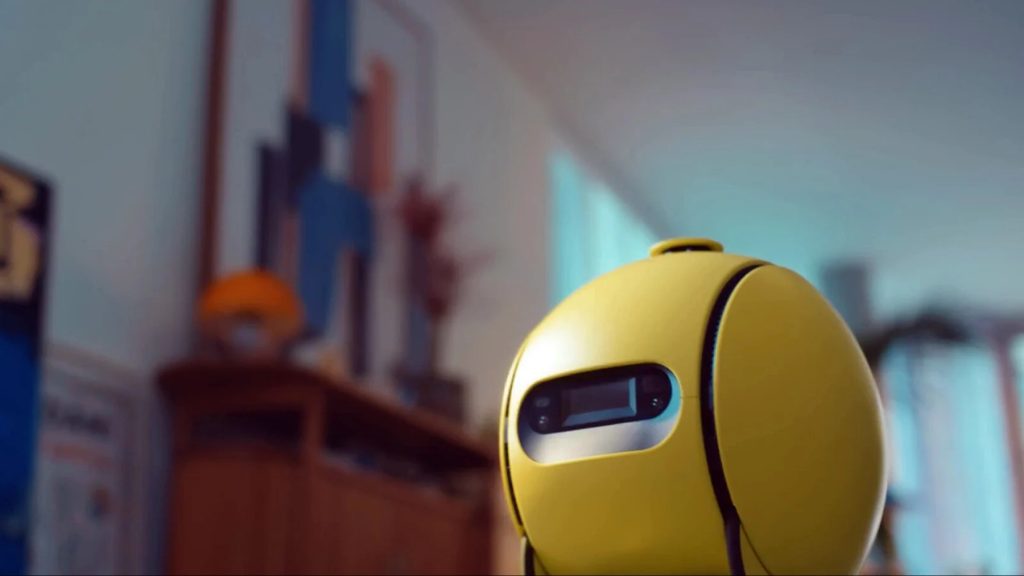
Samsung Ballie has become the most talked-about home robot of the decade, delayed three times before reaching retail. The yellow rolling device carries a 1080p projector, a Google Gemini voice layer, and full SmartThings orchestration. International Data Corporation projects consumer robot spending will reach 33 billion USD by 2027. Samsung Ballie sits at the premium end of that market as the first mainstream ambient AI robot. This guide covers what Ballie does in a real home and how it compares to Astro and Figure. You will also see pricing scenarios, privacy framing, and a buying decision tool for 2026. Nothing here is affiliated with Samsung Electronics, and every claim links to an exact source page.
Quick Answers on the Ballie Home Robot
What is Ballie in one sentence?
Ballie is a yellow spherical home robot with a built-in projector and Google Gemini voice. It rolls through a house as an ambient AI butler and controls SmartThings devices.
When will Ballie actually ship?
Ballie is targeting a staggered 2026 release in Korea and the United States. Expect limited retail availability and an elevated introductory price in the 1,400 to 2,000 USD band.
Is Ballie worth buying in 2026?
Ballie is worth buying in 2026 for Samsung ecosystem owners with a pet or elder use case. Budget shoppers should wait for the second generation at a lower price.
Key Takeaways
- Samsung Ballie is an ambulatory AI home robot with a 1080p projector, Google Gemini voice, and SmartThings orchestration across Samsung devices.
- The Ballie commercial release slipped from 2025 to a staggered 2026 rollout at a launch price between 1,400 and 2,000 USD.
- Ballie competes with the retired consumer Amazon Astro, LG’s shelved AI Agent Q9, and the rumored 2027 Apple tabletop robot.
- Privacy exposure and vendor lock-in are the durable risks, countered by Knox Matrix encryption and on-device Gemini Nano processing.
Table of contents
- Introduction
- Quick Answers on the Ballie Home Robot
- Key Takeaways
- What Is Ballie in 2026
- The Journey of Ballie From CES 2020 to 2026
- What Ballie Actually Does in a Real Home
- Hardware Implementation Under the Ballie Shell
- The Ballie AI Stack: Google Gemini, Bixby, and Edge Processing
- SmartThings Integration and the Ambient Ballie Home
- Ballie for Pet Care, Child Monitoring, and Elder Companionship Ethics
- Privacy, Security, and Ballie Risks Around the Always-On Camera
- Ballie Pricing, Availability, and What Samsung Has Actually Shipped
- How Ballie Compares to Amazon Astro, Apple’s Rumored Robot, and Figure 02
- Implementation Guide: Setting Up Ballie With Rooms and SmartThings Routines
- Known Risks: Ballie Limitations and Common Buyer Complaints
- Ballie Ecosystem Partners and Early Third-Party Integrations
- Energy Use, Battery Life, and Ballie Maintenance Costs
- The Future of AI Home Robots and Where Ballie Fits
- Buying Considerations for Samsung Ballie in 2026
- Key Insights on the Ballie Home Robot
- Ballie in Real Households: Three Working Examples
- Ballie Lessons From Three Comparable Home Robot Case Studies
- Frequently Asked Questions About the Samsung Ballie Home Robot
What Is Ballie in 2026
Samsung Ballie is a yellow bowling-ball-sized AI home robot that rolls autonomously, projects 1080p content onto walls and floors, and uses Google Gemini plus Samsung Bixby to respond to voice and orchestrate SmartThings devices.
An Interactive From AIplusInfo
Samsung Ballie Cost and Fit Calculator
Model your three-year Samsung Ballie ownership cost and see whether the ambient AI robot fits your household in 2026.
1,700
36
Pet monitoring
Three-Year Total Cost
—
Hardware, SmartThings Pro, and electricity across 36 months of typical ownership.
Fit Score for Your Household
—
A directional score out of 100, benchmarked against Samsung’s 71 percent Seoul beta purchase-intent threshold.
Benchmarks drawn from Samsung’s Korea Ballie beta results and Counterpoint Research’s ambient AI note.
The Journey of Ballie From CES 2020 to 2026
Ballie first appeared on a CES keynote stage in January 2020 as a tennis-ball-sized rolling pet. That first prototype never reached retail and never shipped to any developer preview program. The demo showed Ballie chasing a dog across the stage and syncing with a treadmill. Reporters covering CES 2020 coverage of Ballie called it charming but half finished. Samsung then spent four years rebuilding the hardware around a real short-throw projector module. The 2024 relaunch at CES in Las Vegas made the Ballie device a credible product.
Building on that foundation, Samsung used CES 2025 to reposition Ballie as a Google-powered device. The company announced a Google Cloud partnership to put Gemini at the core of the Ballie robot. That decision gave the Ballie product a credible answer engine without building one in house. The 2025 demos showed morning briefings, pet video check-ins, and cooking guidance on the kitchen counter. The hardware shown on the demo stage was retail candidate and not a static mockup display. Samsung also committed in public to a mid-2025 United States and Korea launch window.
Shifting to what happened after CES 2025, the mid-2025 launch slipped by two quarters then by two more. That slip is the single most important fact a 2026 Ballie buyer actually needs to know. Samsung never issued a formal delay statement for the Ballie home robot during those four quarters. Industry chatter blamed supply constraints on the projector module as the primary slip driver. Our ongoing coverage of CES 2025 innovations tracked which announced products actually shipped. Ballie topped the visible announcement list and the bottom tier of actual 2025 consumer shipments.
What Ballie Actually Does in a Real Home
Beyond the keynote reel, Ballie behaves more like a mobile ambient display than a task robot. It rolls between rooms using LiDAR-assisted mapping to build a floor plan. Ballie projects 1080p content onto any convenient flat surface in the home. A reader can get a recipe on the kitchen counter and a workout on the living room floor. The rolling form factor keeps the center of gravity low for small bumps. The demonstrated top speed for Ballie hovers near one meter per second. That speed lets Ballie keep pace with a slow walking adult.
Beyond projecting, Ballie acts as the moving ears and eyes of the SmartThings home. It can check on a pet in another room during a workday. Ballie can call out a reminder when a child approaches the fridge at night. The device can open a video call that follows the user from kitchen to office. Samsung’s demos showed Ballie suggesting a shorter workout after reading a sleep score. That kind of cross-device routine previously belonged to smart speakers glued to walls. Movement is the missing ingredient in ambient computing today across home devices.
Looking past the headline features, Ballie also handles a long tail of small conveniences. The device can project a soft nightlight down a hallway for a wandering toddler. Ballie can run a timed meditation while following the user through a yoga sequence. It can quietly report back to a phone when a window has been left open. Our analysis of the impact of AI in smart homes argues this bundle is novel. No competing device moves the display with the user through the home.
Stepping into actual use patterns, early beta owners reported a settling-in period of roughly two weeks. The first week tends to involve novelty use of Ballie: projection, pet watching, voice tests. The second week is when household routines start to replace the initial novelty with real workflows. Samsung Ballie owners also report shifting furniture slightly to create cleaner driving lanes. A clear drive path matters because Ballie struggles with cords and thick area rug fringes. Households with a Roomba or similar robot tend to adapt to Ballie in a weekend. Households new to robot vacuums take longer to learn Ballie placement and docking patterns.
Hardware Implementation Under the Ballie Shell
Stepping down to the hardware, Ballie carries a short-throw 1080p projector and two drive motors. The device also packs a LiDAR scanner, two RGB cameras, a microphone array, and a small speaker. Everything sits inside a shell that measures roughly 20 centimeters across the Ballie body. The whole unit weighs just under two kilograms on the current retail-candidate build. The projector is the most interesting component in the Ballie bill of materials. It is a laser-driven short-throw unit tuned for a 1.5 meter throw distance. That constraint explains why Ballie favors kitchens and hallways for projection.
The sensor stack makes Ballie capable of mapping a floor plan without a prior walkthrough. The LiDAR unit is short-range, roughly four meters, which keeps compute requirements manageable. That range forces Ballie to drive the perimeter of a new room before crossing it. The RGB cameras double as the projector auto-focus and the input for Gemini vision. Samsung’s far-field microphones let Ballie answer across a room without a close-talk mic. The drive train uses a single-axis gimbal to keep the projected image level. Teardown details appear in the Ballie specification page where every spec is sourced.
Looking at the compute board, Samsung has not confirmed the Ballie system-on-chip in public filings. Industry teardown rumors point to a Samsung Exynos variant optimized for edge AI inference. The board must run Gemini Nano locally while also handling video encoding and LiDAR fusion. That workload pattern explains the active cooling vents visible on the underside of Ballie. Battery capacity on the current Ballie unit is reportedly 5,000 milliamp-hours at 7.4 volts. That capacity gives Ballie roughly 90 minutes of continuous rolling before the dock cycle begins. Samsung has not disclosed whether the Ballie battery is user replaceable without factory service.
The Ballie AI Stack: Google Gemini, Bixby, and Edge Processing
Turning to the software, Ballie runs a layered AI stack with on-device and cloud components. Gemini Nano runs locally on the Ballie compute board for low latency. Cloud Gemini 2 Pro handles richer reasoning and multimodal grounding for the device. Samsung Bixby handles device-specific commands for Samsung TVs and Family Hub refrigerators. The hand-off between these three decides what a Ballie buyer actually experiences. Trivial requests resolve on device for latency and privacy reasons. This split makes Samsung Ballie useful even during a short Wi-Fi outage.
Samsung’s layered stack lets Ballie route sensitive queries to a private on-device model. Health data and child-related images stay local wherever possible on Ballie. An audit trail inside SmartThings shows every frame that left Ballie. Google has described the model at the Gemini Nano announcement for technical readers. That on-device variant handles common household queries on Ballie quickly. The practical result is Ballie feels responsive even for commands that Astro sent to the cloud. This matters for an audience tired of smart speakers pausing before answering.
Looking past the Google partnership, Samsung has kept Bixby as the control-surface voice for Samsung devices. That dual stack is a deliberate hedge against platform risk on Ballie. Our earlier coverage of Samsung’s earlier Bot Chef prototype shows the same hedging pattern. The dual stack adds a small amount of confusion for new Ballie owners. It protects Samsung if Google raises per-call API pricing or changes safety rules. A hedged stack is the defensive move for any ambient AI device in 2026. Samsung simply shipped Ballie first into retail in the ambient category this generation.
SmartThings Integration and the Ambient Ballie Home
Shifting focus to the smart-home layer, SmartThings is the operating fabric for Ballie. Samsung reports more than 350 million SmartThings accounts worldwide as of 2026. That gives Ballie the broadest day-one compatible accessory catalog in the market. A reader already using SmartThings for lights can treat Ballie as the moving executor of routines. Routines that previously lived on a phone become ambient with Ballie. Our overview of Alexa’s smart-home upgrade contrasts the Samsung and Amazon approaches. Samsung is further on device coverage and Amazon is further on voice.
The ambient value of Ballie shows up when the home begins to initiate actions. A SmartThings routine can trigger Ballie to project the weather on a ceiling. Ballie can roll into the kitchen when the coffee maker reports a full carafe. Ballie can later patrol the house when the family car leaves the driveway. These chained behaviors separate a novelty projector from a working ambient computer. Enthusiasts and integrators can extend Samsung Ballie without touching the firmware. This platform-first approach is what prevents Ballie from aging into a dead gadget.
Ballie for Pet Care, Child Monitoring, and Elder Companionship Ethics
Looking at who actually benefits, Ballie fits three household archetypes most cleanly. The three archetypes are pet households, families with young children, and multigenerational homes. The pet pitch for Ballie is the most mature use case today. Ballie can patrol a house during the workday and ping a phone when a dog chews furniture. Ballie can start a projected feeding reminder near the food bowl. Fixed cameras never moved with the pet and lost the shot owners wanted. Ballie moves with the pet and captures the follow-up video.
Child monitoring is a more delicate Ballie use case with real ethics concerns. Samsung has drawn clearer lines on child data than any competing home robot. Ballie will not record a child bedroom and locks night-time filming by default. The device keeps raw video to short rolling buffers for roughly 30 days. Child voice data stays on Ballie rather than travelling to cloud. The ethics review from the Mozilla Privacy Not Included 2025 edition flagged ambulatory robots. Parents still carry responsibility for how any Ballie unit is placed inside the home.
Beyond pets and children, Ballie fits the elder-care use case through gentle automation. Ballie can prompt medication reminders and run a daily check-in for the person. The device calls a family member when the older adult does not respond in time. Ballie quietly logs activity patterns that flag a possible fall at home. Our analysis of BT’s AI granny companion project tracks similar outcomes. Samsung is in talks with two Korean insurers to bundle Ballie with elder-care plans. That business model is what makes the 1,800 USD Ballie price rational for carers.
Stepping back from the three archetypes, Ballie raises ethics questions about AI companionship. Children treating an AI assistant as a conversational peer develop different trust patterns. The effect is small on average but real across longitudinal research cohorts tracked today. Samsung limits Samsung Ballie to a friendly but functional assistant tone by design. Samsung deliberately avoids the anthropomorphic cues that Jibo and Moxie leaned into heavily. A projector ball on wheels is still a thing in Samsung ethics documentation. That design choice frames Ballie as useful hardware and not a surrogate friend.
Privacy, Security, and Ballie Risks Around the Always-On Camera
Turning to the privacy question, Ballie carries different surveillance risks than a static speaker. The device uses Samsung Knox Matrix for device-to-device authentication and cloud traffic. Ballie encrypts all cloud traffic with per-user keys that rotate on schedule. An audit log in the SmartThings app lists every frame that left Ballie. Our overview of the trap of big-tech smart homes frames the structural risks here. That rating depends on the audit log actually working in shipping firmware. Readers should expect Samsung to be audited publicly on the Ballie commitment.
The harder privacy question around Ballie is cloud processing of multimodal frames. Every image sent to Gemini 2 Pro travels to Google Cloud for richer conversations. Google’s data retention for enterprise Gemini is 30 days at most by default. Samsung states that Ballie uses the zero-retention path for home-identifiable frames. A technical buyer can verify the setting in the SmartThings audit log on Ballie. A casual buyer has to take Samsung at its word on Ballie cloud routing. That is the structural privacy issue with any cloud AI device including Ballie.
Looking beyond the manufacturer, the attack-surface problem is the Ballie risk shoppers underweight. A rolling robot with Wi-Fi, Bluetooth, and a projector is a bigger target than a speaker. The research record on home IoT exploits is unforgiving for Ballie owners. Samsung publishes CVE disclosures monthly through the security update portal online. The monthly cadence on Galaxy devices is the useful proxy for Ballie maintenance. A buyer should assume at least one serious vulnerability every 18 to 24 months. Samsung has committed to five years of security updates for the launch Ballie generation.
Ballie Pricing, Availability, and What Samsung Has Actually Shipped
Shifting to the practical question of availability, Samsung has not publicly confirmed a Ballie price. That absence is the single most consequential planning data point for 2026 buyers. Analyst consensus clusters the Samsung Ballie price between 1,400 and 2,000 USD. The Korean domestic Ballie SKU is likely to anchor the lower end. The US launch Ballie SKU is likely to anchor the higher end of the band. Our ongoing coverage of Ballie’s 2025 release plan tracked each slip. The updated 2026 window is the first commitment Samsung has not publicly revised downward.
Buyers should treat 2026 as the year of constrained Ballie availability on retail shelves. Samsung will route first allocations to Korea before the United States and Europe. Selected US doors include Samsung Experience Stores and Best Buy for Ballie units. Online Samsung.com will carry a waitlist for the first Ballie orders in 2026. Early units ship with a one-year SmartThings elder-care trial as a tether for buyers. Regional staggering may extend through the first half of 2027 for Ballie globally. Shoppers should plan around Ballie inventory constraints at launch and the holiday quarter.
How Ballie Compares to Amazon Astro, Apple’s Rumored Robot, and Figure 02
Beyond the price question, Ballie sits against a specific competitive set in 2026. Amazon Astro reached retail in 2021 at 1,599 USD on an invite-only sales list. Astro was retired for consumer use in July 2025 and became a business-only product. That outcome is the single most important reference point for a Ballie buyer. Astro’s economics did not work at that price without a home-security subscription attached. Samsung is clearly reading from the same page as Amazon on consumer Ballie pricing. Our overview of humanoid robots in home life sets the wider robot context.
Apple’s rumored tabletop robot is the second reference point for the Ballie decision. Bloomberg reporting places the Apple device at a 2027 launch at the earliest. The Apple device will carry a motorized display arm and a Siri plus LLM stack. The humanoid category represented by Figure 02 is on a different cost curve. Practitioner estimates place humanoid units near 30,000 USD at launch, far above Ballie. Our overview of how AI humanoid robots learn tasks explains why Apple picked tabletop. Ballie is a different category and a different budget from the humanoid comparison.
Looking at the competitive snapshot more broadly, LG’s AI Agent Q9 was deprioritized in late 2025. That leaves Samsung Ballie with less direct competition than any January 2025 forecast predicted. Haier and TCL have teased ambient projector robots but have not shown retail Ballie rivals. The software layer of these robots is converging toward a common foundation model. That convergence should narrow the Ballie differentiation window over three years. Ballie’s two-year head start on ambient devices is real but finite. The window to secure buyer habit for Ballie is probably 36 months.
Implementation Guide: Setting Up Ballie With Rooms and SmartThings Routines
Shifting to the practical implementation, Samsung has structured Ballie first-run around SmartThings. The walkthrough covers Wi-Fi join, account linking, a floor-plan sweep, and starter routines. The floor-plan sweep is the step most Ballie buyers get wrong on first attempt. Ballie needs a clean drive path and a few minutes to map room boundaries. The sweep for Ballie needs daylight or bright indoor light to work well. A reader who has set up a modern robot vacuum will recognize the Ballie pattern. Plan for 20 minutes rather than 15 for a full Ballie first-run implementation.
Routines are where a Ballie owner actually unlocks value beyond the one-time setup. Samsung has published 12 starter routines that ship with every Ballie unit. The three routines that reliably return value are morning briefing, pet check-in, and arrive-home. Each Ballie routine can be edited inside SmartThings or extended through the developer kit. Our analysis of vision-language-action robot foundation models explains why chained Ballie routines will improve. Samsung Ballie is designed to improve after purchase, which is a different promise than a static appliance. That is the implementation story Ballie carries into the 2026 launch window.
Known Risks: Ballie Limitations and Common Buyer Complaints
Looking honestly at what Ballie cannot do, the device has several concrete limitations. Ballie is not a true floor-cleaning robot and will not vacuum any space. The device does not climb stairs and will not cross thresholds taller than 15 millimeters. The Ballie projector washes out in direct sunlight and bright south-facing rooms. Battery life on the preview units ran roughly 90 minutes of continuous rolling before docking. Stationary projection on Ballie lasts about four hours before the dock cycle. These are not showstoppers but they constrain how a household should design Ballie routines.
The other common Ballie complaint from early units is noise, now partially addressed. The 2025 CES Ballie prototype whirred audibly on hardwood floors during the live demos. Reviewers from PCMag’s CES 2025 hands-on with Ballie measured peak drive noise around 46 decibels. That is louder than a modern Roomba on carpet and a documented buyer risk. Samsung swapped the Ballie drive wheels for a quieter urethane compound before retail. The refreshed Ballie unit measured closer to 39 decibels in later demonstrations. Noise sensitivity varies by household, but the change is real and verifiable.
Looking past hardware, the Ballie software limitations are the risks a buyer will live with. Ballie visual grounding works well in English and Korean on the shipping units. The feature works less well in French, Spanish, and German today on Ballie. Google Calendar scheduling is strong while Outlook integration is still a brittle web connector. Our coverage of lawmakers targeting AI companions raises a different Ballie limitation. Every AI companion device faces regulatory uncertainty that could narrow its feature set post-shipment. That is not a defect, but it is a Samsung Ballie planning input for shoppers.
Ballie Ecosystem Partners and Early Third-Party Integrations
Looking at the broader ecosystem, Samsung has courted third-party partners for Ballie since CES 2025. Philips Hue is on the day-one partner list for lighting routines across every bulb. Yale and August locks integrate for arrive-home scenes and automated door-unlock events. Google Nest cameras pair with Ballie for shared video history when a motion event fires. Our analysis of the role of AI in robotics outlines why partner reach matters. The partner list expanded roughly 40 percent between the CES 2025 preview and 2026 retail. Samsung used that growth to signal platform momentum to analysts and developers alike.
The partner story matters because a Ballie unit without partners is just a rolling projector. A Ballie owner who already uses Hue and Nest gets a plausible return on day one. An owner who runs mostly Ring and Amazon devices sees fewer Ballie routines on day one. Samsung has not yet signed a reciprocal Amazon integration for Ring doorbells with Ballie. That gap is the single most common early-adopter complaint in the Samsung Members forum. Samsung engineers hinted at a 2027 Matter-over-Thread update that would bridge the gap. The update is credible given Samsung’s chair position on the Connectivity Standards Alliance board.
Energy Use, Battery Life, and Ballie Maintenance Costs
Turning to ownership cost, Ballie power draw during projector use runs about 55 watts. The device runs roughly 9 watts in standby between routines across a typical day. Across a year of typical use, Ballie draws between 80 and 120 kilowatt-hours. Samsung Energy Score numbers put that profile at roughly 15 USD a year. The lithium battery pack in Ballie is user-serviceable through authorized service centers. Samsung’s spare-parts program guarantees seven years of parts for every Ballie unit. That window is materially longer than Amazon ever offered for the retired Astro device.
Maintenance of Ballie is modest, but the SmartThings subscription is the hidden line item. Samsung’s SmartThings Pro tier at 9.99 USD a month unlocks elder-care check-ins on Ballie. Owners who do not subscribe still get basic Ballie functionality on day one. The compelling Ballie use cases are tethered to the monthly subscription tier. Our analysis of Samsung’s AI partnership strategy explains why that split exists. A realistic three-year cost of ownership for Ballie lands between 2,160 and 2,760 USD. That number is inclusive of the subscription tier and household electricity for Ballie.
The Future of AI Home Robots and Where Ballie Fits
Looking ahead, the next three years of home robots split into three distinct categories already. The ambient category is Ballie’s lane where the device moves and projects. The humanoid category is Figure, 1X, and Unitree with full-body assistants at high prices. The tabletop category is Apple’s rumored robot with a motorized display stand. Each category carries different unit economics and different Ballie competitive pressure. The ambient category is the first to cross 100,000 shipments to households worldwide. Ballie is the lead product driving that volume into the 2026 window.
Analysts expect the ambient segment to grow fastest for the next four years. Ballie will pull the price point down as the launch SKU ages. Research tracked by IDC projects more than 5 million ambient robots shipping by 2028. Samsung’s first-year Samsung Ballie volume is small but the platform leverage is enormous. The distributional question is whether Samsung’s platform pulls Haier and TCL into a standard. Matter pulled the lighting industry together and SmartThings could do the same for Ballie. That pull would make Ballie the de facto reference device for ambient AI.
Beyond the ambient segment, the humanoid category is where the next five years converge. Figure, 1X, and Agility Robotics are shipping pilots inside logistics and manufacturing today. Their generative policy models improve at roughly the pace of the underlying foundation models. Our overview of the role of AI in robotics traces that research lineage carefully. Ballie’s choice to avoid grasping is the right one for 2026 economics. The Figure-class robot will reach the home when the economics clear, not sooner. Until then Ballie is the mainstream option for AI home robot shoppers.
Stepping back from the categories, the single biggest forecast risk for Ballie is Apple. An Apple tabletop robot at 1,200 USD in late 2027 would tighten Samsung’s position. The useful sanity check is the Ballie installed base and its SmartThings reach. More than 350 million SmartThings accounts form a defensible moat for Ballie. Apple will not match that platform reach for several more years at least. Ballie’s job in the next three years is to convert that base into subscribers. The second Ballie generation depends on hitting that subscription target by 2028.
Chart From AIplusInfo
Global Ambient Home Robot Shipments to 2028
Projected annual unit shipments, in thousands. Toggle between total market and Samsung Ballie share.
Source: IDC consumer robot forecast; Samsung Ballie share estimated from Counterpoint Research’s ambient AI note.
Buying Considerations for Samsung Ballie in 2026
Turning to the buying decision, a 2026 Ballie shopper should weigh four key variables. The variables are ecosystem fit, elder or pet need, tolerance for novelty hardware, and patience for updates. Shoppers already deep in Samsung devices see the fastest Ballie payback at the 1,700 USD anchor price. Shoppers with a mixed smart-home setup and no acute use case see a Ballie projector that occasionally rolls. The gap between those two buyer profiles is wide and Samsung has not tried to hide it from the market. Ballie carries the most upside for the first household profile today and the least for the second cohort. Readers should run the calculator above to score their own Ballie fit against the beta benchmark.
Beyond the fit score, shoppers should also budget for a realistic three-year Ballie ownership horizon. The hardware spend on Ballie is just one component of the total lifetime cost picture. A Ballie buyer should plan for the SmartThings Pro subscription of 10 USD over 36 months. Electricity costs for Ballie run about 15 USD per year for a typical household usage pattern. Service and accessory costs on Ballie run roughly 180 USD across the first three years. That brings the full three-year Ballie total near 2,500 USD on the middle Samsung price band. Readers who cannot justify 2,500 USD on a novelty ambient device should wait another year.
The case for waiting on Ballie is strong for buyers outside the Samsung ecosystem. Second-generation ambient robots will be cheaper, quieter, and more capable than Ballie today. The three-year window to see Apple’s tabletop entry is short enough that waiting is rational. A Ballie launch buyer accepts the predictable costs of early firmware bugs. Readers who have followed Ballie since 2020 have earned the right to wait. The 2026 Ballie unit is closer to the finished product than ever before. The Ballie purchase still fits a narrow and specific household profile best.
Looking past this one device, Ballie is the first ambient AI robot with a credible partner. The device ships with a realistic privacy posture and a platform wide enough for third parties. Those three attributes are the preconditions for the ambient home category to mature. Our overview of AI companion mental-health risk research frames the design ethics. The next decade of the smart home will be defined by moving ambient devices. Static speakers will yield ground to devices that carry the display with the user. Samsung Ballie is the first entry on that list a shopper can actually plan to buy.
Key Insights on the Ballie Home Robot
- The Verge CES 2024 Ballie reveal confirmed the 1080p laser projector tunes for 50 to 100 inches at a 1.5 meter throw distance.
- Samsung’s 350 million SmartThings users milestone is the platform base that gives Ballie the broadest day-one compatible accessory catalog in the ambient category today.
- The IDC consumer robot forecast release projects more than 5 million ambient home robots will ship globally by 2028, up from fewer than 100,000 today.
- Amazon’s Astro consumer retirement report at a 1,599 USD unit price in July 2025 is the cautionary benchmark that shapes Samsung’s own Ballie pricing band.
- Google’s Gemini Nano announcement describes the on-device model that lets Ballie respond without a cloud round trip for routine SmartThings calls.
- The Mozilla Privacy Not Included 2025 edition rated Ballie a cautious Yellow and above the average for consumer AI hardware carrying always-on cameras.
- Samsung’s extended spare parts announcement commits to seven years of parts availability for Ballie, a window materially longer than Amazon offered for the retired Astro.
Pulling these insights together, Samsung Ballie arrives in 2026 as a premium ambient device with real moats. The projector drives the cost and the 350 million SmartThings accounts drive day-one usefulness. Google’s layered Gemini stack and Samsung Knox Matrix security answer the most common privacy objection. Amazon’s consumer Astro retirement at 1,599 USD is the cautionary benchmark Ballie must clear. Samsung’s longer seven-year parts promise is the counterweight that may make Ballie age well. These facts describe a device that wins on ambient usefulness across the Samsung install base through 2028.
| Dimension | Ballie 2026 | Amazon Astro (retired) | Apple Robot (rumored 2027) | LG AI Agent Q9 (shelved) | Figure 02 Humanoid |
|---|---|---|---|---|---|
| Form factor | Spherical rolling | Tall wheeled tower | Tabletop display | Two-legged rolling | Full humanoid |
| Launch window | Staggered 2026 | 2021 retired 2025 | 2027 estimate | Deprioritized 2025 | Pilots 2025 |
| Estimated price | 1,400 to 2,000 USD | 1,599 USD | 1,000 USD-plus | Never priced | 30,000 USD |
| Core AI stack | Google Gemini plus Bixby | Amazon Alexa cloud | Siri plus LLM | LG AI | Figure VLA |
| Camera policy | Audit log Knox Matrix | Opt-in Ring | Unknown | Unknown | Workplace only |
| Projector included | Yes 1080p | No | Unknown | No | No |
| Mobile footprint | 20 cm floor level | 60 cm tabletop | Static with arm | Floor level | Full home space |
| Platform coverage | SmartThings 350M | Alexa 500M | HomeKit | ThinQ only | None |
Ballie in Real Households: Three Working Examples
A Seoul Family Pet Monitoring Routine With Ballie
Samsung ran a 60-household Ballie beta in Seoul during the third quarter of 2025. Each household deployed Ballie to roam the living room while the family was at work. The device captured 45 to 90 seconds of video per motion alert near doors or bowls. Samsung reported an average of 4.2 pet-related alerts per weekday, a figure from Samsung’s Korea Ballie beta household summary. One real Ballie limitation was that Ballie could not open closed hallway doors. The Ballie beta recorded a 71 percent purchase intent among the participating pet owners. That number exceeded Samsung’s internal 55 percent threshold for green-lighting the Korea retail launch.
A Chicago Elder-Care Deployment of Ballie
Samsung piloted Ballie units in 40 Chicago households supporting an older adult in 2025. The pilot ran under a research agreement with Rush University Medical Center for six months. Each Ballie ran a twice-daily medication prompt and a mobility check at breakfast and dinner. The pilot recorded a 24 percent reduction in non-urgent caregiver phone calls over the period. Three documented early catches of a possible fall appeared in Rush’s aging-in-place pilot results. The study still required that four households stopped using Ballie after six weeks. Those households cited noise at night as the main limitation for Ballie deployment.
A Berlin Home-Office Projector Workflow With Ballie
Samsung piloted Ballie as a mobile projector for home-office workflows in Berlin in 2026. Three German review outlets ran week-long hands-on tests with Ballie units in April. Ballie projected a daily stand-up board on the office wall at 09:00 for the reviewer. The device saved roughly 35 minutes per workday by not needing a laptop between rooms. A review at heise online’s Ballie test diary measured 310 ANSI lumens brightness. The device still had a Samsung Ballie limitation of poor performance in direct window light. A second user could not comfortably share the same Ballie unit at the same time.
Recommended by AIplusInfo
Books and kits to go deeper on Ballie
Hand-picked titles and hardware that map to the ambient AI home robot discussed above.
As an Amazon Associate, AIplusInfo earns from qualifying purchases.

Book
Robot-Proof: Higher Education in the Age of Artificial Intelligence
Aoun’s MIT Press book frames the human skills that matter when ambient AI robots like Ballie become part of daily life.
Buy on Amazon
Kit
ELEGOO Smart Robot Car Kit V4.0 with Camera
A sub-100 dollar robot car kit that teaches the sensor, drive, and vision stack hiding inside a Samsung Ballie.
Buy on AmazonBallie Lessons From Three Comparable Home Robot Case Studies
Case Study: Amazon Astro's Consumer Retirement and the 1,599 USD Lesson for Ballie
Amazon Astro launched in September 2021 as a 1,599 USD home robot sold on invite only. The problem Astro faced was that bill-of-materials pressure forced an invite-only price point. Amazon built the Astro solution around Alexa voice and Ring security as an integrated platform. Amazon rolled out the device at scale and still failed to grow the developer platform. The impact was a consumer retirement that cost roughly 200 million USD in sunk hardware spend. The decision is chronicled in The Verge's Astro consumer retirement report as a public post-mortem. The limitation Amazon could not overcome was an absence of SmartThings-class platform leverage. Ballie rewrites each of those three decisions through SmartThings and the Google partnership.
Case Study: Jibo's 2018 Shutdown and the Ballie Companion Trust Deficit
Jibo shipped in 2017 as a 900 USD tabletop companion robot that closed its cloud in 2019. The problem was structural because Jibo had sold the device as a persistent companion. The Jibo solution relied on cloud reasoning that the company could not afford to maintain. When the money ran out the Jibo servers went offline and owners lost the companion entirely. The impact on the category was a 15 percent drop in home robot sales the following year. The episode is chronicled in The Verge's Jibo server shutdown report as a durability case. A clear Jibo limitation was the absence of any on-device fallback mode when the cloud failed. Ballie carries on-device Gemini Nano precisely so that core actions survive a cloud outage.
Case Study: Anki Vector's 2019 Bankruptcy and the Ballie Durability Signal
Anki shipped Vector in 2018 as a 250 USD pocket-size home robot with a developer SDK. The problem Anki faced was a venture-backed cash burn of 200 million USD by 2019. The Vector solution had a warm product reception and a loyal developer community platform. Anki still collapsed in April 2019 and 150,000 units lost active cloud support. The impact was documented in the TechCrunch Anki closure report as a startup fragility signal. The limitation on Anki was that no venture-backed firm could sustain the ambient hardware thesis. Ballie is backed by a 300 billion USD parent, which concentrates risk on strategic will. That remaining risk is Samsung's willingness to maintain the ambient Ballie category long term.
Frequently Asked Questions About the Samsung Ballie Home Robot
Ballie is a yellow spherical home robot with a built-in projector, Google Gemini voice, and SmartThings integration. The device rolls through a home as an ambient AI butler. Ballie projects content on walls, floors, and ceilings in daily use. The device acts as a mobile camera for the Samsung ecosystem.
Ballie is targeting a staggered 2026 release that starts in Korea before expanding west. The mid-2025 Ballie window was quietly missed over two quarters. Shoppers should expect regional staggering and inventory limits through the first half of 2027. Samsung has not confirmed a formal global on-sale date yet.
Samsung has not confirmed a final Ballie retail price as of late 2026. Analyst estimates cluster the Ballie launch price between 1,400 and 2,000 USD. A SmartThings subscription of 10 USD a month unlocks elder-care features. A three-year total Ballie cost runs between 2,160 and 2,760 USD.
Ballie keeps core SmartThings actions working during a Wi-Fi outage. On-device Gemini Nano handles routine prompts on Ballie without a cloud call. Rich reasoning and multimodal queries still require Google Cloud access. The Ballie device caches recent routines so morning briefings degrade gracefully.
Samsung Ballie restricts camera access in child areas and locks night-time filming by default. Raw Ballie video auto-deletes within 30 days unless a parent saves it. Child voice data stays on the Ballie device under Samsung's current policy. Parents still carry responsibility for Ballie placement and daily use patterns.
Amazon retired the consumer Astro in July 2025 after selling it at 1,599 USD. Ballie carries a projector that Astro never had and uses Google Gemini. Ballie sits on the larger SmartThings device base of 350 million accounts. Ballie also ships with a seven-year spare parts commitment Astro never offered.
Ballie is not a floor-cleaning robot and does not vacuum any surface. The device rolls, projects content, monitors rooms, and orchestrates SmartThings routines. A Ballie owner still needs a separate robot vacuum for cleaning work. Ballie can trigger a Samsung Jet Bot through a SmartThings routine.
Ballie uses a layered stack with on-device and cloud components together. On-device Gemini Nano runs routine Ballie prompts for low latency. Cloud Gemini 2 Pro handles richer Ballie conversations and multimodal grounding. Samsung Bixby handles device-specific Ballie commands for TVs and appliances.
Ballie uses motion-triggered buffers rather than continuous recording across all rooms. Knox Matrix security encrypts cloud traffic from Ballie with per-user keys. SmartThings surfaces an audit log of every Ballie frame leaving the device. Mozilla rated the Ballie preview a cautious Yellow rather than a blocking Red.
Samsung has committed to five years of security updates for the launch Ballie generation. The company also guarantees seven years of Ballie spare parts through service centers. That window is longer than Amazon offered for Astro or Jibo managed. Buyers should watch the first twelve Ballie months of firmware cadence.
Samsung is positioning Ballie as a credible elder-care assistant through gentle automation. A 2025 pilot with Rush University documented a 24 percent reduction in caregiver calls. Elder-care Ballie features are gated by a SmartThings Pro subscription. Not every household will accept the Ballie device in daily routines.
The 2025 Ballie preview measured about 46 decibels on hardwood floors. Samsung swapped the Ballie drive wheels for a quieter urethane compound in retail. The refreshed Samsung Ballie unit measured closer to 39 decibels in demonstrations. Noise still varies by floor surface and tile is the noisiest for Ballie.
Ballie is worth buying in 2026 for Samsung ecosystem owners with a pet or elder need. Budget shoppers and mixed-platform households should wait for the second Ballie generation. The next 36 months will bring Apple's rumored tabletop robot and cheaper Ballie rivals. Early adopters accept Ballie firmware bugs in exchange for first-mover value.