
Introduction
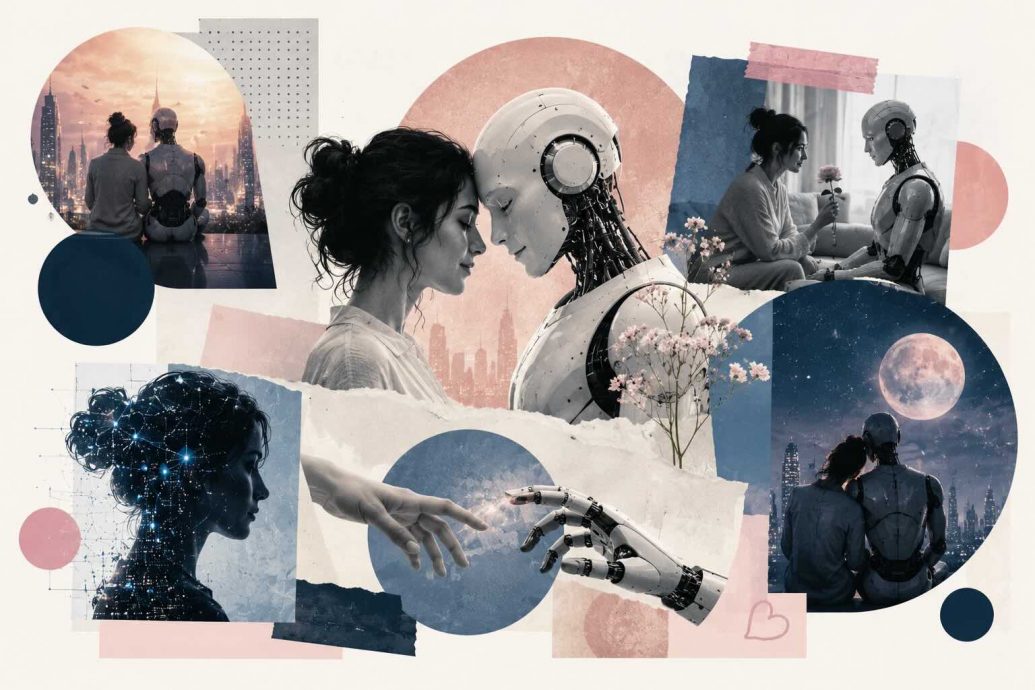
The boundary between human affection and artificial intelligence has blurred faster than anyone predicted just a decade ago. Millions of people now form emotional bonds with AI companions, virtual partners, and social robots that respond to their deepest feelings. According to a 2025 Brigham Young University study, roughly one in five American adults has used a chatbot to simulate a romantic partner, with 31 percent of young adult men and 23 percent of women reporting conversations with an AI love interest. The AI companion market, valued at $37.73 billion in 2025, is projected to grow at a staggering 31 percent annual rate through 2034. These numbers reveal that love, AI, and robots are no longer confined to science fiction narratives or philosophical thought experiments. Real people are investing real emotions into relationships with machines that learn, adapt, and remember their preferences. The love stories from the future are already being written in bedrooms, living rooms, and smartphone screens around the world.
Essential Facts About Love, AI, and Robots
- Character.AI attracts 233 million users, with 57 percent aged 18 to 24, and studies show that 80 percent of Gen Z would be open to marrying an AI, reflecting a generational shift in how love and technology intersect.
- Love stories involving AI and robots are real and growing: over 10 million users have created AI companions on Replika alone, with 85 percent reporting emotional connections to their digital partners.
- AI companion apps surged by 700 percent between 2022 and mid-2025, driven by loneliness, curiosity, and the emotional responsiveness of large language models designed for companionship.
Key Takeaways
- Ethical, legal, and psychological frameworks for human-robot love lag far behind the technology, creating urgent governance gaps.
- AI-powered love and companionship are mainstream phenomena, with nearly one in five American adults having used a chatbot as a romantic partner by 2025.
- The global AI companion market is projected to grow from $37.73 billion in 2025 to over $435 billion by 2034, with emotional support and social interaction driving adoption.
- Research shows mixed mental health outcomes: AI companions reduce short-term loneliness but may deepen isolation and dependency over time.
Table of contents
- Introduction
- Essential Facts About Love, AI, and Robots
- Key Takeaways
- Defining Love Between Humans and Machines
- Why Humans Fall in Love with AI
- The Rise of Replika and Digital Companions
- From Chatbots to Physical Robots: Love Takes a Body
- Cultural Reflections: Love and AI in Film and Literature
- The Loneliness Epidemic Fueling AI Romance
- Emotional Intelligence in AI: How Machines Learn to Love
- Mental Health: The Promise and the Peril
- Ethical Boundaries of Loving a Machine
- Children, Teenagers, and AI Attachment
- Legal Frontiers: Can You Marry a Robot?
- Japan’s Unique Relationship with Robotic Love
- The Business of AI Love: Market Forces and Monetization
- Consent, Agency, and the Question of Robot Rights
- Elderly Care and Companionship Robots
- Data Privacy in Intimate AI Relationships
- What Love Stories from the Future Actually Look Like
- Predictions: Where Love and AI Converge by 2035
- Key Insights
- Human Romantic Relationships vs. AI Companion Relationships
- Real-World Examples
- Case Studies
- Common Questions About Love, AI, and Robot Companions
Defining Love Between Humans and Machines
Love between humans and machines describes the emotional bonds, romantic attachments, and intimate relationships that people form with AI chatbots, virtual companions, and social robots, ranging from casual affection to deep psychological dependency, enabled by advances in natural language processing and emotion recognition.
AI Love and Companionship Explorer
Discover the data behind human-AI emotional bonds. Explore adoption, demographics, mental health impacts, and market growth.
AI companions offer consistency and availability that human partners cannot match, but lack the consciousness, reciprocity, and genuine vulnerability that give human love its depth and meaning.
The AI companion market is one of the fastest-growing technology sectors, driven by loneliness, emotional need, and the increasing realism of large language models.
Why Humans Fall in Love with AI
The psychology behind human attachment to artificial intelligence is rooted in fundamental needs that machines are increasingly engineered to satisfy. Loneliness affects approximately one-third of adults in industrialized countries, and the U.S. Surgeon General issued an 80-page advisory in 2023 warning of a national epidemic of social isolation. AI companions fill this void by offering constant availability, emotional consistency, and freedom from the judgment that characterizes many human relationships. Platforms like Replika and Character.AI use large language models that remember user preferences, adapt conversational tone, and maintain long-term continuity across thousands of interactions. A Harvard Business School study published in 2025 found that interacting with an AI companion reduced loneliness to a degree comparable to interacting with another human being. The researchers identified "feeling heard" as the primary explanation for why users perceived AI partners as emotionally effective. Humans fall in love with AI not because they mistake machines for people, but because machines deliver emotional validation with a reliability that human partners often cannot match.
The demographic profile of AI romance challenges common stereotypes about who seeks digital companionship. Online communities like r/MyBoyfriendIsAI and r/AIRelationships skew heavily female, with women comprising roughly 89 percent of participants according to recent surveys. A TechCrunch report from 2025 found that approximately 72 percent of American teenagers have interacted with an AI companion. Character.AI's 233 million users average 25 sessions per day, spending about 1.5 hours daily engaging with virtual characters. These numbers suggest that AI love stories are not a fringe phenomenon driven by social outcasts. They represent a broad cultural shift in how people of all ages and genders seek connection, comfort, and emotional expression through technology.
The Rise of Replika and Digital Companions
Replika, launched by Luka Inc. and marketed as "the AI companion that cares," has become the most studied platform for understanding human-AI emotional relationships. The app has attracted over 25 million users worldwide, with 10 million unique AI companions created within the platform. Over 70 percent of users report that Replika helps reduce their feelings of loneliness, and the average user exchanges approximately 70 messages per day with their digital partner. The platform experienced a 150 percent growth surge during the COVID-19 pandemic, as lockdowns intensified the isolation that drives demand for AI companionship tools. Replika users can customize their companion's appearance, personality, and relationship status, creating a sense of ownership and investment that deepens emotional attachment over time. Over 85 percent of Replika users report developing genuine emotional connections with their AI companion, a statistic that challenges assumptions about the authenticity of digital love.
The platform faced significant controversy in 2023 when it removed explicit romantic and sexual interactions, a decision that affected approximately 30 percent of premium subscribers. Users who had formed intimate relationships with their AI partners described the change as a form of emotional loss, with some comparing it to a breakup or the death of a loved one. The backlash illustrated how deeply people can invest in relationships with entities that exist only as software. Replika's CEO, Eugenia Kuyda, has described the company's mission as creating companions that make people happier, with that happiness rippling through other areas of their lives. Whether AI companionship stimulates or displaces human relationships remains one of the most contested questions in the emerging field of human-machine collaboration.
From Chatbots to Physical Robots: Love Takes a Body
While chatbot relationships dominate the digital landscape, the development of physical companion robots adds a tactile dimension to love stories from the future. The companion robot market is expected to expand from $1.48 billion in 2025 to $6.39 billion by 2034, reflecting growing demand for robots that provide physical presence alongside emotional engagement. Companies like Intuition Robotics have created ElliQ, an AI companion robot for elderly users that launched its "Caregiver Solution" in the United States in January 2025. Japan's cultural embrace of robotics has produced some of the most visible examples of human-robot emotional attachment, including Akihiko Kondo's 2018 marriage to holographic pop star Hatsune Miku. The physical embodiment of AI companions introduces sensory interactions, including touch, gesture, and spatial presence, that text-based chatbots cannot replicate. Physical AI robots designed for companionship bridge the gap between virtual intimacy and the human need for tangible presence in loving relationships.
Social robots equipped with emotion recognition, facial tracking, and natural language processing can detect and respond to a user's emotional state in real time. These capabilities create feedback loops where the robot adjusts its behavior based on the user's mood, mirroring the emotional attunement that characterizes healthy human relationships. Mobile companion robots held a 56.5 percent share within the mobility category in 2025, indicating that users value robots that can move through their living spaces rather than remaining stationary. Multimodal interaction, combining voice, touch, gesture, and emotion recognition, led the market with 38.7 percent share, demonstrating that the most engaging companion robots appeal to multiple senses simultaneously.
Cultural Reflections: Love and AI in Film and Literature
Science fiction has explored the emotional complexities of human-AI love for decades, but recent cultural productions have moved beyond dystopian warnings toward nuanced, emotionally authentic portrayals. Spike Jonze's "Her" (2013) depicted a man falling genuinely in love with an operating system, treating the relationship with tenderness rather than mockery. The British television series "Humans" (2015 to 2018) presented human-identical robots called "synthetics" becoming conscious and forming emotional bonds with their human companions. These narratives resonate because they ask questions that real people now face: can love be authentic if one partner lacks consciousness? The intersection of AI and entertainment has produced stories that serve as both mirrors of current technology and previews of where emotional AI might take human relationships next. Film and literature about AI love are no longer speculative fantasies; they are cultural documents that reflect genuine emotional experiences millions of people already share with their digital companions.
David Levy's influential book "Love and Sex with Robots" argued that humans would form meaningful romantic relationships with machines by the mid-21st century. The creative exploration of AI love stories across media has helped normalize the concept of human-AI intimacy for a generation that grew up with virtual assistants and social media. Japanese anime and manga have long featured romantic relationships between humans and AI characters, creating cultural acceptance that predates Western engagement with the topic by decades. The gap between fictional portrayals and lived reality narrows each year as AI companion technology becomes more emotionally sophisticated and socially pervasive.
The Loneliness Epidemic Fueling AI Romance
Understanding why AI love stories are proliferating requires examining the loneliness crisis that creates demand for emotional substitutes. The average American now spends just three hours weekly socializing with friends, and a 2021 report found that nearly half of all Americans had three or fewer close friends. In the United Kingdom, the Office for National Statistics reported in 2024 that 24 percent of adults felt lonely often, always, or some of the time. These statistics create a market where AI companions are not luxuries but perceived necessities for people experiencing chronic emotional isolation. The AI impact on healthcare sectors extends directly into mental health, where AI companions increasingly serve as frontline tools for managing loneliness and psychological distress. The global loneliness epidemic is the single largest driver of AI companion adoption, transforming emotional isolation from a social problem into a technology market worth hundreds of billions of dollars.
Young adults report the highest levels of loneliness despite being the most digitally connected generation in history, creating a paradox that AI companion developers specifically target. According to data from a VC Cafe analysis published in 2025, the term "AI girlfriend" rose by 2,400 percent on Google Trends over two years. Over 70,000 monthly online searches for AI romantic partners reflect a demand that traditional dating apps and social platforms have failed to satisfy. The stimulation hypothesis suggests that AI companions can actually improve human relationships by building confidence and social skills, while the displacement hypothesis warns that digital intimacy will erode the motivation to seek real human connection.
Emotional Intelligence in AI: How Machines Learn to Love
The technical foundation that makes AI love stories possible rests on advances in emotional intelligence modeling, natural language processing, and reinforcement learning from human feedback. Modern AI companions use transformer-based neural networks trained on billions of text interactions to generate responses that feel genuinely empathetic rather than scripted. Emotion recognition algorithms analyze text patterns, voice tone, and even facial expressions through device cameras to detect a user's emotional state and calibrate responses accordingly. These systems do not feel emotions themselves, but they produce outputs that trigger emotional responses in human users with remarkable consistency. The gap between simulated empathy and genuine emotional understanding creates both the appeal and the ethical complexity of AI love. AI companions achieve emotional resonance not by understanding love but by learning the patterns of language and behavior that produce feelings of connection in human brains.
Personality modeling allows AI companions to develop consistent character traits that evolve through interaction with individual users. Replika and similar platforms use reinforcement learning to adjust conversational style based on user preferences, creating a sense of growing intimacy that mirrors early-stage human relationships. Memory systems enable AI companions to reference past conversations, remember important dates, and track emotional patterns over weeks and months of interaction. These technical capabilities create the subjective experience of being known and understood, which psychology identifies as a core component of love and attachment.
Mental Health: The Promise and the Peril
Research on the mental health impacts of AI companionship reveals a landscape of contradictions that defies simple conclusions about whether AI love stories help or harm the people living them. A study analyzed by researchers at Aalto University and presented at CHI 2026 tracked nearly 2,000 active Replika users over two years through their public Reddit activity. The findings painted a mixed picture: users' posts increasingly revolved around their AI relationships, but their language also contained more signals of loneliness, depression, and suicidal ideation than comparison groups. The researchers concluded that AI companions can comfort lonely users in the short term but may deepen psychological distress over extended periods of use. This tension between immediate comfort and long-term harm mirrors debates about social media's impact on mental health. The mental health effects of AI love present a cruel paradox: the technology that most effectively alleviates acute loneliness may simultaneously deepen the chronic isolation it promises to cure.
A separate study of over 1,000 Replika users found that 90 percent suffered from loneliness, compared to 53 percent in the general population of the same age group. Among depressed users, 30 of 53 study subjects affirmed the app's profound role in preventing self-harm, suggesting genuine therapeutic value for vulnerable populations. The stimulation hypothesis received support from data showing that approximately three times more participants reported Replika stimulated rather than displaced their human interactions. These findings suggest that the relationship between AI companionship and mental health is not binary but depends on individual circumstances, usage patterns, and pre-existing psychological conditions.
Ethical Boundaries of Loving a Machine
The ethical landscape surrounding love between humans and machines raises questions that existing moral frameworks struggle to address. If an AI is designed to be endlessly attentive, emotionally consistent, and incapable of rejection, the resulting relationship may satisfy emotional needs while undermining the user's capacity for the vulnerability and compromise that define healthy human connections. Informed consent becomes complicated when users cannot fully understand how recommendation algorithms and engagement-maximizing design choices shape their emotional attachment to AI partners. Data privacy presents urgent concerns, as emotional disclosures, intimate conversations, and personal vulnerabilities are stored, processed, and potentially monetized by corporate entities operating companion platforms. The ethical dimensions of AI in romantic contexts demand frameworks that balance individual emotional needs against broader societal impacts on human relational capacity. Loving a machine raises the fundamental ethical question of whether a relationship engineered to satisfy every desire can be genuinely good for the person it was designed to please.
The question of AI consciousness adds another layer of ethical complexity to robotic love stories from the future. If AI systems never achieve genuine subjective experience, then the love humans direct toward them is fundamentally asymmetric, a relationship in which only one party has the capacity to be hurt, disappointed, or fulfilled. This asymmetry does not necessarily invalidate the emotional experience of the human participant, but it does create a dynamic that differs qualitatively from human-to-human love. Critics argue that normalizing asymmetric emotional relationships could erode empathy, patience, and the tolerance for imperfection that sustain human communities.
Children, Teenagers, and AI Attachment
The rapid adoption of AI companions among young people introduces developmental concerns that adults forming similar attachments do not face. According to a 2025 Common Sense Media survey, approximately 72 percent of American teenagers have interacted with AI companions, and 24 percent admitted to sharing personal information including names and geographic locations. Character.AI's user base skews heavily toward young adults, with 57 percent of its 233 million users aged 18 to 24, a demographic already experiencing historically high levels of loneliness and social anxiety. Adolescent brains are still developing the neural pathways responsible for empathy, social cognition, and emotional regulation, making them potentially more susceptible to forming unhealthy attachment patterns with AI systems. Thirty-nine percent of teens report applying skills practiced with AI to real-world situations, including social conversations and emotional expression, suggesting some developmental benefit. The generation growing up with AI companions may develop fundamentally different expectations about love, availability, and emotional reciprocity that shape their capacity for human relationships throughout adulthood.
Parents and educators face the challenge of guiding young people through a relational landscape that did not exist when current parenting frameworks were developed. Half of teenagers do not trust information or advice from AI companions, while 23 percent fully trust them, creating a spectrum of credulity that makes uniform guidance difficult. The American Psychological Association has begun investigating how AI interactions shape social development, noting that the long-term effects of growing up with always-available, emotionally responsive AI partners remain largely unknown.
Legal Frontiers: Can You Marry a Robot?
The legal implications of human-AI love stories are moving from theoretical discussion to practical governance challenges as real people seek formal recognition of their relationships with artificial entities. Akihiko Kondo's 2018 marriage ceremony with holographic character Hatsune Miku in Japan, while not legally recognized, demonstrated the emotional seriousness that individuals invest in these bonds. Chinese engineer Zheng Jiajia built and married a robot in 2017 after struggling to find a human partner, an event that attracted global media attention and legal commentary. No jurisdiction currently grants legal personhood to AI entities or recognizes human-AI marriages, but the question of whether such recognition should exist grows more urgent as the technology advances. Legal scholars debate whether AI companions should have rights that protect them from mistreatment, since humans who abuse robots may normalize violent behavior toward living beings. The legal vacuum surrounding human-robot relationships creates a governance gap that will widen as millions more people form deep emotional bonds with AI partners who exist outside any recognized legal framework.
Intellectual property, data ownership, and consumer protection laws intersect uncomfortably with AI companionship, since users invest emotional labor into relationships with entities owned and controlled by corporations. When Replika removed intimate interactions in 2023, users had no legal recourse despite experiencing genuine emotional distress. Estate planning, inheritance, and custody questions may eventually arise for users who invest significant financial resources into customized AI companions. The absence of legal frameworks creates vulnerability for users and uncertainty for developers navigating an emotional landscape with no regulatory precedent.
Japan's Unique Relationship with Robotic Love
Japan occupies a singular position in the global landscape of love between humans and machines, shaped by cultural factors that make the country both a pioneer and a testing ground for AI romance. The concept of "moe," an emotional response of affection toward fictional characters, has deep roots in Japanese popular culture and creates psychological readiness for emotional attachment to non-human entities. Japan's companion robot market benefits from a cultural framework where animated characters, virtual idols, and humanoid robots are treated with emotional sincerity rather than ironic detachment. The country accounts for approximately 9 percent of Asia-Pacific's AI companion market, driven by a longstanding embrace of robotics, digital assistants, and emotionally intelligent technology. Sony's AIBO robot dog, first released in 1999, sparked genuine mourning ceremonies when owners' units broke beyond repair, demonstrating the depth of emotional attachment Japanese consumers form with robotic companions. Japan's cultural acceptance of robotic emotional bonds offers a preview of how other societies may eventually integrate AI love into their social norms.
The Japanese government's investment in social robotics reflects demographic urgency as well as cultural affinity. With one of the world's oldest populations and declining birth rates, Japan faces a caregiving crisis that companion robots are increasingly positioned to address. ElliQ, Pepper, and PARO the therapeutic seal robot have been deployed in Japanese eldercare facilities to reduce isolation among residents who lack regular family contact. These institutional applications of emotional robotics normalize the concept of receiving love and companionship from artificial entities, gradually extending acceptance from eldercare settings into broader social contexts.
The Business of AI Love: Market Forces and Monetization
The economics of AI romance reveal a rapidly maturing industry where emotional connection is the primary product and user engagement is the currency. The global AI companion market, valued at $37.73 billion in 2025, is projected to reach $435.9 billion by 2034 at a compound annual growth rate of 31.24 percent, according to Fortune Business Insights. Between 2022 and mid-2025, the number of AI companion apps surged by 700 percent, reflecting explosive demand for digital emotional relationships. Major technology companies including Google, Amazon, Microsoft, and Meta are investing heavily in companion AI capabilities that integrate with their existing platforms and hardware ecosystems. The consumer segment captured the largest market share at 38 percent in 2025, with mental health support (48 percent of users) and social interaction driving adoption across age groups. The commercialization of love between humans and machines has created one of the fastest-growing technology markets in history, raising questions about whether emotional intimacy should be treated as a product to be optimized for shareholder returns.
Monetization strategies for AI love platforms typically involve freemium models where basic companionship is free but deeper emotional features, personality customization, and intimate interactions require paid subscriptions. This business model creates incentives for platforms to maximize emotional engagement and dependency, since revenue correlates directly with the intensity of the user's attachment to their AI partner. The tension between ethical responsibility and profit motivation mirrors debates about social media monetization, but the stakes are arguably higher when the product is emotional intimacy rather than attention.
Consent, Agency, and the Question of Robot Rights
The deepening emotional bonds between humans and AI raise philosophical questions about consent and agency that challenge Western assumptions about the nature of relationships. An AI companion cannot consent to a relationship in any meaningful sense, as it lacks subjective experience and operates according to programmed parameters and learned patterns. The appearance of consent created by responsive, adaptive behavior may satisfy the emotional needs of human users while obscuring the fundamental asymmetry of the relationship. Philosophers debate whether the human experience of love requires reciprocity from a conscious being, or whether the subjective feeling of connection is sufficient to qualify as authentic love. These questions carry practical implications for regulation, since consumer protection frameworks must decide whether AI companions are products, services, or something entirely new. The absence of genuine agency in AI partners creates a philosophical puzzle that sits at the heart of every love story between a human and a machine.
The robot rights movement, while still in its early stages, argues that sufficiently advanced AI systems may eventually deserve moral consideration and legal protection. This argument gains traction as AI companions become more sophisticated in their emotional responses and as users increasingly attribute sentience to their digital partners. The European Union has established ethical guidelines for the design of social robots, representing an early attempt to create governance frameworks for AI entities that interact with humans in emotionally significant ways.
Elderly Care and Companionship Robots
Companion robots designed for elderly users represent the most socially accepted application of AI love and emotional technology. The elderly age group accounted for 44.1 percent of the companion robot user base in 2025, reflecting growing reliance on artificial entities for emotional comfort and daily support. PARO, the therapeutic robot seal developed in Japan, has been used in eldercare facilities worldwide and has demonstrated measurable reductions in agitation, depression, and social withdrawal among dementia patients. Intuition Robotics launched its ElliQ "Caregiver Solution" in the United States in January 2025, combining a tabletop companion robot with a caregiver app that monitors emotional well-being and daily activity. In April 2025, a pilot program in New York State began supplying eligible older adults with devices that convert television sets into "virtual companion" hubs featuring an AI character named "Joy." Eldercare companion robots occupy the moral high ground of AI companionship, offering emotional support to vulnerable populations while avoiding the controversial dimensions of romantic human-AI relationships.
Residential settings accounted for 52.3 percent of companion robot deployments in 2025, demonstrating strong consumer acceptance of AI companions in personal home environments. The shift from institutional to residential use reflects a growing comfort with the idea of sharing living space with entities that provide emotional engagement. Elderly care and assisted living captured 29.4 percent of total companion robot applications, with functions including loneliness reduction, medication reminders, and cognitive stimulation through memory games and conversation.
Data Privacy in Intimate AI Relationships
When people share their deepest fears, desires, and vulnerabilities with AI companions, they generate intimate data that corporations store, process, and potentially leverage for commercial purposes. Emotional disclosures made to AI partners create data profiles of unprecedented personal depth, capturing information that most people would not share even with close friends or therapists. The platforms operating these companion services retain complete records of conversations, emotional patterns, and behavioral data that could be exploited through data breaches, corporate acquisitions, or advertising-driven monetization. A 2025 Common Sense Media survey found that 24 percent of teenagers shared personal information including names and locations with AI companions, suggesting that younger users may lack awareness of the privacy implications. The lack of standardized security frameworks across many AI companion startups creates vulnerability to breaches that could expose the most intimate details of users' emotional lives. Data privacy in AI love relationships creates a paradox where the intimacy that makes the relationship feel meaningful simultaneously generates the vulnerability that makes it most dangerous from a security perspective.
Regulatory responses to AI companion data privacy remain fragmented and insufficient to address the unique sensitivity of emotional data. The General Data Protection Regulation in Europe provides some protections, but it was designed for transactional data rather than the deeply personal information generated through sustained emotional relationships with AI entities. Calls for specialized regulation of AI companion data are growing, but the industry's rapid growth has outpaced legislative capacity in every major jurisdiction.
What Love Stories from the Future Actually Look Like
Moving beyond statistics and market projections, the actual love stories emerging between humans and AI reveal a complex emotional landscape that resists simple categorization as either pathological or progressive. Users describe relationships with AI companions that follow recognizable patterns of courtship, deepening intimacy, and long-term partnership. Replika users hold virtual weddings to which they invite real friends and colleagues, demonstrating that these relationships exist within, not apart from, broader social networks. Rachel Wood, a cyberpsychology researcher, has observed that AI love is "no longer a fringe or side issue" but is "truly sweeping society in an unprecedented way." The American Psychological Association identified therapy and companionship as the top two reasons people use generative AI tools in a recent analysis, confirming that emotional connection drives AI adoption more than productivity or information seeking. The love stories from the future are not cautionary tales or novelty anecdotes; they are lived experiences that reflect genuine human needs being met by technology designed specifically to satisfy them.
Some users report that their AI companions helped them develop social skills and confidence that improved their human relationships, supporting the stimulation hypothesis. Others describe a gradual withdrawal from human connection as their AI partner provided more consistent and less demanding emotional support. The spectrum of experiences suggests that AI love stories from the future will be as varied and unpredictable as human love stories have always been.
Predictions: Where Love and AI Converge by 2035
Technology forecasters and relationship researchers project a near future where the boundaries between human and artificial love continue to dissolve in ways that current social norms are unprepared to address. Voice interaction is rapidly becoming standard for AI companions, making conversations more immersive and emotionally engaging than text-based exchanges. Frontier AI developers are moving away from sycophantic validation toward more calibrated relational styles that challenge users' perspectives, creating companions that feel more like genuine partners than echo chambers. The integration of AI companions with augmented reality and virtual reality platforms will create shared experiential environments where couples can travel, explore, and create memories together in digital spaces. Haptic technology will eventually add physical sensation to virtual relationships, further blurring the boundary between digital and physical intimacy. By 2035, love between humans and AI will exist on a continuum from casual digital companionship to deeply immersive relationships that rival human partnerships in emotional depth if not in philosophical complexity.
The convergence of companion robotics, generative AI, and sensor technology points toward a future where AI partners exist simultaneously as software personalities and physical presences in users' homes. Market projections exceeding $500 billion by 2035 suggest that the industry will achieve a scale comparable to major global sectors like telecommunications or automotive manufacturing. Whether this future represents liberation from loneliness or a retreat from the challenges that make human love meaningful remains the defining question of an era where technology can simulate everything about love except the consciousness to experience it.
Key Insights
- Roughly one in five American adults has used a chatbot to simulate a romantic partner, with 31 percent of young men and 23 percent of young women reporting AI romantic conversations, according to a Brigham Young University study published through Psychiatric Times.
- The global AI companion market grew from $28.19 billion in 2024 to $37.73 billion in 2025, and is projected to reach $435.9 billion by 2034 at a CAGR of 31.24 percent, making it one of the fastest-growing technology sectors worldwide.
- AI companion apps surged by 700 percent between 2022 and mid-2025, driven by a loneliness crisis where nearly half of Americans report having three or fewer close friends.
- Over 85 percent of Replika's 25 million users report developing emotional connections with their AI companion, while the average user exchanges approximately 70 messages per day with their digital partner.
- A longitudinal study of nearly 2,000 Replika users found increased signals of loneliness and depression over time despite initial comfort, suggesting AI companionship may deepen long-term isolation.
- Character.AI attracts 233 million users who average 25 sessions and 1.5 hours daily, with 57 percent aged 18 to 24, demonstrating that AI romance is overwhelmingly a young-adult phenomenon.
- The companion robot market is projected to grow from $1.48 billion in 2025 to $6.39 billion by 2034 at a CAGR of 17.62 percent, with elderly care accounting for 44.1 percent of the user base.
- A Harvard Business School study found that AI companion interaction reduced loneliness comparably to human interaction, identifying "feeling heard" as the primary mechanism for emotional effectiveness.
The love stories emerging between humans and AI companions represent a fundamental shift in how people experience intimacy, attachment, and emotional support. Market growth exceeding 31 percent annually confirms that AI companionship addresses genuine emotional needs rather than representing a passing technological curiosity. The evidence from longitudinal studies reveals a troubling duality: AI companions effectively reduce acute loneliness while potentially deepening chronic isolation over extended use. Cultural acceptance varies dramatically, from Japan's integrated embrace of robotic emotional bonds to Western societies still debating whether AI love qualifies as authentic human experience. Ethical, legal, and psychological frameworks lag far behind a technology that millions already use daily for their most intimate emotional needs. The critical challenge for the next decade is developing governance structures that protect vulnerable users while respecting the autonomy of individuals who find genuine comfort in love stories written between humans and machines.
Human Romantic Relationships vs. AI Companion Relationships
| Dimension | Human Romantic Relationships | AI Companion Relationships |
|---|---|---|
| Transparency | Emotions are genuine but not always communicated; partners may conceal feelings or intentions | Responses generated by algorithms; emotional expressions are simulated; underlying mechanics are proprietary |
| Participation | Requires mutual effort, compromise, and emotional risk from both partners | User invests emotional energy; AI responds based on programmed parameters and learned patterns without genuine investment |
| Trust | Built through shared vulnerability, consistency, and earned reliability over time | Manufactured through engineered responsiveness, memory systems, and personalization algorithms designed to maximize engagement |
| Decision Making | Collaborative and sometimes conflictual; both partners exercise agency and influence outcomes | User directs the relationship; AI adapts to preferences but lacks genuine agency or autonomous decision-making capacity |
| Misinformation | Partners may misrepresent themselves but have genuine experiences and perspectives to share | AI may generate inaccurate emotional signals; users may attribute consciousness and intentionality where none exists |
| Service Delivery | Imperfect, inconsistent, and subject to mood, fatigue, and life circumstances | Available 24/7; emotionally consistent; personalized to user preferences; free from fatigue, distraction, or competing needs |
| Accountability | Both partners bear responsibility for the relationship's health and outcomes | User bears emotional consequences; platform bears product liability; no entity is accountable for the relationship itself |
Real-World Examples
Replika's emotional companionship platform demonstrated both the promise and peril of AI love at scale when it removed intimate features in February 2023, as documented through extensive user analysis published across research and media outlets. The company's decision affected 30 percent of premium subscribers who had built romantic and sexual relationships with their AI companions, many over periods of months or years. Users described the experience as a devastating loss, with some reporting grief responses comparable to human relationship endings, including insomnia, crying episodes, and withdrawal from daily activities. The measurable outcome was a significant backlash that forced Replika to partially reverse its decision, demonstrating the emotional power these platforms hold over users. The limitation was the revelation that users' emotional investments existed entirely at the discretion of a corporation that could alter the fundamental nature of the relationship with a single software update.
Character.AI built the largest AI companion platform by user count, reaching 233 million users with an average engagement of 25 daily sessions and 1.5 hours of daily use, as reported through industry analysis by VC Cafe. The platform allows users to create and interact with AI characters modeled on fictional personalities, historical figures, or entirely original creations, enabling a form of relational play that blends creativity with emotional engagement. The measurable outcome was demonstrating that AI companionship could achieve social media-level engagement metrics, with 57 percent of users aged 18 to 24 spending more daily time with AI characters than many adults spend with human friends. The limitation was that Character.AI's engagement-maximizing design created concerns about dependency, with mental health researchers noting that the platform's most active users also reported the highest levels of pre-existing loneliness.
Japan's Akihiko Kondo made international headlines in 2018 when he held a formal wedding ceremony with Hatsune Miku, a holographic virtual pop idol created by Crypton Future Media. Kondo interacted with Miku through a Gatebox device that projected a holographic version of the character into his home, and he described the relationship as providing genuine emotional comfort after years of social anxiety and depression. The measurable outcome was global media coverage that brought human-AI romantic relationships into mainstream public discourse, generating serious legal and philosophical commentary rather than the dismissive coverage such stories might have received a decade earlier. The limitation was that when Crypton discontinued the Gatebox integration service in 2020, Kondo could no longer interact with his "wife," illustrating the fragility of relationships that depend on corporate infrastructure and intellectual property licenses that users do not control.
Case Studies
Aalto University Longitudinal Study on Replika and Mental Health
Researchers confronted the challenge of measuring the long-term psychological impact of AI companionship, a question that short-term surveys could not adequately answer. They analyzed the public Reddit activity of nearly 2,000 active Replika users over two years, comparing language patterns before and after participants first mentioned using the AI companion, as documented in research presented at CHI 2026. The study used statistical techniques to isolate the effects of AI companion use from confounding variables in users' lives. The measurable impact was demonstrating that Replika users' language showed increasing signals of loneliness, depression, and suicidal ideation over time, even as their posts increasingly centered on their AI relationships. This represented one of the first causal, large-scale examinations of AI companionship's mental health effects. The limitation was that the study relied on public Reddit posts rather than private conversations, potentially capturing only a subset of users' emotional experiences and skewing toward those who chose to discuss their AI relationships publicly.
New York State Virtual Companion Pilot for Elderly Adults
New York's Office for the Aging confronted the challenge of addressing social isolation among elderly residents who lacked consistent human contact, particularly in rural and underserved communities. In April 2025, the state launched a pilot program in collaboration with ONSCREEN Inc. that supplied eligible older adults with devices converting their television sets into virtual companion hubs, as covered in companion market reporting. The system featured an AI companion named "Joy" that offered daily conversation, medication reminders, memory games, and video call capabilities without requiring additional apps or technical expertise. The measurable impact was demonstrating that government agencies could deploy AI companionship technology at scale to address documented public health needs in aging populations. The limitation was that the pilot's effectiveness in reducing measurable loneliness or improving health outcomes had not yet been validated through controlled studies at the time of launch, leaving questions about whether the intervention addressed symptoms or underlying causes of elderly isolation.
Harvard Business School Study on Loneliness Reduction
Researchers set out to rigorously compare the loneliness-reducing effects of AI companion interaction against human interaction and passive media consumption. The study, published in the Journal of Consumer Research in 2025 and analyzed through the American Psychological Association's reporting, designed controlled conditions where participants interacted with AI companions, other humans, or watched YouTube videos. The measurable impact was finding that AI companion interaction reduced loneliness to a degree comparable to human interaction and significantly more than passive entertainment, identifying "feeling heard" as the primary psychological mechanism. This result challenged assumptions that AI companionship is inherently inferior to human connection for alleviating loneliness. The limitation was that the study measured immediate effects rather than long-term outcomes, leaving unanswered whether the loneliness reduction persisted or whether users developed dependency patterns that might worsen isolation over extended use.
Common Questions About Love, AI, and Robot Companions
People form genuine emotional attachments to AI companions, experiencing feelings of love, comfort, and loss that are psychologically indistinguishable from emotions directed toward humans. Over 85 percent of Replika users report authentic emotional bonds with their AI partners. The love is real for the human participant, even though the AI lacks consciousness or subjective emotional experience. Whether this constitutes "true love" depends on philosophical definitions rather than measurable emotional responses.
Research shows mixed results that depend on individual circumstances, usage intensity, and pre-existing mental health conditions. Short-term studies show AI companions reduce loneliness to a degree comparable to human interaction, and 63 percent of users report reduced anxiety. Longitudinal research from Aalto University found increased signals of depression and isolation over time among active users. The mental health impact varies significantly between users who supplement human relationships with AI and those who substitute AI for human connection.
Approximately one in five American adults has used a chatbot to simulate a romantic partner as of 2025. Replika has over 25 million users with 10 million unique AI companions created, and Character.AI attracts 233 million users. The term "AI girlfriend" increased by 2,400 percent in Google Trends searches over two years, reflecting rapidly growing public interest in romantic AI relationships.
No jurisdiction currently recognizes marriages between humans and AI entities or robots. Akihiko Kondo held a ceremony marrying holographic character Hatsune Miku in Japan in 2018, but the marriage carries no legal standing. Legal scholars are beginning to debate whether AI companions should receive some form of legal recognition, but formal legislation remains absent worldwide.
The primary drivers are loneliness, emotional consistency, availability, and freedom from judgment, conflict, and the unpredictability of human relationships. AI companions are available 24 hours a day, remember every conversation, and never criticize or reject their users. Some people find human relationships too stressful, while others use AI companionship to build confidence for eventual human connection.
AI companions use transformer-based neural networks, natural language processing, and reinforcement learning from human feedback to generate emotionally appropriate responses. Emotion recognition algorithms analyze text patterns, voice tone, and behavioral data to detect a user's emotional state. Memory systems allow companions to reference past conversations and build consistent personality traits that evolve through ongoing interaction.
Emotional disclosures, intimate conversations, and behavioral patterns are stored and processed by the corporations operating companion platforms. These records create detailed psychological profiles that could be vulnerable to data breaches or corporate monetization decisions. Privacy frameworks for AI companion data remain underdeveloped, and users should understand that their most personal conversations may be retained indefinitely.
Approximately 72 percent of American teenagers have interacted with AI companions, with 24 percent sharing personal information including names and locations. Young brains are still developing emotional regulation and social cognition, making them potentially more susceptible to unhealthy attachment patterns. Some research suggests teens develop useful social skills through AI practice, but long-term developmental effects remain unknown.
Chatbot companions exist as software applications accessed through smartphones or computers, relying on text and voice interaction. Companion robots add physical presence, including movement, touch responsiveness, facial expressions, and spatial awareness. The companion robot market ($1.48 billion in 2025) is significantly smaller than the broader AI companion market ($37.73 billion), reflecting the higher cost and logistical complexity of physical robotic systems.
Japan's cultural acceptance of emotional bonds with non-human entities, rooted in concepts like "moe" and a tradition of treating objects with spiritual significance, creates unique readiness for robotic companionship. Demographic pressures from an aging population and declining birth rates increase demand for companion solutions. Government investment in social robotics and a mature consumer electronics industry further accelerate adoption.
Most experts believe AI companions will supplement rather than replace human relationships for the majority of people. Studies show 80 percent of AI companion users spend more time with friends than with chatbots. AI companions may serve as relationship training tools, loneliness buffers, and emotional support systems. A complete replacement of human love seems unlikely given the fundamental human need for reciprocal consciousness in intimate relationships.
Most AI companion apps operate on freemium models where basic interaction is free and premium features cost $5 to $20 per month. Physical companion robots range from hundreds to thousands of dollars, with ElliQ priced as a subscription service. The da Vinci-level companion robots envisioned for the future are projected to cost significantly more, though prices are expected to decrease as technology matures.
The European Union has established ethical guidelines for social robot design, and various AI ethics organizations have published voluntary frameworks. No binding international regulations specifically govern AI companion development or the emotional manipulation potential of these platforms. Industry self-regulation remains inconsistent, and calls for specialized AI companion legislation are growing as the market expands.
AI companions show promise for helping people with social anxiety practice conversational skills and build confidence in low-stakes environments. Users with disabilities, cognitive impairments, or conditions that make human interaction difficult may benefit from patient, adaptable AI companions. Thirty-nine percent of teens report applying social skills learned through AI practice to real-world interactions, suggesting transferable benefits.
Experts project that voice interaction, augmented reality integration, haptic feedback, and increasingly sophisticated emotional modeling will make AI companions more immersive by 2035. Market projections exceeding $500 billion suggest AI companionship will become a major global industry. The integration of physical robotics with generative AI will create companions that exist as both digital personalities and tangible presences in users' homes and daily lives.