
Introduction
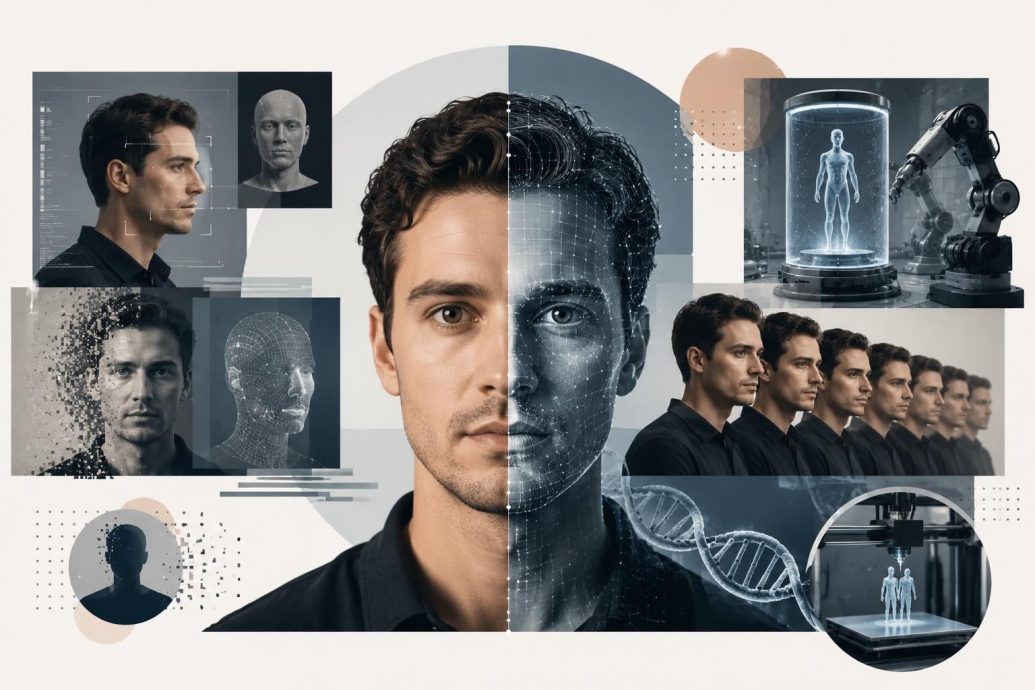
The idea of creating a digital copy of a human being has moved from science fiction to everyday reality in less than five years. The AI voice cloning market alone reached $4.06 billion in 2026 and is projected to more than double to $9.56 billion by 2030, growing at a compound annual growth rate of 23.9%. AI can now replicate a person’s voice from just three seconds of recorded audio, reproduce their facial expressions with photorealistic accuracy, and even simulate their personality based on two hours of conversational data. Gartner listed digitally replicating employees as one of its Future of Work Trends for 2026, signaling that this technology has entered the corporate mainstream. The tools that once required a Hollywood studio now run on a smartphone, and their implications reach into every corner of society. From entertainment and healthcare to fraud and identity theft, AI human cloning is reshaping how we think about identity, trust, and what it means to be real. This article explores the technology, the applications, the risks, and the ethical questions that AI human cloning raises in 2026.
Key Questions About AI Cloning Humans
What does it mean when AI clones a human?
AI human cloning creates a digital replica of a person’s voice, face, expressions, and behavior using deep learning models. These clones can speak, interact, and make decisions that mirror the original person without requiring their physical presence.
How accurate are AI human clones in 2026?
Modern AI clones can replicate voice with near-perfect accuracy from just three seconds of audio. Facial cloning achieves photorealistic results, and personality replication can simulate decision-making patterns based on roughly two hours of conversational training data.
Are AI human clones legal?
Legality varies by jurisdiction. The EU AI Act requires transparency and labeling for synthetic media. Tennessee’s ELVIS Act protects voice and likeness rights. India mandates three-hour takedowns of harmful deepfakes. No single global framework governs AI human cloning comprehensively.
Key Takeaways
- Regulations are emerging rapidly but remain fragmented, with the EU AI Act, Tennessee’s ELVIS Act, India’s IT Rules 2026, and the US TAKE IT DOWN Act each addressing different dimensions of AI cloning.
- AI voice cloning has grown into a $4.06 billion market in 2026, with technology capable of replicating a human voice from just three seconds of recorded audio.
- Digital twins now extend beyond physical appearance to replicate personality, decision-making patterns, and behavioral tendencies using large language models.
- Deepfake-enabled scams are projected to cause $40 billion in global losses by 2027, with businesses losing an average of $500,000 per deepfake-related incident.
Table of contents
- Introduction
- Key Questions About AI Cloning Humans
- Key Takeaways
- Understanding AI Human Cloning Technology
- How AI Creates a Digital Copy of You
- The Voice Cloning Revolution
- Digital Twins Move Beyond Physical Appearance
- The Entertainment Industry as a Testing Ground
- AI Clones in the Workplace
- The Fraud Landscape Powered by AI Cloning
- How AI Replicates Human Personality
- The Regulatory Landscape for AI Human Cloning
- The Ethics of Creating Digital Replicas
- Defending Against Unwanted AI Cloning
- AI Cloning and the Future of Trust
- What Comes Next for AI Human Cloning
- Key Insights
- Real World Examples Of AI Cloning Humans
- Case Studies
- Frequently Asked Questions on How AI Clones Humans
Understanding AI Human Cloning Technology
AI human cloning refers to the use of artificial intelligence to create digital replicas of real people by replicating their voice, facial appearance, physical movements, personality traits, and behavioral patterns. It encompasses voice cloning, face synthesis, digital twin creation, and personality simulation through deep learning, generative adversarial networks, and large language models.
AI Cloning Exposure Assessment
Select your digital profile and adjust exposure factors to see your personal risk score for AI voice, face, and personality cloning.
Select a profile and adjust the sliders to see personalized risk analysis and protection recommendations.
How AI Creates a Digital Copy of You
The process of creating an AI clone begins with data collection, and the amount of data required has dropped dramatically over the past two years. Voice cloning platforms can now generate a convincing replica of someone’s speech patterns, tone, pitch, and emotional inflection from as little as three seconds of recorded audio. The technology uses neural network models trained on thousands of hours of human speech to extrapolate a complete vocal profile from these minimal samples. Facial cloning follows a similar trajectory, using computer vision algorithms to map facial geometry, skin texture, and micro-expressions from photographs or short video clips. The barrier to creating a convincing digital replica of any person has collapsed to the point where anyone with a smartphone and internet access can do it. Understanding what a deepfake actually is provides essential context for grasping the scale of this transformation.
Beyond voice and face, the newest generation of AI cloning tools can replicate personality itself. Stanford researchers demonstrated in 2024 that a large language model could simulate an individual’s decision-making patterns and behavioral tendencies after approximately two hours of conversational interview data. The resulting digital twin could complete surveys, predict choices, and respond to novel situations in ways that closely matched the original person’s actual responses. This capability transforms AI cloning from a surface-level visual trick into something far more profound. When a system can replicate not just how you look and sound but how you think and decide, the distinction between the real person and the digital copy becomes genuinely difficult to identify from the outside. The implications for consent, identity, and authenticity are staggering.
The technical architecture powering AI human cloning combines several distinct AI disciplines working in concert to produce increasingly convincing results. Generative Adversarial Networks handle visual synthesis by pitting a generator network against a discriminator in an adversarial training loop that produces photorealistic outputs. Neural text-to-speech systems convert written scripts into spoken audio using cloned vocal characteristics that preserve the original speaker’s emotional range and cadence. Large language models provide the cognitive layer, simulating personality and conversational behavior based on training data gathered from the target individual. Each of these components has improved independently at a rapid pace, and their convergence creates clones that can pass as authentic across video, audio, and text simultaneously.
The Voice Cloning Revolution
The voice cloning segment represents the most commercially mature dimension of AI human cloning and the one with the most immediate impact on everyday life. The global AI voice cloning market reached $4.06 billion in 2026, growing at a compound annual growth rate of 23.9% according to market research data. Media and entertainment accounts for roughly 46% of the market, driven by demand for voiceovers, audiobook narration, podcast production, and multilingual content localization. North America holds approximately 41% of the global market share, reflecting concentrated investment in AI innovation and media applications. Voice cloning has evolved from a novelty experiment into a core production tool that generates billions in economic value annually.
The legitimate applications of voice cloning span an impressive range of industries and use cases that deliver genuine value to businesses and consumers. In audiobook production, publishers use voice cloning to rapidly produce titles in multiple languages while maintaining the original narrator’s tone and style. Customer service organizations deploy cloned voices to create virtual agents that deliver consistent, natural-sounding interactions at scale across global markets. Healthcare applications allow patients who have lost the ability to speak due to medical conditions like ALS to communicate using AI-reconstructed versions of their own voices. Educational platforms use voice cloning to personalize learning experiences with instructor voices that feel familiar and engaging to students. The technology saves time, reduces production costs, and expands accessibility in ways that were simply impossible five years ago.
The dark side of voice cloning is equally significant and growing at an alarming rate. The FBI has warned about the rise of AI voice scams targeting both individuals and enterprises. Vishing, which combines voice cloning with phishing techniques, now accounts for over 60% of phishing-related incident response engagements according to 2025 data. Deepfake-enabled scams are projected to cause $40 billion in global losses by 2027. Businesses lost an average of nearly $500,000 per deepfake-related incident in 2025, with some large enterprises experiencing losses of up to $680,000 per incident. A single high-profile case involved a $35 million corporate theft executed through executive voice impersonation. The same technology that enables a publisher to produce audiobooks efficiently also enables a criminal to impersonate a CEO and authorize fraudulent wire transfers.
Digital Twins Move Beyond Physical Appearance
While voice and face cloning capture surface-level attributes, the concept of digital twins is expanding into something far more comprehensive and transformative than simple visual replication. Gartner listed digitally replicating employees as one of its Future of Work Trends for 2026, and organizations are beginning to explore how complete cognitive replicas of individuals could transform business operations. Swiss bank UBS started deploying cloned versions of its analysts to share market insights with clients, citing time savings and growing client demand for video content. The technology allows a single analyst to deliver personalized briefings in multiple languages simultaneously without recording a single additional minute of content. AI is quietly rewriting the definition of human identity as these digital twins become more sophisticated and prevalent across industries.
New York-based startup Mantis Biotech is pushing digital twin technology into the biomedical space with an approach that goes far beyond appearance replication. Their platform integrates data from textbooks, motion capture cameras, biometric sensors, training logs, and medical imaging to create physics-based predictive models of human anatomy, physiology, and behavior. These digital twins can be used to study and test new medical procedures, train surgical robots, and simulate patterns of behavior. A sports team could potentially predict the likelihood of a specific player developing an injury based on their recent performance metrics, training load, diet, and activity duration. The company’s founder envisions a future where researchers interact with virtual humans the way a child plays with a toy, testing freely without ethical constraints.
The cognitive dimension of digital twins represents perhaps the most philosophically challenging frontier of AI human cloning technology. Researchers at the Nielsen Norman Group distinguish between synthetic users, which represent population segments or archetypes, and true digital twins, which model specific individuals and their likely thoughts and actions. The construction of a cognitive digital twin depends on how much contextual information is available, including demographic attributes, beliefs, preferences, prior survey responses, and behavioral data. The more personal data fed into the model, the more closely the twin mirrors its human counterpart. This creates a spectrum where the distinction between a statistical model and a genuine cognitive replica becomes increasingly blurred, raising questions about consciousness, consent, and ownership that existing legal and ethical frameworks are not equipped to answer.
The Entertainment Industry as a Testing Ground
Moving from research applications to commercial deployment, the entertainment industry has become the most visible testing ground for AI human cloning, and the tensions it creates reveal dynamics that will play out across every sector in the coming years. Twinnin, a controversial AI platform backed by Google and Nvidia, launched its first funding round in May 2026, targeting $3 million at a $25 million post-money valuation. The platform clones actors’ faces and creates digital likenesses that can be licensed to studios and brands for use in shows, movies, and advertisements. Actors sign up for $14.99 per year to post their digital likeness on the platform, while studios subscribe at tiers reaching $1,200 per month. The platform reports 2,000 signed-up twins and a vision that by 2030, 50% of humans appearing in AI content will be licensed digital twins of real people rather than fully synthetic characters.
The entertainment industry’s engagement with AI cloning exists in direct tension with the labor concerns that led to the 2023 SAG-AFTRA strikes, which centered partly on the unauthorized use of performers’ digital likenesses. The actors’ union Equity has stated it is willing to engage with AI companies that center consent, transparency, and fair pay, though it does not endorse any specific platform. The fundamental question is whether a system that pays actors $14.99 per year for unlimited use of their digital likeness constitutes fair compensation or exploitation. The debate reveals a broader challenge that extends beyond entertainment. When AI can replicate your professional output without your ongoing involvement, how should the economic value of that replication be distributed? This question will eventually confront every knowledge worker, educator, and creative professional. The growing concern about AI deepfakes stirring global trust issues reflects the scale of this challenge.
The music industry faces parallel disruptions as AI voice cloning enables the creation of tracks featuring synthetic versions of established artists’ voices without their involvement or consent. Songs created with cloned voices of major artists have accumulated millions of streams on platforms before being removed, demonstrating both the demand for this content and the difficulty of policing it at scale. The technology enables emerging artists to produce professional-sounding collaborations with vocal profiles that mimic famous performers, blurring the line between homage, parody, and infringement. The legal frameworks governing this activity remain fragmented and inconsistent across jurisdictions, creating a landscape where the technology moves far faster than the rules designed to contain it.
AI Clones in the Workplace
As entertainment reveals the creative tensions of AI cloning, the workplace is where the operational and economic implications become most tangible for the largest number of people. HR Magazine reported in its March 2026 edition that digital doppelgangers are increasingly appearing in the broader workforce, extending well beyond the creative industries where the technology first gained traction. Language and software company Guildhawk provides a digital humans service that allows executives to deliver presentations in multiple languages using AI-replicated versions of themselves. Instead of spending weeks recording the same presentation in different languages, a single recording session generates multilingual content that maintains the speaker’s appearance, voice, and mannerisms across every version.
The efficiency gains are substantial, but the human implications generate legitimate concern among workers, managers, and organizational leaders. Jon Dawson, Chief People Officer at international hospitality company Lore Group, challenged whether the adoption of AI avatars actually gives people back time or merely creates more work at a faster pace. Attendees at a recent AI summit he participated in concluded that while AI use sped up outputs, this acceleration caused people to work faster and harder rather than working less. Business transformation expert Allister Frost, who uses a digital doppelganger to assist with personal tasks, draws a firm boundary at public representation. He would not send his clone to deliver a talk on his behalf because, as he puts it, that is not him. The human touch remains important, and the question of when a digital representation crosses from helpful tool to hollow replacement has no simple answer. The growing landscape of AI agents as potential manipulation engines adds another dimension of complexity to workplace deployment.
Recruitment represents one of the most sensitive areas where AI cloning technology is being tested and debated within organizations. Some companies have begun using cloned interviewers to conduct initial candidate screenings, creating a consistent and scalable assessment process that operates around the clock. Dawson has encountered this technology and raises a pointed question about what it signals to candidates. If an organization sends a clone to conduct your interview, does that suggest the company genuinely values you as an individual? The answer likely depends on whether the candidate perceives the clone as an efficiency tool or as evidence that their potential employer did not consider them worth a real human’s time. This perception gap between organizational intent and candidate experience mirrors the broader challenge of deploying AI clones in any context where authentic human connection carries significant weight.
The Fraud Landscape Powered by AI Cloning
While organizations explore legitimate workplace applications, criminals are exploiting the same technology to execute increasingly sophisticated fraud operations that outpace traditional security measures. The dangers of AI misinformation and manipulation extend far beyond fake news articles into real-time impersonation attacks. AI voice cloning has been weaponized to impersonate CEOs, authorize fraudulent wire transfers, and bypass voice-based authentication systems that millions of financial institutions rely upon for security. Consumers now receive an average of 9.9 unwanted calls per week, and deepfake voice call exposure in the United States increased by over 250% year over year. The technology that requires only three seconds of audio to clone a voice means that virtually anyone who has ever spoken publicly, posted a video, or left a voicemail is vulnerable to impersonation.
The financial impact of AI cloning fraud is already staggering and growing rapidly across every major market. Businesses lost an average of nearly $500,000 per deepfake-related incident, with large enterprises experiencing losses up to $680,000 per single attack. Deepfake-enabled scams globally are projected to reach $40 billion in losses by 2027. Financial regulators in over 15 major markets now require enhanced authentication protocols in response to these threats. Law enforcement agencies report a 40% increase in investigations involving AI-generated fraud, and courts are increasingly accepting deepfake evidence in fraud prosecutions. Investment in fraud prevention technologies is projected to exceed $20 billion globally as organizations race to build defenses against threats that evolve faster than the detection systems designed to catch them.
The psychological dimension of AI cloning fraud is particularly devastating because it exploits the deepest bonds of human trust. A scammer calling an elderly parent using a cloned version of their child’s voice, asking them to wire money urgently, exploits not a technical vulnerability but a fundamental human instinct to help family members in distress. The FBI has specifically warned about these family impersonation scams targeting seniors, and the emotional damage extends far beyond the financial loss. Victims report lasting feelings of violation and diminished trust in telephone communications of all kinds. The knowledge that AI is undermining online trust at a fundamental level raises questions about whether traditional verification methods can survive in an environment where any voice or face can be convincingly replicated.
How AI Replicates Human Personality
Beyond physical replication, the ability of AI systems to clone human personality represents a qualitative leap that distinguishes current technology from earlier generations of synthetic media. AI can now replicate your personality in approximately two hours of conversational interview data. Stanford research demonstrated that digital twins built from this data could complete surveys, predict choices, and interact in real time in ways that closely matched the behavior of the original individuals. These are not scripted responses following predetermined paths. The AI generates novel responses to novel situations based on its internalized model of how a specific person thinks, decides, and communicates.
The implications of personality cloning extend into territory that existing ethical frameworks were never designed to address. If a digital twin can predict your choices with reasonable accuracy, who owns the predictions it generates? If a company trains a cognitive model on an employee’s two decades of decision-making and then the employee leaves, does the company retain the right to continue using a clone that replicates that employee’s professional judgment? These questions are not hypothetical. They are emerging in real workplaces as organizations begin to recognize the competitive value of institutional knowledge encoded in AI models trained on specific individuals. The intersection of labor law, intellectual property law, and privacy law remains largely unexplored in the context of personality cloning.
The consumer-facing dimension of personality cloning is evolving just as rapidly, with applications ranging from companionship to personal branding. The emergence of AI clones revolutionizing the dating scene demonstrates how personality replication is entering intimate personal spaces. Content creators are using AI personality clones to maintain engagement with audiences across multiple platforms simultaneously. Entrepreneurs are deploying cognitive replicas of themselves to handle customer interactions, investor inquiries, and media responses while they focus on strategic work. The ability to clone not just your appearance but your judgment, humor, and communication style creates a new category of digital asset that has no precedent in intellectual property law. The philosophical question at the core of personality cloning is deceptively simple. If your thoughts, decisions, and conversational patterns can be simulated, what part of you remains uniquely and irreplaceably human?
The Regulatory Landscape for AI Human Cloning
The regulatory response to AI human cloning is accelerating but remains fragmented across jurisdictions in ways that create significant gaps for both protection and enforcement. The EU AI Act classifies deepfakes and synthetic media under transparency obligations, requiring that AI-generated content be clearly labeled and disclosed to viewers. The framework categorizes AI systems by risk level and imposes specific obligations for high-risk applications, though the enforcement mechanisms for cross-border synthetic media distribution remain untested. India took a more aggressive approach with its IT Rules 2026 amendment, which introduces a mandatory three-hour takedown deadline for specific categories of harmful AI-generated content, including non-consensual intimate imagery, impersonation, and fraud. Understanding the broader landscape of AI ethics and evolving legal frameworks helps individuals and organizations prepare for the regulatory complexity ahead.
In the United States, the regulatory approach combines federal legislation with an expanding patchwork of state-level protections that collectively create one of the more complex compliance environments globally. Tennessee’s ELVIS Act, enacted in 2024, became the first state law to expressly extend right-of-publicity protections to AI-generated voice clones, criminalizing unauthorized digital replication and providing civil remedies for infringement. The federal TAKE IT DOWN Act, signed in May 2025, addresses non-consensual intimate imagery, including AI-generated deepfakes, and requires covered platforms to remove reported content. The Federal Trade Commission has issued warnings about AI-driven scams and is working to expand penalties for those who produce or distribute deepfakes with intent to deceive. Despite this momentum, no single comprehensive federal framework governs AI human cloning, leaving enforcement responsibility distributed across multiple agencies with overlapping and sometimes conflicting jurisdictions.
China’s regulatory approach differs structurally from both the EU and US models, reflecting the country’s distinct priorities around content control and data sovereignty. China’s deep synthesis regulations require mandatory labeling and explicit consent for AI-generated media, combined with algorithmic registration requirements that have no direct equivalent in Western regulatory frameworks. The combination of strict content rules and aggressive enforcement creates a compliance environment that is challenging for multinational organizations to navigate alongside EU and US requirements simultaneously. This global regulatory fragmentation means that a piece of AI-cloned content could be legal in one jurisdiction, require specific labeling in another, and face criminal penalties in a third, all depending on its content, context, and the nationality of the person being cloned. Building responsible AI governance frameworks is increasingly essential for any organization working with synthetic media.
The Ethics of Creating Digital Replicas
Regulatory frameworks attempt to draw boundaries, but the ethical questions raised by AI human cloning extend well beyond what legislation can address on its own. The most fundamental ethical issue is consent. When AI can create a convincing replica of someone from publicly available data, including social media posts, interview recordings, or conference presentations, the traditional notion of consent breaks down entirely. The person being cloned may never know their likeness has been replicated, used for commercial purposes, or weaponized for fraud. The concept of informed consent assumes that individuals can meaningfully control how their personal data is used, but AI cloning technology makes that control practically impossible for anyone with a public presence. The urgency of understanding data privacy implications in an AI-powered world grows more acute as cloning tools become more accessible.
The question of identity ownership becomes increasingly complex as AI clones grow more sophisticated and capable of autonomous interaction. If a digital twin of a professor delivers lectures to thousands of students, generating revenue for a university long after the professor has retired or passed away, who benefits from that labor? If a deceased person’s personality clone continues to interact with their family members and friends, what are the psychological implications for grieving and acceptance? These scenarios are not distant hypotheticals. Companies are already marketing services that create interactive clones of deceased loved ones, promising to preserve their memory through conversational AI. The line between honoring someone’s legacy and exploiting their identity after death remains undefined and deeply contested. The dangers of AI bias and discrimination add further complexity, as cloning systems may replicate and amplify biases embedded in their training data.
The economic ethics of AI cloning present challenges that existing market structures are poorly equipped to resolve fairly. When Twinnin offers actors $14.99 per year for unlimited commercial use of their digital likeness, the transaction reflects an enormous power asymmetry between individuals and platforms. Most people cannot accurately value their digital identity because there is no established market for it, no standardized pricing, and no transparent data on how clones are used after creation. Early adopters may sign away rights that prove enormously valuable as the technology matures. The entertainment industry’s experience with rights contracts for digital likeness will eventually become relevant to every professional whose work output can be replicated by AI, creating a need for new forms of economic protection that current labor law does not contemplate.
Defending Against Unwanted AI Cloning
Moving from ethical principles to practical protection, individuals and organizations need concrete strategies for defending against unwanted AI cloning in an environment where the tools are widely accessible and the protections remain incomplete. The first line of defense involves limiting the raw material available for cloning. Individuals can reduce their exposure by being selective about the audio and video content they post publicly, as longer samples of continuous speech make voice cloning more accurate. Organizations should establish clear policies about which employee data, images, and voice recordings can be used and under what conditions. Learning how to spot a deepfake is becoming an essential digital literacy skill for everyone from corporate executives to elderly family members who are prime targets for voice cloning scams.
Technical defenses against AI cloning are evolving rapidly as the detection and authentication ecosystem races to keep pace with increasingly sophisticated synthesis tools. Audio watermarking systems embed invisible signals in legitimate recordings that can later be used to verify authenticity and trace unauthorized use. Content authentication frameworks, including C2PA and similar initiatives supported by major technology companies, attach verifiable provenance data to media files at the point of creation. AI-powered detection tools analyze synthetic media for artifacts and inconsistencies that human observers cannot perceive, though the arms race between generation and detection means that no single detection method remains reliable indefinitely. Organizations handling sensitive communications should implement multi-factor authentication that does not rely on voice alone, combining biometric verification with additional identity confirmation steps. The broader challenge of fighting back against explicit AI deepfakes requires coordinated effort across technology providers, platforms, regulators, and individual users.
Corporate preparedness for AI cloning threats requires a multi-layered approach that combines technology, policy, education, and incident response planning into a comprehensive defense posture. Financial institutions should implement out-of-band verification for high-value transactions, requiring confirmation through a separate communication channel from the one used to initiate the request. Employee training programs should include deepfake awareness modules that teach staff to recognize and report suspected synthetic media. Legal teams should review and update insurance coverage to address AI-related fraud specifically, as many existing policies contain exclusion clauses for losses arising from synthetic media. The organizations best positioned to defend against AI cloning threats are those that treat it as an enterprise-wide risk management challenge rather than a narrow IT security concern.
AI Cloning and the Future of Trust
The cumulative effect of AI human cloning technology on societal trust represents one of the most consequential long-term challenges that this technology creates. The concern about undermining trust through AI and the minefield of deepfakes has moved from theoretical discussion to practical reality. When any voice can be cloned, any face can be synthesized, and any personality can be simulated, the default assumption of authenticity that underpins human communication begins to erode. A world where nothing can be taken at face value is not just inconvenient. It is corrosive to the social fabric that enables cooperation, commerce, democratic governance, and personal relationships to function.
The erosion of trust creates what researchers call the “liar’s dividend,” a phenomenon where the mere existence of convincing synthetic media allows real people to dismiss authentic evidence as fake. A politician caught on camera making an embarrassing statement can claim the video is a deepfake, and a meaningful percentage of the audience will believe them regardless of the evidence. A corporate executive confronted with recorded evidence of wrongdoing can invoke the same defense. The technology does not need to be used to cause damage. Its mere existence is sufficient to undermine the evidentiary foundation on which accountability depends. This dynamic affects journalism, law enforcement, judicial proceedings, and democratic discourse simultaneously, creating systemic vulnerability that no single intervention can resolve.
Rebuilding trust in an era of AI cloning will require fundamental changes to how we verify identity, authenticate media, and establish the provenance of digital content. The technical solutions exist in embryonic form. Cryptographic signing of media at the point of capture, blockchain-based provenance chains, and AI-powered authentication systems all offer partial solutions to the verification challenge. The deeper challenge is cultural. Societies must develop new norms and expectations around digital authenticity that balance the creative potential of synthetic media against the need for reliable truth. This transition will take years and will involve painful episodes of confusion, manipulation, and institutional failure before stable new frameworks emerge. The organizations and societies that invest in trust infrastructure now will be better positioned to navigate this transition than those that wait for the crisis to force their hand.
What Comes Next for AI Human Cloning
Looking forward, the trajectory of AI human cloning points toward more capable, more accessible, and more deeply integrated systems that will touch every aspect of personal and professional life within the next five years. The AI voice cloning market alone is projected to reach $9.56 billion by 2030, and the broader digital twin market will grow even faster as cognitive and behavioral cloning capabilities mature alongside voice and visual synthesis. Twinnin’s founder envisions that by 2030, 50% of humans in AI-generated content will be licensed digital twins of real people rather than purely synthetic characters, suggesting a future where real human identity becomes a tradeable digital asset on a massive scale.
The technology will become simultaneously more powerful and more invisible as it integrates into platforms and tools that people use daily. Email clients may offer to draft responses in your cloned writing style. Video conferencing platforms may allow you to send your digital twin to meetings. Customer service interactions may involve AI clones of specific company representatives rather than generic chatbots. Each of these applications offers genuine utility, but each also extends the reach of cloning technology deeper into the texture of everyday life. The cumulative effect is a world where the boundary between human-generated and AI-generated content becomes increasingly difficult to perceive, even for sophisticated users. The implications for data privacy in phones and computers will intensify as cloning capabilities become embedded in consumer devices.
The central challenge for the next decade is not whether AI will clone humans more effectively. That outcome is certain. The challenge is whether individuals, organizations, and governments can build the governance frameworks, ethical standards, detection tools, and cultural norms necessary to ensure that this technology amplifies human potential rather than undermining human dignity. The decisions made in 2026 about regulation, consent, economic fairness, and technological safeguards will shape how AI human cloning develops for the rest of the decade. The technology itself is neutral. Its impact depends entirely on the choices that people, companies, and governments make about how it is built, deployed, governed, and restrained.
Key Insights
- The AI voice cloning market reached $4.06 billion in 2026 and is projected to grow to $9.56 billion by 2030 at a 23.9% CAGR, making it one of the fastest-growing segments in the broader AI industry.
- According to SQ Magazine’s analysis of AI voice cloning fraud statistics, businesses lost an average of nearly $500,000 per deepfake-related incident, with deepfake-enabled scams projected to cause $40 billion in global losses by 2027.
- HR Magazine reported that Gartner listed digitally replicating employees as one of its Future of Work Trends for 2026, with Swiss bank UBS already deploying cloned analyst avatars to deliver client briefings.
- Deadline reported that AI platform Twinnin, backed by Google and Nvidia, launched a $3 million seed round at a $25 million valuation, with 2,000 actors signed up for digital likeness licensing.
- TechCrunch covered Mantis Biotech’s development of physics-based digital twins of the human body for biomedical research, targeting surgical training, drug trials, and injury prediction.
- According to Fast Company’s investigation, an individual was able to create a digital twin convincing enough to fool his own mother using commercially available AI tools, demonstrating how accessible the technology has become.
- The Nielsen Norman Group’s research found that digital twins built from individual-level data can predict behavior, complete surveys, and interact on behalf of specific people, blurring the line between synthetic users and genuine cognitive replicas.
- India’s IT Rules 2026 amendment introduced three-hour takedown mandates for harmful AI-generated content and new labeling requirements for platforms enabling synthetic media creation.
The convergence of voice cloning, facial synthesis, and personality replication has created an AI human cloning ecosystem that is both commercially vibrant and socially disruptive at unprecedented scale. The technology’s accessibility has democratized creation while simultaneously expanding the attack surface for fraud and identity exploitation. Regulatory responses are accelerating but remain fragmented, with each major jurisdiction addressing different dimensions of the challenge through incompatible frameworks. The organizations and individuals best positioned to navigate this landscape are those building defense, governance, and ethical awareness simultaneously rather than treating any one dimension in isolation. The fundamental question confronting society is not whether AI can clone humans convincingly. It already can. The question is who decides how that power is used.
| Dimension | AI Cloning for Good | AI Cloning for Harm |
|---|---|---|
| Voice | Accessibility tools for patients who lost speech, multilingual content | CEO impersonation for wire fraud, family voice scam calls |
| Face | Licensed digital twins for entertainment, multilingual presentations | Non-consensual deepfake pornography, political manipulation |
| Personality | Medical research digital twins, personalized education | Identity theft at the cognitive level, post-mortem exploitation |
| Consent | Opt-in platforms with transparent licensing and fair compensation | Cloning from publicly available data without knowledge or approval |
| Detection | Watermarking, C2PA provenance, AI-powered authentication | Arms race with generators, detection evasion improving 30% annually |
| Regulation | EU AI Act transparency, ELVIS Act voice protection, IT Rules 2026 | Fragmented global enforcement, jurisdiction shopping by bad actors |
| Trust | Content authentication rebuilds confidence in verified media | Liar’s dividend allows real evidence to be dismissed as synthetic |
Real World Examples Of AI Cloning Humans
Twinnin’s Digital Likeness Platform for Actors
Twinnin, backed by Google and Nvidia, launched in 2026 as a platform that creates licensed digital clones of actors’ faces for use in films, shows, and advertisements, as reported by Deadline. The platform signed up 2,000 actors and targeted $3 million in seed funding at a $25 million post-money valuation during its debut round. Actors pay $14.99 per year to list their digital likeness, while studios subscribe at tiers reaching $1,200 per month for access to the library. The platform’s founder stated a vision that by 2030, 50% of humans in AI content will be licensed real-person digital twins rather than fully synthetic characters. Critics question whether $14.99 annually constitutes fair compensation for unlimited commercial use of someone’s physical likeness. The actors’ union Equity acknowledged the platform’s consent-centered approach but stopped short of endorsing it, reflecting the broader industry tension between innovation and labor protection.
UBS Analyst Clones for Client Briefings
Swiss bank UBS began deploying AI-cloned versions of its financial analysts to deliver market insights to clients in 2025, as covered by HR Magazine. The bank cited significant time savings and growing client demand for video-format briefings as primary drivers for adoption. The cloned analysts could deliver the same briefing in multiple languages using the analyst’s own voice and appearance without requiring additional recording time. This allowed UBS to scale its personalized client engagement while reducing the operational burden on its research team. The limitation is the absence of real-time interaction capability; cloned briefings are one-directional presentations rather than interactive conversations. Questions remain about client perceptions of receiving advice from a digital replica rather than the actual analyst, particularly for high-net-worth individuals who expect personalized human attention.
Mantis Biotech’s Biomedical Digital Twins
Mantis Biotech, a New York-based startup, developed a platform that creates physics-based digital twins of the human body for biomedical research applications, as described by TechCrunch. The platform integrates data from textbooks, motion capture cameras, biometric sensors, training logs, and medical imaging, then processes it through an LLM-based system to create high-fidelity predictive models of anatomy, physiology, and behavior. These digital twins are designed for testing medical procedures, training surgical robots, simulating injury risk, and supporting FDA clinical trials. The company targets edge cases like rare diseases where reliable patient data is scarce and ethical constraints limit traditional research methods. The key limitation is the technology’s current dependence on the quality and completeness of input data, meaning digital twins of underrepresented populations may be less accurate due to gaps in available biomedical datasets.
Case Studies
India’s Three-Hour Takedown Mandate for AI Deepfakes
India faced a growing crisis of AI-generated deepfake content targeting politicians, celebrities, and private citizens, with synthetic media being used for political manipulation and non-consensual intimate imagery at increasing scale. The government responded by amending the IT Intermediary Guidelines in 2026 to create the most aggressive takedown regime globally for harmful synthetic content, as analyzed by Mondaq. The amendment mandates that platforms remove reported deepfake content within three hours of notification and imposes new labeling, traceability, and due diligence requirements on any intermediary that enables the creation, modification, or distribution of synthetically generated information. Platforms that fail to meet these obligations risk losing their safe harbor protections, increasing their exposure to both regulatory penalties and criminal liability. Critics argue the three-hour window is technically unrealistic for platforms operating at scale and could be weaponized to suppress legitimate speech through coordinated false reporting campaigns.
Tennessee’s ELVIS Act Protecting Voice and Likeness Rights
Tennessee confronted the challenge of protecting performers’ identities after AI voice cloning tools made it trivially easy to create synthetic versions of musicians’ and actors’ voices without authorization or compensation. The state enacted the Ensuring Likeness, Voice, and Image Security Act in 2024, becoming the first jurisdiction in the United States to expressly extend right-of-publicity protections to AI-generated voice clones, as detailed by legal analysis. The ELVIS Act criminalizes unauthorized digital replication of a person’s voice and provides civil remedies for infringement, marking a significant expansion beyond traditional likeness protection into the domain of synthetic media. The measurable impact includes establishing a legal precedent that other states are now referencing when drafting their own AI identity protection legislation. The limitation is jurisdictional scope. The Act protects rights under Tennessee law, but AI-generated voice clones can be created and distributed from any location globally, making enforcement against international actors extremely difficult without federal legislation or international cooperation frameworks.
Corporate AI Voice Fraud and the $35 Million Theft
A multinational corporation experienced one of the largest documented AI voice cloning fraud incidents when criminals used cloned executive voices to authorize a $35 million wire transfer through a series of coordinated phone calls that impersonated senior leadership, as documented by SQ Magazine’s fraud analysis. The attackers combined AI voice cloning with detailed knowledge of the company’s internal authorization procedures, creating calls that replicated the CEO’s speaking patterns convincingly enough to pass through internal verification steps. The fraud was only discovered after the transferred funds had been dispersed across multiple accounts in different jurisdictions. The incident prompted the company to implement multi-factor authentication for all financial transactions above a defined threshold, requiring confirmation through a separate communication channel. The broader impact has been a sector-wide reassessment of voice-based authentication systems, with financial regulators in over 15 major markets now mandating enhanced verification protocols. The case demonstrates that voice-based identity verification alone is no longer sufficient in an environment where three seconds of audio can produce a convincing voice clone.
Frequently Asked Questions on How AI Clones Humans
AI voice cloning uses neural network models trained on human speech to replicate a person’s vocal characteristics from a recorded sample. Modern systems can generate a convincing voice clone from as little as three seconds of audio. The AI extrapolates tone, pitch, cadence, and emotional inflection from the sample and applies these characteristics to any new text input.
Yes. Research has demonstrated that large language models can simulate an individual’s decision-making patterns and behavioral tendencies after approximately two hours of conversational interview data. The resulting digital twin can predict choices, complete surveys, and respond to novel situations in ways that closely match the original person’s actual behavior.
Consumer-grade AI cloning tools range from free tiers with basic voice synthesis to enterprise platforms costing several thousand dollars per month for advanced features. Twinnin charges actors $14.99 per year to create and list a digital likeness. Professional-grade digital twin platforms for biomedical or corporate applications carry significantly higher costs tied to data integration and customization requirements.
Legality depends on jurisdiction and intended use. Tennessee’s ELVIS Act criminalizes unauthorized AI voice replication. The EU AI Act requires transparency and labeling for synthetic media. India mandates three-hour takedowns of harmful deepfakes. The US TAKE IT DOWN Act addresses non-consensual intimate deepfakes at the federal level. Using voice clones for fraud is illegal everywhere under existing fraud statutes.
Limit the amount of long-form audio and video you post publicly, as longer samples improve cloning accuracy. Use multi-factor authentication that does not rely solely on voice verification. Be cautious about calls from known contacts requesting urgent financial actions and verify through a separate communication channel. Monitor online platforms for unauthorized use of your likeness.
A deepfake typically refers to AI-generated media that creates a false impression, often without consent or for deceptive purposes. A digital twin is a broader concept referring to any AI-created replica of a person, including authorized and beneficial applications like medical simulation, licensed entertainment content, and accessibility tools. The technology underlying both is often identical; the distinction lies in consent and intent.
Businesses can use AI clones with the employee’s informed consent and appropriate contractual agreements. The scope of permitted use should be clearly defined in writing, including whether the clone can be used after the employee leaves the company. Organizations operating in the EU must also comply with AI Act transparency requirements and GDPR provisions regarding biometric data processing.
Detection tools analyze synthetic media for artifacts that distinguish AI-generated content from authentic recordings. Techniques include analyzing spectral patterns in audio, detecting inconsistencies in facial movement timing, and identifying compression artifacts unique to generative models. Audio watermarking embeds invisible signals in legitimate recordings to verify authenticity. The effectiveness of detection tools varies as generation technology continuously improves.
There is no universal legal framework governing the use of AI clones of deceased individuals. Some companies already market interactive clones of deceased loved ones as memorial services. Estate law, personality rights, and privacy protections vary significantly by jurisdiction. Tennessee’s ELVIS Act extends likeness protection beyond death, but most jurisdictions have not addressed this question specifically.
AI-generated deepfakes in 2026 achieve near-photorealistic visual quality and highly convincing audio synthesis. Voice clones can replicate emotional inflection and conversational cadence with sufficient accuracy to fool close family members. Facial synthesis can produce video that passes casual inspection, though forensic analysis tools can still detect artifacts in most cases. The gap between generation quality and detection capability is narrowing steadily.
AI cloning will augment rather than wholesale replace human workers in most contexts. The technology enables individuals to scale their presence, deliver content in multiple languages, and handle routine interactions through digital proxies. Roles requiring genuine human judgment, creativity, empathy, and physical presence will remain human-centered. The economic displacement risk is highest for workers whose output is primarily digital and can be replicated through text, voice, or video synthesis.
Generative Adversarial Networks are central to the visual synthesis component of AI human cloning. GANs use two competing neural networks, a generator that creates synthetic images and a discriminator that evaluates their authenticity, in an adversarial training loop that produces progressively more realistic outputs. This architecture powers face generation, expression mapping, and video synthesis used in deepfake and digital twin creation.
The EU AI Act classifies deepfakes under transparency obligations, requiring that AI-generated or manipulated content be clearly labeled and disclosed. The Act categorizes AI systems by risk level and imposes specific requirements for high-risk applications. Biometric systems used for identification face particularly strict requirements. The regulation applies to any organization serving EU markets regardless of where the organization is headquartered.
Yes. Social media posts containing photos, videos, and audio recordings provide sufficient raw material for AI cloning tools to generate synthetic replicas of voice, face, and basic behavioral patterns. Even short video clips or voice messages can serve as training data for modern voice cloning systems. This reality makes anyone with a public social media presence potentially vulnerable to unauthorized cloning.
The liar’s dividend describes the phenomenon where the mere existence of convincing synthetic media allows real people to dismiss authentic evidence as fake. A politician or executive confronted with genuine audio or video evidence of wrongdoing can claim it is an AI-generated deepfake, and a significant portion of the audience will accept that explanation. This erodes the evidentiary foundation on which accountability depends across journalism, law enforcement, and democratic governance.